Kathryn C. Statler – författare
Visar alla böcker från författaren Kathryn C. Statler. Handla med fri frakt och snabb leverans.
4 produkter
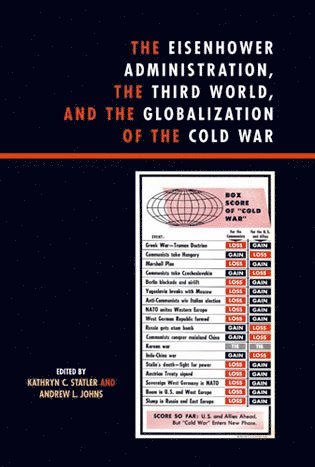
Eisenhower Administration, the Third World, and the Globalization of the Cold War
Av Kathryn C. Statler, Andrew L. Johns
Inbunden, 2006
1608 kr
Lägg i varukorg
In the United States, the Cold War is often remembered as a two-power struggle. However, increasing globalization during that time meant nations across the world became involved in the conflict. During the Eisenhower administration, American officials struggled to respond to the dual threats of …
Replacing France
The Origins of American Intervention in Vietnam
E-bok, 2007
534 kr
Lägg i varukorg
Using recently released archival materials from the United States and Europe, Replacing France: The Origins of American Intervention in Vietnam explains how and why the United States came to assume control as the dominant western power in Vietnam during the 1950s. Acting on their conviction that …
Replacing France
The Origins of American Intervention in Vietnam
E-bok, 2007
787 kr
Lägg i varukorg
Using recently released archival materials from the United States and Europe, Replacing France: The Origins of American Intervention in Vietnam explains how and why the United States came to assume control as the dominant western power in Vietnam during the 1950s. Acting on their conviction that …
Replacing France
The Origins of American Intervention in Vietnam
Häftad, 2009
608 kr
Lägg i varukorg
Using recently released archival materials, Replacing France explains how and why the United States came to assume control as the dominant western power in Vietnam during the 1950s. Kathryn C. Statler examines diplomatic maneuvers in Paris, Washington, London, and Saigon to detail how Western …