Kathryn E. Holliday - Böcker
Visar alla böcker från författaren Kathryn E. Holliday. Handla med fri frakt och snabb leverans.
3 produkter
3 produkter
544 kr
Tillfälligt slut
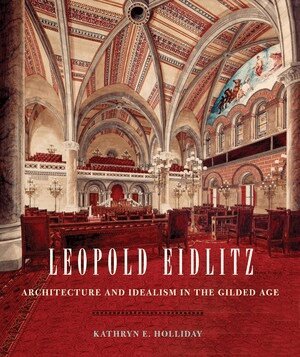
Though the organic tradition has long been understood to be a central defining feature of American architecture, associated most strongly with Chicago and Louis Sullivan and Frank Lloyd Wright, Eidlitz in fact began the exploration of the organic ideal a generation earlier in New York. Eidlitz served as a lightning rod in the world of New York architecture, fomenting dissent and debate among his professional peers. While he made enemies of powerful Beaux-Arts practitioners such as Richard Morris Hunt and George B. Post, he found allies in the progressive community, among them Frederick Law Olmsted and Peter Cooper, founder of the Cooper Union. Though Eidlitz's career faltered in New York in the 1880s, his blend of idealism and pragmatism, of science and art, became crucial to the further development of organic architecture in Chicago.For Eidlitz, born in Prague and trained in Prague and Vienna, the organic metaphor provided a means of rationally approaching design according to natural law, producing modern buildings that expressed the true democratic spirit of the age. In buildings like the New York State Capitol at Albany, the Tweed Courthouse and Temple Emanu-El in New York, and P. T. Barnum's mansion Iranistan, Eidlitz created a fusion of structure and ornament that defied the Gilded Age's aesthetic conventions. Combining German romanticism and American transcendentalism with a reform spirit inspired by the nineteenth-century Jewish reform movement, Eidlitz in his prolific writing sowed the seeds of modern American architectural theory, focusing on buildings as organisms that could evolve.
1 000 kr
Kommande
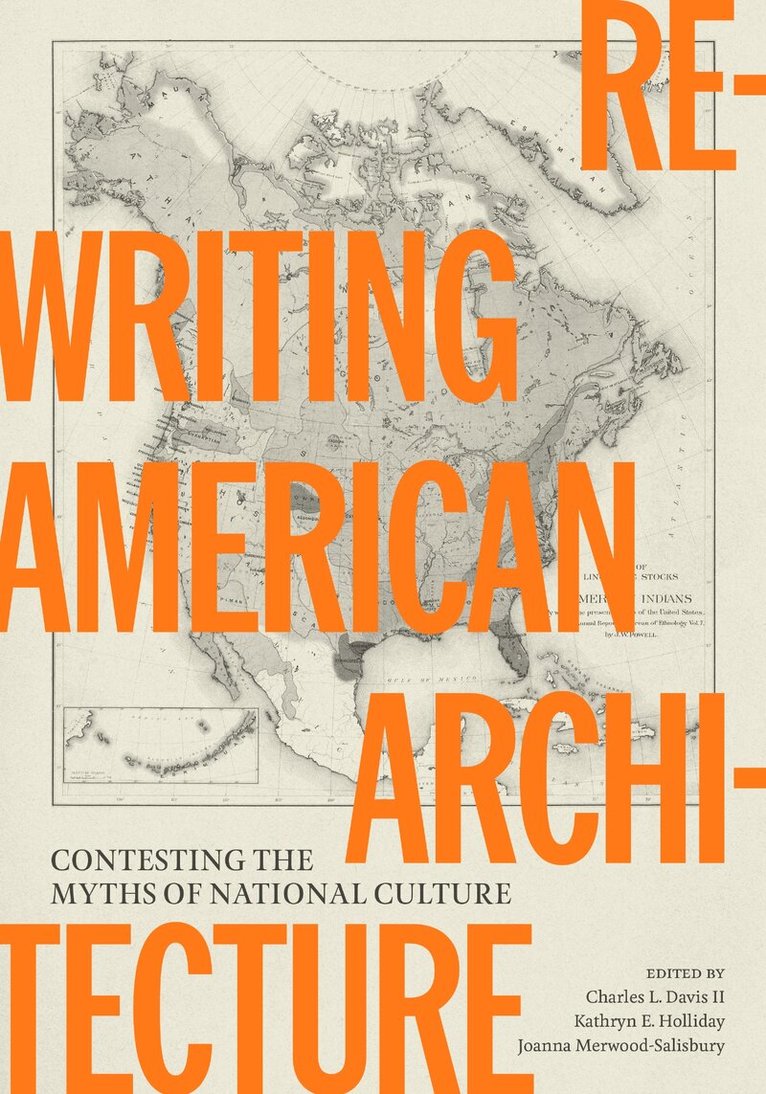
A critical reassessment of nineteenth‑century American architecture that uncovers how race, settler colonialism, and contested national identities shaped the built environment and its historiography.Rewriting American Architecture offers a revisionist riposte to the canonical story of nineteenth-century American architecture. Drawing on new archival research and revisionist historiography, the essays in this volume reveal how American architecture was shaped not by inevitable progress toward a unified national culture but by the turbulent realities of race, labor, settler colonialism, and territorial expansion. Rather than treating architecture as an apolitical aesthetic expression, the contributors expose it as an active arena in which the meanings of nationhood were constructed, contested, and often violently enforced. From Indigenous spatial practices and Black institutional building to transnational exchanges and the racial politics embedded in professionalization, this collection reframes the built environment as central to the competing cultural, political, and geographic claims that defined the United States during this period.
432 kr
Kommande
A critical reassessment of nineteenth‑century American architecture that uncovers how race, settler colonialism, and contested national identities shaped the built environment and its historiography.Rewriting American Architecture offers a revisionist riposte to the canonical story of nineteenth-century American architecture. Drawing on new archival research and revisionist historiography, the essays in this volume reveal how American architecture was shaped not by inevitable progress toward a unified national culture but by the turbulent realities of race, labor, settler colonialism, and territorial expansion. Rather than treating architecture as an apolitical aesthetic expression, the contributors expose it as an active arena in which the meanings of nationhood were constructed, contested, and often violently enforced. From Indigenous spatial practices and Black institutional building to transnational exchanges and the racial politics embedded in professionalization, this collection reframes the built environment as central to the competing cultural, political, and geographic claims that defined the United States during this period.