Katja Garloff - Böcker
Visar alla böcker från författaren Katja Garloff. Handla med fri frakt och snabb leverans.
6 produkter
6 produkter
793 kr
Skickas inom 7-10 vardagar
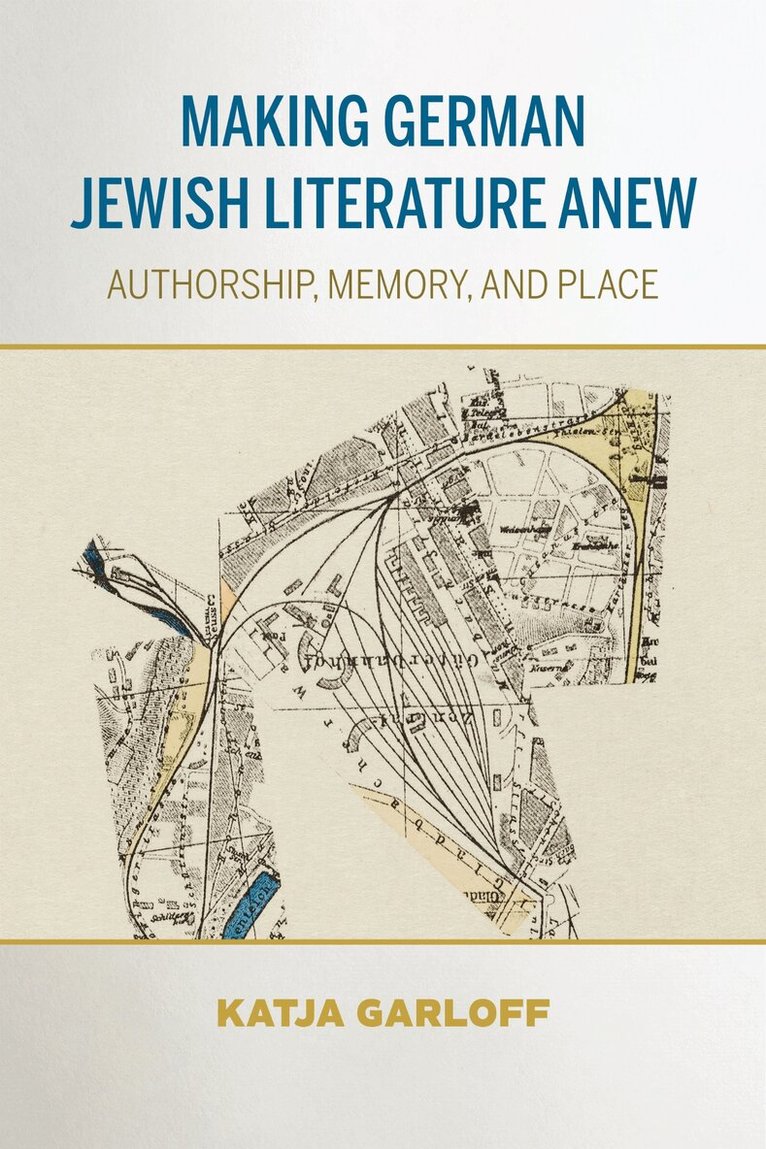
In Making German Jewish Literature Anew, Katja Garloff traces the emergence of a new Jewish literature in Germany and Austria from 1990 to the present. The rise of new generations of authors who identify as both German and Jewish, and who often sustain additional affiliations with places such as France, Russia, or Israel, affords a unique opportunity to analyze the foundational moments of diasporic literature. Making German Jewish Literature Anew is structured around a series of founding gestures: performing authorship, remaking memory, and claiming places. Garloff contends that these founding gestures are literary strategies that reestablish the very possibility of a German Jewish literature several decades after the Holocaust.Making German Jewish Literature Anew offers fresh interpretations of second-generation authors such as Maxim Biller, Doron Rabinovici, and Barbara Honigmann as well as of third-generation authors, many of whom come from Eastern European and/or mixed-religion backgrounds. These more recent writers include Benjamin Stein, Lena Gorelik, and Katja Petrowskaja. Throughout the book, Garloff asks what exactly marks a given text as Jewish—the author's identity, intended audience, thematic concerns, or stylistic choices—and reflects on existing definitions of Jewish literature.
415 kr
Skickas inom 7-10 vardagar
In Making German Jewish Literature Anew, Katja Garloff traces the emergence of a new Jewish literature in Germany and Austria from 1990 to the present. The rise of new generations of authors who identify as both German and Jewish, and who often sustain additional affiliations with places such as France, Russia, or Israel, affords a unique opportunity to analyze the foundational moments of diasporic literature. Making German Jewish Literature Anew is structured around a series of founding gestures: performing authorship, remaking memory, and claiming places. Garloff contends that these founding gestures are literary strategies that reestablish the very possibility of a German Jewish literature several decades after the Holocaust.Making German Jewish Literature Anew offers fresh interpretations of second-generation authors such as Maxim Biller, Doron Rabinovici, and Barbara Honigmann as well as of third-generation authors, many of whom come from Eastern European and/or mixed-religion backgrounds. These more recent writers include Benjamin Stein, Lena Gorelik, and Katja Petrowskaja. Throughout the book, Garloff asks what exactly marks a given text as Jewish—the author's identity, intended audience, thematic concerns, or stylistic choices—and reflects on existing definitions of Jewish literature.
665 kr
Skickas inom 10-15 vardagar
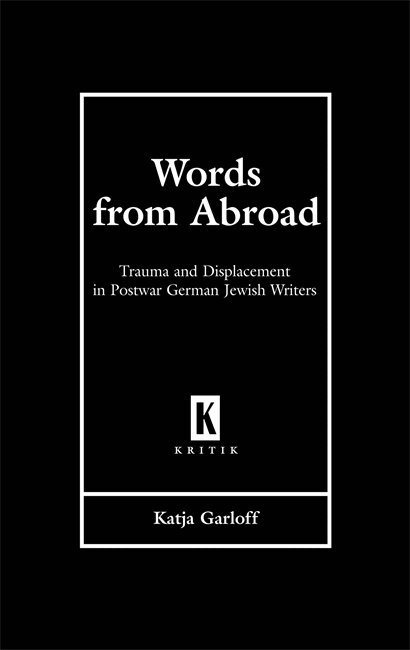
When Paul Celan was charged with plagiarism in 1960, the ensuing public debate in West Germany threw the poet into a major personal crisis even though most German critics immediately came to his defense. This crisis coincided with a transformative moment in the history of Holocaust remembrance, its first generational reimagining in the wake of a number of highly publicized criminal trials. Words from Abroad takes its lead from this disjunction between public ritual and private crisis to chart the emergence of a new literary diaspora, examining German Jewish writers who were dislocated in the course of World War II and began rewriting their own displacement more than a decade after the war. The idea of diaspora had ceased to be a constructive element of Jewish culture in Germany during the nineteenth-century process of emancipation and assimilation, though this book argues that it becomes crucial in articulating the possibility of German Jewish identity after the Holocaust. Along with the works of Paul Celan, Words from Abroad examines selected German Jewish writers such as Peter Weiss and Nelly Sachs. The study of these authors is framed by theoretical reflections on the play of distance and proximity in German Jewish intellectuals after the Holocaust, including Theodor W. Adorno, Jean Amery, and Gunther Anders. Drawing on postcolonial theory, diaspora studies, trauma theory, and psychoanalytical theory, author Katja Garloff offers an original and nuanced reading of the way in which these writers, in the wake of the Holocaust, experienced and variously created a vision of dispersion as both traumatic and productive. Words from Abroad is an important tool in investigating the works of these German Jewish writers and thinkers, but it is also a contribution to the interdisciplinary scholarship on trauma and displacement itself.
1 536 kr
Skickas inom 10-15 vardagar
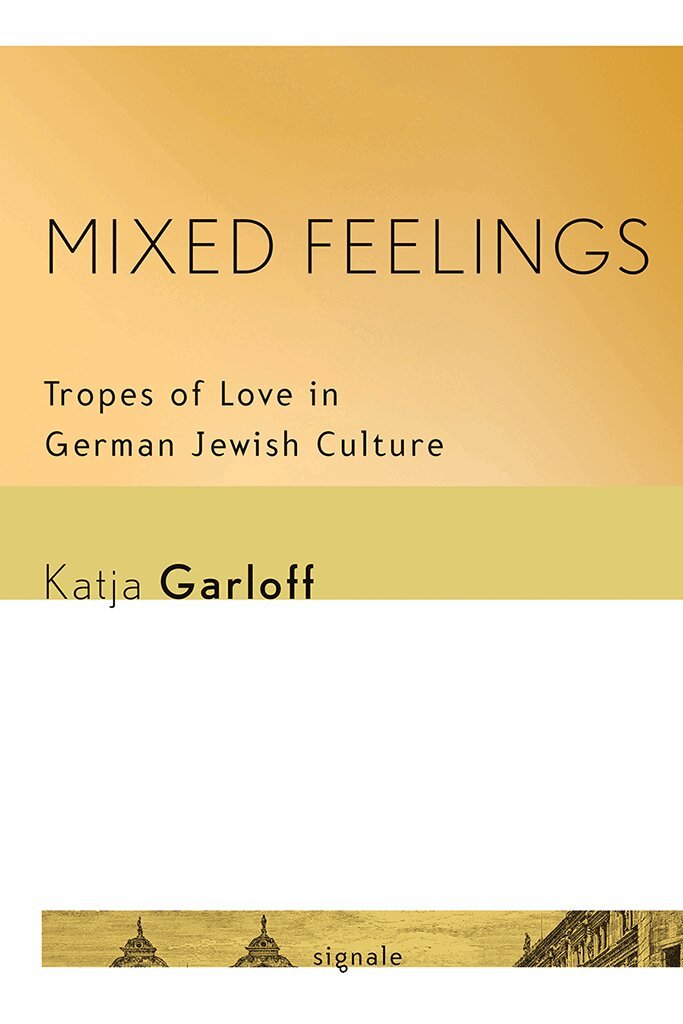
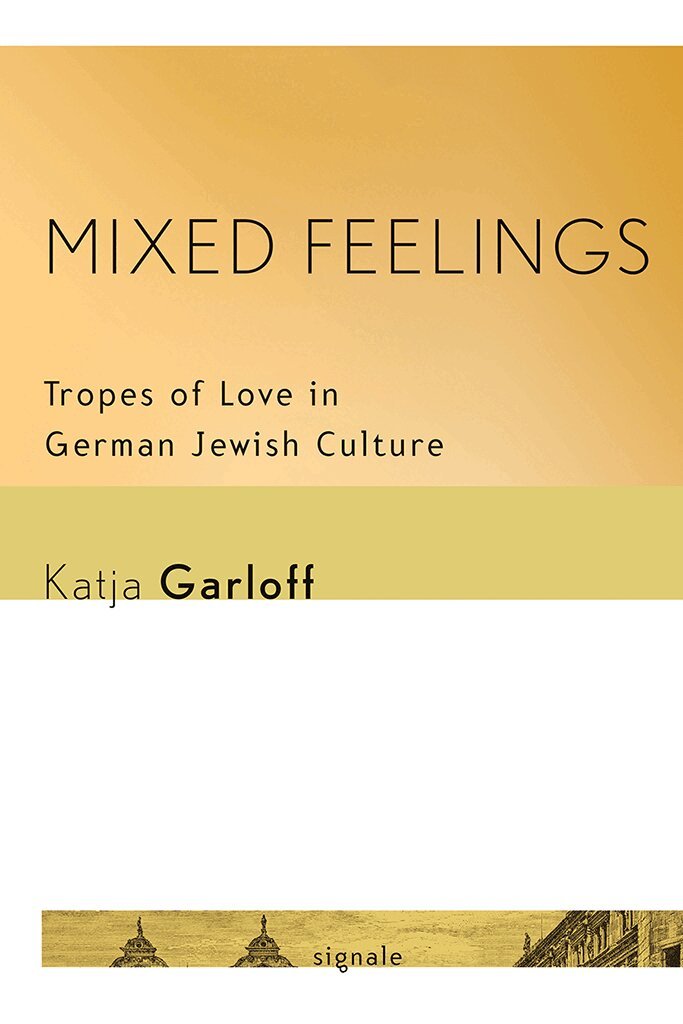
Since the late eighteenth century, writers and thinkers have used the idea of love—often unrequited or impossible love—to comment on the changing cultural, social, and political position of Jews in the German-speaking countries. In Mixed Feelings, Katja Garloff asks what it means for literature (and philosophy) to use love between individuals as a metaphor for group relations. This question is of renewed interest today, when theorists of multiculturalism turn toward love in their search for new models of particularity and universality. Mixed Feelings is structured around two transformative moments in German Jewish culture and history that produced particularly rich clusters of interfaith love stories. Around 1800, literature promoted the rise of the Romantic love ideal and the shift from prearranged to love-based marriages. In the German-speaking countries, this change in the theory and practice of love coincided with the beginnings of Jewish emancipation, and both its supporters and opponents linked their arguments to tropes of love. Garloff explores the generative powers of such tropes in Moses Mendelssohn, G. E. Lessing, Friedrich Schlegel, Dorothea Veit, and Achim von Arnim. Around 1900, the rise of racial antisemitism had called into question the promises of emancipation and led to a crisis of German Jewish identity. At the same time, Jewish- Christian intermarriage prompted public debates that were tied up with racial discourses and concerns about procreation, heredity, and the mutability and immutability of the Jewish body. Garloff shows how modern German Jewish writers such as Arthur Schnitzler, Else Lasker-Schüler, and Franz Rosenzweig wrest the idea of love away from biologist thought and reinstate it as a model of sociopolitical relations. She concludes by tracing the relevance of this model in post-Holocaust works by Gershom Scholem, Hannah Arendt, and Barbara Honigmann.
466 kr
Skickas inom 10-15 vardagar
Since the late eighteenth century, writers and thinkers have used the idea of love—often unrequited or impossible love—to comment on the changing cultural, social, and political position of Jews in the German-speaking countries. In Mixed Feelings, Katja Garloff asks what it means for literature (and philosophy) to use love between individuals as a metaphor for group relations. This question is of renewed interest today, when theorists of multiculturalism turn toward love in their search for new models of particularity and universality. Mixed Feelings is structured around two transformative moments in German Jewish culture and history that produced particularly rich clusters of interfaith love stories. Around 1800, literature promoted the rise of the Romantic love ideal and the shift from prearranged to love-based marriages. In the German-speaking countries, this change in the theory and practice of love coincided with the beginnings of Jewish emancipation, and both its supporters and opponents linked their arguments to tropes of love. Garloff explores the generative powers of such tropes in Moses Mendelssohn, G. E. Lessing, Friedrich Schlegel, Dorothea Veit, and Achim von Arnim. Around 1900, the rise of racial antisemitism had called into question the promises of emancipation and led to a crisis of German Jewish identity. At the same time, Jewish- Christian intermarriage prompted public debates that were tied up with racial discourses and concerns about procreation, heredity, and the mutability and immutability of the Jewish body. Garloff shows how modern German Jewish writers such as Arthur Schnitzler, Else Lasker-Schüler, and Franz Rosenzweig wrest the idea of love away from biologist thought and reinstate it as a model of sociopolitical relations. She concludes by tracing the relevance of this model in post-Holocaust works by Gershom Scholem, Hannah Arendt, and Barbara Honigmann.
Del 5 - Dialogue and Disjunction: Studies in Jewish German Literature, Culture & Thought
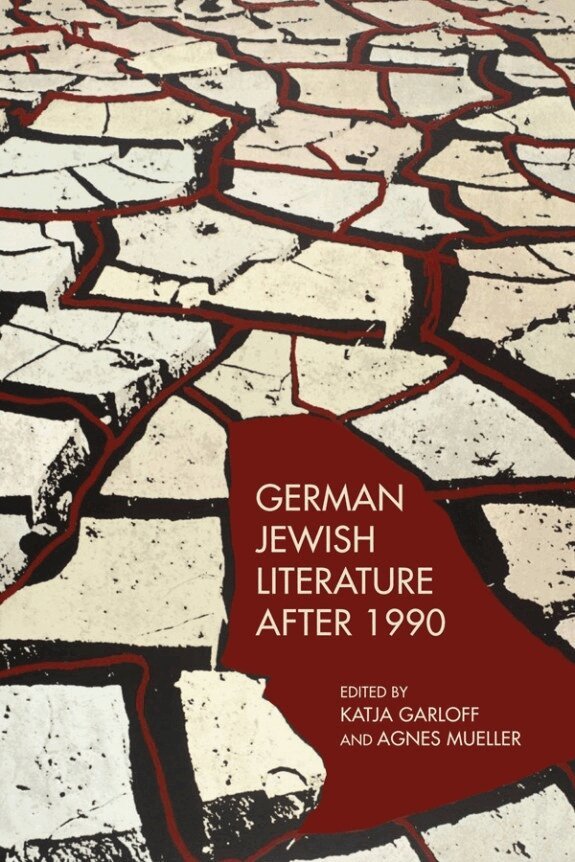
German Jewish Literature after 1990
Inbunden, Engelska, 2018
1 348 kr
Skickas inom 10-15 vardagar
Edited volume tracing the development of a new generation of German Jewish writers, offering fresh interpretations of individual works, and probing the very concept of "German Jewish literature."The 1990 reunification of Germany gave rise to a new generation of writers who write in German, identify as both German and Jewish, and often also sustain cultural affiliations with places such as Russia, Azerbaijan, or Israel. This edited volume traces the development of this new literature into the present, offers fresh interpretations of individual works, and probes the very concept of "German Jewish literature." A central theme is the transformation ofmemory at a time when the Holocaust is moving into greater historical distance while the influx of new immigrant groups to Germany brings other past trauma into view. The volume's ten original essays by scholars from Europe and the US reframe the debates about Holocaust memory and contemporary German culture. The concluding interviews with authors Mirna Funk and Olga Grjasnowa offer a glimpse into the future of German Jewish literature.Contributors: Luisa Banki, Caspar Battegay, Helen Finch, Mirna Funk, Katja Garloff, Olga Grjasnowa, Elizabeth Loentz, Andree Michaelis-König, Agnes Mueller, Jessica Ortner, Jonathan Skolnik, Stuart Taberner.Katja Garloff is Professor of German and Humanities at Reed College. Agnes Mueller is the College of Arts & Sciences Distinguished Professor of the Humanities at the University of South Carolina.