Katrina Kimport - Böcker
Visar alla böcker från författaren Katrina Kimport. Handla med fri frakt och snabb leverans.
9 produkter
9 produkter
234 kr
Tillfälligt slut
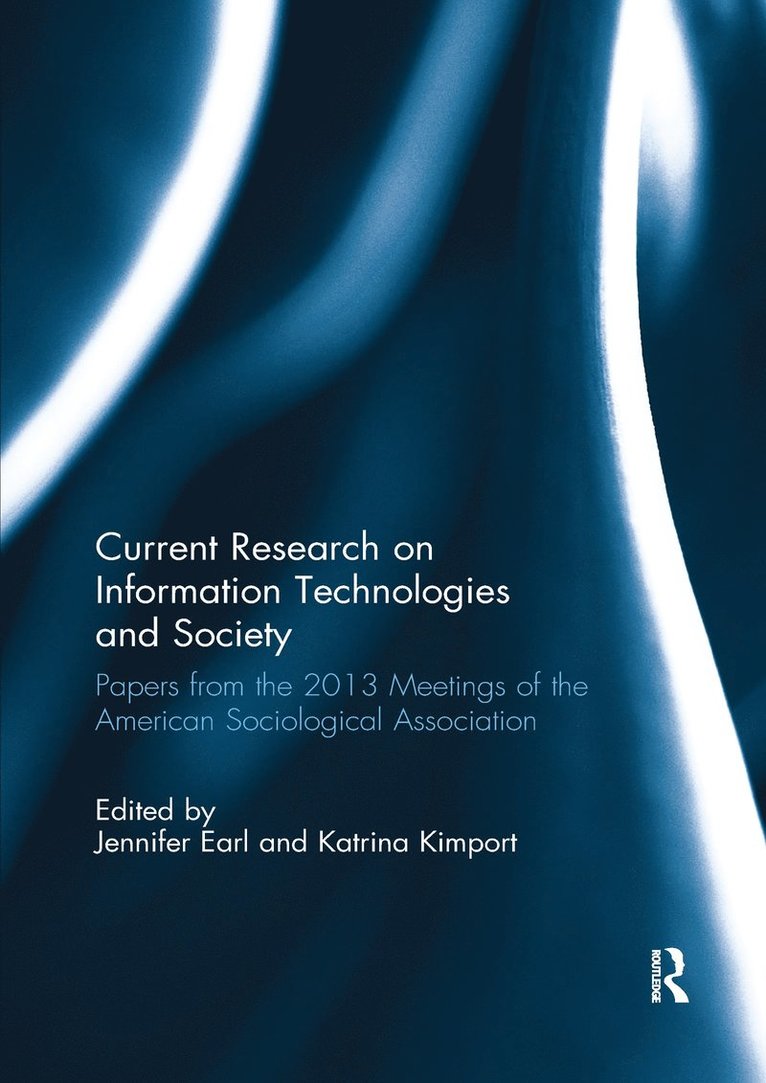
Current Research on Information Technologies and Society
Papers from the 2013 Meetings of the American Sociological Association
Häftad, Engelska, 2020
576 kr
Skickas inom 10-15 vardagar
Research on communication and information technologies is of growing importance to sociology and the interdisciplinary examination of communication and (new) media. This volume includes eight chapters examining recent developments in the field, illustrating the maturation, vibrancy, and diversity of this field of study as well as pointing to rich new avenues for scholarly exploration. Contributions aptly chart three key developments that characterize current research on communication and digital media. First, chapters demonstrate the maturation of work on measurement, demonstrating the importance of refining measurements of online activities and their consequences. For instance, contributions evaluate: social network measures frequently used in online research; alternative measures for online activity; and alternative measures of Twitter activity. Second, the volume showcases continued work on understanding user behaviour, including research on the consequence of reward systems similar to badges and on the limitations of purely technological solutions to social dilemmas in emergency preparedness. Finally, chapters identify emerging questions for the field related to social media, such as research on potential privacy and identity implications of social media, different dispositions toward social media use, and variation in levels of social media usage.This book was originally published as a special issue of Information, Communication & Society.
370 kr
Skickas inom 5-8 vardagar
Co-Winner of the 2015 Charles Tilly Award for Best Book of the Collective Behavior and Social Movements section from the American Sociological AssociationOver four thousand gay and lesbian couples married in the city of San Francisco in 2004. The first large-scale occurrence of legal same-sex marriage, these unions galvanized a movement and reignited the debate about whether same-sex marriage, as some hope, challenges heterosexual privilege or, as others fear, preserves that privilege by assimilating queer couples.In Queering Marriage, Katrina Kimport uses in-depth interviews with participants in the San Francisco weddings to argue that same-sex marriage cannot be understood as simply entrenching or contesting heterosexual privilege. Instead, she contends, these new legally sanctioned relationships can both reinforce as well as disrupt the association of marriage and heterosexuality.During her deeply personal conversations with same-sex spouses, Kimport learned that the majority of respondents did characterize their marriages as an opportunity to contest heterosexual privilege. Yet, in a seeming contradiction, nearly as many also cited their desire for access to the normative benefits of matrimony, including social recognition and legal rights. Kimport’s research revealed that the pattern of ascribing meaning to marriage varied by parenthood status and, in turn, by gender. Lesbian parents were more likely to embrace normative meanings for their unions; those who are not parents were more likely to define their relationships as attempts to contest dominant understandings of marriage.By posing the question-can queers “queer” marriage?-Kimport provides a nuanced, accessible, and theoretically grounded framework for understanding the powerful effect of heterosexual expectations on both sexual and social categories.
1 391 kr
Skickas inom 5-8 vardagar
Co-Winner of the 2015 Charles Tilly Award for Best Book of the Collective Behavior and Social Movements section from the American Sociological AssociationOver four thousand gay and lesbian couples married in the city of San Francisco in 2004. The first large-scale occurrence of legal same-sex marriage, these unions galvanized a movement and reignited the debate about whether same-sex marriage, as some hope, challenges heterosexual privilege or, as others fear, preserves that privilege by assimilating queer couples.In Queering Marriage, Katrina Kimport uses in-depth interviews with participants in the San Francisco weddings to argue that same-sex marriage cannot be understood as simply entrenching or contesting heterosexual privilege. Instead, she contends, these new legally sanctioned relationships can both reinforce as well as disrupt the association of marriage and heterosexuality.During her deeply personal conversations with same-sex spouses, Kimport learned that the majority of respondents did characterize their marriages as an opportunity to contest heterosexual privilege. Yet, in a seeming contradiction, nearly as many also cited their desire for access to the normative benefits of matrimony, including social recognition and legal rights. Kimport’s research revealed that the pattern of ascribing meaning to marriage varied by parenthood status and, in turn, by gender. Lesbian parents were more likely to embrace normative meanings for their unions; those who are not parents were more likely to define their relationships as attempts to contest dominant understandings of marriage.By posing the question-can queers “queer” marriage?-Kimport provides a nuanced, accessible, and theoretically grounded framework for understanding the powerful effect of heterosexual expectations on both sexual and social categories.
Current Research on Information Technologies and Society
Papers from the 2013 Meetings of the American Sociological Association
Inbunden, Engelska, 2014
1 886 kr
Skickas inom 10-15 vardagar
Research on communication and information technologies is of growing importance to sociology and the interdisciplinary examination of communication and (new) media. This volume includes eight chapters examining recent developments in the field, illustrating the maturation, vibrancy, and diversity of this field of study as well as pointing to rich new avenues for scholarly exploration. Contributions aptly chart three key developments that characterize current research on communication and digital media. First, chapters demonstrate the maturation of work on measurement, demonstrating the importance of refining measurements of online activities and their consequences. For instance, contributions evaluate: social network measures frequently used in online research; alternative measures for online activity; and alternative measures of Twitter activity. Second, the volume showcases continued work on understanding user behaviour, including research on the consequence of reward systems similar to badges and on the limitations of purely technological solutions to social dilemmas in emergency preparedness. Finally, chapters identify emerging questions for the field related to social media, such as research on potential privacy and identity implications of social media, different dispositions toward social media use, and variation in levels of social media usage.This book was originally published as a special issue of Information, Communication & Society.
319 kr
Skickas inom 7-10 vardagar
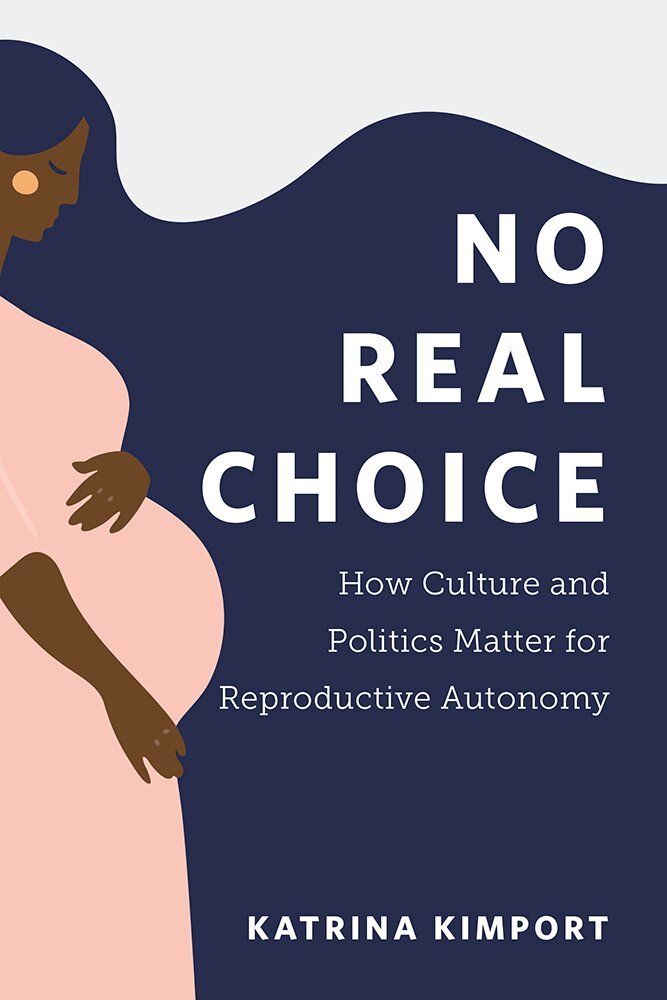
In the United States, the “right to choose” an abortion is the law of the land. But what if a woman continues her pregnancy because she didn’t really have a choice? What if state laws, federal policies, stigma, and a host of other obstacles push that choice out of her reach? Based on candid, in-depth interviews with women who considered but did not obtain an abortion, No Real Choice punctures the myth that American women have full autonomy over their reproductive choices. Focusing on the experiences of a predominantly Black and low-income group of women, sociologist Katrina Kimport finds that structural, cultural, and experiential factors can make choosing abortion impossible–especially for those who experience racism and class discrimination. From these conversations, we see the obstacles to “choice” these women face, such as bans on public insurance coverage of abortion and rampant antiabortion claims that abortion is harmful. Kimport's interviews reveal that even as activists fight to preserve Roe v. Wade, class and racial disparities have already curtailed many women’s freedom of choice. No Real Choice analyzes both the structural obstacles to abortion and the cultural ideologies that try to persuade women not to choose abortion. Told with care and sensitivity, No Real Choice gives voice to women whose experiences are often overlooked in debates on abortion, illustrating how real reproductive choice is denied, for whom, and at what cost.
1 617 kr
Skickas inom 7-10 vardagar
In the United States, the “right to choose” an abortion is the law of the land. But what if a woman continues her pregnancy because she didn’t really have a choice? What if state laws, federal policies, stigma, and a host of other obstacles push that choice out of her reach? Based on candid, in-depth interviews with women who considered but did not obtain an abortion, No Real Choice punctures the myth that American women have full autonomy over their reproductive choices. Focusing on the experiences of a predominantly Black and low-income group of women, sociologist Katrina Kimport finds that structural, cultural, and experiential factors can make choosing abortion impossible–especially for those who experience racism and class discrimination. From these conversations, we see the obstacles to “choice” these women face, such as bans on public insurance coverage of abortion and rampant antiabortion claims that abortion is harmful. Kimport's interviews reveal that even as activists fight to preserve Roe v. Wade, class and racial disparities have already curtailed many women’s freedom of choice. No Real Choice analyzes both the structural obstacles to abortion and the cultural ideologies that try to persuade women not to choose abortion. Told with care and sensitivity, No Real Choice gives voice to women whose experiences are often overlooked in debates on abortion, illustrating how real reproductive choice is denied, for whom, and at what cost.
When Roe Fell
How Barriers, Inequities, and Systemic Failures of Justice in Abortion Became Visible
Häftad, Engelska, 2025
346 kr
Skickas inom 7-10 vardagar
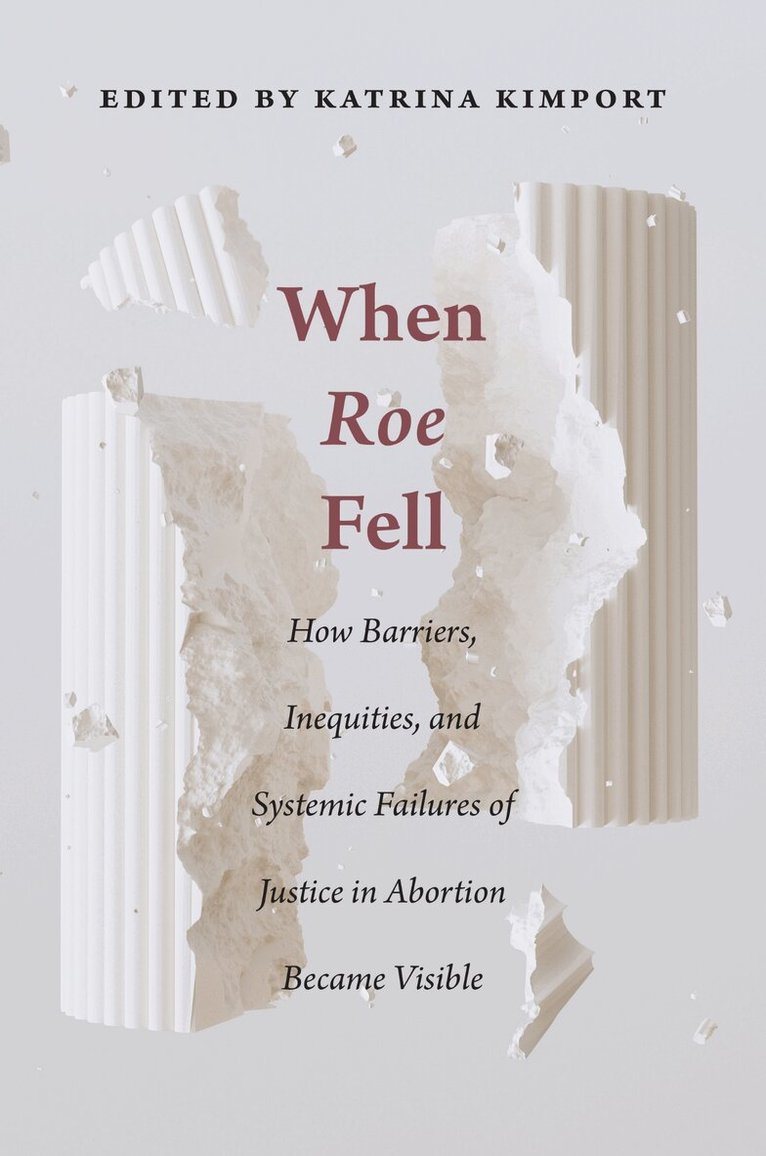
In June 2022, Roe was overturned. The constitutional right to abortion was gone, and abortion was soon banned or severely restricted in states across the country. Clinics closed. Abortion seekers were turned away. It was a bombshell, dramatically altering the geographical landscape of abortion legality and availability. But it did not change everything. Even under Roe, for many in the US, abortion was a right in name only. The fall of Roe changed a great deal, but it is also noteworthy for what it did not change-and, perhaps, for what it made more visible about whom the Roe legal regime served and whom it failed.In this volume, an interdisciplinary group of abortion scholars examines the history, politics, and practical experience of abortion leading up to the overturning of Roe, placing this judicial decision in a longer history of abortion in the US. Chapters delve into what the fall of Roe revealed about abortion seekers, abortion provision, and abortion advocacy. With diverse voices, formats, and styles, chapters include geographically specific deep dives and incisive big picture assessments. Collectively, they demystify abortion and abortion research, laying bare common misunderstandings and misinformation about the topic, and belying claims that Dobbs “changed everything.” In the aftermath of the fall of Roe, this volume offers readers the opportunity to reorient scholarship and understanding about abortion, recognizing what was already true before Roe was overturned and how losing the protections of Roe forced, enabled, and perhaps even facilitated a new era of abortion. Only by understanding the historical moment when Roe fell can we anticipate what might happen next in the ongoing social and political contention over reproductive autonomy and freedom.
When Roe Fell
How Barriers, Inequities, and Systemic Failures of Justice in Abortion Became Visible
Inbunden, Engelska, 2025
1 415 kr
Skickas inom 7-10 vardagar
In June 2022, Roe was overturned. The constitutional right to abortion was gone, and abortion was soon banned or severely restricted in states across the country. Clinics closed. Abortion seekers were turned away. It was a bombshell, dramatically altering the geographical landscape of abortion legality and availability. But it did not change everything. Even under Roe, for many in the US, abortion was a right in name only. The fall of Roe changed a great deal, but it is also noteworthy for what it did not change-and, perhaps, for what it made more visible about whom the Roe legal regime served and whom it failed.In this volume, an interdisciplinary group of abortion scholars examines the history, politics, and practical experience of abortion leading up to the overturning of Roe, placing this judicial decision in a longer history of abortion in the US. Chapters delve into what the fall of Roe revealed about abortion seekers, abortion provision, and abortion advocacy. With diverse voices, formats, and styles, chapters include geographically specific deep dives and incisive big picture assessments. Collectively, they demystify abortion and abortion research, laying bare common misunderstandings and misinformation about the topic, and belying claims that Dobbs “changed everything.” In the aftermath of the fall of Roe, this volume offers readers the opportunity to reorient scholarship and understanding about abortion, recognizing what was already true before Roe was overturned and how losing the protections of Roe forced, enabled, and perhaps even facilitated a new era of abortion. Only by understanding the historical moment when Roe fell can we anticipate what might happen next in the ongoing social and political contention over reproductive autonomy and freedom.