Katsuyuki Sakuma - Böcker
Visar alla böcker från författaren Katsuyuki Sakuma. Handla med fri frakt och snabb leverans.
4 produkter
4 produkter
1 886 kr
Skickas inom 10-15 vardagar
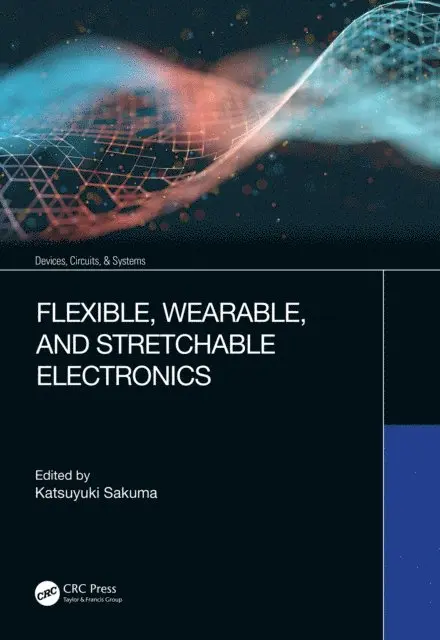
Remarkable progress has been achieved within recent years in developing flexible, wearable, and stretchable (FWS) electronics. These electronics will play an increasingly significant role in the future of electronics and will open new product paradigms that conventional semiconductors are not capable of. This is because flexible electronics will allow us to build flexible circuits and devices on a substrate that can be bent, stretched, or folded without losing functionality. This revolutionary change will impact how we interact with the world around us. Future electronic devices will use flexible electronics as part of ambient intelligence and ubiquitous computing for many different applications such as consumer electronics, medical, healthcare, and security devices. Thus, these devices have the potential to create a huge market all over the world.Flexible, Wearable, and Stretchable Electronics, provide a comprehensive technological review of the state-of-the-art developments in FWS electronics. This book offers the reader a taste of what is possible with FWS electronics and describes how these electronics can provide unique solutions for a wide variety of applications. Furthermore, the book introduces and explains new applications of flexible technology that has opened up the future of FWS electronics.
766 kr
Skickas inom 10-15 vardagar
Remarkable progress has been achieved within recent years in developing flexible, wearable, and stretchable (FWS) electronics. These electronics will play an increasingly significant role in the future of electronics and will open new product paradigms that conventional semiconductors are not capable of. This is because flexible electronics will allow us to build flexible circuits and devices on a substrate that can be bent, stretched, or folded without losing functionality. This revolutionary change will impact how we interact with the world around us. Future electronic devices will use flexible electronics as part of ambient intelligence and ubiquitous computing for many different applications such as consumer electronics, medical, healthcare, and security devices. Thus, these devices have the potential to create a huge market all over the world.Flexible, Wearable, and Stretchable Electronics, provide a comprehensive technological review of the state-of-the-art developments in FWS electronics. This book offers the reader a taste of what is possible with FWS electronics and describes how these electronics can provide unique solutions for a wide variety of applications. Furthermore, the book introduces and explains new applications of flexible technology that has opened up the future of FWS electronics.
820 kr
Skickas inom 10-15 vardagar
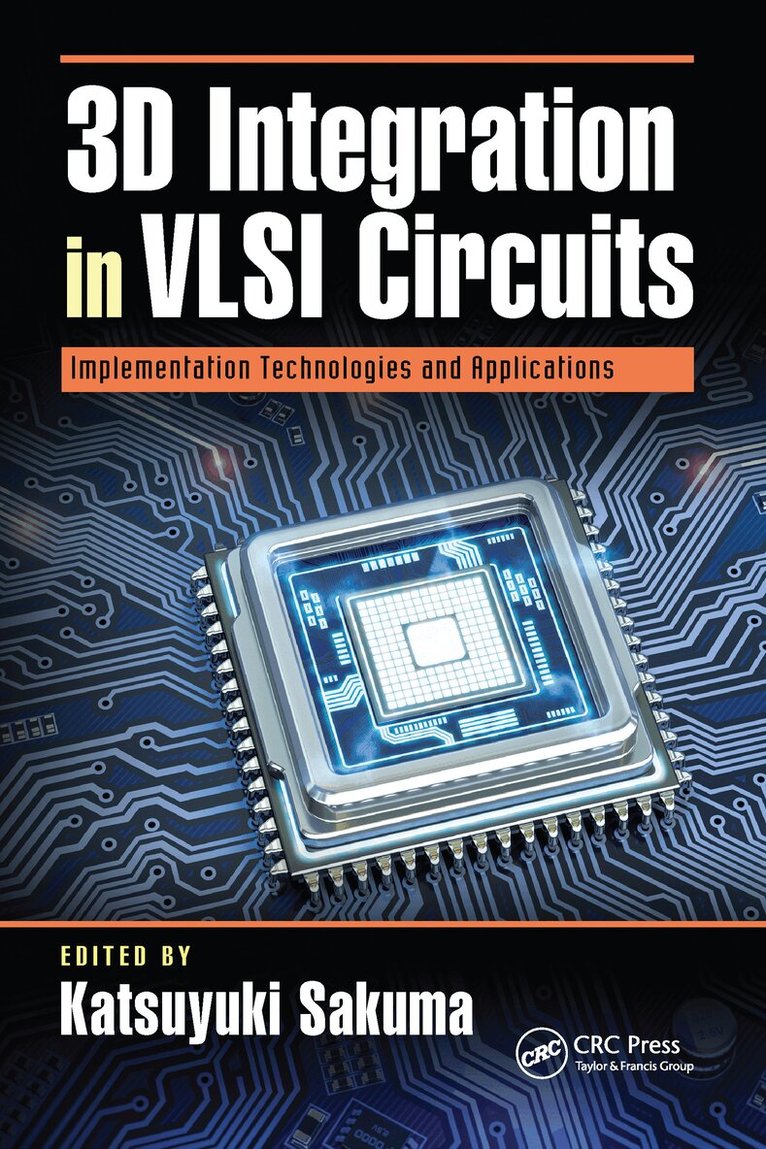
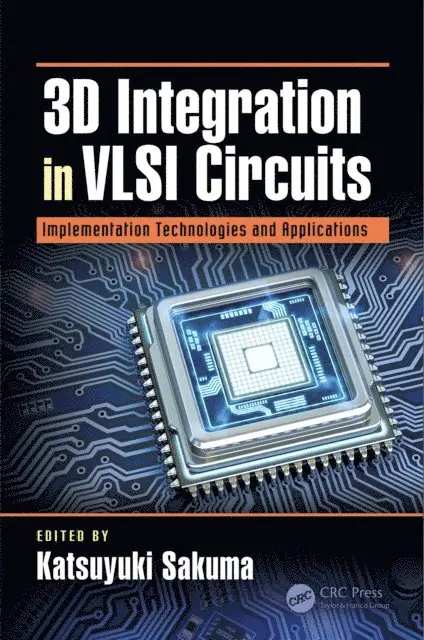
Currently, the term 3D integration includes a wide variety of different integration methods, such as 2.5-dimensional (2.5D) interposer-based integration, 3D integrated circuits (3D ICs), 3D systems-in-package (SiP), 3D heterogeneous integration, and monolithic 3D ICs. The goal of this book is to provide readers with an understanding of the latest challenges and issues in 3D integration. TSVs are not the only technology element needed for 3D integration. There are numerous other key enabling technologies required for 3D integration, and the speed of the development in this emerging field is very rapid. To provide readers with state-of-the-art information on 3D integration research and technology developments, each chapter has been contributed by some of the world’s leading scientists and experts from academia, research institutes, and industry from around the globe.Covers chip/wafer level 3D integration technology, memory stacking, reconfigurable 3D, and monolithic 3D IC.Discusses the use of silicon interposer and organic interposer.Presents architecture, design, and technology implementations for 3D FPGA integration.Describes oxide bonding, Cu/SiO2 hybrid bonding, adhesive bonding, and solder bonding.Addresses the issue of thermal dissipation in 3D integration.
2 289 kr
Skickas inom 10-15 vardagar
Currently, the term 3D integration includes a wide variety of different integration methods, such as 2.5-dimensional (2.5D) interposer-based integration, 3D integrated circuits (3D ICs), 3D systems-in-package (SiP), 3D heterogeneous integration, and monolithic 3D ICs. The goal of this book is to provide readers with an understanding of the latest challenges and issues in 3D integration. TSVs are not the only technology element needed for 3D integration. There are numerous other key enabling technologies required for 3D integration, and the speed of the development in this emerging field is very rapid. To provide readers with state-of-the-art information on 3D integration research and technology developments, each chapter has been contributed by some of the world’s leading scientists and experts from academia, research institutes, and industry from around the globe. Covers chip/wafer level 3D integration technology, memory stacking, reconfigurable 3D, and monolithic 3D IC. Discusses the use of silicon interposer and organic interposer. Presents architecture, design, and technology implementations for 3D FPGA integration. Describes oxide bonding, Cu/SiO2 hybrid bonding, adhesive bonding, and solder bonding. Addresses the issue of thermal dissipation in 3D integration.