Katy Hull - Böcker
Visar alla böcker från författaren Katy Hull. Handla med fri frakt och snabb leverans.
3 produkter
3 produkter
348 kr
Skickas inom 7-10 vardagar
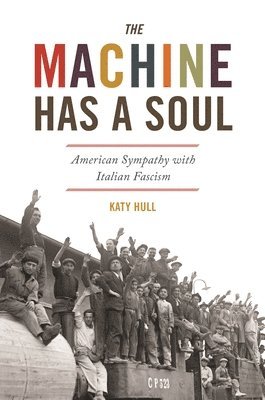
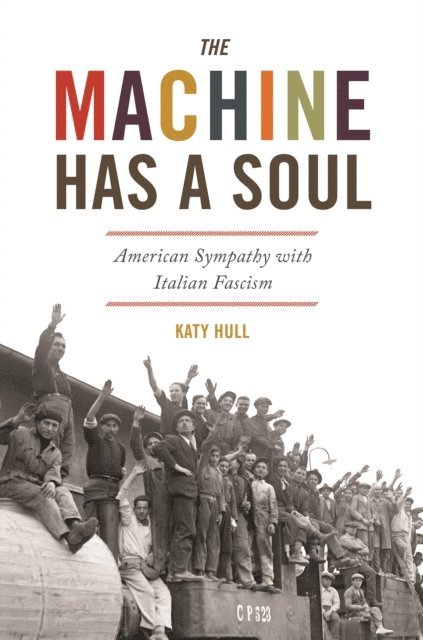
A historical look at the American fascination with Italian fascism during the interwar periodIn the interwar years, the United States grappled with economic volatility, and Americans expressed anxieties about a decline in moral values, the erosion of families and communities, and the decay of democracy. These issues prompted a profound ambivalence toward modernity, leading some individuals to turn to Italian fascism as a possible solution for the problems facing the country. The Machine Has a Soul delves into why Americans of all stripes sympathized with Italian fascism, and shows that fascism’s appeal rested in the image of Mussolini’s regime as “the machine which will run and has a soul”—a seemingly efficient and technologically advanced system that upheld tradition, religion, and family.Katy Hull focuses on four prominent American sympathizers: Richard Washburn Child, a conservative diplomat and Republican operative; Anne O’Hare McCormick, a distinguished New York Times journalist; Generoso Pope, an Italian-American publisher and Democratic political broker; and Herbert Wallace Schneider, a Columbia University professor of moral philosophy. In fascism’s violent squads they saw youthful glamour and impeccable manners, in the megalomaniacal Mussolini they perceived someone both current and old-fashioned, and in the corporate state they witnessed a politics that could revive addled minds. They argued that with the right course of action, the United States could use fascism to take the best from modernity while withstanding its harmful effects.Investigating the motivations of American fascist sympathizers, The Machine Has a Soul offers provocative lessons about authoritarianism’s appeal during times of intense cultural, social, and economic strain.
226 kr
Skickas inom 7-10 vardagar
A historical look at the American fascination with Italian fascism during the interwar periodIn the interwar years, the United States grappled with economic volatility, and Americans expressed anxieties about a decline in moral values, the erosion of families and communities, and the decay of democracy. These issues prompted a profound ambivalence toward modernity, leading some individuals to turn to Italian fascism as a possible solution for the problems facing the country. The Machine Has a Soul delves into why Americans of all stripes sympathized with Italian fascism, and shows that fascism’s appeal rested in the image of Mussolini’s regime as “the machine which will run and has a soul”—a seemingly efficient and technologically advanced system that upheld tradition, religion, and family.Katy Hull focuses on four prominent American sympathizers: Richard Washburn Child, a conservative diplomat and Republican operative; Anne O’Hare McCormick, a distinguished New York Times journalist; Generoso Pope, an Italian-American publisher and Democratic political broker; and Herbert Wallace Schneider, a Columbia University professor of moral philosophy. In fascism’s violent squads they saw youthful glamour and impeccable manners, in the megalomaniacal Mussolini they perceived someone both current and old-fashioned, and in the corporate state they witnessed a politics that could revive addled minds. They argued that with the right course of action, the United States could use fascism to take the best from modernity while withstanding its harmful effects.Investigating the motivations of American fascist sympathizers, The Machine Has a Soul offers provocative lessons about authoritarianism’s appeal during times of intense cultural, social, and economic strain.
327 kr
Skickas inom 10-15 vardagar
The process of rural-urban transformation presents both opportunities and challenges for development. If managed effectively, it can result in growth that benefits everyone; if managed poorly, it can lead to stark welfare disparities and entire regions cut off from the advantages of agglomeration economies. The importance of rural-urban transition has been confirmed by two consecutive World Development Reports: WDR 2008 Agriculture for Development; and WDR 2009 Reshaping Economic Geography. Focusing on Sub-Saharan Africa and South Asia, this book picks up where the WDRs left off, investigating the influence of country conditions and policies on the pace, pattern, and consequences of rural-urban transition and suggesting strategies to ensure that its benefits results in shared improvements in well-being.The book uncovers vast inequalities, whether between two regions of one country, between rural and urban areas, or within cities themselves. The authors find little evidence to suggest that these inequalities will automatically diminish as countries develop: empirical and qualitative analysis suggests that spatial divides are mainly a function of country conditions, policies and institutions. By implication, policymakers must take active steps to ensure that rural-urban transition results in shared growth. Spatially unbiased provision of health and education services is crucial to ensuring that the benefits of transition are shared by all. But connective infrastructure and targeted interventions also emerge as important considerations, even in countries with severely constrained fiscal and administrative capacity. The authors suggest steps for navigating the tricky political economy of land reforms. And they alert readers to potential spillover effects that mean that policies designed for one space can have unintended consequences on another.Policymakers and development experts, as well as anyone concerned with the impact of rural-urban transition on growth and equity, will find this book a thought-provoking and informative read.