Keir A. Lieber – författare
Visar alla böcker från författaren Keir A. Lieber. Handla med fri frakt och snabb leverans.
5 produkter
5 produkter
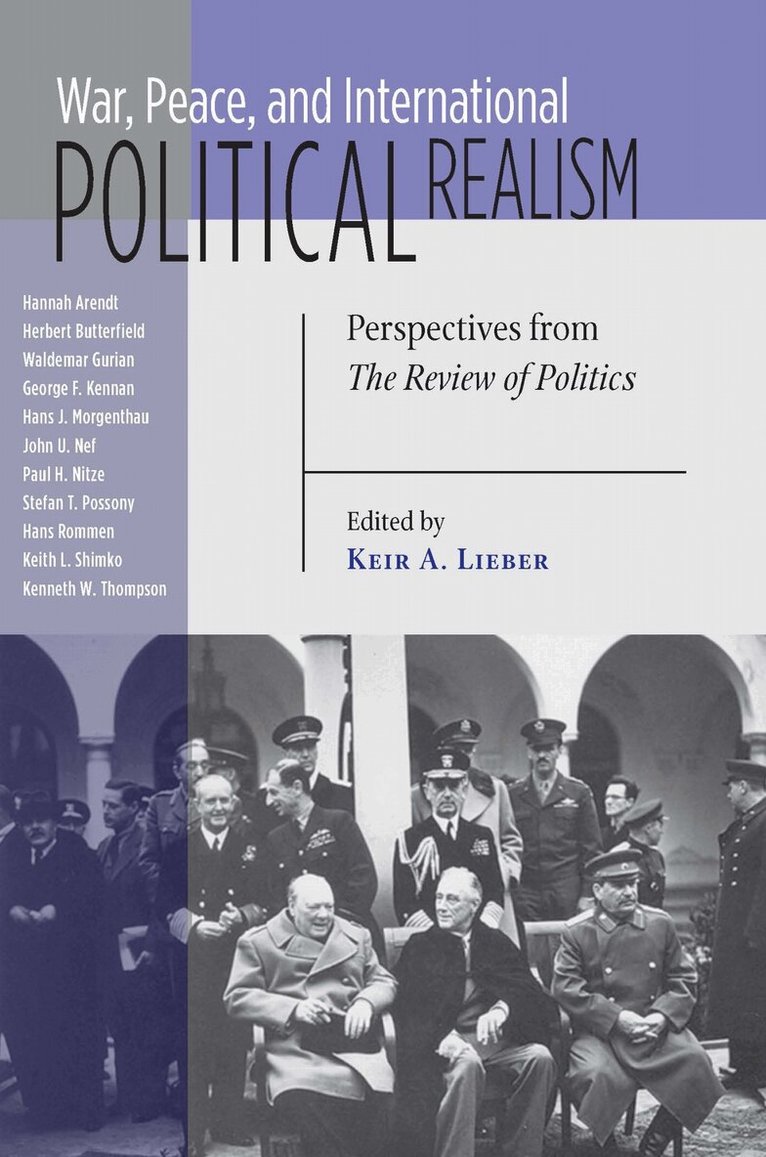
War, Peace, and International Political Realism
Perspectives from the Review of Politics
Häftad, Engelska, 2009
422 kr
Skickas inom 10-15 vardagar
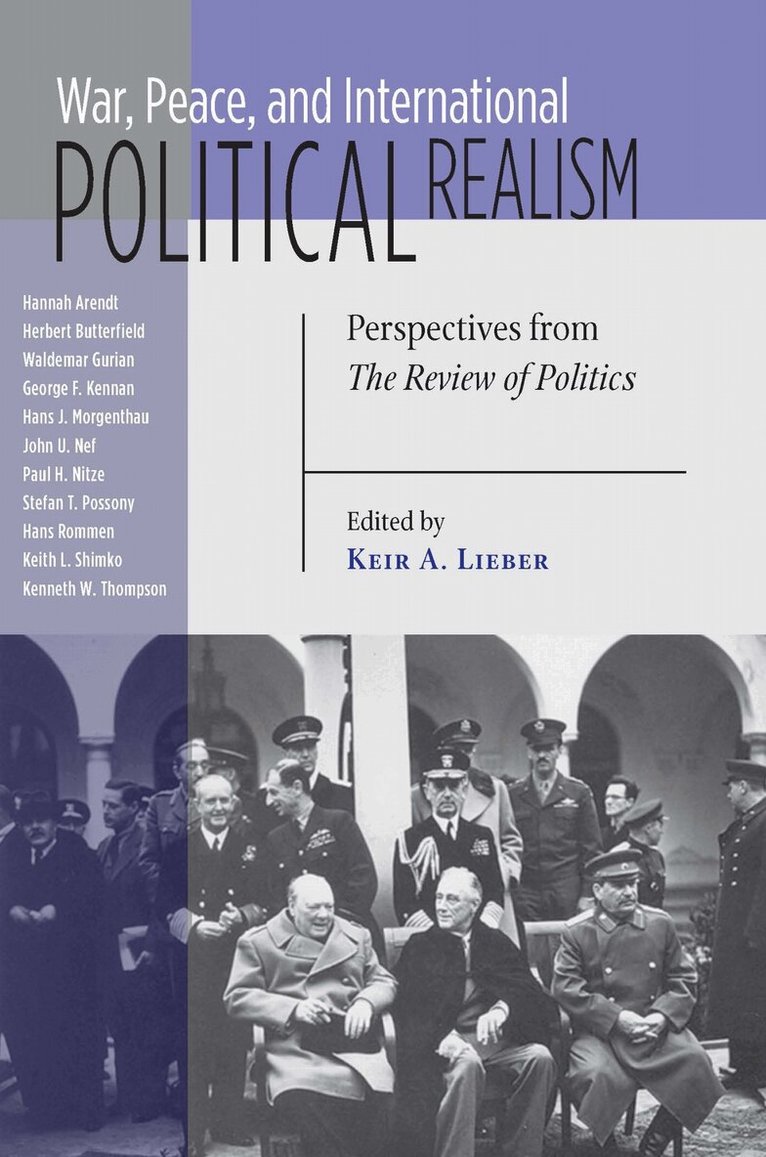
Gathering together essays by some of the most influential modern political philosophers and theorists, War, Peace, and International Political Realism reveals the twentieth-century roots of the realist tradition and demonstrates the enduring relevance of realist insights for current international relations scholarship and foreign affairs. These essays, all of which were published in The Review of Politics, the majority during the 1940s and 1950s, reflect four major tenets of the classical realist tradition: an obligation to confront large and difficult questions about international politics, a recognition of the fundamentally tragic nature of relations among humans and states, a rejection of historical optimism, and a belief in practical morality. Keir A. Lieber provides an excellent introduction emphasizing the importance of political realism as defined by the contributors.Students and scholars of political theory, international relations, and history will welcome having these important essays in one useful volume; they are just as applicable to contemporary foreign policy challenges as they were to the crises of post-World War II international politics.
War, Peace, and International Political Realism
Perspectives from the Review of Politics
Inbunden, Engelska, 2009
1 344 kr
Skickas inom 10-15 vardagar
Gathering together essays by some of the most influential modern political philosophers and theorists, War, Peace, and International Political Realism reveals the twentieth-century roots of the realist tradition and demonstrates the enduring relevance of realist insights for current international relations scholarship and foreign affairs. These essays, all of which were published in The Review of Politics, the majority during the 1940s and 1950s, reflect four major tenets of the classical realist tradition: an obligation to confront large and difficult questions about international politics, a recognition of the fundamentally tragic nature of relations among humans and states, a rejection of historical optimism, and a belief in practical morality. Keir A. Lieber provides an excellent introduction emphasizing the importance of political realism as defined by the contributors.Students and scholars of political theory, international relations, and history will welcome having these important essays in one useful volume; they are just as applicable to contemporary foreign policy challenges as they were to the crises of post-World War II international politics.
750 kr
Skickas inom 3-6 vardagar
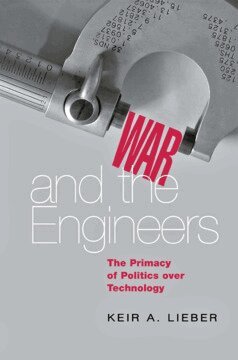
Do some technologies provoke war? Do others promote peace? Offense-defense theory contends that technological change is an important cause of conflict: leaders will be tempted to launch wars when they believe innovation favors attackers over defenders. Offense-defense theory is perhaps best known from the passionate and intricate debates about first-strike capability and deterrence stability during the cold war, but it has deeper historical roots, remains a staple in international relations theorizing, and drives modern arms control policymaking.In War and the Engineers, the first book systematically to test the logical and empirical validity of offense-defense theory, Keir A. Lieber examines the relationships among politics, technology, and the causes of war. Lieber's cases explore the military and political implications of the spread of railroads, the emergence of rifled small arms and artillery, the introduction of battle tanks, and the nuclear revolution. Lieber incorporates the new historiography of World War I, which draws on archival materials that only recently became available, to challenge many common beliefs about the conflict. The author's central conclusion is that technology is neither a cause of international conflict nor a panacea; instead, power politics remains paramount.
288 kr
Skickas inom 10-15 vardagar
Do some technologies provoke war? Do others promote peace? Offense-defense theory contends that technological change is an important cause of conflict: leaders will be tempted to launch wars when they believe innovation favors attackers over defenders. Offense-defense theory is perhaps best known from the passionate and intricate debates about first-strike capability and deterrence stability during the cold war, but it has deeper historical roots, remains a staple in international relations theorizing, and drives modern arms control policymaking.In War and the Engineers, the first book systematically to test the logical and empirical validity of offense-defense theory, Keir A. Lieber examines the relationships among politics, technology, and the causes of war. Lieber's cases explore the military and political implications of the spread of railroads, the emergence of rifled small arms and artillery, the introduction of battle tanks, and the nuclear revolution. Lieber incorporates the new historiography of World War I, which draws on archival materials that only recently became available, to challenge many common beliefs about the conflict. The author's central conclusion is that technology is neither a cause of international conflict nor a panacea; instead, power politics remains paramount.
338 kr
Skickas inom 10-15 vardagar
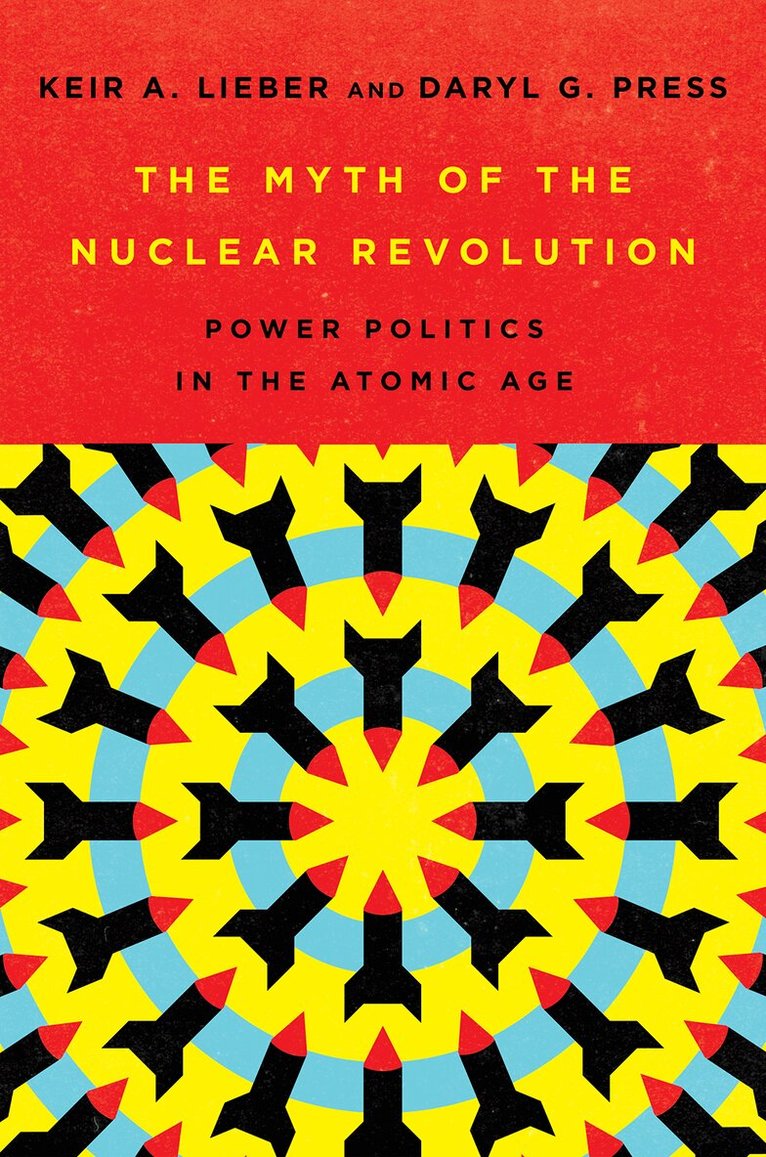
Leading analysts have predicted for decades that nuclear weapons would help pacify international politics. The core notion is that countries protected by these fearsome weapons can stop competing so intensely with their adversaries: they can end their arms races, scale back their alliances, and stop jockeying for strategic territory. But rarely have theory and practice been so opposed. Why do international relations in the nuclear age remain so competitive? Indeed, why are today's major geopolitical rivalries intensifying?In The Myth of the Nuclear Revolution, Keir A. Lieber and Daryl G. Press tackle the central puzzle of the nuclear age: the persistence of intense geopolitical competition in the shadow of nuclear weapons. They explain why the Cold War superpowers raced so feverishly against each other; why the creation of "mutual assured destruction" does not ensure peace; and why the rapid technological changes of the 21st century will weaken deterrence in critical hotspots around the world.By explaining how the nuclear revolution falls short, Lieber and Press discover answers to the most pressing questions about deterrence in the coming decades: how much capability is required for a reliable nuclear deterrent, how conventional conflicts may become nuclear wars, and how great care is required now to prevent new technology from ushering in an age of nuclear instability.