Keith Hitchins - Böcker
Visar alla böcker från författaren Keith Hitchins. Handla med fri frakt och snabb leverans.
5 produkter
5 produkter
318 kr
Skickas inom 7-10 vardagar
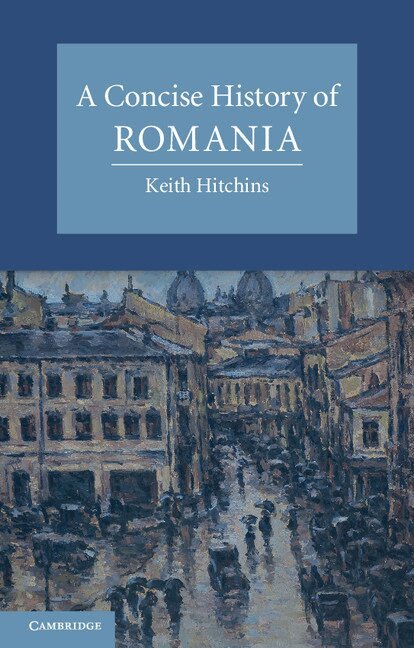
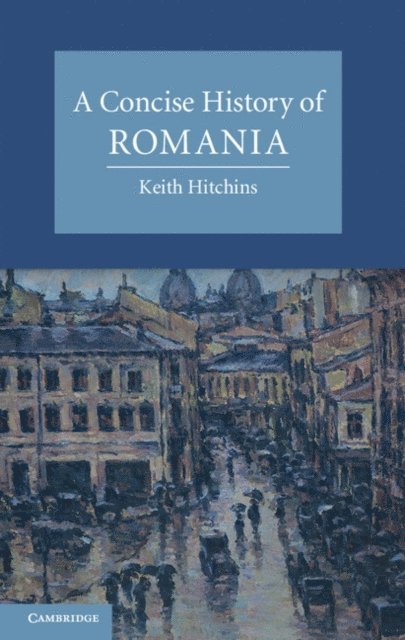
Spanning a period of 2000 years from the Roman conquest of Dacia to the present day, A Concise History of Romania traces the development of a unique nation situated on the border between East and West. In this illuminating new history, Keith Hitchins explores Romania's struggle to find its place amidst two diverse societies: one governed by Eastern orthodox tradition, spirituality and agriculture and the other by Western rationalism, experimentation and capitalism. The book charts Romania's advancement through five significant phases of its history: medieval, early modern, modern and finally the nation's 'return to Europe'; evaluating all the while Romania's part in European politics, economic and social change, intellectual and cultural renewals and international entanglements. This is a fascinating history of an East European nation; one which sheds new light on the complex evolution of the Romanians and the identity they have successfully crafted from a unique synthesis of traditions.
3 836 kr
Skickas inom 7-10 vardagar
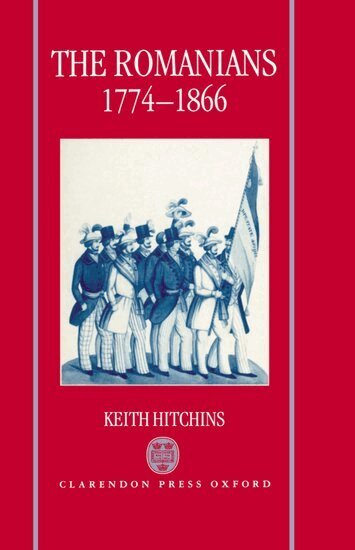
The century from the 1774 Treaty of Kuchuk Kainardji (between Russia and the Ottoman Empire) to the end of Prince Alexandru Cuza's reign in 1866 stands as a distinct era in the development of modern Romania. It marks the transition from long-established agrarian economic and social structures, and medieval political forms, to a society moulded by urban and industrial values and held together by allegiance to the nation-state.This initial period of nation-building was characterized by dramatic shifts of mentality and significant changes in economic and social life. The principal changes included: the freeing of the principalities of Moldavia and Wallachia from Ottoman Turkish dominion and their union to form the core of modern Romania; the cultivation of the idea of the ethnic nation as the foundation of community; the emergence of new ways of producing goods and doing business, notably the advance of capitalism in agriculture and industry; and the relentless advance of Western political forms, economic models and cultural acheivements. As a consequence, by the 1860s a united, and for all practical purposes, an independent Romania had come into being, and the institutions and ideologies that were to guide the countrie's development down to the Second World War were in place. In the process the Romanians had experienced a fundamental shift in their mental outlook away from the traditions of the Eastern Orthodox world towards the innovations and experiments of the West. Yet the creators of the new state could never forget that they and their countrymen remained as always at the crossroads between east and west.This original and ground-breaking work is the first attempt to treat the period 1774-1866 as a distinct stage in the evolution of modern Romania and is a fascinating analysis of the building of a European nation-state.
2 797 kr
Skickas inom 5-8 vardagar
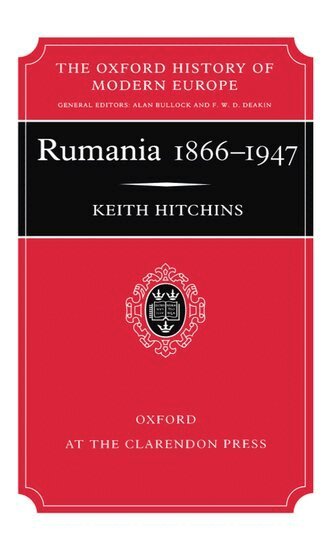
From the mid-nineteenth century until the Second World War, the energies of Rumanian political and intellectual élites were absorbed by the building of their nation. In this comprehensive and scholarly study Keith Hitchins traces these complex processes and explores how Rumania's leaders attempted to transform the ideology of modern nationhood into strong political, economic, and social institutions and to find ways of preserving independence in an international political and economic order dominated by the great powers.As the new Rumania took shape, the threads of historical continuity remained strikingly evident: in government a strong administrative centralization prevailed, despite the maturing of parliamentary institutions and the diversity of political expression; the national economy remained beholden to agriculture, despite the steady growth of industry; and in cultural life traditional values persisted, despite the adoption of modern forms. In foreign relations the most pressing aim was to unite all Rumanians in a single state and to defend its sovereignty within an uncertain international order. In all these endeavours, the measure of achievement was the West. After the Second World War, when the Communist Party came to power, this historical continuity was broken. The experiment in nation-building gave way to a new ideology, and Rumania now turned to the Soviet political and economic model.
1 065 kr
Skickas inom 7-10 vardagar
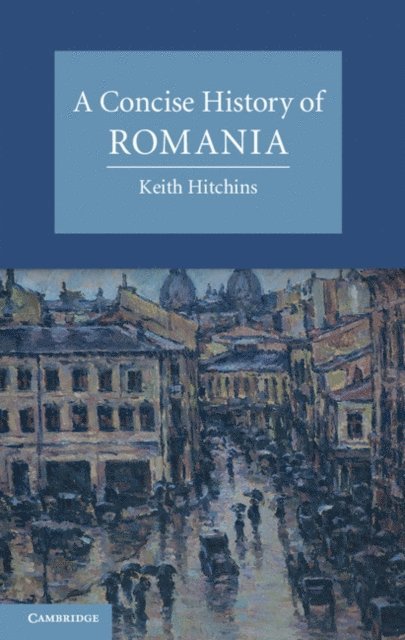
Spanning a period of 2000 years from the Roman conquest of Dacia to the present day, A Concise History of Romania traces the development of a unique nation situated on the border between East and West. In this illuminating new history, Keith Hitchins explores Romania's struggle to find its place amidst two diverse societies: one governed by Eastern orthodox tradition, spirituality and agriculture and the other by Western rationalism, experimentation and capitalism. The book charts Romania's advancement through five significant phases of its history: medieval, early modern, modern and finally the nation's 'return to Europe'; evaluating all the while Romania's part in European politics, economic and social change, intellectual and cultural renewals and international entanglements. This is a fascinating history of an East European nation; one which sheds new light on the complex evolution of the Romanians and the identity they have successfully crafted from a unique synthesis of traditions.
Del 22 - Makers of the Modern World
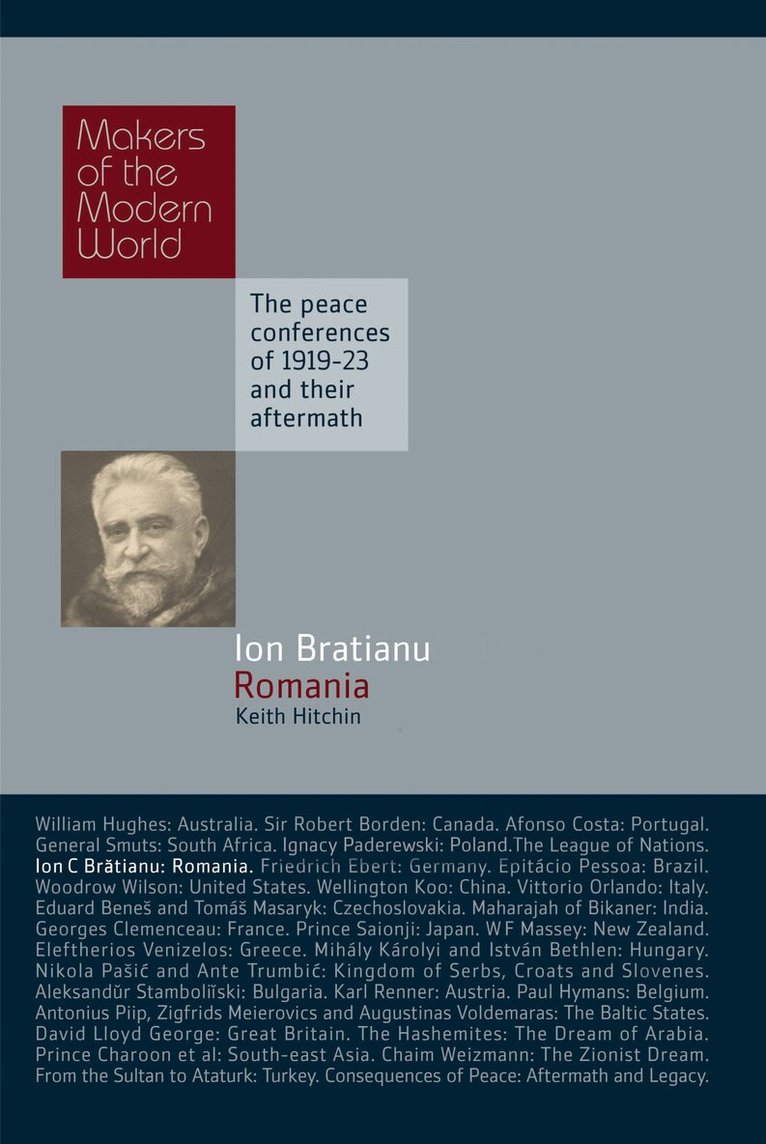
Ion Bratianu: Romania
The Peace Conferences of 1919-23 and Their Aftermath
Inbunden, Engelska, 2011
142 kr
Tillfälligt slut
At the beginning of 1918 the British War Cabinet endorsed the view of the Prime Minister, David Lloyd George, that after the war Austria-Hungary should be in a position to exercise a powerful influence in south-east Europe. These reassuring professions were the essence of hypocrisy, since the Allies had already given away, at least on paper, large chunks of Austro-Hungarian territory as bribes to potential allies. In 1916 Romania was promised the whole of Transylvania, the Banat both components of historic Hungary and the Bukovina in return for her entry into the war. These promises persuaded the Romanian Prime Minister Ion Bratianu (1864-1927) to intervene in the war on the side of the Allies in 1916. He lead the Romanian delegation to the Paris Peace Conference, where he insisted on those promises to be fulfilled. His often-strained relations with the Big Four and the Supreme Council were further eroded when Romania invaded Hungary. Romania, however, in the end signed and adhered to the Treaty of Saint-Germain-en-Laye with Austria, Neuilly-sur-Seine with Bulgaria, the Treaty of Paris (1920), the Treaty of Trianon with Hungary, and the minorities treaty.