Keith M. Finley - Böcker
Visar alla böcker från författaren Keith M. Finley. Handla med fri frakt och snabb leverans.
2 produkter
2 produkter
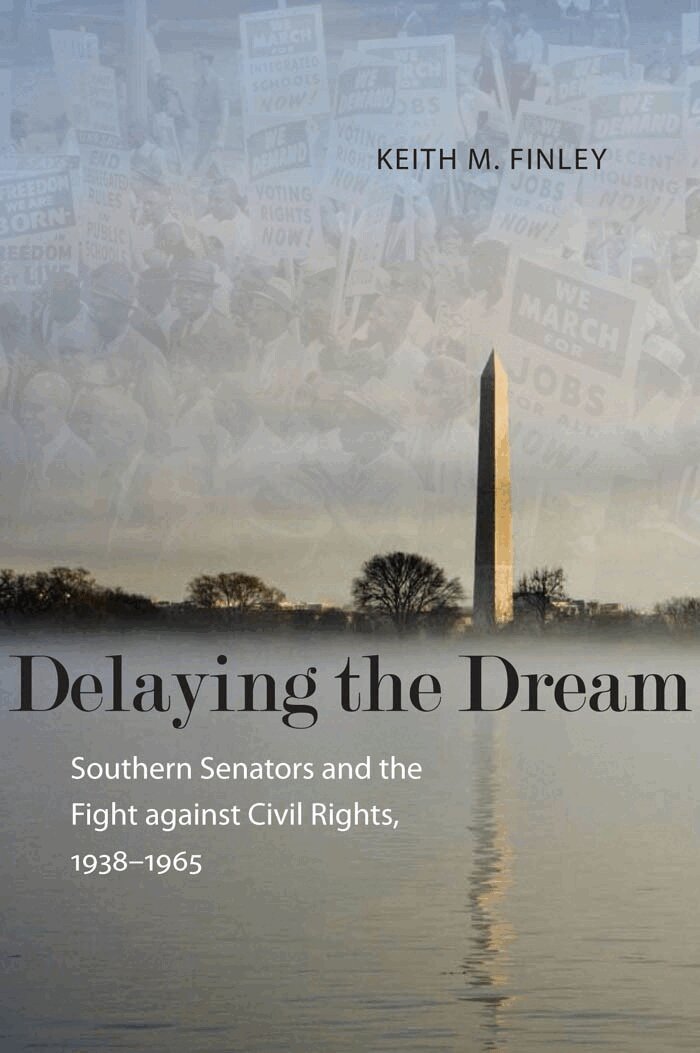
Delaying the Dream
Southern Senators and the Fight Against Civil Rights, 1938-1965
Häftad, Engelska, 2010
377 kr
Skickas inom 10-15 vardagar
Few historical events lend themselves to such a sharp delineation between right and wrong as does the civil rights struggle. Consequently, many historical accounts of white resistance to civil rights legislation emphasise the ferocity of the opposition, from the Ole Miss riots to the depredations of Eugene ""Bull"" Conner's Birmingham police force to George Wallace's stand on the schoolhouse steps. While such hostile episodes frequently occurred in the Jim Crow South, civil rights adversaries also employed other, less confrontational but remarkably successful, tactics to deny equal rights to black Americans. In Delaying the Dream, Keith M. Finley explores gradations in the opposition by examining how the region's principal national spokesmen, its United States senators, addressed themselves to the civil rights question and developed a concerted plan of action to thwart legislation: the use of strategic delay.
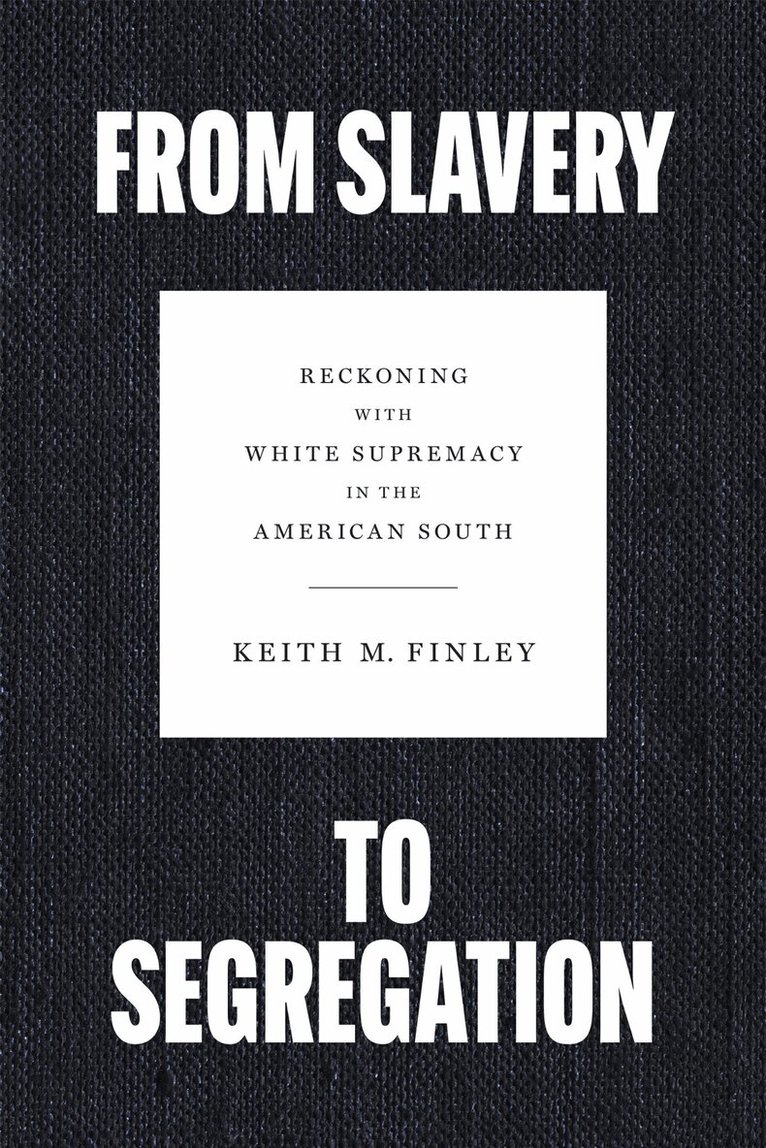
From Slavery to Segregation
Reckoning with White Supremacy in the American South
Inbunden, Engelska, 2024
501 kr
Skickas inom 10-15 vardagar
Keith M. Finley's From Slavery to Segregation explores the key features shaping southern politics during the nineteenth and twentieth centuries as explained in the South's defense of its racial systems. It treats slavery and segregation as part of the same whole rather than as discrete institutions rooted in different periods. In the process, the book uncovers the deep historical origins of the region's states' rights philosophy and the unfortunate persistence of a culture dominated by calls for white supremacy. While highlighting the broad overview of southern racial and political thought, Finley underscores the larger American struggle with racial injustice, which, although most pronounced in the South, afflicted the entire nation. The South's defense of chattel slavery became a natural model for the region's defense of segregation during the Jim Crow era. Through a comparative analysis of the rhetoric employed in the justification of both racial institutions, Finley reveals elements of continuity and change in the region's identity. Ultimately, he shows how the history of the twentieth-century South is irreparably linked to the century before it. For instance, one cannot understand the ferocity of resistance to the Supreme Court's 1954 Brown v. Board decision without being aware of how and why the South emerged as it did after the Civil War. The Old South and the New South shared a similar constellation of ideas that informed arguments advancing their respective race-based social orders, which took the form of a commonality of perception regarding race, a sense of being assailed by outsiders, and a series of appeals to the highest secular authority in the pantheon of regional and American beliefs the Constitution. Discontinuity, however, marked the long-term strategies of both the prewar and postwar South. Although segregationists sought to preserve the racial status quo as did their forebears, they ultimately relented when confronted with federal power and grudgingly shifted toward a narrative that less often foregrounded race when championing states' rights.