
Kelebogile Zvobgo – författare
Visar alla böcker från författaren . Handla med fri frakt och snabb leverans.
7 produkter
7 produkter
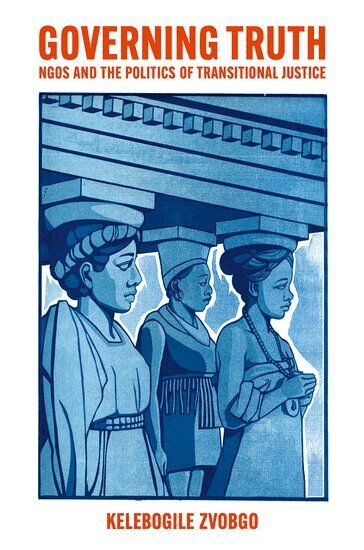
Inbunden, Engelska, 2026
1 923 kr
Skickas inom 3-6 vardagar
Who governs transitional justice--the international regime that aims to deliver truth, justice, and reparations for political violence and guarantees that the violence will not be repeated? Existing research tends to suggest that the adoption, design, and implementation of transitional justice mechanisms are primarily, if not exclusively, shaped by national governments. In Governing Truth, Kelebogile Zvobgo argues instead that transitional justice is transnational and led by civil society groups, both domestic and international. The book draws on statistical analyses of original data on truth commissions and interviews with government officials, former commission leaders, representatives of international organizations and NGOs, and human rights stakeholders from around the world. Zvobgo demonstrates that a worldwide network of civil society groups—the global transitional justice network—leverages advocacy, technical expertise, and operational assistance to give governments the impetus to adopt transitional justice mechanisms, design them to succeed, and follow up on them with additional measures. In a strategic system of coordination, civil society groups alternate leadership and support roles and exercise their comparative advantages in information, experience, material resources, and political power at different stages to enhance their overall chances of success. Governing Truth thus proposes a new model of transnational advocacy—the burden sharing model—which goes beyond policy advocacy and brings attention to civil society's essential role in policy design, delivery, and follow-up in transitional justice processes.
Häftad, Engelska, 2029
283 kr
Skickas inom 5-8 vardagar
Who governs transitional justice--the international regime that aims to deliver truth, justice, and reparations for political violence and guarantees that the violence will not be repeated? Existing research tends to suggest that the adoption, design, and implementation of transitional justice mechanisms are primarily, if not exclusively, shaped by national governments. In Governing Truth, Kelebogile Zvobgo argues instead that transitional justice is transnational and led by civil society groups, both domestic and international. The book draws on statistical analyses of original data on truth commissions and interviews with government officials, former commission leaders, representatives of international organizations and NGOs, and human rights stakeholders from around the world. Zvobgo demonstrates that a worldwide network of civil society groups—the global transitional justice network—leverages advocacy, technical expertise, and operational assistance to give governments the impetus to adopt transitional justice mechanisms, design them to succeed, and follow up on them with additional measures. In a strategic system of coordination, civil society groups alternate leadership and support roles and exercise their comparative advantages in information, experience, material resources, and political power at different stages to enhance their overall chances of success. Governing Truth thus proposes a new model of transnational advocacy—the burden sharing model—which goes beyond policy advocacy and brings attention to civil society's essential role in policy design, delivery, and follow-up in transitional justice processes.
E-bok
Engelska, 2026264 kr
Läs direkt efter köp
Who governs transitional justice--the international regime that aims to deliver truth, justice, and reparations for political violence and guarantees that the violence will not be repeated? Existing research tends to suggest that the adoption, design, and implementation of transitional justice mechanisms are primarily, if not exclusively, shaped by national governments. In Governing Truth, Kelebogile Zvobgo argues instead that transitional justice is transnational and led by civil society groups, both domestic and international. The book draws on statistical analyses of original data on truth commissions and interviews with government officials, former commission leaders, representatives of international organizations and NGOs, and human rights stakeholders from around the world. Zvobgo demonstrates that a worldwide network of civil society groups the global transitional justice network leverages advocacy, technical expertise, and operational assistance to give governments the impetus to adopt transitional justice mechanisms, design them to succeed, and follow up on them with additional measures. In a strategic system of coordination, civil society groups alternate leadership and support roles and exercise their comparative advantages in information, experience, material resources, and political power at different stages to enhance their overall chances of success. Governing Truth thus proposes a new model of transnational advocacy the burden sharing model which goes beyond policy advocacy and brings attention to civil society's essential role in policy design, delivery, and follow-up in transitional justice processes.
E-bok
PDF, Engelska, 2026263 kr
Läs direkt efter köp
Who governs transitional justice--the international regime that aims to deliver truth, justice, and reparations for political violence and guarantees that the violence will not be repeated? Existing research tends to suggest that the adoption, design, and implementation of transitional justice mechanisms are primarily, if not exclusively, shaped by national governments. In Governing Truth, Kelebogile Zvobgo argues instead that transitional justice is transnational and led by civil society groups, both domestic and international. The book draws on statistical analyses of original data on truth commissions and interviews with government officials, former commission leaders, representatives of international organizations and NGOs, and human rights stakeholders from around the world. Zvobgo demonstrates that a worldwide network of civil society groups the global transitional justice network leverages advocacy, technical expertise, and operational assistance to give governments the impetus to adopt transitional justice mechanisms, design them to succeed, and follow up on them with additional measures. In a strategic system of coordination, civil society groups alternate leadership and support roles and exercise their comparative advantages in information, experience, material resources, and political power at different stages to enhance their overall chances of success. Governing Truth thus proposes a new model of transnational advocacy the burden sharing model which goes beyond policy advocacy and brings attention to civil society's essential role in policy design, delivery, and follow-up in transitional justice processes.

Inbunden, Engelska, 2026
1 390 kr
Skickas inom 5-8 vardagar
This timely book presents a practical framework for conceptualizing and analyzing human rights issues such as repression, compliance, and transitional justice in an increasingly fraught climate for human rights globally. Emerging and established experts advance quantitative and mixed-methods research, showcasing innovative ways of measuring and evaluating multifaceted concepts.Chapters cover a broad range of salient topics including state repression, civil society activism, compliance with international law, and transitional justice. Emphasizing that rigorous research is driven by substance, not methods, the contributing authors explain how they measure concepts that are vital to human rights research. They showcase diverse forms of evidence in descriptive and analytical studies, as well as guidance for using cutting-edge techniques like machine learning and text analysis, charting a path for future empirical human rights research.Innovations in Human Rights provides students and scholars with an essential toolkit they can incorporate into their learning, research, and teaching of human rights, international law, international organizations, and research methods.

E-bok
PDF, Engelska, 2026409 kr
Läs direkt efter köp
This timely book presents a practical framework for conceptualizing and analyzing human rights issues such as repression, compliance, and transitional justice in an increasingly fraught climate for human rights globally. Emerging and established experts advance quantitative and mixed-methods research, showcasing innovative ways of measuring and evaluating multifaceted concepts.Chapters cover a broad range of salient topics including state repression, civil society activism, compliance with international law, and transitional justice. Emphasizing that rigorous research is driven by substance, not methods, the contributing authors explain how they measure concepts that are vital to human rights research. They showcase diverse forms of evidence in descriptive and analytical studies, as well as guidance for using cutting-edge techniques like machine learning and text analysis, charting a path for future empirical human rights research.Innovations in Human Rights provides students and scholars with an essential toolkit they can incorporate into their learning, research, and teaching of human rights, international law, international organizations, and research methods.

E-bok
Engelska, 2026409 kr
Läs direkt efter köp
This timely book presents a practical framework for conceptualizing and analyzing human rights issues such as repression, compliance, and transitional justice in an increasingly fraught climate for human rights globally. Emerging and established experts advance quantitative and mixed-methods research, showcasing innovative ways of measuring and evaluating multifaceted concepts.Chapters cover a broad range of salient topics including state repression, civil society activism, compliance with international law, and transitional justice. Emphasizing that rigorous research is driven by substance, not methods, the contributing authors explain how they measure concepts that are vital to human rights research. They showcase diverse forms of evidence in descriptive and analytical studies, as well as guidance for using cutting-edge techniques like machine learning and text analysis, charting a path for future empirical human rights research.Innovations in Human Rights provides students and scholars with an essential toolkit they can incorporate into their learning, research, and teaching of human rights, international law, international organizations, and research methods.