Kelly M. Greenhill - Böcker
Visar alla böcker från författaren Kelly M. Greenhill. Handla med fri frakt och snabb leverans.
7 produkter
7 produkter
1 531 kr
Skickas inom 5-8 vardagar
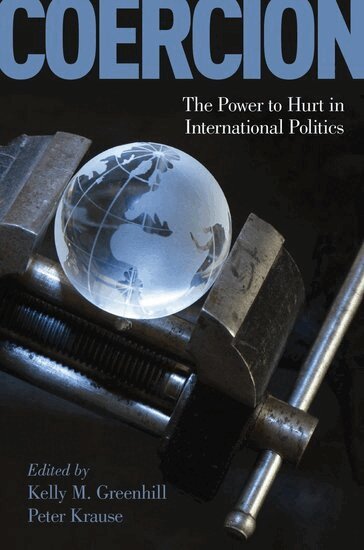
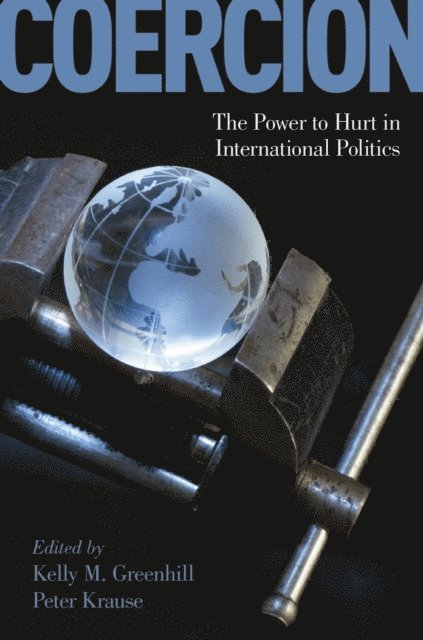
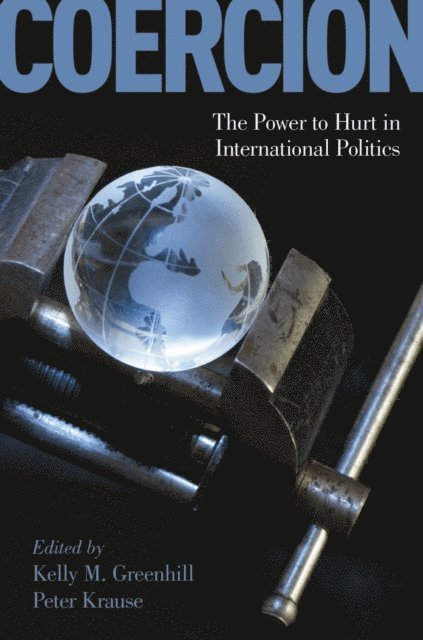
From the rising significance of non-state actors to the increasing influence of regional powers, the nature and conduct of international politics has arguably changed dramatically since the height of the Cold War. Yet much of the literature on deterrence and compellence continues to draw (whether implicitly or explicitly) upon assumptions and precepts formulated in-and predicated upon-politics in a state-centric, bipolar world. Coercion moves beyond these somewhat hidebound premises and examines the critical issue of coercion in the 21st century, with a particular focus on new actors, strategies and objectives in this very old bargaining game. The chapters in this volume examine intra-state, inter-state, and transnational coercion and deterrence as well as both military and non-military instruments of persuasion, thus expanding our understanding of coercion for conflict in the 21st century.?Scholars have analyzed the causes, dynamics, and effects of coercion for decades, but previous works have principally focused on a single state employing conventional military means to pressure another state to alter its behavior. In contrast, this volume captures fresh developments, both theoretical and policy relevant. This chapters in this volume focus on tools (terrorism, sanctions, drones, cyber warfare, intelligence, and forced migration), actors (insurgents, social movements, and NGOs) and mechanisms (trilateral coercion, diplomatic and economic isolation, foreign-imposed regime change, coercion of nuclear proliferators, and two-level games) that have become more prominent in recent years, but which have yet to be extensively or systematically addressed in either academic or policy literatures.
448 kr
Skickas inom 5-8 vardagar
From the rising significance of non-state actors to the increasing influence of regional powers, the nature and conduct of international politics has arguably changed dramatically since the height of the Cold War. Yet much of the literature on deterrence and compellence continues to draw (whether implicitly or explicitly) upon assumptions and precepts formulated in-and predicated upon-politics in a state-centric, bipolar world. Coercion moves beyond these somewhat hidebound premises and examines the critical issue of coercion in the 21st century, with a particular focus on new actors, strategies and objectives in this very old bargaining game. The chapters in this volume examine intra-state, inter-state, and transnational coercion and deterrence as well as both military and non-military instruments of persuasion, thus expanding our understanding of coercion for conflict in the 21st century.?Scholars have analyzed the causes, dynamics, and effects of coercion for decades, but previous works have principally focused on a single state employing conventional military means to pressure another state to alter its behavior. In contrast, this volume captures fresh developments, both theoretical and policy relevant. This chapters in this volume focus on tools (terrorism, sanctions, drones, cyber warfare, intelligence, and forced migration), actors (insurgents, social movements, and NGOs) and mechanisms (trilateral coercion, diplomatic and economic isolation, foreign-imposed regime change, coercion of nuclear proliferators, and two-level games) that have become more prominent in recent years, but which have yet to be extensively or systematically addressed in either academic or policy literatures.
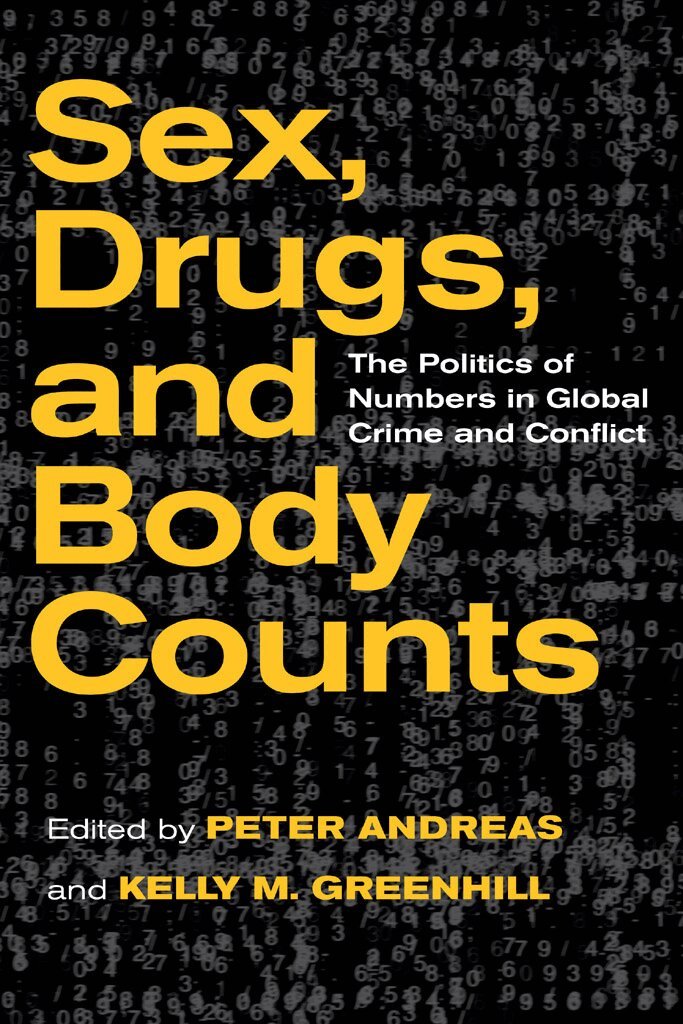
Sex, Drugs, and Body Counts
The Politics of Numbers in Global Crime and Conflict
Inbunden, Engelska, 2010
925 kr
Skickas inom 10-15 vardagar
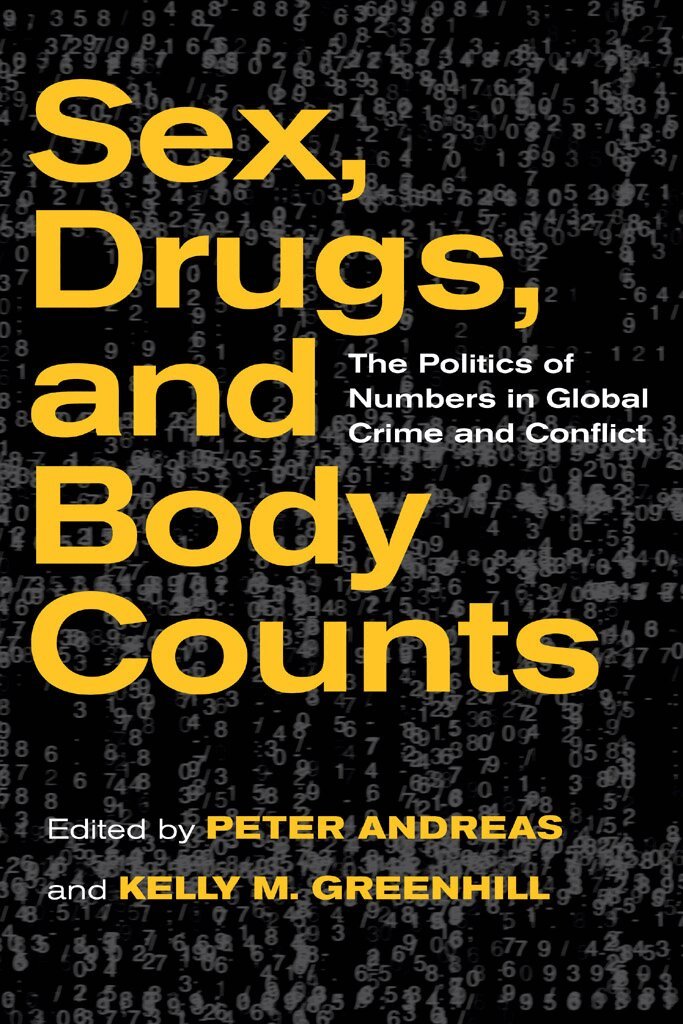
At least 200,000-250,000 people died in the war in Bosnia. "There are three million child soldiers in Africa." "More than 650,000 civilians have been killed as a result of the U.S. occupation of Iraq." "Between 600,000 and 800,000 women are trafficked across borders every year." "Money laundering represents as much as 10 percent of global GDP." "Internet child porn is a $20 billion-a-year industry." These are big, attention-grabbing numbers, frequently used in policy debates and media reporting. Peter Andreas and Kelly M. Greenhill see only one problem: these numbers are probably false. Their continued use and abuse reflect a much larger and troubling pattern: policymakers and the media naively or deliberately accept highly politicized and questionable statistical claims about activities that are extremely difficult to measure. As a result, we too often become trapped by these mythical numbers, with perverse and counterproductive consequences.This problem exists in myriad policy realms. But it is particularly pronounced in statistics related to the politically charged realms of global crime and conflict-numbers of people killed in massacres and during genocides, the size of refugee flows, the magnitude of the illicit global trade in drugs and human beings, and so on. In Sex, Drugs, and Body Counts, political scientists, anthropologists, sociologists, and policy analysts critically examine the murky origins of some of these statistics and trace their remarkable proliferation. They also assess the standard metrics used to evaluate policy effectiveness in combating problems such as terrorist financing, sex trafficking, and the drug trade.
393 kr
Skickas inom 10-15 vardagar
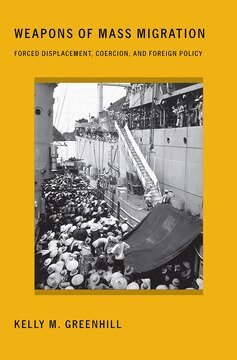
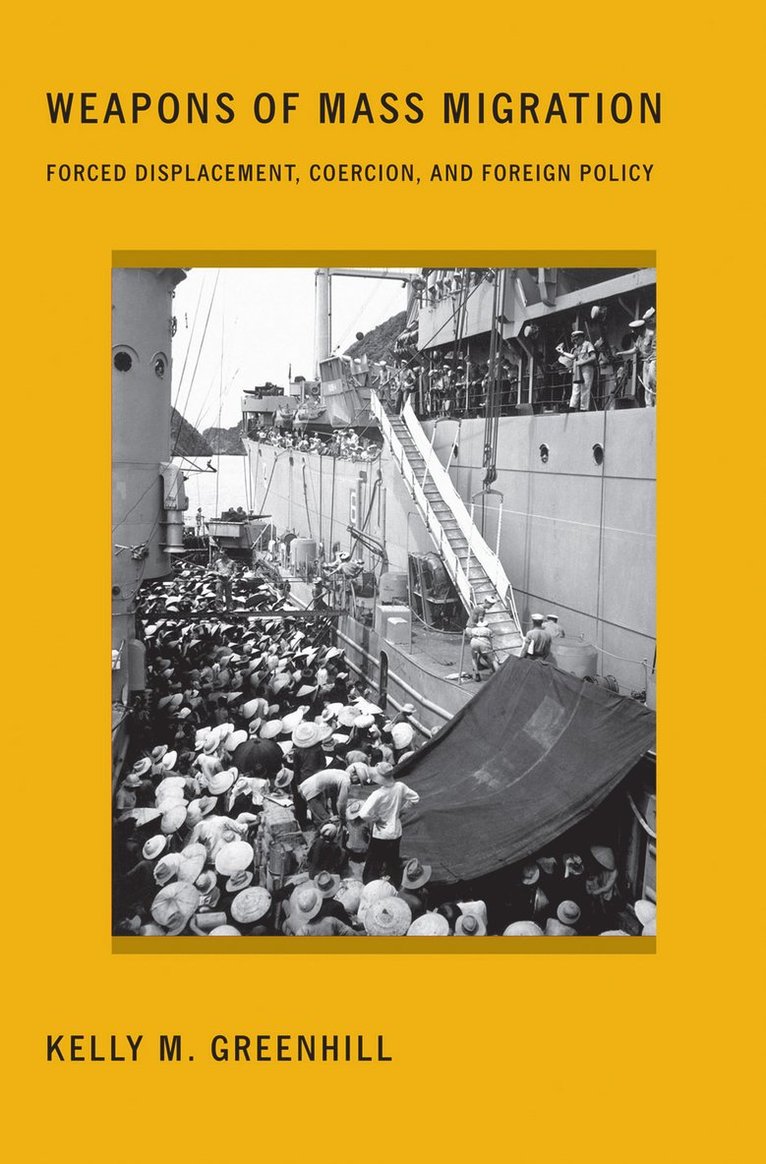
IR theorists, foreign policy analysts and migration, security studies, and human rights scholars will all find this book a valuable addition to their scholarship.â• Political Studies ReviewAt first glance, the U.S. decision to escalate the war in Vietnam in the mid-1960s, China's position on North Korea's nuclear program in the late 1990s and early 2000s, and the EU resolution to lift what remained of the arms embargo against Libya in the mid-2000s would appear to share little in common. Yet each of these seemingly unconnected and far-reaching foreign policy decisions resulted at least in part from the exercise of a unique kind of coercion, one predicated on the intentional creation, manipulation, and exploitation of real or threatened mass population movements. In Weapons of Mass Migration, Kelly M. Greenhill offers the first systematic examination of this widely deployed but largely unrecognized instrument of state influence. She shows both how often this unorthodox brand of coercion has been attempted (more than fifty times in the last half century) and how successful it has been (well over half the time). She also tackles the questions of who employs this policy tool, to what ends, and how and why it ever works.Coercers aim to affect target states' behavior by exploiting the existence of competing political interests and groups, Greenhill argues, and by manipulating the costs or risks imposed on target state populations. This "coercion by punishment" strategy can be effected in two ways: the first relies on straightforward threats to overwhelm a target's capacity to accommodate a refugee or migrant influx; the second, on a kind of norms-enhanced political blackmail that exploits the existence of legal and normative commitments to those fleeing violence, persecution, or privation. The theory is further illustrated and tested in a variety of case studies from Europe, East Asia, and North America.To help potential targets better respond to-and protect themselves against-this kind of unconventional predation, Weapons of Mass Migration also offers practicable policy recommendations for scholars, government officials, and anyone concerned about the true victims of this kind of coercion-the displaced themselves.
Sex, Drugs, and Body Counts
The Politics of Numbers in Global Crime and Conflict
Häftad, Engelska, 2010
269 kr
Skickas inom 7-10 vardagar
At least 200,000-250,000 people died in the war in Bosnia. "There are three million child soldiers in Africa." "More than 650,000 civilians have been killed as a result of the U.S. occupation of Iraq." "Between 600,000 and 800,000 women are trafficked across borders every year." "Money laundering represents as much as 10 percent of global GDP." "Internet child porn is a $20 billion-a-year industry." These are big, attention-grabbing numbers, frequently used in policy debates and media reporting. Peter Andreas and Kelly M. Greenhill see only one problem: these numbers are probably false. Their continued use and abuse reflect a much larger and troubling pattern: policymakers and the media naively or deliberately accept highly politicized and questionable statistical claims about activities that are extremely difficult to measure. As a result, we too often become trapped by these mythical numbers, with perverse and counterproductive consequences.This problem exists in myriad policy realms. But it is particularly pronounced in statistics related to the politically charged realms of global crime and conflict-numbers of people killed in massacres and during genocides, the size of refugee flows, the magnitude of the illicit global trade in drugs and human beings, and so on. In Sex, Drugs, and Body Counts, political scientists, anthropologists, sociologists, and policy analysts critically examine the murky origins of some of these statistics and trace their remarkable proliferation. They also assess the standard metrics used to evaluate policy effectiveness in combating problems such as terrorist financing, sex trafficking, and the drug trade.
991 kr
Skickas inom 7-10 vardagar
The Use of Force, long considered a classic in its own right, brings together enduring, influential works on the role of military power in foreign policy and international politics. Now in its eighth edition, the reader has been significantly revised; with twenty innovative and up-to-date selections, this edition is 60 percent new. Meticulously chosen and edited by leading scholars Robert J. Art and Kelly M. Greenhill, the selections are grouped under three headings: theories, case studies, and contemporary issues. The first section includes essays that cover the security dilemma, terrorism, the sources of military doctrine, the nuclear revolution, and the fungibility of force. A new subsection of Part I also deals with ethical issues in the use of force. The second section includes case studies in the use of force that span the period from World War I through the war in Afghanistan. The final section considers issues concerning the projection of US military power; the rising power of China; the spread of biological and nuclear weapons and cyberwarfare; intervention in internal conflicts and insurgencies; and possible future developments in terrorism, nuclear abolition, and robotic warfare. Continuing the tradition of previous editions, this fully updated reader collects the best analysis by influential thinkers on the use of force in international affairs.Contributions by: Bruce J. Allyn, Kenneth Anderson, Robert J. Art, Mark S. Bell, Richard K. Betts, Laurie R. Blank, James G. Blight, Stephen G. Brooks, Seyom Brown, Daniel Byman, Audrey Kurth Cronin, Patrick M. Cronin, Alexander B. Downes, Karl W. Eikenberry, John Lewis Gaddis, Erik Gartke, Alexander L. George, Avery Goldstein, Kelly M. Greenhill, G. John Ikenberry, Robert Jervis, Gregory Koblentz, Peter R. Mansoor, John J. Mearsheimer, Nicholas L. Miller, Louis C. Morton, Barry R. Posen, Louise Richardson, George B. Samson, Thomas C. Schelling, Jack L. Snyder, Paul Staniland, Barbara F. Walter, Kenneth N. Waltz, Matthew Waxman, David A. Welch, Jon Western, and William C. Wohlforth.
289 kr
Skickas inom 10-15 vardagar
IR theorists, foreign policy analysts and migration, security studies, and human rights scholars will all find this book a valuable addition to their scholarship.â• Political Studies ReviewAt first glance, the U.S. decision to escalate the war in Vietnam in the mid-1960s, China's position on North Korea's nuclear program in the late 1990s and early 2000s, and the EU resolution to lift what remained of the arms embargo against Libya in the mid-2000s would appear to share little in common. Yet each of these seemingly unconnected and far-reaching foreign policy decisions resulted at least in part from the exercise of a unique kind of coercion, one predicated on the intentional creation, manipulation, and exploitation of real or threatened mass population movements. In Weapons of Mass Migration, Kelly M. Greenhill offers the first systematic examination of this widely deployed but largely unrecognized instrument of state influence. She shows both how often this unorthodox brand of coercion has been attempted (more than fifty times in the last half century) and how successful it has been (well over half the time). She also tackles the questions of who employs this policy tool, to what ends, and how and why it ever works.Coercers aim to affect target states' behavior by exploiting the existence of competing political interests and groups, Greenhill argues, and by manipulating the costs or risks imposed on target state populations. This "coercion by punishment" strategy can be effected in two ways: the first relies on straightforward threats to overwhelm a target's capacity to accommodate a refugee or migrant influx; the second, on a kind of norms-enhanced political blackmail that exploits the existence of legal and normative commitments to those fleeing violence, persecution, or privation. The theory is further illustrated and tested in a variety of case studies from Europe, East Asia, and North America.To help potential targets better respond to-and protect themselves against-this kind of unconventional predation, Weapons of Mass Migration also offers practicable policy recommendations for scholars, government officials, and anyone concerned about the true victims of this kind of coercion-the displaced themselves.