Kembrew McLeod - Böcker
Visar alla böcker från författaren Kembrew McLeod. Handla med fri frakt och snabb leverans.
8 produkter
8 produkter
481 kr
Skickas
449 kr
Skickas inom 10-15 vardagar
From BenjaminFranklin's newspaper hoax that faked the death of his rival to Abbie Hoffman'sattempt to levitate the Pentagon, pranksters, hoaxers, and con artists have causedconfusion, disorder, and laughter in Western society for centuries. Profilingthe most notorious mischief makers from the 1600s to the present day, Prankstersexplores how "pranks" are part of a long tradition of speaking truth to powerand social critique.Invoking such historical and contemporary figures as P.T. Barnum,Jonathan Swift, WITCH, The Yes Men, and Stephen Colbert, Kembrew McLeod showshow staged spectacles that balance the serious and humorous can spark importantpublic conversations. In some instances, tricksters have incited social change(and unfortunate prank blowback) by manipulating various forms of media, fromnewspapers to YouTube. For example, in the 1960s, self-proclaimed "professionalhoaxer" Alan Abel lampooned America's hypocritical sexual mores by usingconservative rhetoric to fool the news media into covering a satirical organizationthat advocated clothing naked animals. In the 1990s, Sub Pop Recordsthen-receptionist Megan Jasper satirized the commodification of alternativemusic culture by pranking the New YorkTimes into reporting on her fake lexicon of "grunge speak." Throughout thisbook, McLeod shows how pranks interrupt the daily flow of approved informationand news, using humor to underscore larger, pointed truths.Written in an accessible, story-driven style, Prankstersreveals how mischief makers have left their shocking, entertaining, andeducational mark on modern political and social life.
Del 1 - Popular Culture and Everyday Life
Owning Culture
Authorship, Ownership, and Intellectual Property Law
Häftad, Engelska, 2007
300 kr
Skickas inom 5-8 vardagar
Cutting Across Media
Appropriation Art, Interventionist Collage, and Copyright Law
Inbunden, Engelska, 2011
1 144 kr
Skickas inom 7-10 vardagar
In this collection of essays, leading academics, critics, and artists historicize collage and appropriation tactics that cut across diverse media and genres. They take up issues of appropriation in the popular and the avant-garde, in altered billboards and the work of the renowned painter Chris Ofili, in hip-hop and the compositions of BÉla BartÓk and ZoltÁn KodÁly, and in audio mash-ups, remixed news broadcasts, pranks, culture jamming, and numerous other cultural forms. The borrowing practices that they consider often run afoul of intellectual property regimes, and many of the contributors address the effects of copyright and trademark law on creativity. Among the contributors are the novelist and essayist Jonathan Lethem, the poet and cultural critic Joshua Clover, the filmmaker Craig Baldwin, the hip-hop historian Jeff Chang, the ’zine-maker and sound collage artist Lloyd Dunn, and Negativland, the infamous collective that was sued in 1991 for sampling U2 in a satirical sound collage. Cutting Across Media is both a serious examination of collage and appropriation practices and a celebration of their transformative political and cultural possibilities. Contributors. Craig Baldwin, David Banash, Marcus Boon, Jeff Chang, Joshua Clover, Lorraine Morales Cox, Lloyd Dunn, Philo T. Farnsworth, Pierre Joris, Douglas Kahn, Rudolf Kuenzli, Rob Latham, Jonathan Lethem, Carrie McLaren, Kembrew McLeod, Negativland, Davis Schneiderman, David Tetzlaff, GÁbor VÁlyi, Warner Special Products, Eva Hemmungs WirtÉn
Cutting Across Media
Appropriation Art, Interventionist Collage, and Copyright Law
Häftad, Engelska, 2011
430 kr
Skickas inom 7-10 vardagar
In this collection of essays, leading academics, critics, and artists historicize collage and appropriation tactics that cut across diverse media and genres. They take up issues of appropriation in the popular and the avant-garde, in altered billboards and the work of the renowned painter Chris Ofili, in hip-hop and the compositions of BÉla BartÓk and ZoltÁn KodÁly, and in audio mash-ups, remixed news broadcasts, pranks, culture jamming, and numerous other cultural forms. The borrowing practices that they consider often run afoul of intellectual property regimes, and many of the contributors address the effects of copyright and trademark law on creativity. Among the contributors are the novelist and essayist Jonathan Lethem, the poet and cultural critic Joshua Clover, the filmmaker Craig Baldwin, the hip-hop historian Jeff Chang, the ’zine-maker and sound collage artist Lloyd Dunn, and Negativland, the infamous collective that was sued in 1991 for sampling U2 in a satirical sound collage. Cutting Across Media is both a serious examination of collage and appropriation practices and a celebration of their transformative political and cultural possibilities. Contributors. Craig Baldwin, David Banash, Marcus Boon, Jeff Chang, Joshua Clover, Lorraine Morales Cox, Lloyd Dunn, Philo T. Farnsworth, Pierre Joris, Douglas Kahn, Rudolf Kuenzli, Rob Latham, Jonathan Lethem, Carrie McLaren, Kembrew McLeod, Negativland, Davis Schneiderman, David Tetzlaff, GÁbor VÁlyi, Warner Special Products, Eva Hemmungs WirtÉn
333 kr
Skickas inom 7-10 vardagar
How did the Depression-era folk-song collector Alan Lomax end up with a songwriting credit on Jay-Z’s song “Takeover”? Why doesn’t Clyde Stubblefield, the primary drummer on James Brown recordings from the late 1960s such as “Funky Drummer” and “Cold Sweat,” get paid for other musicians’ frequent use of the beats he performed on those songs? The music industry’s approach to digital sampling-the act of incorporating snippets of existing recordings into new ones-holds the answers. Exploring the complexities and contradictions in how samples are licensed, Kembrew McLeod and Peter DiCola interviewed more than 100 musicians, managers, lawyers, industry professionals, journalists, and scholars. Based on those interviews, Creative License puts digital sampling into historical, cultural, and legal context. It describes hip-hop during its sample-heavy golden age in the 1980s and early 1990s, the lawsuits that shaped U.S. copyright law on sampling, and the labyrinthine licensing process that musicians must now navigate. The authors argue that the current system for licensing samples is inefficient and limits creativity. For instance, by estimating the present-day licensing fees for the Beastie Boys’ Paul’s Boutique (1989) and Public Enemy’s Fear of a Black Planet (1990), two albums from hip-hop’s golden age, the authors show that neither album could be released commercially today. Observing that the same dynamics that create problems for remixers now reverberate throughout all culture industries, the authors conclude by examining ideas for reform.Interviewees include David Byrne, Cee Lo Green, George Clinton, De La Soul, DJ Premier, DJ Qbert, Eclectic Method, El-P, Girl Talk, Matmos, Mix Master Mike, Negativland, Public Enemy, RZA, Clyde Stubblefield, T.S. Monk.
The Downtown Pop Underground: New York City and the Literary Punks, Renegade Artists, DIY Filmmakers, Mad Playwrights, and Rock 'n' Roll Glitter Queen
Häftad, Engelska, 2019
276 kr
Skickas inom 3-6 vardagar
143 kr
Skickas inom 7-10 vardagar
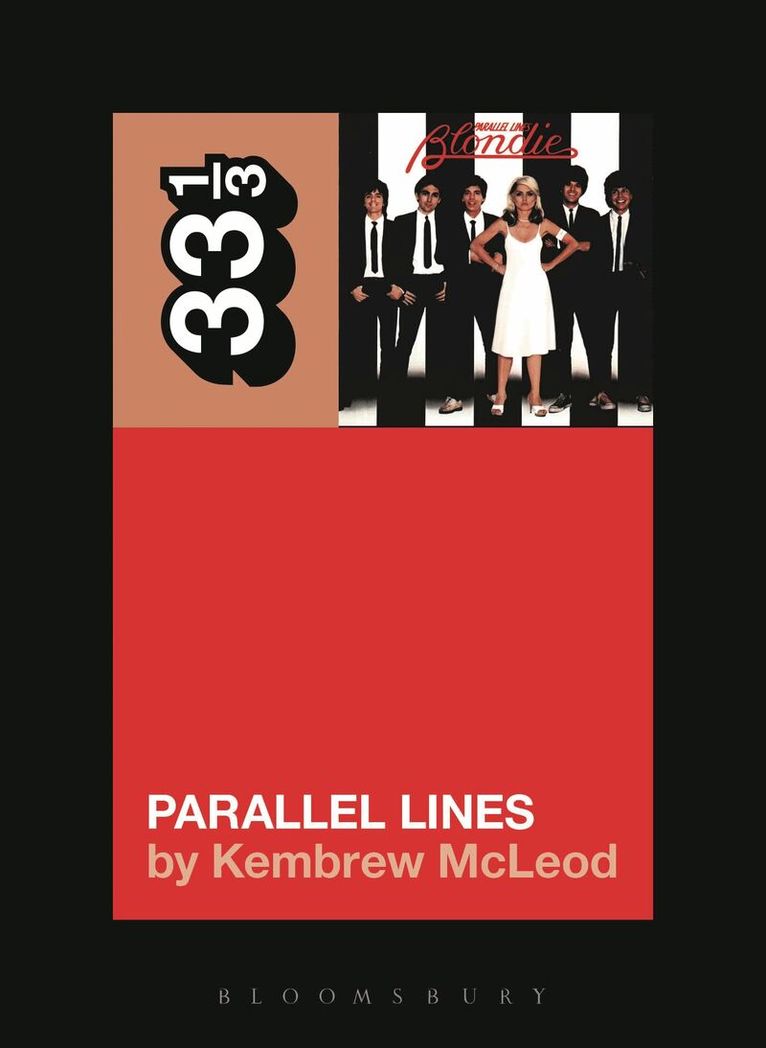
Blondie’s Parallel Lines mixed punk, disco and radio-friendly FM rock with nostalgic influences from 1960s pop and girl group hits. This 1978 album kept one foot planted firmly in the past while remaining quite forward-looking, an impulse that can be heard in its electronic dance music hit “Heart of Glass.” Bubblegum music maven Mike Chapman produced Parallel Lines, which was the first massive hit by a group from the CBGB punk underworld. By embracing the diversity of New York City’s varied music scenes, Blondie embodied many of the tensions that played out at the time between fans of disco, punk, pop and mainstream rock. Debbie Harry’s campy glamor and sassy snarl shook up the rock’n’roll boy’s club during a growing backlash against the women’s and gay liberation movements, which helped fuel the “disco sucks” battle cry in the late 1970s. Despite disco’s roots in a queer, black and Latino underground scene that began in downtown New York, punk is usually celebrated by critics and scholars as the quintessential subculture. This book challenges the conventional wisdom that dismissed disco as fluffy prefab schlock while also recuperating punk’s unhip pop influences, revealing how these two genres were more closely connected than most people assume. Even Blondie’s album title, Parallel Lines, evokes the parallel development of punk and disco—along with their eventual crossover into the mainstream.