Ken Feil - Böcker
Visar alla böcker från författaren Ken Feil. Handla med fri frakt och snabb leverans.
4 produkter
4 produkter
260 kr
Skickas inom 10-15 vardagar
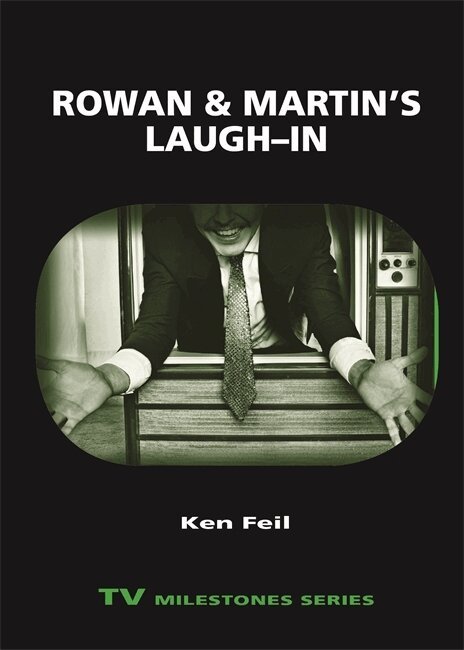
The highest-rated network program during its first three seasons, comedy-variety show Rowan and Martin’s Laugh-In (NBC, 1968–1973) remains an often overlooked and underrated innovator of American television history. Audiences of all kinds - old and young, square and hip, black and white, straight and queer - watched Laugh-In, whose campy, anti-establishment aesthetic mocked other tepid and serious popular shows. In Rowan and Martin’s Laugh-In, author Ken Feil presents the first scholarly investigation of the series whose suggestive catch-phrases ""sock it to me,"" ""look that up in your Funk’n’Wagnalls,"" and ""here comes the judge"" became part of pop culture history.In four chapters, Feil explores Laugh-In’s newness, sophisticated style, irreverence, and broad appeal. First, he considers the show’s indulgence of ""bad taste"" through a strategy of deliberate ambiguity that allowed audiences to enjoy countercultural, anti-establishment transgression and, reassuringly, conveyed the sense that it represented the establishment’s investment in containing such defiant delights. Feil considers Laugh-In’s camp, otherness, and ""open secrets"" as well as the show’s conflicted positions on the ""private"" issues of taste, sexuality, lifestyle, and politics. Sexual swingers, stoned hippies, empowered African Americans, feminists, and flamboyantly ""nellie"" men all filled Laugh-In’s routine roster, embodied by cast members Jo Anne Worley, Lily Tomlin, Chelsea Brown, Alan Sues, Johnny Brown, and Judy Carne, along with regular guests Flip Wilson, Sammy Davis Jr., and Tiny Tim. Related to these icons, Laugh-In reflected on hotly politicized current events: militarism in Vietnam, racist discrimination in the U.S., Civil Rights and Black Power, birth control and sex, feminism, and gay liberation.In its playful put-ons of the establishment, parade of countercultural types and tastes, and vacillation between identification and repulsion, Feil argues that Laugh-In’s intentional ambiguity was part and parcel of its inventiveness and commercial prosperity. Fans of the show as well as readers interested in American television and pop culture history will enjoy this insightful look at Rowan and Martin’s Laugh-In.
1 049 kr
Skickas inom 10-15 vardagar
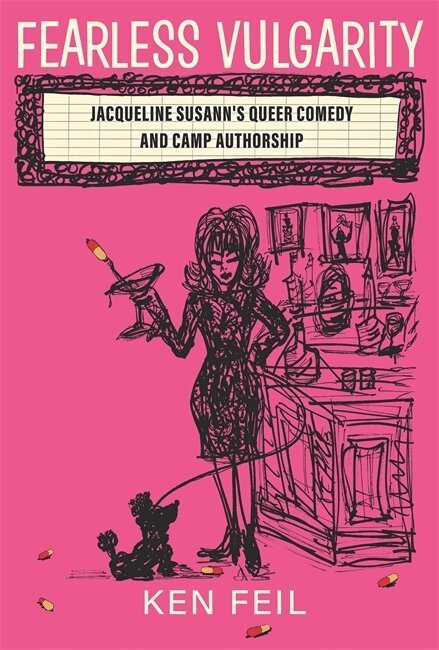
Catalyzed by her notoriously "dirty," fabulously successful bestseller Valley of the Dolls, the "Jackie Susann Sixties" brimmed with camp comedy that now permeates contemporary celebrations of the author, from Pee-wee's Playhouse to RuPaul's Drag Race and Lee Daniels's Star. First christened "camp" by Gloria Steinem in an excoriating review of Valley of the Dolls and compounded by the publishing juggernauts The Love Machine (1969), Once Is Not Enough (1973), and Dolores (1976), the comedy of Jackie Susann illuminated conflicting positions about gender, sexuality, and aesthetic value. Through a writing formula that Ken Feil calls sleazy realism, Susann veers from gossip to confession and devises comedies of bad manners spun from real celebrities whose occasionally queer and always outré antics clashed with their "official" personas, the popular genres they were famous for, and the narrow, normative constructions of identity and reality shaped by the culture industry. Susann's promotional appearances led to another comedy of bad manners, this one populated with critics alternately horrified and delighted by an upstart woman vulgarian barging into the male literary firmament, and which continues to inspire fascination for the author, her novels, and their legendarily bad film adaptations.
421 kr
Skickas inom 10-15 vardagar
Catalyzed by her notoriously "dirty," fabulously successful bestseller Valley of the Dolls, the "Jackie Susann Sixties" brimmed with camp comedy that now permeates contemporary celebrations of the author, from Pee-wee's Playhouse to RuPaul's Drag Race and Lee Daniels's Star. First christened "camp" by Gloria Steinem in an excoriating review of Valley of the Dolls and compounded by the publishing juggernauts The Love Machine (1969), Once Is Not Enough (1973), and Dolores (1976), the comedy of Jackie Susann illuminated conflicting positions about gender, sexuality, and aesthetic value. Through a writing formula that Ken Feil calls sleazy realism, Susann veers from gossip to confession and devises comedies of bad manners spun from real celebrities whose occasionally queer and always outré antics clashed with their "official" personas, the popular genres they were famous for, and the narrow, normative constructions of identity and reality shaped by the culture industry. Susann's promotional appearances led to another comedy of bad manners, this one populated with critics alternately horrified and delighted by an upstart woman vulgarian barging into the male literary firmament, and which continues to inspire fascination for the author, her novels, and their legendarily bad film adaptations.
427 kr
Skickas inom 3-6 vardagar
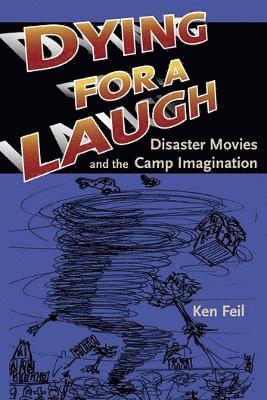
Dying for a Laugh looks at the evolution of the contemporary disaster film from the 1970s to the present. Ken Feil argues that contemporary camp culture has influenced and reformed the conventions of the 1970s disaster film, in both its production and reception. The book chronicles how the genre rose to prominence, sank into critical and popular disrepute, and became unintentionally campy. Through close readings of films including The Poseidon Adventure, The Swarm, Ghostbusters, Independence Day, and Mars Attacks!, along with film reviews, entertainment reports and publicity materials as evidence, Feil shows that the renewal of the disaster genre in the 1990s hinged on self-parody, ironic self-consciousness, and state-of-the-art effects. Feil also looks at the impact of 9/11 on the genre's campy, sadistic pleasures through movies such as The Sum of All Fears, The Core, and The Day After Tomorrow. This analysis of "high concept camp" draws from diverse methodologies and theories, such as historical reception, textual analysis, neoformalism, political economy, genre analysis, feminism, and queer theory.