Kendra Strauss - Böcker
Visar alla böcker från författaren Kendra Strauss. Handla med fri frakt och snabb leverans.
6 produkter
6 produkter
1 200 kr
Skickas inom 5-8 vardagar
Understanding the ways in which people save for their retirement is an urgent issue. So much has changed in the last 10 to 15 years, especially in the area of the provision of pensions and retirement income. Around the world, greater and greater responsibility is being allocated to individuals while governments discount their contributions to social security and employers retreat from the provision of supplementary retirement income. This book explores the behavioral revolution and its implications for understanding financial decision-making and saving for the future. Recognizing the profound implications of this research program, it goes beyond issues of risk aversion, framing, and decision-making to consider how social identity and the resources due to people by virtue of their place in society figure in savings behavior. It gives considerable attention to the context of the environment in which people make financial decisions, arguing that this allows a better understanding of the coexistence of sophistication and naivety apparent in patterns of retirement saving. Utilizing databases from the UK, the book provides an empirical foundation to its theoretical arguments, demonstrating how an integrated approach to individual financial decision-making is necessary if we are to address the apparent shortfall in many people's planning for the future. The book concludes by setting the agenda for the design, governance, and regulation of pension savings schemes consistent with delivering cost-effective solutions to pension adequacy. In these ways, it sets forth a strategy for rethinking individual behavior as well as the design of retirement income systems.
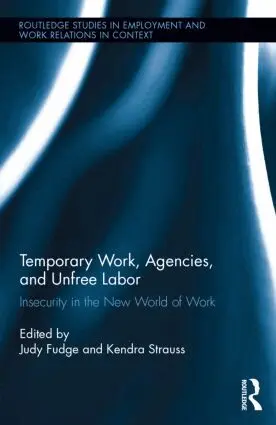
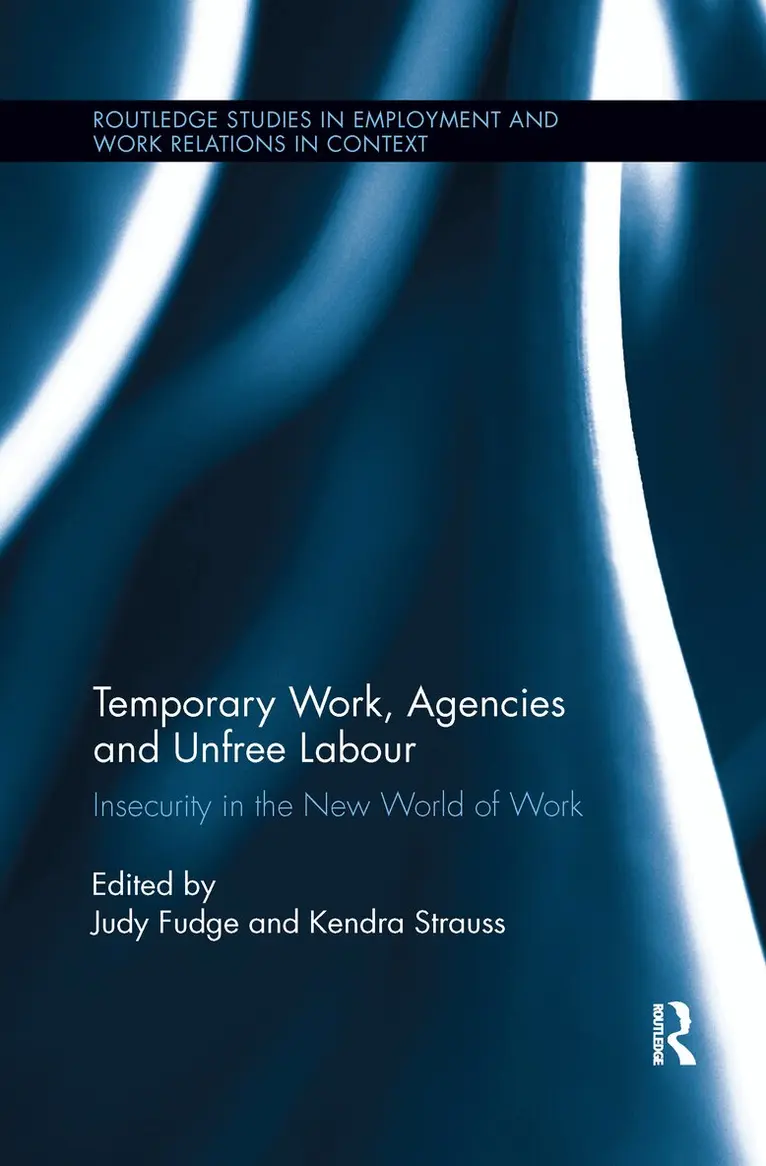
Temporary Work, Agencies and Unfree Labour
Insecurity in the New World of Work
Inbunden, Engelska, 2013
2 155 kr
Skickas inom 10-15 vardagar
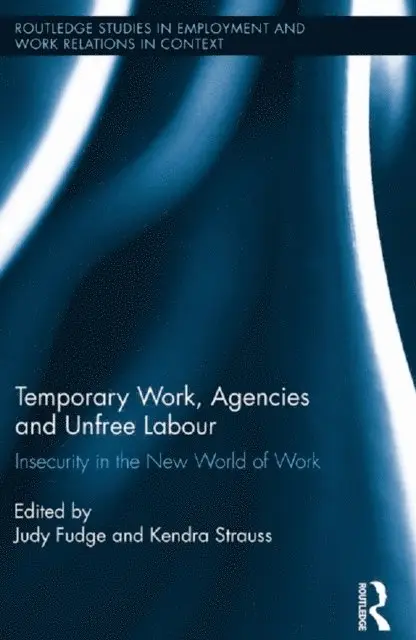
Unfree labor has not disappeared from advanced capitalist economies. In this sense the debates among and between Marxist and orthodox economic historians about the incompatibility of capitalism and unfree labor are moot: the International Labour Organisation has identified forced, coerced, and unfree labor as a contemporary issue of global concern. Previously hidden forms of unfree labor have emerged in parallel with several other well-documented trends affecting labor conditions, rights, and modes of regulation. These evolving types of unfree labor include the increasing normalization of contingent work (and, by extension, the undermining of the standard contract of employment), and an increase in labor intermediation. The normative, political, and numerical rise of temporary employment agencies in many countries in the last three decades is indicative of these trends.It is in the context of this rapidly changing landscape that this book consolidates and expands on research designed to understand new institutions for work in the global era. This edited collection provides a theoretical and empirical exploration of the links between unfree labor, intermediation, and modes of regulation, with particular focus on the evolving institutional forms and political-economic contexts that have been implicated in, and shaped by, the ascendency of temp agencies. What is distinctive about this collection is this bi-focal lens: it makes a substantial theoretical contribution by linking disparate literatures on, and debates about, the co-evolution of contingent work and unfree labor, new forms of labor intermediation, and different regulatory approaches; but it further lays the foundation for this theory in a series of empirically rich and geographically diverse case studies. This integrative approach is grounded in a cross-national comparative framework, using this approach as the basis for assessing how, and to what extent, temporary agency work can be considered unfree wage labor
1 122 kr
Skickas inom 5-8 vardagar
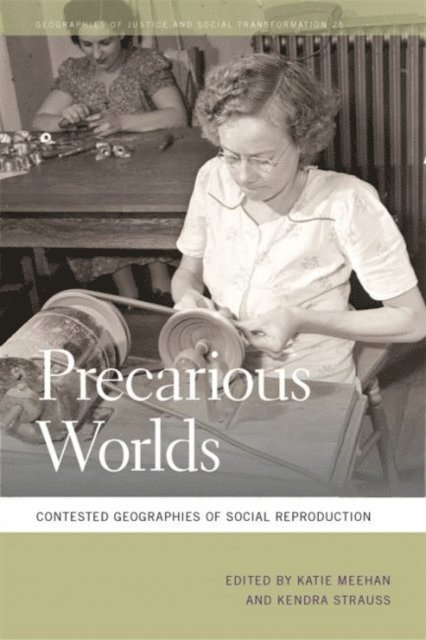
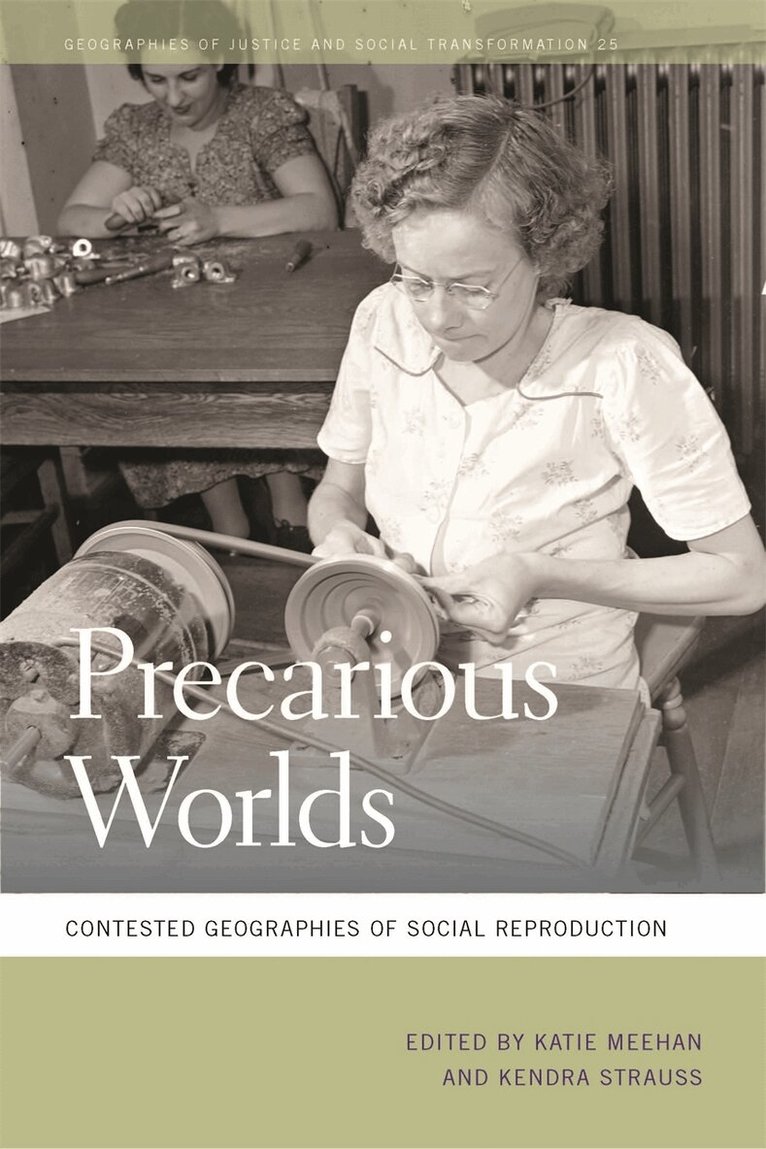
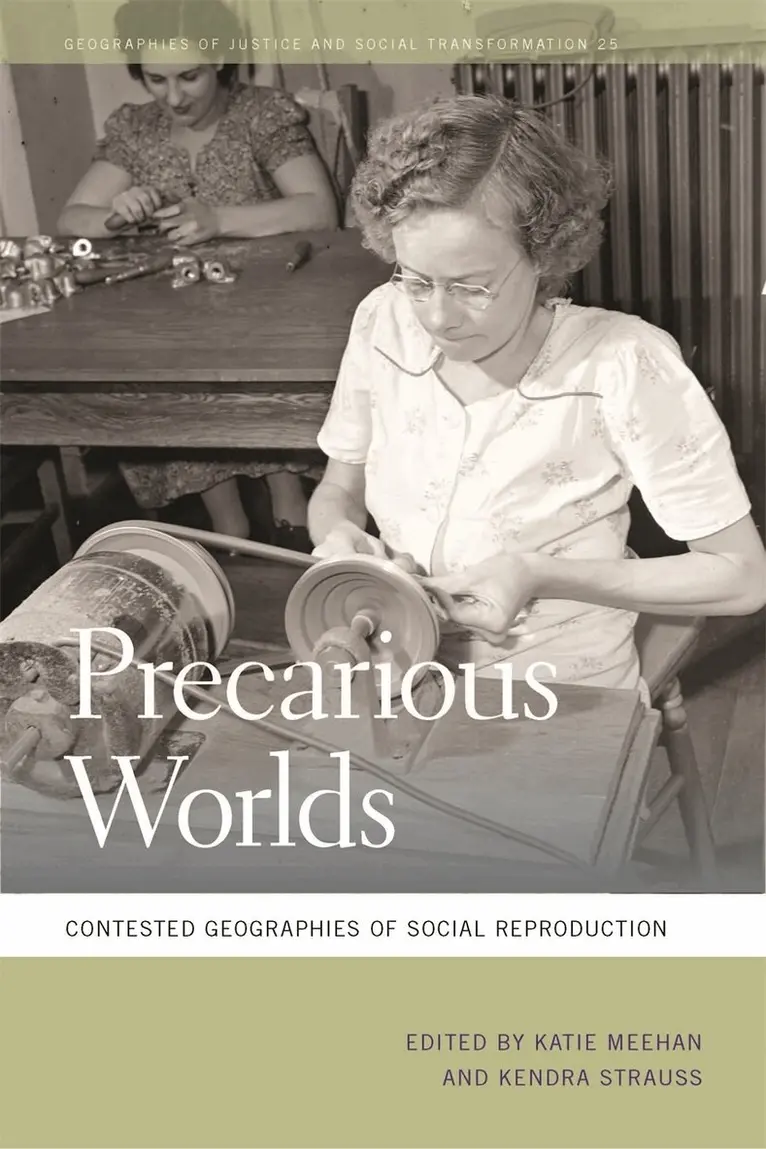
This collection contributes to the theoretical literature on social reproduction—defined by Marx as the necessary labor to arrive the next day at the factory gate—and extended by feminist geographers and others into complex understandings of the relationship between paid labor and the unpaid work of daily life. The volume explores new terrain in social reproduction with a focus on the challenges posed by evolving theories of embodiment and identity, nonhuman materialities, and diverse economies.Reflecting and expanding on ongoing debates within feminist geography, with additional cross-disciplinary contributions from sociologists and political scientists, Precarious Worlds explores the productive possibilities of social reproduction as an ontology, a theoretical lens, and an analytical framework for what Geraldine Pratt has called “a vigorous, materialist transnational feminism.”
2 088 kr
Skickas inom 10-15 vardagar
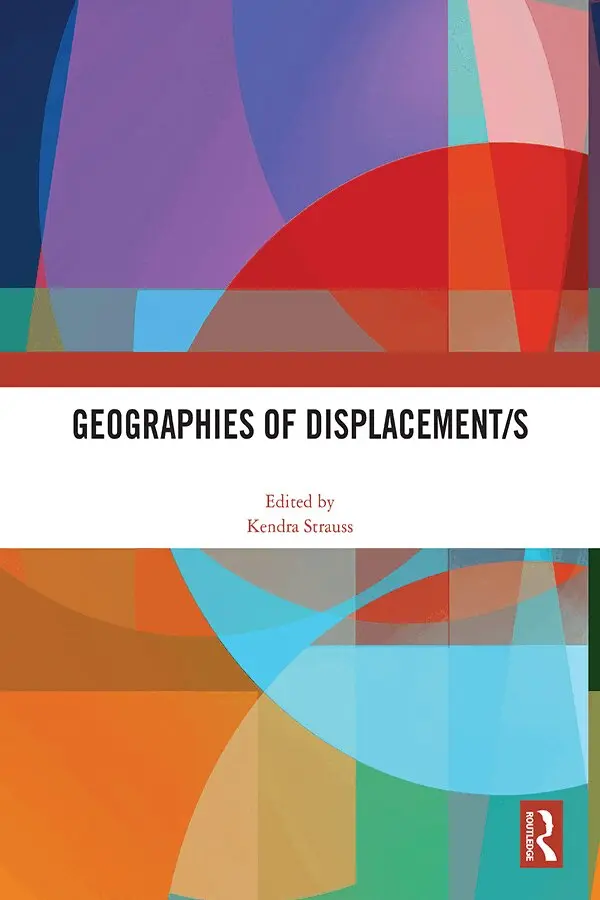
This book assembles cutting edge contemporary research and thinking on multiple forms and meanings of displacements and their geographies: patterns of shifting, dislocation, or putting out of place; substitutions of one idea for another or the unconscious transfer of intense feelings or emotions; activities occurring outside their normal context; and replacements of one thing by another.The COVID-19 pandemic, declared by the World Health Organization in 2020, produced new displacements and intensified existing patterns of displacement and dispossession. At the same time, socionatural displacements - floods, fires, droughts, hurricanes, sea-level rise, species loss, and dislocation - were the backdrop to the displaced and deferred hopes of the 2021 United Nations Climate Change Conference. The chapters in this volume contend with how we as geographers conceptualize and theorize displacements; the range of sites, spaces, processes, affects, scales, and actors we study with to understand them; and what is at stake politically in how we research displacements. It is also a pandemic archive of academic labor, in which we find traces of displacements within and beyond the academic discipline of geography.Geographies of Displacement/s will be of particular interest to students, scholars and researchers of Geography including those interested in human geography, socio-natural displacements, and the politics of migration and displacement. The chapters in this book were originally published as a special issue of Annals of the American Association of Geographers.
617 kr
Skickas inom 10-15 vardagar
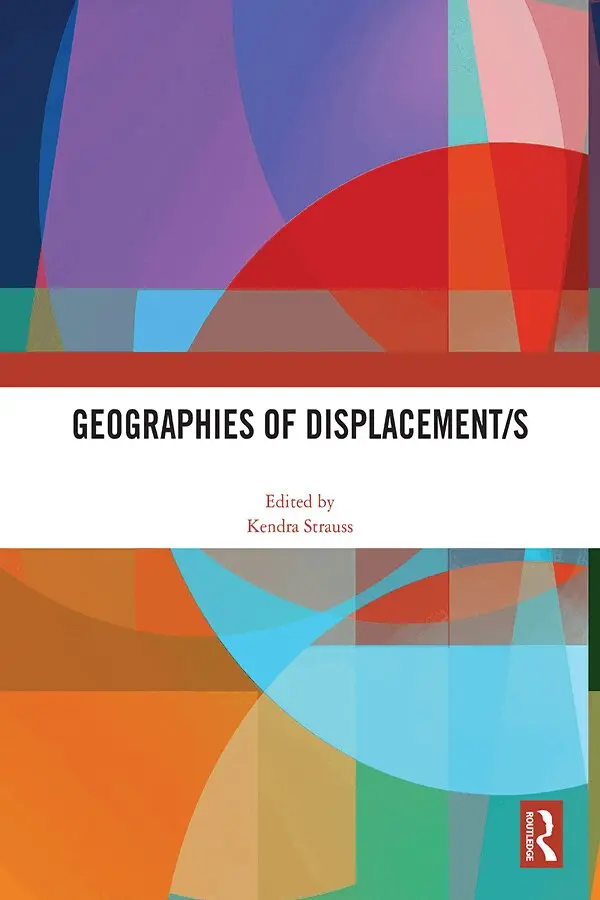
This book assembles cutting edge contemporary research and thinking on multiple forms and meanings of displacements and their geographies: patterns of shifting, dislocation, or putting out of place; substitutions of one idea for another or the unconscious transfer of intense feelings or emotions; activities occurring outside their normal context; and replacements of one thing by another.The COVID-19 pandemic, declared by the World Health Organization in 2020, produced new displacements and intensified existing patterns of displacement and dispossession. At the same time, socionatural displacements - floods, fires, droughts, hurricanes, sea-level rise, species loss, and dislocation - were the backdrop to the displaced and deferred hopes of the 2021 United Nations Climate Change Conference. The chapters in this volume contend with how we as geographers conceptualize and theorize displacements; the range of sites, spaces, processes, affects, scales, and actors we study with to understand them; and what is at stake politically in how we research displacements. It is also a pandemic archive of academic labor, in which we find traces of displacements within and beyond the academic discipline of geography.Geographies of Displacement/s will be of particular interest to students, scholars and researchers of Geography including those interested in human geography, socio-natural displacements, and the politics of migration and displacement. The chapters in this book were originally published as a special issue of Annals of the American Association of Geographers.
807 kr
Skickas inom 10-15 vardagar
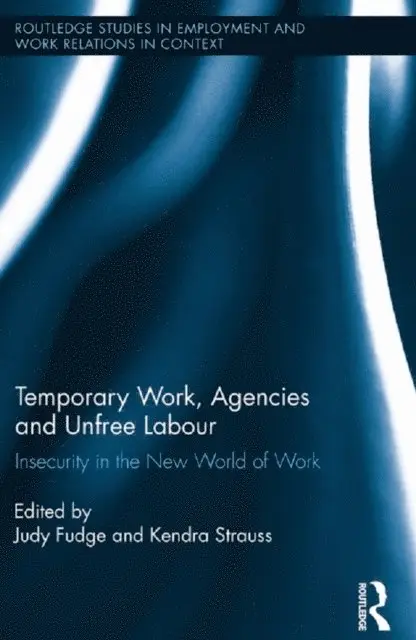
Unfree labor has not disappeared from advanced capitalist economies. In this sense the debates among and between Marxist and orthodox economic historians about the incompatibility of capitalism and unfree labor are moot: the International Labour Organisation has identified forced, coerced, and unfree labor as a contemporary issue of global concern. Previously hidden forms of unfree labor have emerged in parallel with several other well-documented trends affecting labor conditions, rights, and modes of regulation. These evolving types of unfree labor include the increasing normalization of contingent work (and, by extension, the undermining of the standard contract of employment), and an increase in labor intermediation. The normative, political, and numerical rise of temporary employment agencies in many countries in the last three decades is indicative of these trends.It is in the context of this rapidly changing landscape that this book consolidates and expands on research designed to understand new institutions for work in the global era. This edited collection provides a theoretical and empirical exploration of the links between unfree labor, intermediation, and modes of regulation, with particular focus on the evolving institutional forms and political-economic contexts that have been implicated in, and shaped by, the ascendency of temp agencies. What is distinctive about this collection is this bi-focal lens: it makes a substantial theoretical contribution by linking disparate literatures on, and debates about, the co-evolution of contingent work and unfree labor, new forms of labor intermediation, and different regulatory approaches; but it further lays the foundation for this theory in a series of empirically rich and geographically diverse case studies. This integrative approach is grounded in a cross-national comparative framework, using this approach as the basis for assessing how, and to what extent, temporary agency work can be considered unfree wage labor