Kenneth Hugdahl – författare
Visar alla böcker från författaren Kenneth Hugdahl. Handla med fri frakt och snabb leverans.
7 produkter
Psychophysiology
The Mind-Body Perspective
Häftad, 2001
465 kr
Lägg i varukorg
In our high-speed culture, terms like "stressed-out," "Type-A personality," "biofeedback," and "relaxation response" have become commonplaces. More than ever before, we are aware of the relationship between our mental and emotional states and our physical well-being. Findings from the field of …
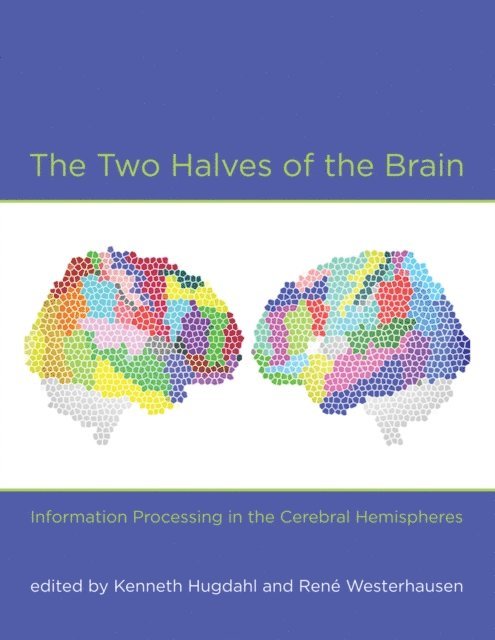
Two Halves of the Brain
Av Rene Westerhausen, Kenneth Hugdahl
E-bok, 2010
1012 kr
Lägg i varukorg
State-of-the-art research on brain asymmetry, explained from molecular to clinical levels. Hemispheric asymmetry is one of the basic aspects of perception and cognitive processing. The different functions of the left and right hemispheres of the brain have been studied with renewed interest in …
Experimental Methods in Neuropsychology
Av David Downing, Kenneth Hugdahl m. fl.
Inbunden, 2002
1128 kr
Lägg i varukorg
Clinical neuropsychology typically employs large standardized test-batteries to cover the cognitive deficits caused by brain lesions and neurodegenerative diseases. The neuropsychologist moves between three levels of explanation; the behavioral level, the cognitive level and the brain level. The …
Experimental Methods in Neuropsychology
Häftad, 2012
1128 kr
Lägg i varukorg
Clinical neuropsychology typically employs large standardized test-batteries to cover the cognitive deficits caused by brain lesions and neurodegenerative diseases. The neuropsychologist moves between three levels of explanation; the behavioral level, the cognitive level and the brain level. The …
Experimental Methods in Neuropsychology
E-bok, 2012
1459 kr
Lägg i varukorg
Clinical neuropsychology typically employs large standardized test-batteries to cover the cognitive deficits caused by brain lesions and neurodegenerative diseases. The neuropsychologist moves between three levels of explanation; the behavioral level, the cognitive level and the brain level. The …
Two Halves of the Brain
Information Processing in the Cerebral Hemispheres
Av Kenneth Hugdahl, René Westerhausen
Inbunden, 2010
190 kr
Tillfälligt slut