Kenneth J. Andrien - Böcker
Visar alla böcker från författaren Kenneth J. Andrien. Handla med fri frakt och snabb leverans.
11 produkter
11 produkter
The Spanish Atlantic World, 1492–1825
From Kingdoms to Colonies to Independence
Inbunden, Engelska, 2025
1 208 kr
Skickas inom 7-10 vardagar
The overseas enterprises of Spain expanded dramatically following the first voyage of Christopher Columbus in 1492. The Spanish had already conquered the Canary Islands, which served as a base for the later conquest of lands in the Americas (known as the Indies) that served as the foundation of the Spanish Atlantic world. After 1492 Spanish colonists fanned out from a few Caribbean outposts to Mexico, as armies overthrew the Aztec Empire and annexed the Maya domains in southern Mexico and Central America. In just over a decade the Spaniards brought down the Inca Empire, giving the Castilians control over the vast human and mineral resources in South America. Over the course of the sixteenth century, the Castilian invaders, followed by crown bureaucrats and Catholic clergymen, consolidated control over the central regions of Mexico and Peru. Spain eventually claimed control over the vast region from the current southwest of the United States to the southern tip of South America, creating a massive domain that brought unimaginable wealth to the Kingdoms of Spain.This wide-ranging study examines the evolution of the Spanish Atlantic World from its inception with the voyages of Christopher Columbus through the period of conquest and expansion in the sixteenth century, the era of consolidation in the seventeenth century, to the reform and renovation of the eighteenth century, culminating in its slow-motion collapse by 1825. Drawing on traditions from the long Reconquest of the Iberian Peninsula from the Muslims, the first conquistadors and settlers attempted to establish a stratified patriarchal society, based on Roman Catholic values and firmly tied to metropolitan Spain and the wider Atlantic world. As Spain became mired in a series of disastrous wars with European rivals and the colonial economy expanded, diversified, and became more self-sufficient in the seventeenth century, colonial elites gained greater political and social power. Under the new French Bourbon dynasty after 1700, crown ministers framed Enlightenment-inspired policies to reform the Spanish Atlantic world, creating a more centralized state apparatus with the ability to raise taxes, curtail contraband commerce, and establish a military capable of defending the interests of the crown against its European foes. These Bourbon Reforms enjoyed successes, despite provoking opposition among conservative groups in Spain and unrest and revolts in the Indies. Finally, Spain became embroiled in the wars of the French Revolution and the rise of Napoleon Bonaparte, which led a French invasion of Iberia, political tumult in Spain and the Indies, and the collapse of the Spanish Atlantic World and independence for the Americas. Drawing on his extensive research and the most recent literature, eminent historian Kenneth J. Andrien lucidly narrates the three hundred years during which the Spanish Indies evolved from kingdoms of the crown to dependent colonies to independent nations, leading to the fracturing of the Spanish Atlantic world.
The Spanish Atlantic World, 1492–1825
From Kingdoms to Colonies to Independence
Häftad, Engelska, 2025
286 kr
Skickas inom 5-8 vardagar
The overseas enterprises of Spain expanded dramatically following the first voyage of Christopher Columbus in 1492. The Spanish had already conquered the Canary Islands, which served as a base for the later conquest of lands in the Americas (known as the Indies) that served as the foundation of the Spanish Atlantic world. After 1492 Spanish colonists fanned out from a few Caribbean outposts to Mexico, as armies overthrew the Aztec Empire and annexed the Maya domains in southern Mexico and Central America. In just over a decade the Spaniards brought down the Inca Empire, giving the Castilians control over the vast human and mineral resources in South America. Over the course of the sixteenth century, the Castilian invaders, followed by crown bureaucrats and Catholic clergymen, consolidated control over the central regions of Mexico and Peru. Spain eventually claimed control over the vast region from the current southwest of the United States to the southern tip of South America, creating a massive domain that brought unimaginable wealth to the Kingdoms of Spain.This wide-ranging study examines the evolution of the Spanish Atlantic World from its inception with the voyages of Christopher Columbus through the period of conquest and expansion in the sixteenth century, the era of consolidation in the seventeenth century, to the reform and renovation of the eighteenth century, culminating in its slow-motion collapse by 1825. Drawing on traditions from the long Reconquest of the Iberian Peninsula from the Muslims, the first conquistadors and settlers attempted to establish a stratified patriarchal society, based on Roman Catholic values and firmly tied to metropolitan Spain and the wider Atlantic world. As Spain became mired in a series of disastrous wars with European rivals and the colonial economy expanded, diversified, and became more self-sufficient in the seventeenth century, colonial elites gained greater political and social power. Under the new French Bourbon dynasty after 1700, crown ministers framed Enlightenment-inspired policies to reform the Spanish Atlantic world, creating a more centralized state apparatus with the ability to raise taxes, curtail contraband commerce, and establish a military capable of defending the interests of the crown against its European foes. These Bourbon Reforms enjoyed successes, despite provoking opposition among conservative groups in Spain and unrest and revolts in the Indies. Finally, Spain became embroiled in the wars of the French Revolution and the rise of Napoleon Bonaparte, which led a French invasion of Iberia, political tumult in Spain and the Indies, and the collapse of the Spanish Atlantic World and independence for the Americas. Drawing on his extensive research and the most recent literature, eminent historian Kenneth J. Andrien lucidly narrates the three hundred years during which the Spanish Indies evolved from kingdoms of the crown to dependent colonies to independent nations, leading to the fracturing of the Spanish Atlantic world.
Del 80 - Cambridge Latin American Studies
The Kingdom of Quito, 1690-1830
The State and Regional Development
Inbunden, Engelska, 1995
1 417 kr
Skickas inom 7-10 vardagar
Spanish colonialism exacted a high price from its subjects, promoting economic dependency as the accompaniment of a more vital, diversified economy based on a mix of industry and agriculture. The result was a legacy of underdevelopment, domestic social inequities, and economic subordination to the North Atlantic world. This volume examines how Spanish colonial policies contributed to profound socioeconomic changes, leading to patterns of underdevelopment in the Kingdom of Quito (modern Ecuador) from 1690 to 1830.
Del 80 - Cambridge Latin American Studies
The Kingdom of Quito, 1690-1830
The State and Regional Development
Häftad, Engelska, 2002
468 kr
Skickas inom 7-10 vardagar
Spanish colonialism exacted a high price from its subjects, promoting economic dependency as the accompaniment of a more vital, diversified economy based on a mix of industry and agriculture. The result was a legacy of underdevelopment, domestic social inequities, and economic subordination to the North Atlantic world. This volume examines how Spanish colonial policies contributed to profound socioeconomic changes, leading to patterns of underdevelopment in the Kingdom of Quito (modern Ecuador) from 1690 to 1830.
Andean Worlds
Indigenous History, Culture and Consciousness Under Spanish Rule, 1532-1825
Häftad, Engelska, 2001
609 kr
Skickas inom 3-6 vardagar
This broadly gauged, synthetic study examines how the Spanish invasion of the Inca Empire (called Tawintinsuyu) in 1532 brought dramatic and irreversible transformations in traditional Andean modes of production, technology, politics, religion, culture, and social hierarchies. At the same time, Professor Andrien explains how the indigenous peoples merged these changes with their own political, socio-economic, and religious traditions. In this way European and indigenous life ways became intertwined, producing a new and constantly evolving hybrid colonial order in the Andes. After beginning with a study of Tawintinsuyu on the eve of the Spanish invasion, Andrien then presents the salient topics in Andean colonial history: the emergence of the colonial state; the colonial socio-economic order; indigenous culture and society; Spanish attempts to impose Roman Catholic orthodoxy; and Andean resistance, rebellion, and political consciousness. By drawing on his own research and the contributions from scholars in many disciplines, Kenneth J. Andrien offers a masterful interpretation of Andean colonial history, one of the most dynamic and creative fields in Latin American studies.
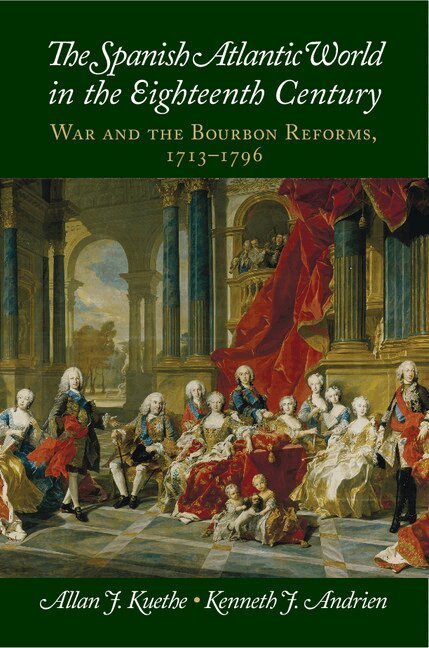
The Spanish Atlantic World in the Eighteenth Century
War and the Bourbon Reforms, 1713-1796
Inbunden, Engelska, 2014
862 kr
Skickas inom 7-10 vardagar
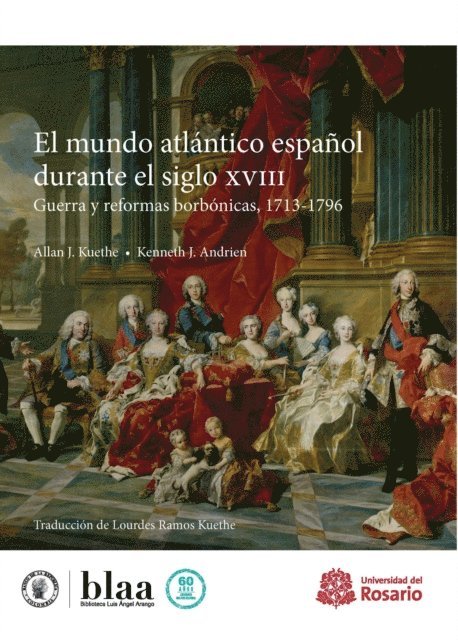
This volume elucidates Bourbon colonial policy with emphasis on Madrid's efforts to reform and modernize its American holdings. Set in an Atlantic world context, the book highlights the interplay between Spain and America as the Spanish empire struggled for survival amid the fierce international competition that dominated the eighteenth century. The authors use extensive research in the repositories of Spain and America, as well as innovative consultation of the French Foreign Affairs archive, to bring into focus the poorly understood reformist efforts of the early Bourbons, which laid the foundation for the better-known agenda of Charles III. As the book unfolds, the narrative puts flesh on the men and women who, for better or worse, influenced colonial governance. It is the story of power, ambition and idealism at the highest levels.
The Spanish Atlantic World in the Eighteenth Century
War and the Bourbon Reforms, 1713-1796
Häftad, Engelska, 2014
357 kr
Skickas inom 7-10 vardagar
This volume elucidates Bourbon colonial policy with emphasis on Madrid's efforts to reform and modernize its American holdings. Set in an Atlantic world context, the book highlights the interplay between Spain and America as the Spanish empire struggled for survival amid the fierce international competition that dominated the eighteenth century. The authors use extensive research in the repositories of Spain and America, as well as innovative consultation of the French Foreign Affairs archive, to bring into focus the poorly understood reformist efforts of the early Bourbons, which laid the foundation for the better-known agenda of Charles III. As the book unfolds, the narrative puts flesh on the men and women who, for better or worse, influenced colonial governance. It is the story of power, ambition and idealism at the highest levels.
1 619 kr
Skickas inom 10-15 vardagar
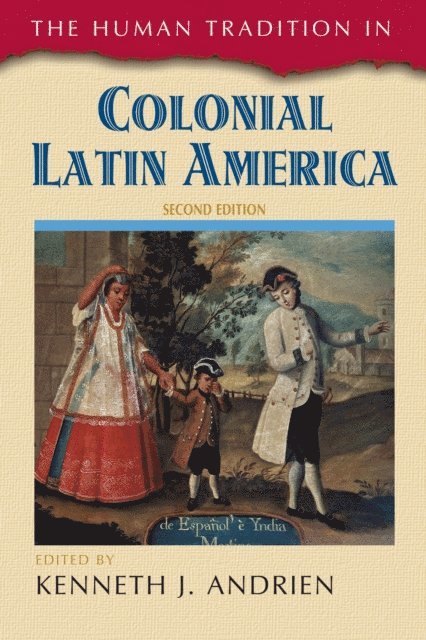
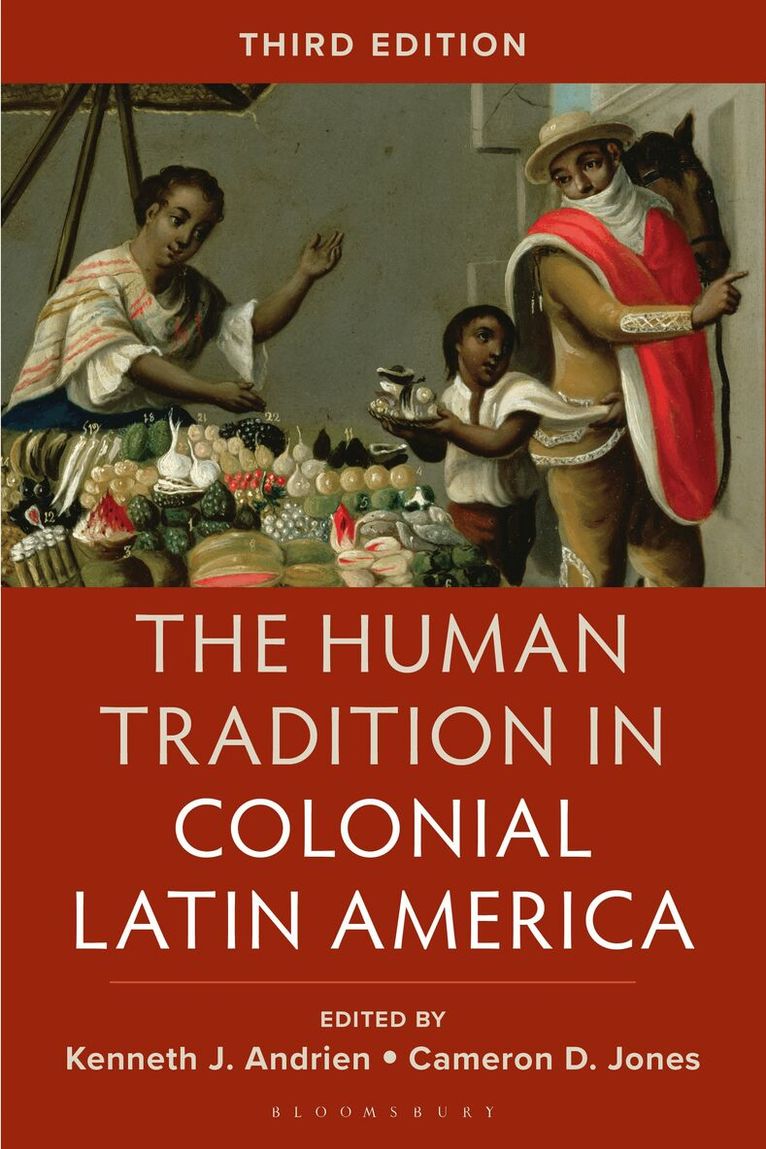
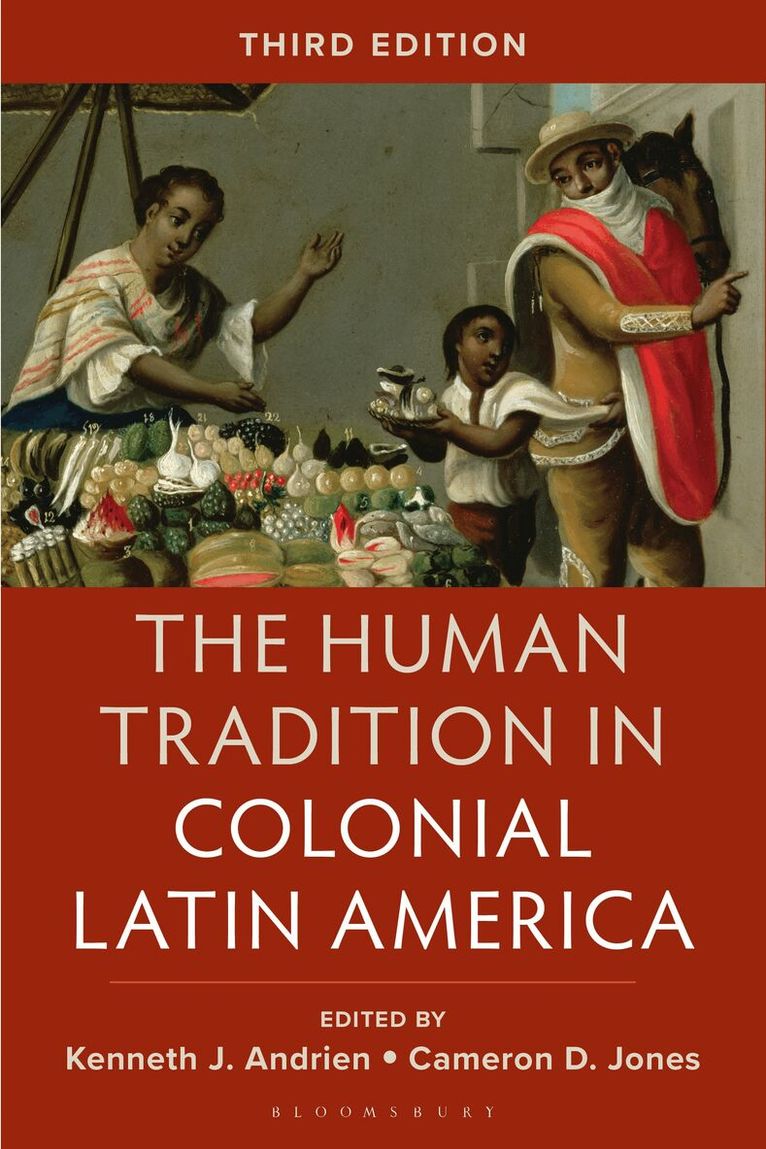
The Human Tradition in Colonial Latin America is an anthology of stories of largely ordinary individuals struggling to forge a life during the unstable colonial period in Latin America. These mini-biographies vividly show the tensions that emerged when the political, social, religious, and economic ideals of the Spanish and Portuguese colonial regimes and the Roman Catholic Church conflicted with the realities of daily living in the Americas.Now fully updated with new and revised essays, the book is carefully balanced among countries and ethnicities. Within an overall theme of social order and disorder in a colonial setting, the stories bring to life issues of gender; race and ethnicity; conflicts over religious orthodoxy; and crime, violence, and rebellion. Written by leading scholars, the essays are specifically designed to be readable and interesting. Ideal for the Latin American history survey and for courses on colonial Latin American history, this fresh and human text will engage as well as inform students.Contributions by: Rolena Adorno, Kenneth J. Andrien, Christiana Borchart de Moreno, Joan Bristol, Noble David Cook, Marcela Echeverri, Lyman L. Johnson, Mary Karasch, Alida C. Metcalf, Kenneth Mills, Muriel S. Nazzari, Ana María Presta, Susan E. Ramírez, Matthew Restall, Zeb Tortorici, Camilla Townsend, Ann Twinam, and Nancy E. van Deusen.
557 kr
Skickas inom 10-15 vardagar
The Human Tradition in Colonial Latin America is an anthology of stories of largely ordinary individuals struggling to forge a life during the unstable colonial period in Latin America. These mini-biographies vividly show the tensions that emerged when the political, social, religious, and economic ideals of the Spanish and Portuguese colonial regimes and the Roman Catholic Church conflicted with the realities of daily living in the Americas.Now fully updated with new and revised essays, the book is carefully balanced among countries and ethnicities. Within an overall theme of social order and disorder in a colonial setting, the stories bring to life issues of gender; race and ethnicity; conflicts over religious orthodoxy; and crime, violence, and rebellion. Written by leading scholars, the essays are specifically designed to be readable and interesting. Ideal for the Latin American history survey and for courses on colonial Latin American history, this fresh and human text will engage as well as inform students.Contributions by: Rolena Adorno, Kenneth J. Andrien, Christiana Borchart de Moreno, Joan Bristol, Noble David Cook, Marcela Echeverri, Lyman L. Johnson, Mary Karasch, Alida C. Metcalf, Kenneth Mills, Muriel S. Nazzari, Ana María Presta, Susan E. Ramírez, Matthew Restall, Zeb Tortorici, Camilla Townsend, Ann Twinam, and Nancy E. van Deusen.
1 245 kr
Skickas inom 10-15 vardagar
The Human Tradition in Colonial Latin America is an anthology of life stories of largely ordinary individuals struggling to forge a life during the unstable colonial period in Latin America. These mini-biographies show the tensions that emerged when the political, social, religious, and economic ideals of the Spanish and Portugese colonial regimes and the Roman Catholic Church conflicted with the realities of daily life in the Americas. The essays examine subthemes of gender roles; race and ethnicity; conflicts over religious orthodoxy; and crime, violence, and rebellion, while illustrating the overall theme of social order and disorder in a colonial setting. Professor Andrien has carefully selected pieces to comprise a volume that is well balanced in terms of geography, gender, and ethnicity. Written by established scholars, the essays are designed to be readable and interesting to students. Ideal for courses on Colonial Latin American history and the Latin American history survey, The Human Tradition in Colonial Latin America will interest as well as inform students.
331 kr
Skickas
This book tells the story of colonial Latin America through the lives of common people, helping students comprehend the triumphs and tragedies of daily life and its impact on the region’s history.Stretching from Mexico to Buenos Aires, from the Pacific coast across the Atlantic, from the first colonial invasions to independence, these stories knit together common themes. The narratives include a Mayan noblemen turned translator for a Spanish torturer, a Eurafrican woman healer accused of witchcraft, a missionary caught between native rebels and corrupt administrators, an Afro-Brazilian maroon leader trying to hold on to freedom, and a mestizo crown loyalist weary of independence under the new Creole elite.This new edition provides vital updates and tackles new topics:- Expanded scope to consider more trans-Atlantic and trans-regional individuals who gave colonial Latin America its uniquely wide-reaching cultural and geographic scope- Spaces between different empires- The complex role of religion and religious figures as cultural and political intermediaries- An additional chapter bridging the pre-Columbian period to post-invasion colonial rule- Updated terminology and historiography reflective of the changes in the field since the previous editionWhile most texts for use in the classroom approach political, social, religious, and economic trends through top-down narratives, this volume demonstrates how the ordinary lives of Latin Americans shaped the region. These engaging, easy-to-read chapters help students understand the complex interaction of race, gender, ethnicity, and religiosity in the colonial setting.