Kenneth S. Greenberg – författare
Visar alla böcker från författaren Kenneth S. Greenberg. Handla med fri frakt och snabb leverans.
6 produkter
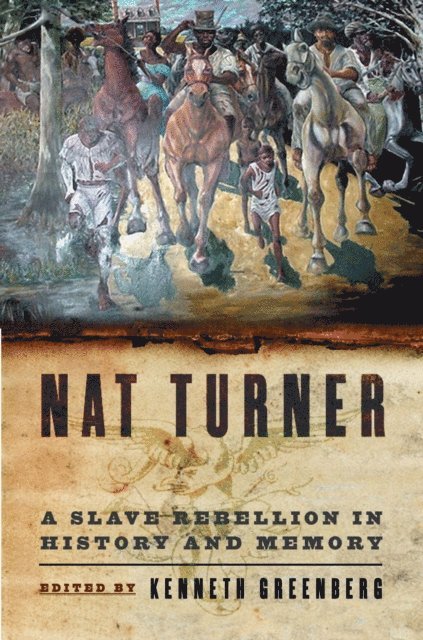
Nat Turner
A Slave Rebellion in History and Memory
E-bok, 2003
227 kr
Lägg i varukorg
Nat Turner''s name rings through American history with a force all its own. Leader of the most important slave rebellion on these shores, variously viewed as a murderer of unarmed women and children, an inspired religious leader, a fanatic--this puzzling figure represents all the terrible …
Nat Turner
A Slave Rebellion in History and Memory
Häftad, 2004
334 kr
Lägg i varukorg
Nat Turner's name rings through American history with a force all its own. Leader of the most important slave rebellion on these shores, variously viewed as a murderer of unarmed women and children, an inspired religious leader, a fanatic--this puzzling figure represents all the terrible …
Nat Turner
A Slave Rebellion in History and Memory
E-bok, 2003
227 kr
Lägg i varukorg
Nat Turner''s name rings through American history with a force all its own. Leader of the most important slave rebellion on these shores, variously viewed as a murderer of unarmed women and children, an inspired religious leader, a fanatic--this puzzling figure represents all the terrible …
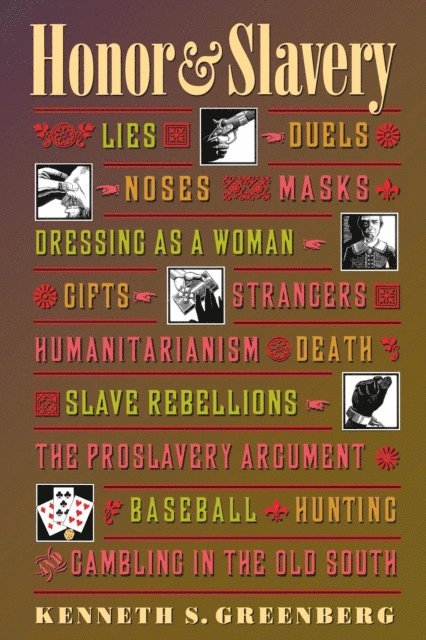
Honor and Slavery
Lies, Duels, Noses, Masks, Dressing as a Woman, Gifts, Strangers, Humanitarianism, Death, Slave Rebellions, the Proslavery Argument, Baseball, Hunting, and Gambling in the Old South
Häftad, 1997
515 kr
Lägg i varukorg
The "honorable men" who ruled the Old South had a language all their own, one comprised of many apparently outlandish features yet revealing much about the lives of masters and the nature of slavery. When we examine Jefferson Davis's explanation as to why he was wearing women's clothing when caught …
Honor and Slavery
Lies, Duels, Noses, Masks, Dressing as a Woman, Gifts, Strangers, Humanitarianism, Death, Slave Rebellions, the Proslavery Argument, Baseball, Hunting, and Gambling in the Old South
E-bok, 2020
705 kr
Lägg i varukorg
The "honorable men" who ruled the Old South had a language all their own, one comprised of many apparently outlandish features yet revealing much about the lives of masters and the nature of slavery. When we examine Jefferson Davis''s explanation as to why he was wearing women''s clothing when …
Masters and Statesmen
The Political Culture of American Slavery
Häftad, 1988
468 kr
Lägg i varukorg
"Masters and Statesmen" delineates a provocative set of parallels between the proslavery argument, concepts of political representation, dueling, the theory and practice of political parties, and secession in the American South. "Slavery in the antebellum South", Kenneth Greenberg writes, "was …