Kenneth W. Noe - Böcker
Visar alla böcker från författaren Kenneth W. Noe. Handla med fri frakt och snabb leverans.
11 produkter
11 produkter
764 kr
Skickas inom 7-10 vardagar
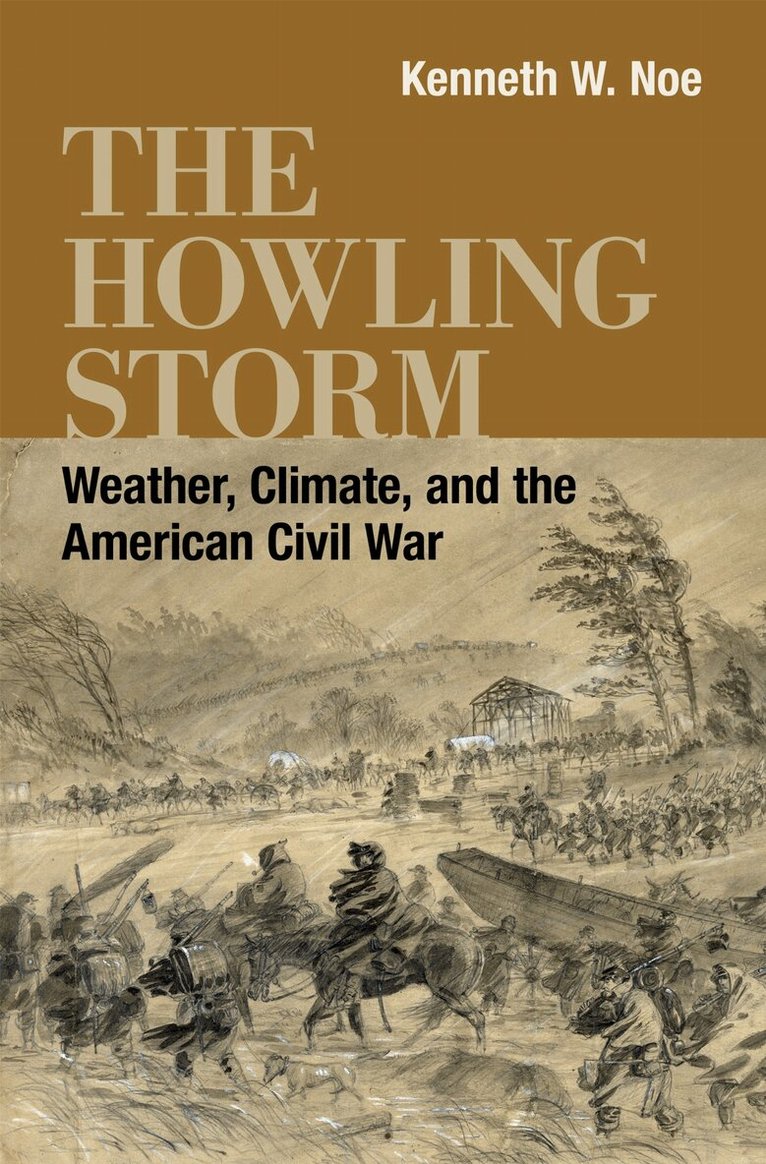
Traditional histories of the Civil War describe the conflict as a war between North and South. Kenneth W. Noe suggests it should instead be understood as a war between the North, the South, and the weather. In The Howling Storm, Noe retells the history of the conflagration with a focus on the ways in which weather and climate shaped the outcomes of battles and campaigns. He further contends that events such as floods and droughts affecting the Confederate home front constricted soldiers' food supply, lowered morale, and undercut the government's efforts to boost nationalist sentiment. By contrast, the superior equipment and open supply lines enjoyed by Union soldiers enabled them to cope successfully with the South's extreme conditions and, ultimately, secure victory in 1865.Climate conditions during the war proved unusual, as irregular phenomena such as El Niño, La Niña, and similar oscillations in the Atlantic Ocean disrupted weather patterns across southern states. Taking into account these meteorological events, Noerethinks conventional explanations of battlefield victories and losses, compelling historians to reconsider long-held conclusions about the war. Unlike past studies that fault inflation, taxation, and logistical problems for the Confederate defeat, his work considers how soldiers and civilians dealt with floods and droughts that beset areas of the South in 1862, 1863, and 1864. In doing so, he addresses the foundational causes that forced Richmond to make difficult and sometimes disastrous decisions when prioritizing the feeding of the home front or the front lines. The Howling Storm stands as the first comprehensive examination of weather and climate during the Civil War. Its approach, coverage, and conclusions are certain to reshape the field of Civil War studies.
426 kr
Skickas inom 7-10 vardagar
Finalist for the Lincoln Prize!Traditional histories of the Civil War describe the conflict as a war between North and South. Kenneth W. Noe suggests it should instead be understood as a war between the North, the South, and the weather. In The Howling Storm, Noe retells the history of the conflagration with a focus on the ways in which weather and climate shaped the outcomes of battles and campaigns. He further contends that events such as floods and droughts affecting the Confederate home front constricted soldiers' food supply, lowered morale, and undercut the government's efforts to boost nationalist sentiment. By contrast, the superior equipment and open supply lines enjoyed by Union soldiers enabled them to cope successfully with the South's extreme conditions and, ultimately, secure victory in 1865.Climate conditions during the war proved unusual, as irregular phenomena such as El Niño, La Niña, and similar oscillations in the Atlantic Ocean disrupted weather patterns across southern states. Taking into account these meteorological events, Noe rethinks conventional explanations of battlefield victories and losses, compelling historians to reconsider long-held conclusions about the war. Unlike past studies that fault inflation, taxation, and logistical problems for the Confederate defeat, his work considers how soldiers and civilians dealt with floods and droughts that beset areas of the South in 1862, 1863, and 1864. In doing so, he addresses the foundational causes that forced Richmond to make difficult and sometimes disastrous decisions when prioritizing the feeding of the home front or the front lines. The Howling Storm stands as the first comprehensive examination of weather and climate during the Civil War. Its approach, coverage, and conclusions are certain to reshape the field of Civil War studies.
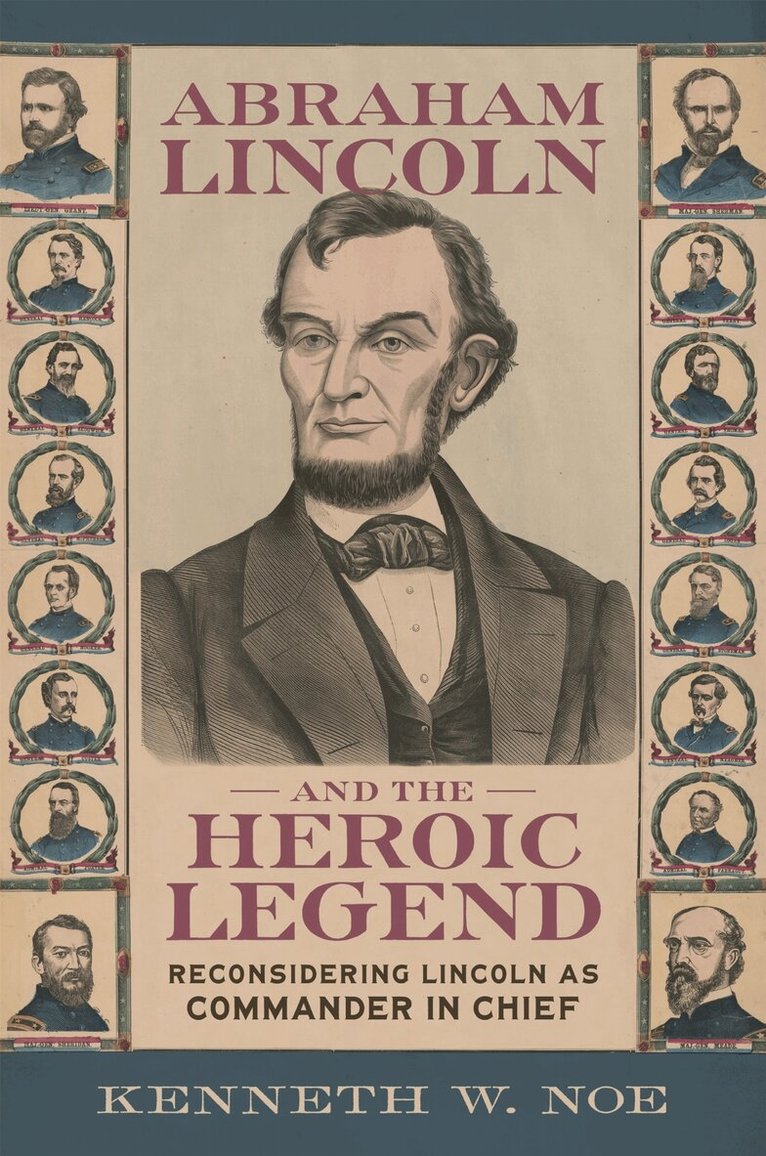
Abraham Lincoln and the Heroic Legend
Reconsidering Lincoln As Commander in Chief
Inbunden, Engelska, 2026
535 kr
Skickas inom 3-6 vardagar
Kenneth W. Noe's Abraham Lincoln and the Heroic Legend boldly questions the long-accepted notion that the sixteenth president was an almost-perfect commander in chief, more intelligent than his generals. The legend originated with Lincoln himself, who early in the war concluded that he possessed a keen strategic and tactical mind. Noe explores the genesis of this powerful idea and asks why so many have tenaciously defended it. George McClellan, Lincoln's top general, emerged in Lincoln's mind and the American psyche as his chief adversary, and to this day, the Lincoln-McClellan relationship remains central to the enduring legend. Lincoln came to view himself as a wiser warrior than McClellan, and as the war proceeded, a few members of Lincoln's inner circle began to echo the president's thoughts on his military prowess. Convinced of his own tactical brilliance, Lincoln demanded that Ulysses Grant, McClellan's replacement, turn to the "hard, tough fighting" of the Overland and Petersburg campaigns, when Grant's first instinct was to copy McClellan and swing into the Confederate rear. Noe suggests that the growth and solidification of the heroic legend began with Lincoln's assassination; it debuted in print only months afterward and was so cloaked in religious piety that for decades it could not withstand the counternarratives offered by secular contemporaries. Although the legend was debated and neglected at times, it reemerged in interwar Great Britain and gained canonical status in the 1950s Cold War era and during the Civil War Centennial of the 1960s. Historians became torchbearers of the heroic legend and much else that we know about Lincoln, reorienting his biography forever. Based on lessons and language from the world wars, their arguments were so timely and powerful that they seized the field. Since then, biographers and historians have reevaluated many aspects of Lincoln's life, but have rarely revisited his performance as commander in chief. Noe's reappraisal is long overdue.
583 kr
Skickas inom 10-15 vardagar
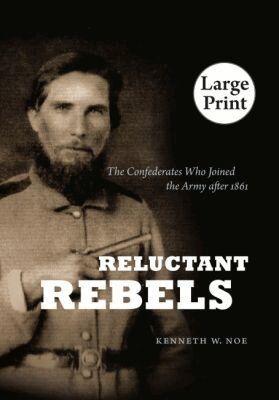
After the feverish mobilization of secession had faded, why did Southern men join the Confederate army? Kenneth Noe examines the motives and subsequent performance of "later enlisters." He offers a nuanced view of men who have often been cast as less patriotic and less committed to the cause, rekindling the debate over who these later enlistees were, why they joined, and why they stayed and fought. Noe refutes the claim that later enlisters were more likely to desert or perform poorly in battle and reassesses the argument that they were less ideologically savvy than their counterparts who enlisted early in the conflict. He argues that kinship and neighborhood, not conscription, compelled these men to fight: they were determined to protect their families and property and were fueled by resentment over emancipation and pillaging and destruction by Union forces. But their age often combined with their duties to wear them down more quickly than younger men, making them less effective soldiers for a Confederate nation that desperately needed every able-bodied man it could muster.Reluctant Rebels places the stories of individual soldiers in the larger context of the Confederate war effort and follows them from the initial optimism of enlistment through the weariness of battle and defeat.Reluctant Rebels places the stories of individual soldiers in the larger context of the Confederate war effort and follows them from the initial optimism of enlistment through the weariness of battle and defeat.
986 kr
Skickas inom 3-6 vardagar
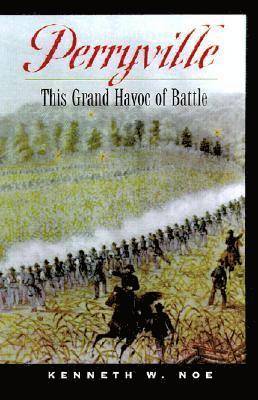
On October 8, 1862, Union and Confederate forces clashed near Perryville, Kentucky, in what would be the largest battle ever fought on Kentucky soil. The climax of a campaign that began two months before in northern Mississippi, Perryville came to be recognized as the high water mark of the western Confederacy. Perryville: This Grand Havoc of Battle is the definitive account of this important conflict. While providing all the parry and thrust one might expect from an excellent battle narrative, the book also reflects the new trends in Civil War history in its concern for ordinary soldiers and civilians caught in the slaughterhouse. The last chapter, unique among Civil War battle narratives, even discusses the battle's veterans, their families, efforts to preserve the battlefield, and the many ways Americans have remembered and commemorated Perryville.
444 kr
Skickas inom 3-6 vardagar
On October 8, 1862, Union and Confederate forces clashed near Perryville, Kentucky, in what would be the largest battle ever fought on Kentucky soil. The climax of a campaign that began two months before in northern Mississippi, Perryville came to be recognized as the high water mark of the western Confederacy. Perryville: This Grand Havoc of Battle is the definitive account of this important conflict. While providing all the parry and thrust one might expect from an excellent battle narrative, the book also reflects the new trends in Civil War history in its concern for ordinary soldiers and civilians caught in the slaughterhouse. The last chapter, unique among Civil War battle narratives, even discusses the battle's veterans, their families, efforts to preserve the battlefield, and the many ways Americans have remembered and commemorated Perryville.
318 kr
Skickas inom 7-10 vardagar
Southwest Virginia's Railroad
Modernization and the Sectional Crisis in the Civil War Era
Häftad, Engelska, 2003
264 kr
Skickas inom 7-10 vardagar
This work examines the construction of the Virginia and Tennessee Railroad through southwest Virginia in the 1850s, before the Civil War began. The building and operation of the railroad reoriented the economy of the region toward staple crops and slave labour.
432 kr
Skickas inom 10-15 vardagar
After the feverish mobilization of secession had faded, why did Southern men join the Confederate army? Kenneth Noe examines the motives and subsequent performance of ""later enlisters."" He offers a nuanced view of men who have often been cast as less patriotic and less committed to the cause, rekindling the debate over who these later enlistees were, why they joined, and why they stayed and fought. Noe refutes the claim that later enlisters were more likely to desert or perform poorly in battle and reassesses the argument that they were less ideologically savvy than their counterparts who enlisted early in the conflict. He argues that kinship and neighborhood, not conscription, compelled these men to fight: they were determined to protect their families and property and were fueled by resentment over emancipation and pillaging and destruction by Union forces. But their age often combined with their duties to wear them down more quickly than younger men, making them less effective soldiers for a Confederate nation that desperately needed every able-bodied man it could muster.Reluctant Rebels places the stories of individual soldiers in the larger context of the Confederate war effort and follows them from the initial optimism of enlistment through the weariness of battle and defeat.
346 kr
Skickas inom 10-15 vardagar
Of the one hundred thousand Southerners who donned Federal uniforms during the Civil War, more than forty thousand were Tennesseeans. Not surprisingly, most came from the Appalachian counties of East Tennessee—but not all. A Middle Tennessean named Marcus Woodcock, not yet nineteen when the war began, was among the exceptions.A Southern Boy in Blue is Woodcock's own account of his experiences during the war. After joining the 9th Kentucky Infantry, Woodcock barely missed the battle of Shiloh—a bout of measles kept him from the front lines—but he went on to see action at Stones River, Chickamauga, and Missionary Ridge. He also participated in the Atlanta campaign and the siege of Corinth and was among the reserves at the battle of Perryville. In three years he rose from the rank of private to that of first lieutenant. Since Woodcock wrote his memoir in 1865 (instead of much later as many veterans did), his descriptions of battles, camp life, and period politics have a special vividness. Woodcock's account is also significant in showing how his views and opinions of the war changed over time. Initially opposed to the use of black troops and to Lincoln's re-election, he eventually converted to both positions and describes the process by which he transformed his thinking.Woodcock's memoir has been meticulously annotated by Kenneth Noe, who also provides an introduction that places Woodcock's experiences in historical context and describes his postwar career as a prominent Tennessee legislator, attorney, business administrator, and Baptist layman. The book is not only a compelling personal account but an important addition to the literature on Southern Unionism.The Editor: Kenneth W. Noe is associate professor of history at West Georgia College. He is the author of Southwest Virginia's Railroad: Modernization and the Sectional Crisis.
322 kr
Skickas inom 10-15 vardagar
Unlike many collections of original essays, this one is consistently fresh, coherent, and excellent. It reflects the combined scholarly excitement of ... the cultural history of the Civil War and the social history of Appalachia. As the editors point out in their introduction, this collection revises two false cliches - uniform Unionism in a region filled with cultural savages.