Kent Greenawalt – författare
Visar alla böcker från författaren Kent Greenawalt. Handla med fri frakt och snabb leverans.
32 produkter
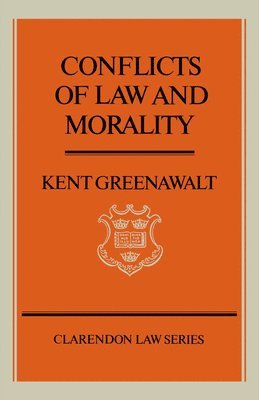
Conflicts of Law and Morality
Häftad, 1989
1434 kr
Lägg i varukorg
This book deals with conscientious law-breaking - those instances in which individuals believe that they have sound moral reasons for breaking a particular law. This study is a comprehensive philosophical and legal analysis of the grey area in which the foundations of law and morality clash. It …
Legal Interpretation
Perspectives from Other Disciplines and Private Texts
E-bok, 2010
1366 kr
Lägg i varukorg
In Legal Interpretation, Kent Greenawalt focuses on the complex and multi-faceted topic of textual interpretation of the law. All law needs to be interpreted, and there are many ways to do it. But what sorts of questions must one seek to answer in interpreting law and what approach should one take …
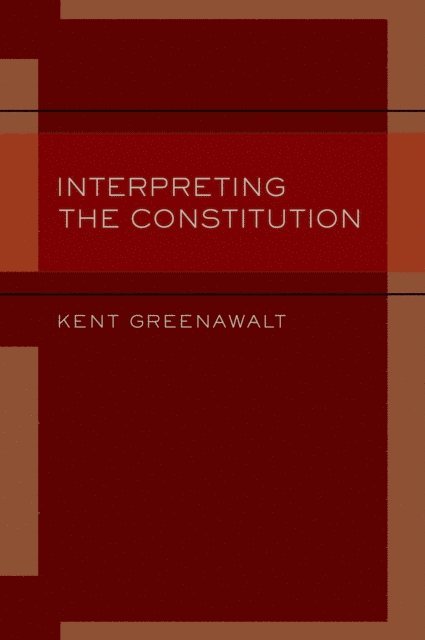
Interpreting the Constitution
E-bok, 2015
1366 kr
Lägg i varukorg
This third volume about legal interpretation focuses on the interpretation of a constitution, most specifically that of the United States of America. In what may be unique, it combines a generalized account of various claims and possibilities with an examination of major domains of American …
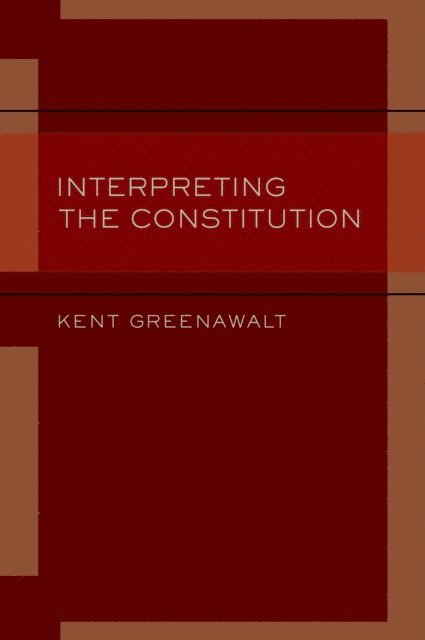
Interpreting the Constitution
E-bok, 2015
1366 kr
Lägg i varukorg
This third volume about legal interpretation focuses on the interpretation of a constitution, most specifically that of the United States of America. In what may be unique, it combines a generalized account of various claims and possibilities with an examination of major domains of American …
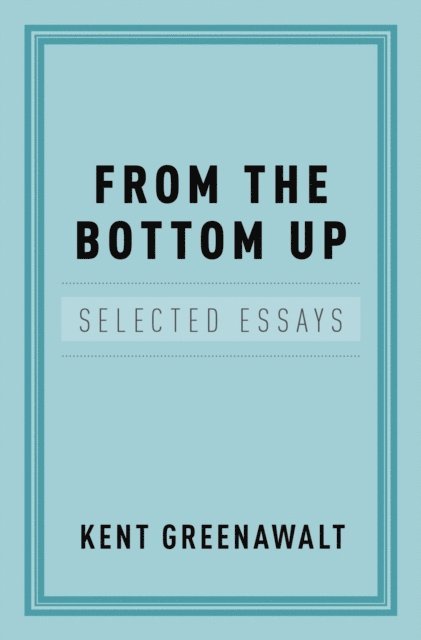
From the Bottom Up
Selected Essays
E-bok, 2016
1855 kr
Lägg i varukorg
Kent Greenawalt''s From the Bottom Up constitutes a collection of articles and essays written over the last five decades of his career. They cover a wide range of topics, many of which address ties between political and moral philosophy and what the law does and should provide. A broad general …
Realms of Legal Interpretation
Core Elements and Critical Variations
Inbunden, 2018
975 kr
Lägg i varukorg
Legal norms may forbid, require, or authorize a particular form of behavior. The law of contracts, for example, informs people how to enter into agreements that will bind both sides, and from this we establish legal requirements on how they should behave. In public law, legal standards provide …
Realms of Legal Interpretation
Core Elements and Critical Variations
E-bok, 2018
624 kr
Lägg i varukorg
Legal norms may forbid, require, or authorize a particular form of behavior. The law of contracts, for example, informs people how to enter into agreements that will bind both sides, and from this we establish legal requirements on how they should behave. In public law, legal standards provide …
Realms of Legal Interpretation
Core Elements and Critical Variations
E-bok, 2018
624 kr
Lägg i varukorg
Legal norms may forbid, require, or authorize a particular form of behavior. The law of contracts, for example, informs people how to enter into agreements that will bind both sides, and from this we establish legal requirements on how they should behave. In public law, legal standards provide …
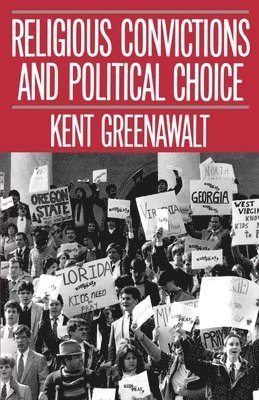
Religious Convictions and Political Choice
Inbunden, 1988
3681 kr
Lägg i varukorg
This is the first thorough examination of what has become an intensely relevant contemporary issue. Beginning with an account of the basic premises of liberal democracy, it moves on to a comparison between rational, secular grounds of decision and grounds based on religious convictions. The author …
Religious Convictions and Political Choice
Häftad, 1992
1253 kr
Lägg i varukorg
How far may Americans properly rely on their religious beliefs when they make and defend political decisions? For example, are ordinary citizens or legislators doing something wrong when they consciously allow their decisions respecting abortion laws to be determined by their religious views? …
Speech, Crime, and the Uses of Language
Häftad, 1992
1685 kr
Lägg i varukorg
This is a paperback reprint of a book published in 1989.In this comprehensive treatise Greenawalt explores the three-way relationship between the idea of freedom of speech, the law of crimes, and the many uses of language. He begins by considering free speech as a political principle, and after a …
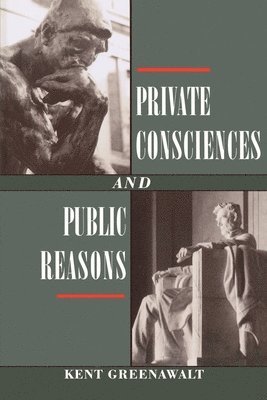
Private Consciences and Public Reasons
Häftad, 1995
652 kr
Lägg i varukorg
Within democratic societies, a deep division exists over the nature of community and the grounds for political life. Should the political order be neutral between competing conceptions of the good life or should it be based on some such conception? This book addresses one crucial set of problems …
Law and Objectivity
E-bok, 1995
411 kr
Lägg i varukorg
In modern times the idea of the objectivity of law has been undermined by skepticism about legal institutions, disbelief in ideals of unbiased evaluation, and a conviction that language is indeterminate. Greenawalt here considers the validity of such skepticism, examining such questions as: whether …
Private Consciences and Public Reasons
E-bok, 1995
424 kr
Lägg i varukorg
Within democratic societies, a deep division exists over the nature of community and the grounds for political life. Should the political order be neutral between competing conceptions of the good life or should it be based on some such conception? This book addresses one crucial set of problems …
Speech, Crime, and the Uses of Language
E-bok, 1992
1113 kr
Lägg i varukorg
In this book Greenawalt explores the three-way relationship between the idea of freedom of speech, the law of crimes, and the many uses of language. He begins by considering free speech as a political principle, and after a thorough and incisive analysis of the justifications commonly advanced for …
Conflicts of Law and Morality
E-bok, 1989
742 kr
Lägg i varukorg
Powerful emotion and pursuit of self-interest have many times led people to break the law with the belief that they are doing so with sound moral reasons. This study, a comprehensive philosophical and legal analysis of the gray area in which the foundations of law and morality clash, views these …
Religious Convictions and Political Choice
E-bok, 1987
490 kr
Lägg i varukorg
How far may Americans properly rely on their religious beliefs when they make and defend political decisions? For example, are ordinary citizens or legislators doing something wrong when they consciously allow their decisions respecting abortion laws to be determined by their religious views? …
Legal Interpretation
Perspectives from Other Disciplines and Private Texts
Inbunden, 2010
992 kr
Lägg i varukorg
Comparative Legal Interpretation focuses on textual interpretation of the law. All law needs to be interpreted, and there are many ways to do it. Greenawalt covers the dominant methods of legal interpretation, explaining their underlying structure and efficacy. But there are other issues involved. …
Statutory and Common Law Interpretation
Inbunden, 2012
1363 kr
Lägg i varukorg
As Kent Greenwalt's second volume on aspects of legal interpretation, this book analyzes statutory and common law interpretation and compares the two. In respect to statutory interpretation, it first asks whether judges are "faithful agents" of the legislature or "independent cooperative partners." …
Interpreting the Constitution
Inbunden, 2015
1363 kr
Lägg i varukorg
This third volume about legal interpretation focuses on the interpretation of a constitution, most specifically that of the United States of America. In what may be unique, it combines a generalized account of various claims and possibilities with an examination of major domains of American …
From the Bottom Up
Selected Essays
Inbunden, 2016
2306 kr
Lägg i varukorg
Kent Greenawalt's From the Bottom Up constitutes a collection of articles and essays written over the last five decades of his career. They cover a wide range of topics, many of which address ties between political and moral philosophy and what the law does and should provide. A broad general theme …
From the Bottom Up
Selected Essays
E-bok, 2016
1855 kr
Lägg i varukorg
Kent Greenawalt''s From the Bottom Up constitutes a collection of articles and essays written over the last five decades of his career. They cover a wide range of topics, many of which address ties between political and moral philosophy and what the law does and should provide. A broad general …
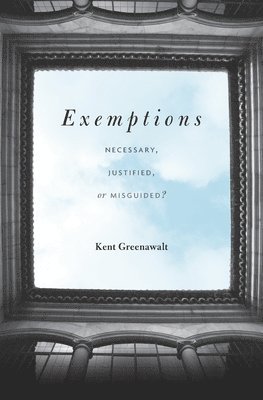
Exemptions
Necessary, Justified, or Misguided?
Inbunden, 2016
510 kr
Lägg i varukorg
Should laws apply equally to everyone, or should some individuals and organizations be granted exemptions because of conflicting religious or moral convictions? In recent years, this question has become intensely controversial in America. The Supreme Court’s ruling on same-sex marriage, in …
When Free Exercise and Nonestablishment Conflict
Inbunden, 2017
394 kr
Lägg i varukorg
The First Amendment to the United States Constitution begins: “Congress shall make no law respecting an establishment of religion or prohibiting the free exercise thereof.” Taken as a whole, this statement has the aim of separating church and state, but tensions can emerge between its two …
Fighting Words
Individuals, Communities, and Liberties of Speech
Häftad, 1996
744 kr
Lägg i varukorg
Should "hate speech" be made a criminal offense, or does the First Amendment oblige Americans to permit the use of epithets directed against a person's race, religion, ethnic origin, gender, or sexual preference? Does a campus speech code enhance or degrade democratic values? When the American flag …
Does God Belong in Public Schools?
Häftad, 2007
401 kr
Lägg i varukorg
Controversial Supreme Court decisions have barred organized school prayer, but neither the Court nor public policy exclude religion from schools altogether. In this book, one of America's leading constitutional scholars asks what role religion ought to play in public schools. Kent Greenawalt …
Religion and the Constitution, Volume 1
Free Exercise and Fairness
Häftad, 2009
401 kr
Lägg i varukorg
Balancing respect for religious conviction and the values of liberal democracy is a daunting challenge for judges and lawmakers, particularly when religious groups seek exemption from laws that govern others. Should members of religious sects be able to use peyote in worship? Should pacifists be …
Religion and the Constitution, Volume 2
Establishment and Fairness
Häftad, 2009
401 kr
Lägg i varukorg
Balancing respect for religious conviction and the values of liberal democracy is a daunting challenge for judges and lawmakers, particularly when religious groups seek exemption from laws that govern others. Should students in public schools be allowed to organize devotional Bible readings and …
Fighting Words
Individuals, Communities, and Liberties of Speech
E-bok, 1996
599 kr
Lägg i varukorg
Should "hate speech" be made a criminal offense, or does the First Amendment oblige Americans to permit the use of epithets directed against a person''s race, religion, ethnic origin, gender, or sexual preference? Does a campus speech code enhance or degrade democratic values? When the American …
Does God Belong in Public Schools?
E-bok, 2009
551 kr
Lägg i varukorg
Controversial Supreme Court decisions have barred organized school prayer, but neither the Court nor public policy exclude religion from schools altogether. In this book, one of America''s leading constitutional scholars asks what role religion ought to play in public schools. Kent Greenawalt …