Kerry Parker - Böcker
Visar alla böcker från författaren Kerry Parker. Handla med fri frakt och snabb leverans.
1 produkt
1 produkt
2 752 kr
Kommande
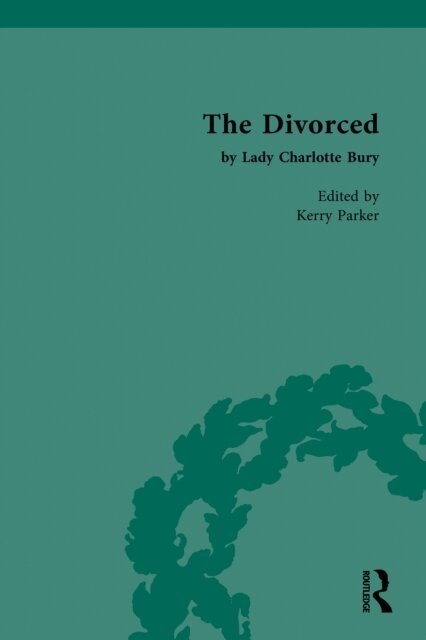
Lady Charlotte Susan Maria Bury née Campbell (1775–1861) is one of the most influential and least understood women’s rights activists of the nineteenth century. Her landmark text, The Divorced, has been out of circulation in the UK for almost two centuries; this new edition redefines her work not as silver-fork fiction but as matrimonial reform literature, and resituates the novel within the early nineteenth-century historical contexts that produced it. The introduction and scholarly notes trace Bury’s political response during the 1810s to the public persecution of Princess Caroline of Brunswick (1768–1821) by her estranged husband, an affair which significantly heightened women’s anxieties about their legal and financial security. Firm connections are established also between The Divorced and the writings of early-feminist orator Anna Doyle Wheeler (1780–1848) — one of the several contemporary campaigners who harnessed progressive literature of all modes to their political cause. Discussed alongside publications in 1831-32 by the radical Unitarian activist Harriet Taylor-Mill (1807– 58) is the contribution Bury’s novel made to the endeavours of Caroline Norton (1808–77), an admirer of Wollstonecraft whose circle included Mary Shelley and Wheeler’s daughter, Lady Rosina Bulwer Lytton (1802-1882). In 1837 Bury challenged the abuses of a culture which permitted separated and divorced women to be dispossessed not only of their status and reputation, but of their children. She deliberately pricked the public conscience by dramatising notorious criminal conversation cases of the 1820s and 1830s, confronting also the seismic erosions of widowed and divorced women’s property rights which had been passed into law between 1811 and 1833. Driven by her concern for family, friends and women who experienced problematic marriage in wider society, Bury embedded her radical message within the conventions of the roman–à-clef to extend the appeal and reach of her novel. She also used immersive narrative not only to increase women’s awareness of their legal vulnerability but to inaugurate the broken-marriage genre under cover of the moral-domestic fictional mode. Throughout the 1830s she strove to change the moral standards of an unequal and unjust culture and arguably exerted a material influence, through fiction, upon the outcome of contemporary political campaigns to achieve legislative change. An invaluable resource for scholars of women’s history and literature in 19th century Britain.