Kerry Wallach - Böcker
Visar alla böcker från författaren Kerry Wallach. Handla med fri frakt och snabb leverans.
4 produkter
4 produkter
Del 17 - Dimyonot
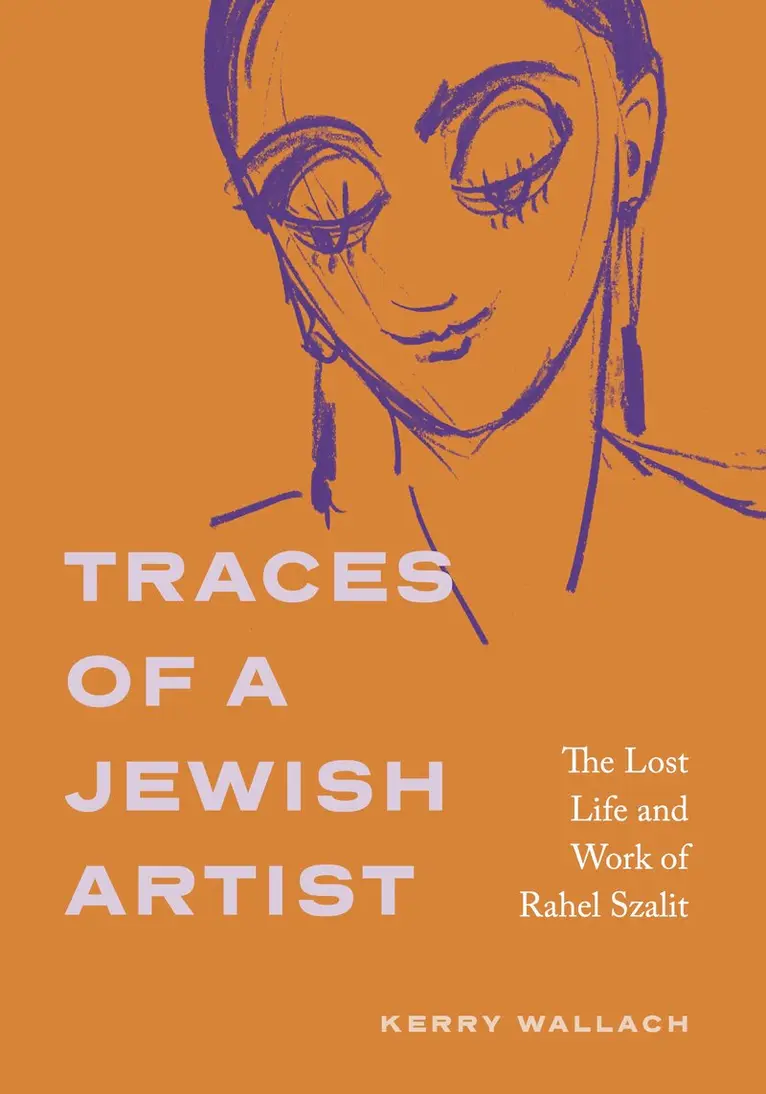
Traces of a Jewish Artist
The Lost Life and Work of Rahel Szalit
Inbunden, Engelska, 2024
288 kr
Skickas inom 7-10 vardagar
Graphic artist, illustrator, painter, and cartoonist Rahel Szalit (1888–1942) was among the best-known Jewish women artists in Weimar Berlin. But after she was arrested by the French police and then murdered by the Nazis at Auschwitz, she was all but lost to history, and most of her paintings have been destroyed or gone missing. Drawing on a range of primary and secondary sources, this biography recovers Szalit’s life and presents a stunning collection of her art.Szalit was a sought-after artist. Highly regarded by art historians and critics of her day, she made a name for herself with soulful, sometimes humorous illustrations of Jewish and world literature by Sholem Aleichem, Heinrich Heine, Leo Tolstoy, Charles Dickens, and others. She published her work in the mainstream German and Jewish press, and she ran in artists’ and queer circles in Weimar Berlin and in 1930s Paris. Szalit’s fascinating life demonstrates how women artists gained access to Jewish and avant-garde movements by experimenting with different media and genres.This engaging and deeply moving biography explores the life, work, and cultural contexts of an exceptional Jewish woman artist. Complementing studies such as Michael Brenner’s The Renaissance of Jewish Culture in Weimar Germany, this book brings Rahel Szalit into the larger conversation about Jewish artists, Expressionism, and modern art.
372 kr
Skickas inom 7-10 vardagar
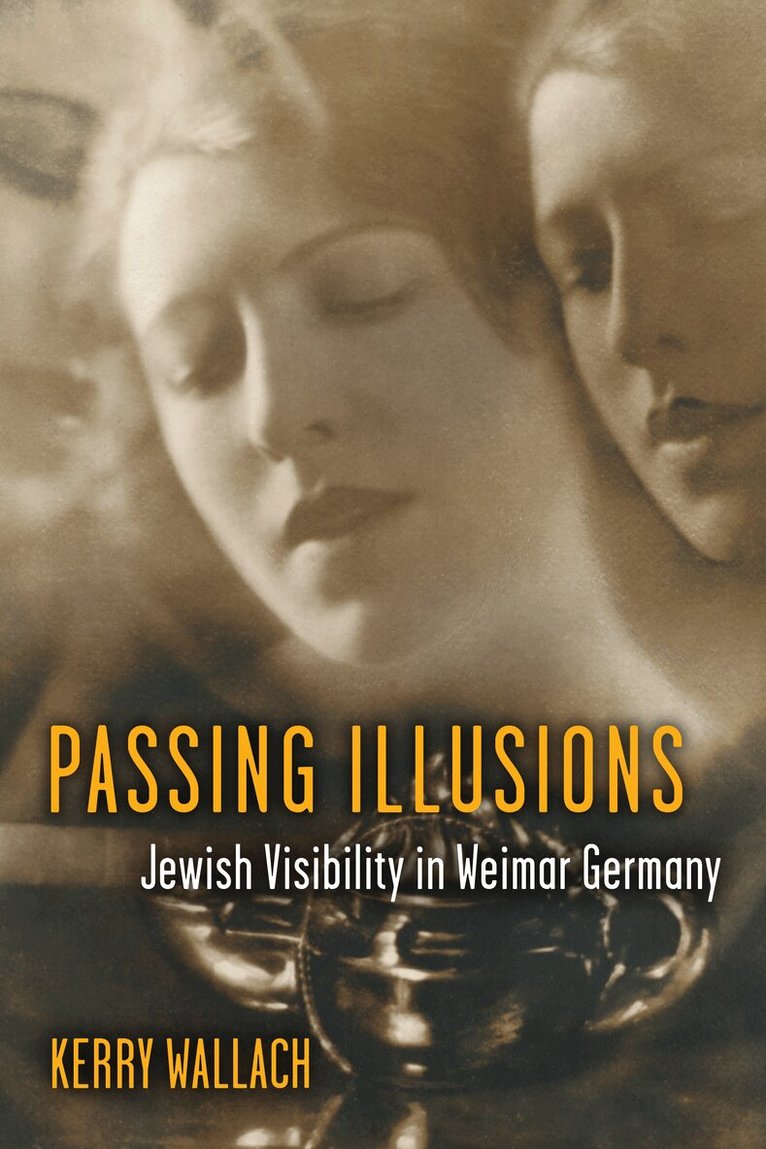
Weimar Germany (1919–33) was an era of equal rights for women and minorities, but also of growing antisemitism and hostility toward the Jewish population. This led some Jews to want to pass or be perceived as non-Jews; yet there were still occasions when it was beneficial to be openly Jewish. Being visible as a Jew often involved appearing simultaneously non-Jewish and Jewish. Passing Illusions examines the constructs of German-Jewish visibility during the Weimar Republic and explores the controversial aspects of this identity—and the complex reasons many decided to conceal or reveal themselves as Jewish. Focusing on racial stereotypes, Kerry Wallach outlines the key elements of visibility, invisibility, and the ways Jewishness was detected and presented through a broad selection of historical sources including periodicals, personal memoirs, and archival documents, as well as cultural texts including works of fiction, anecdotes, images, advertisements, performances, and films. Twenty black-and-white illustrations (photographs, works of art, cartoons, advertisements, film stills) complement the book’s analysis of visual culture.
1 068 kr
Skickas
Weimar Germany (1919–33) was an era of equal rights for women and minorities, but also of growing antisemitism and hostility toward the Jewish population. This led some Jews to want to pass or be perceived as non-Jews; yet there were still occasions when it was beneficial to be openly Jewish. Being visible as a Jew often involved appearing simultaneously non-Jewish and Jewish. Passing Illusions examines the constructs of German-Jewish visibility during the Weimar Republic and explores the controversial aspects of this identity—and the complex reasons many decided to conceal or reveal themselves as Jewish. Focusing on racial stereotypes, Kerry Wallach outlines the key elements of visibility, invisibility, and the ways Jewishness was detected and presented through a broad selection of historical sources including periodicals, personal memoirs, and archival documents, as well as cultural texts including works of fiction, anecdotes, images, advertisements, performances, and films. Twenty black-and-white illustrations (photographs, works of art, cartoons, advertisements, film stills) complement the book’s analysis of visual culture.
2 229 kr
Skickas inom 3-6 vardagar
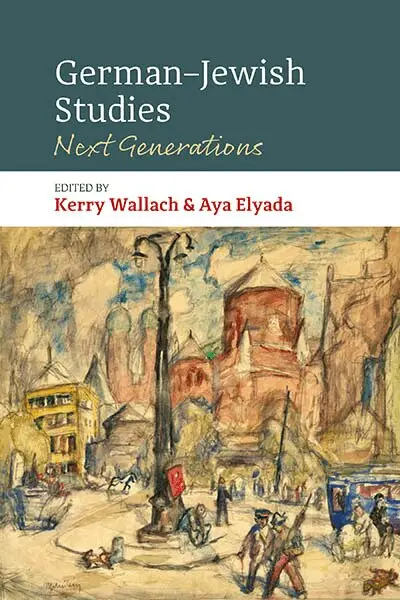
As a field, German-Jewish Studies emphasizes the dangers of nationalism, monoculturalism, and ethnocentrism, while making room for multilingual and transnational perspectives with questions surrounding migration, refugees, exile, and precarity. Focussing on the relevance and utility of the field for the twenty-first century, German-Jewish Studies explores why studying and applying German-Jewish history and culture must evolve and be given further attention today. The volume brings together an interdisciplinary range of scholars to reconsider the history of antisemitism—as well as intersections of antisemitism with racism and colonialism—and how connections to German Jews shed light on the continuities, ruptures, anxieties, and possible futures of German-speaking Jews and their legacies.