Kerstin S. Jobst - Böcker
Visar alla böcker från författaren Kerstin S. Jobst. Handla med fri frakt och snabb leverans.
7 produkter
7 produkter
314 kr
Skickas inom 5-8 vardagar
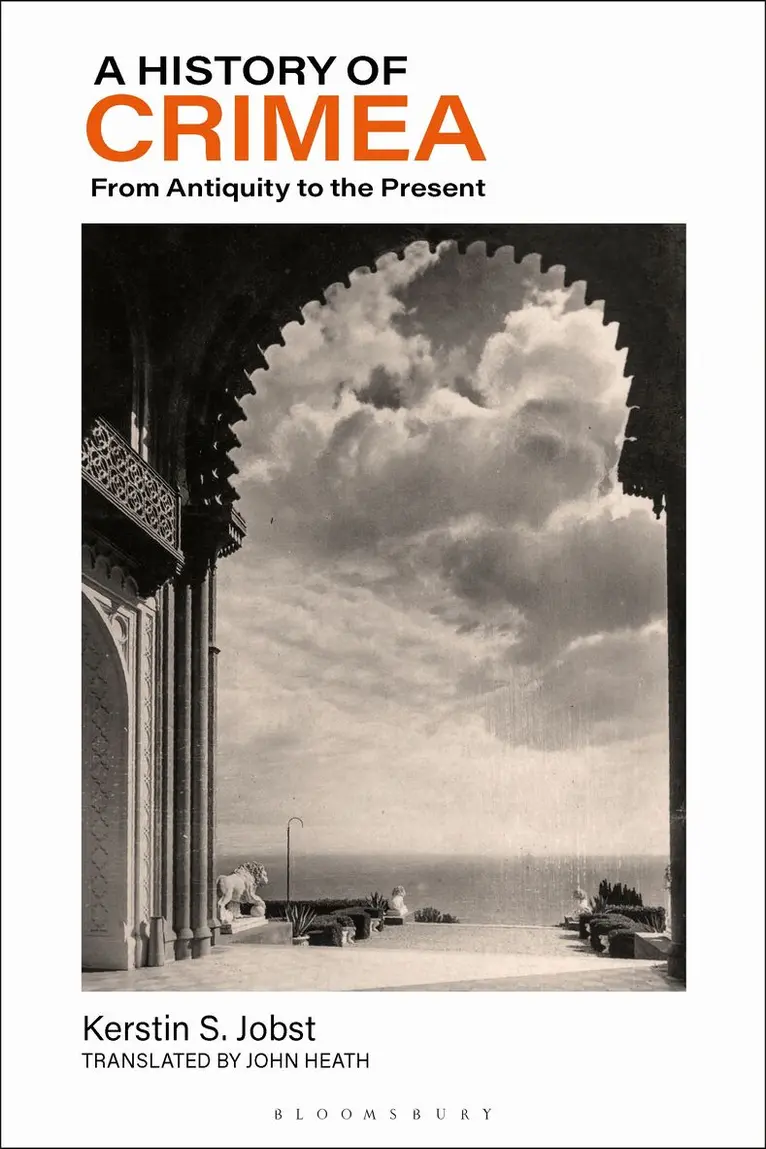
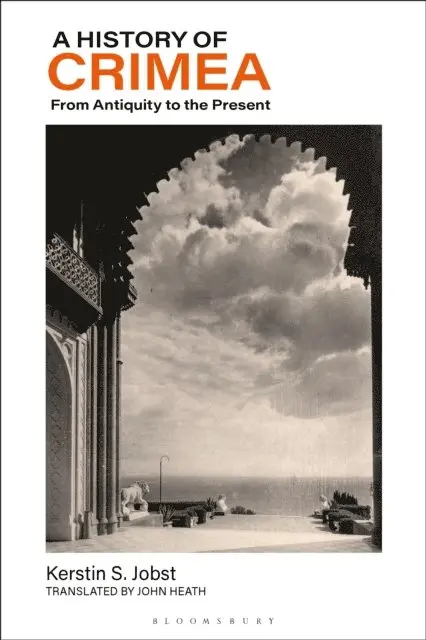
Since the Russian Federation’s illegal annexation of Crimea from Ukraine in March 2014 – 160 years after the Crimean War – the peninsula has returned to the fore on the global geopolitical stage. This book provides a comprehensive history of the peninsula that was previously lacking, one that stretches from ancient times to the present and explores various aspects and inhabitants through the ages.Kerstin S. Jobst examines the complex history of multi-ethnic and pluri-religious Crimea – not only from a political perspective, but also considering the manifold cultural and historical interdependencies that are central to the territory. The book examines myths and legends about Crimea, as well as the various peoples for whom it has been a settlement and transit area and who have shaped the fate of the peninsula: Greek, Genoese and Venetian colonists, Eurasian nomads, Crimean Tatars, Germans, Russians, Ukrainians and others. A History of Crimea shows the importance of Crimea as a site of early Christianity, but also as a contact zone between different religions – Judaism, Christianity and Islam. It also emphasizes the role of the peninsula as a peripheral space of various great powers – the Roman Empire, Byzantium, the Golden Horde, the “Third Reich” and the Ottoman, Russian and Soviet empires.With this detailed overview of 2,000 years of Crimea’s history, Kerstin S. Jobst debunks the narratives around the most recent explosive events in the peninsula by examining the full historical context. In doing so, she de-mythologizes simplified claims to historical legitimacy that, rooted in Russian emotional attachment and geopolitical ambitions, ignore the cultural complexities of the previous centuries. This important work thus rebalances skewed narratives that continue to prevail even among seasoned observers of developments in Crimea.
1 039 kr
Skickas inom 10-15 vardagar
Since the Russian Federation’s illegal annexation of Crimea from Ukraine in March 2014 – 160 years after the Crimean War – the peninsula has returned to the fore on the global geopolitical stage. This book provides a comprehensive history of the peninsula that was previously lacking, one that stretches from ancient times to the present and explores various aspects and inhabitants through the ages.Kerstin S. Jobst examines the complex history of multi-ethnic and pluri-religious Crimea – not only from a political perspective, but also considering the manifold cultural and historical interdependencies that are central to the territory. The book examines myths and legends about Crimea, as well as the various peoples for whom it has been a settlement and transit area and who have shaped the fate of the peninsula: Greek, Genoese and Venetian colonists, Eurasian nomads, Crimean Tatars, Germans, Russians, Ukrainians and others. A History of Crimea shows the importance of Crimea as a site of early Christianity, but also as a contact zone between different religions – Judaism, Christianity and Islam. It also emphasizes the role of the peninsula as a peripheral space of various great powers – the Roman Empire, Byzantium, the Golden Horde, the “Third Reich” and the Ottoman, Russian and Soviet empires.With this detailed overview of 2,000 years of Crimea’s history, Kerstin S. Jobst debunks the narratives around the most recent explosive events in the peninsula by examining the full historical context. In doing so, she de-mythologizes simplified claims to historical legitimacy that, rooted in Russian emotional attachment and geopolitical ambitions, ignore the cultural complexities of the previous centuries. This important work thus rebalances skewed narratives that continue to prevail even among seasoned observers of developments in Crimea.
478 kr
Skickas inom 3-6 vardagar
608 kr
Skickas inom 5-8 vardagar
2 321 kr
Skickas inom 3-6 vardagar
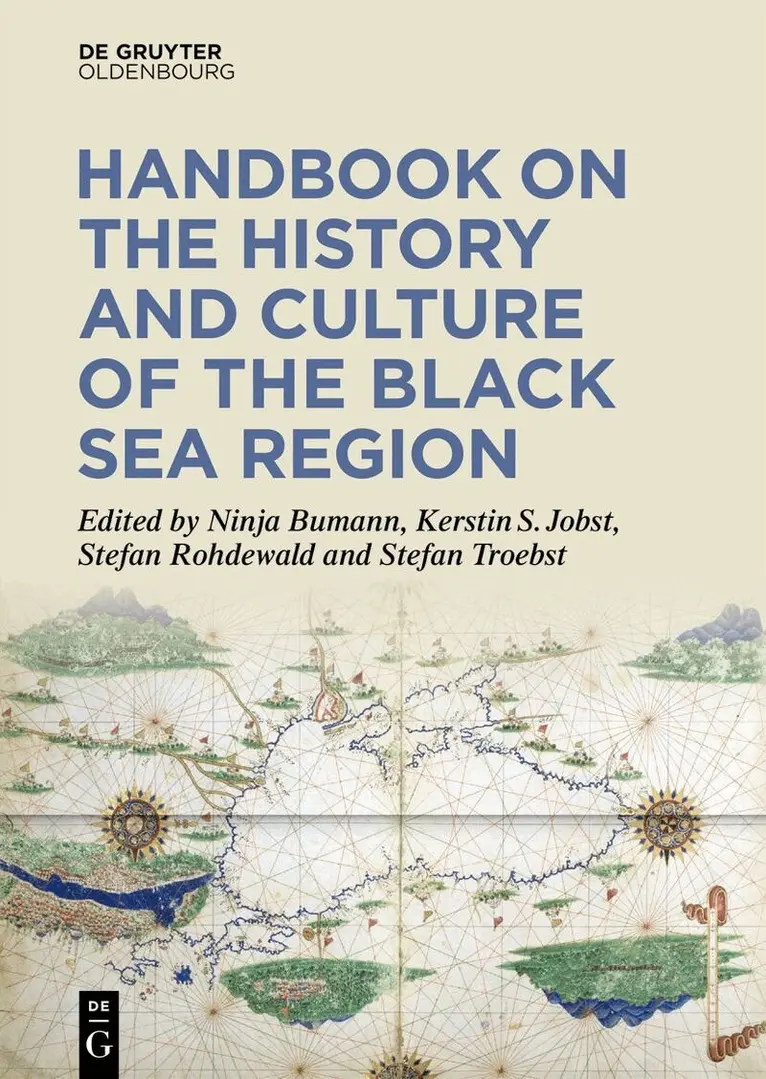
Following the annexation of Crimea by the Russian Federation in spring 2014 – 160 years after the Crimean War – and the full-scale invasion of Ukraine in February 2022, the Black Sea region has again become the focus of world history. In this handbook, international scholars from various historical and cultural disciplines provide deep historical insights into the structures of conflict, cooperation, and interrelations between the Balkans, the Middle East, the Caucasus, and Eastern Europe in the space referred to as the Black Sea world. The trans-maritime communication and intra-regional circulations, spanning from Antiquity to the present day via, Byzantium, the Polish-Lithuanian Commonwealth, the Crimean Khanate, the Venetian, Safavid, Ottoman, and Romanov empires, two World Wars, and the Cold War, highlight the autonomy of this historical region in the larger transcontinental setting – designated in various times and varying languages as the Pontus Euxinus, the Mare Maggiore, the Kara Deniz, the Chernoe More, or the Black Sea. "This voluminous edition sheds real light upon the history of the Black Sea region from antiquity until the end of the 20th century. Not only does this first-rate book provide a host of excellent historical essays across time, it also devotes considerable attention to important questions regarding how the Black Sea region is conceptualized and theorized. A very useful contribution." (James H. Meyer, Montana State University) "In the wake of several research projects, monographs and journals, this is the first groundbreaking handbook on the cohesive history of the Black Sea as a historical meso-region. It gathers 39 excellent contributions that provide the conceptual apparatus, survey the history of the region from a Greek to Byzantine to Ottoman lake, to conflicting rivalries, to its recent transformation from a quasi-Soviet to a quasi-NATO lake, examine the ideas that underpin the various national, ethnic and religious identities, research the different mobilities through migration, transport,infrastructure, and take stock of its turbulent history through conflicts and war.” (Maria Todorova, University of Illinois at Urbana-Champaign) "Mostly the work of scholars from Central Europe and the Black Sea region, this massive volume focuses on the relationship between historical research and memory, in particular the difficulty of certain groups living in the region when confronted with empires and nation states, whose centers may be quite distant from the Black Sea. Attentive readers may thus view the present handbook not merely as a work of reference on history, memory and movement, but also as a testimony to the historical perspectives developed by a significant number of Central European and Black Sea scholars during the first quarter of the twenty-first century." (Suraiya Faroqhi, Ibn Haldun University, Istanbul)
364 kr
Skickas inom 5-8 vardagar
139 kr
Skickas inom 5-8 vardagar