Ketty Gottardo - Böcker
Visar alla böcker från författaren Ketty Gottardo. Handla med fri frakt och snabb leverans.
7 produkter
7 produkter
154 kr
Skickas inom 7-10 vardagar
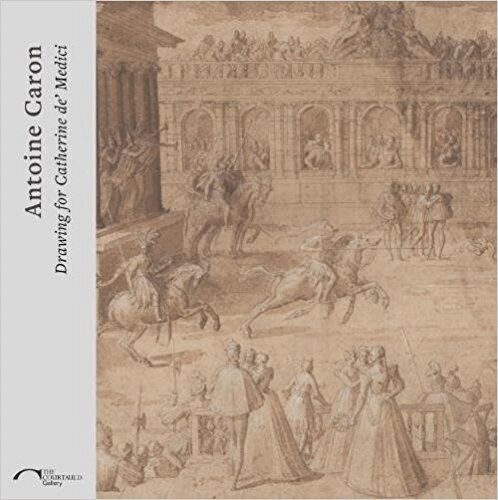
This catalogue accompanies an exhibition at The Courtauld Gallery, which is the first dedicated to the graphic oeuvre of Antoine Caron (1521–1599). Bringing together a core group of drawings centered around the figures and deeds of the French Royal family, the Valois, this display highlights the role played by Catherine de’ Medici (1519–1589). Featuring the Valois series, a set of drawings here reunited for the first time, the display showcases the way in which the powerful and influential Catherine promoted the success of her regency and future of her progeny by delivering a series of lavish courtly events that were meant to enhance the power and diplomacy of her family. The drawings represent jousts, tournaments, festivals and a mock naval battle, events that occurred at the French court during the reigns of Catherine’s sons Charles IX and Henri III. Preparatory designs for a group of tapestries, these visual documents relate to actual events that were organized by the court, some of which took place at the French castles of Anet, Palace of Fontainebleau, Bayonne and at the Tuileries Gardens in Paris. Minutely designed, they thus allow a reconstruction of the visual testimony of those events, as they were documented in written contemporary sources. Antoine Caron: Drawing for Catherine de’ Medici is the latest in a series of books accompanying critically acclaimed Courtauld displays, which showcase aspects of the Gallery’s outstanding permanent collection.
348 kr
Skickas inom 7-10 vardagar
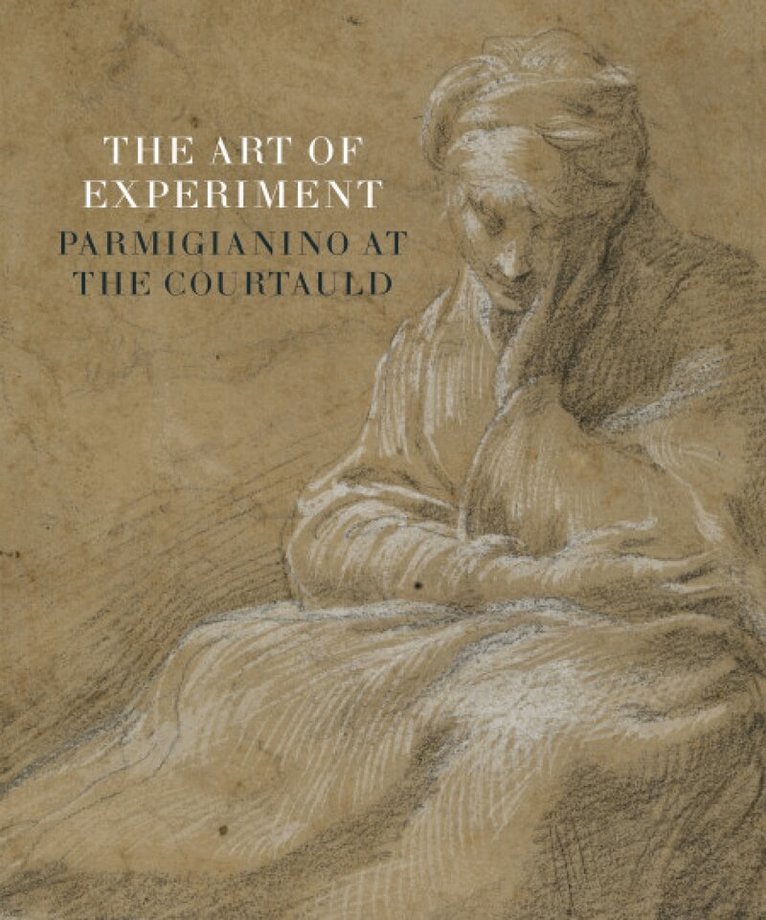
This stunning catalogue presents The Courtauld's outstanding collection of works by Renaissance artist Girolamo Francesco Maria Mazzola, better known as Parmigianino (1503-1540). This catalogue accompanies a display of works by Parmigianino at The Courtauld, including his famous and enigmatic painting of the Virgin and Child, as well as drawn studies for his most ambitious projects such as the Madonna of the Long Neck and the frescoes of the church of Santa Maria della Steccata in Parma. The latter was the last and most important commission of his life and would have been his triumphal homecoming. Instead, Parmigianino became entangled in his experimental processes and failed to complete it, leading to his brief imprisonment for breach of contract. Fundamentally a draftsman at heart, Parmigianino drew relentlessly during his relatively short life, and around a thousand of his drawings have survived. The Courtauld's collection comprises twenty-four sheets. In preparation for the catalogue, new photography and technical examinations have been carried out on all the works revealing two new drawings that were previously unknown, hidden underneath theirhistoric mounts. They have also helped to better identify connections between some of the drawings and the finished paintings for which they were conceived. The catalogue illustrates the whole Courtauld collection, which also includes two paintings and more than ten prints. As a printmaker, Parmigianino is considered to have been the first to experiment with etching in Italy and was a pioneer of the chiaroscuro woodcut technique. His refined and graceful compositions were much appreciated by his contemporaries and exalted by the artist and biographer Giorgio Vasari (1511-74). This catalogue and display have been curated by Gottardo and Rebecchini in collaboration with former and current research students at The Courtauld, and technical research has been conducted by members of The Courtauld Conservation Institute. A truly collaborative project, the catalogue sheds light on an artist who approached every technique with unprecedented freedom and produced innovative works which were studied and admired by artists and collectors for many years to come.
348 kr
Skickas inom 7-10 vardagar
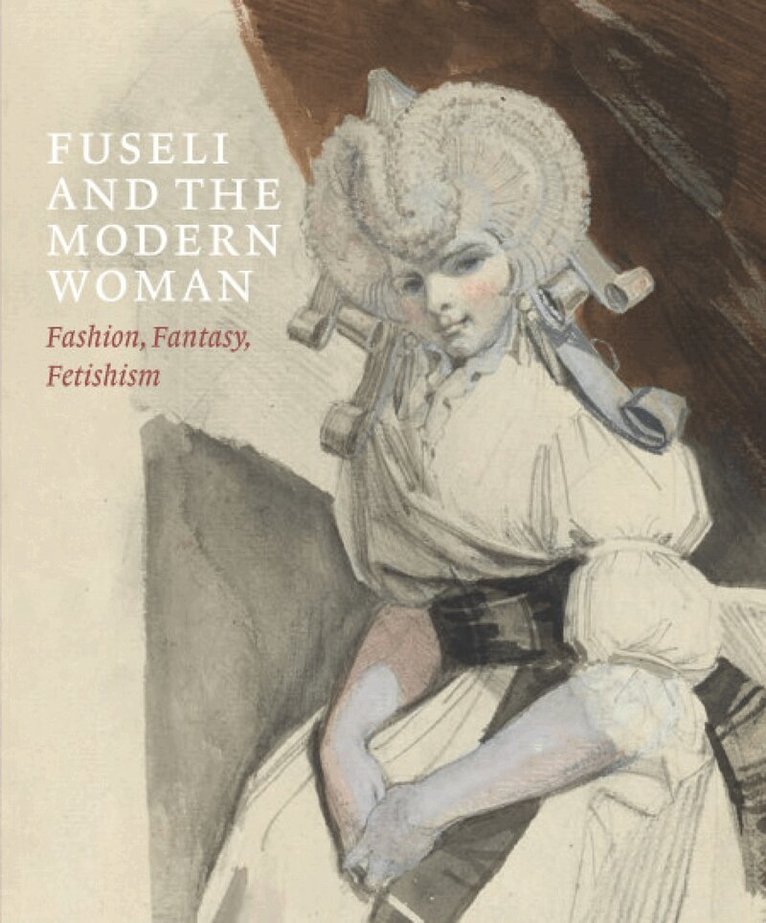
This catalogue accompanies the first exhibition devoted to a fascinating group of drawings by the Anglo-Swiss Henry Fuseli (1741–1825), one of eighteenth-century Europe’s most idiosyncratic, original and controversial artists. Best known for his notoriously provocative painting The Nightmare, Fuseli energetically cultivated a reputation for eccentricity, with vividly stylised images of supernatural creatures, muscle-bound heroes, and damsels in distress. While these convinced some viewers of the greatness of his genius, others dismissed him as a charlatan, or as completely mad. Fuseli’s contemporaries might have thought him even crazier had they been aware that in private he harboured an obsessive preoccupation with the figure of the modern woman, which he pursued almost exclusively in his drawings. Where one might have expected idealised bodies with the grace and proportions of classical statues, here instead we encounter figures whose anatomies have been shaped by stiff bodices, waistbands, puff ed sleeves, and pointed shoes, and whose heads are crowned by coiffures of the mostbizarre and complicated sort. Often based on the artist’s wife Sophia Rawlins, the women who populate Fuseli’s graphic work tend to adopt brazenly aggressive attitudes, either fixing their gaze directly on the viewer or ignoring our presence altogether. Usually theyappear on their own, in isolation on the page; sometimes they are grouped together to form disturbing narratives, erotic fantasies that may be mysterious, vaguely menacing, or overtly transgressive, but where women always play a dominant role. Among the many intriguing questions raised by these works is the extent to which his wife Sophia was actively involved in fashioning her appearance for her own pleasure, as well as for the benefit of her husband. By bringing together more than fi fty of these studies (roughly a third of the known total), The Courtauld Gallery will give audiences an unprecedented opportunity to see one of the finest Romantic-period draughtsmen at his most innovative and exciting. Visitors to the show and readers of the lavishly illustrated catalogue will further be invited to consider how Fuseli’s drawings of women, as products of the turbulent aftermath of the American and French Revolutions, speak to concerns about gender and sexuality that have never been more relevant than they are today. The exhibition showcases drawings brought together from international collections, including the Kunsthaus in Zurich, the Auckland Art Gallery in New Zealand, and from other European and North American institutions.
206 kr
Skickas inom 7-10 vardagar
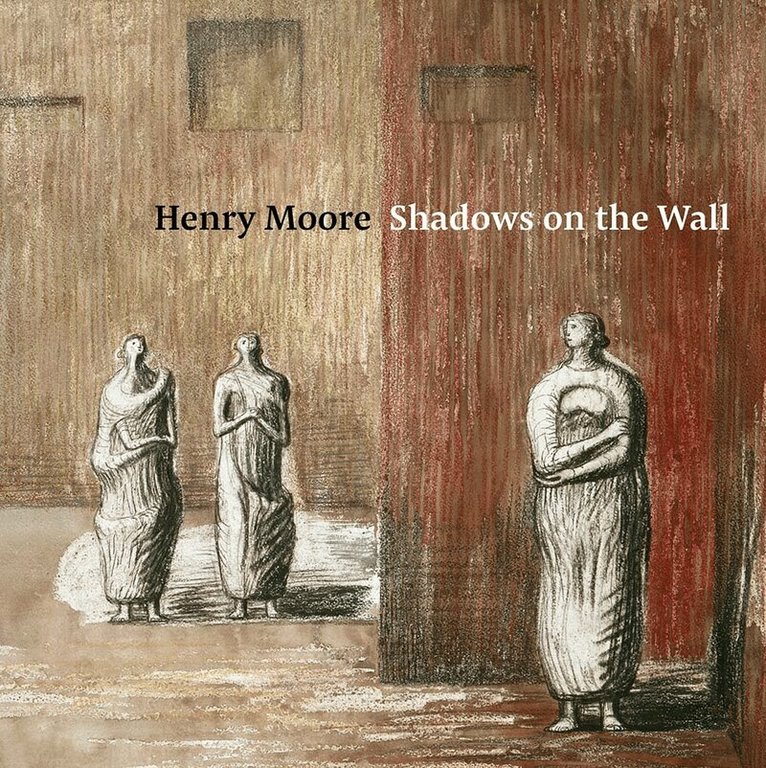
Uncovers the significance of walls in the drawings of Henry Spencer Moore after World War II. Henry Spencer Moore (1898–1986) was one of the most influential British artists of the twentieth century. This book and exhibition offer a new reading of Moore's celebrated Shelter series and the artist's fascination with images of walls during and immediately after World War II. Henry Moore: Shadows on the Wall accompanies a focused exhibition at the Courtauld Gallery. After the destruction of his London studio early in World War II, Henry Moore began drawing figures sheltering from bomb raids in the London Underground. The walls of these sheltered spaces came to absorb his attention in an altogether new way, becoming scene-setters and key components of his drawings. This fascination with the bricks and the presence of walls, their texture, mass, and volume, became especially important after his project to illustrate the wartime radio play The Rescue, based on Homer's Odyssey. Henry Moore, a collaboration with the Henry Moore Foundation, suggests for the first time that the walls in his drawings offer a new way to understand some of his most individual and monumental post-war sculpture projects.
206 kr
Skickas inom 7-10 vardagar
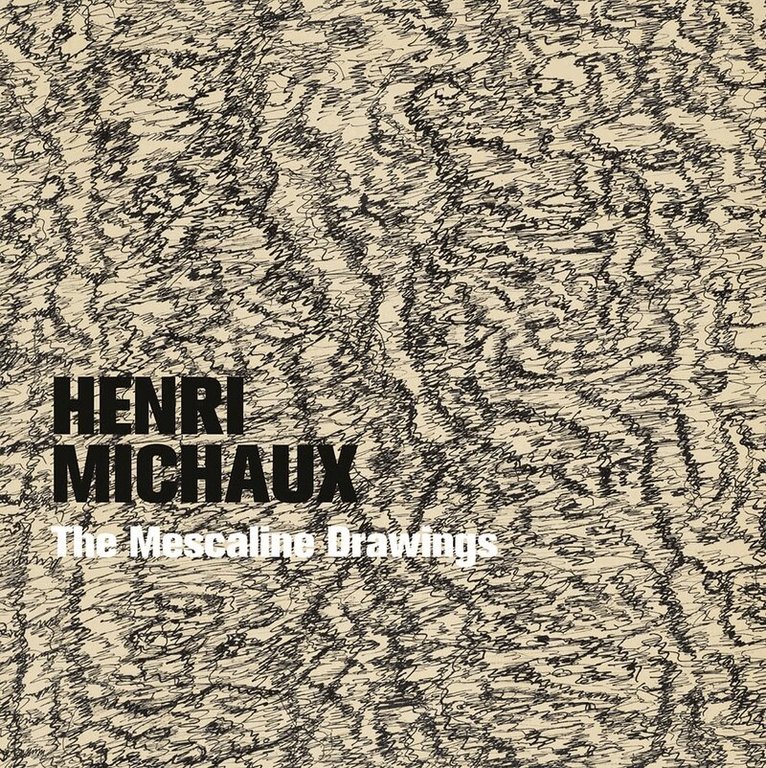
This fascinating catalogue explores the work of Franco-Belgian poet and visual artist Henri Michaux and an experience that transformed his artistic life: trying the psychedelic drug mescaline.In 1955 the Franco-Belgian poet and visual artist Henri Michaux (1899—1984) tried the psychedelic drug mescaline, an experience that transformed his artistic life and provoked an outpouring of writings and distinctive drawings. Accompanying an exhibition at the Courtauld Gallery, this fascinating catalogue celebrates these unique drawings. This catalogue and exhibition celebrate the unique Mescaline Drawings by the Franco- Belgian poet and visual artist Henri Michaux (1899–1984). In January 1955, as part of an experiment prompted by his publisher, Michaux, who was then 56 years old, tried the psychedelic drug mescaline, a product derived from the Mexican peyote cactus. The aim of the experiment was to investigate the effect of this type of non-addictive drug on the creative act. Michaux considered these experiences to be a portal into the innerworkings of the mind. The investigation transformed Michaux’s artistic life and provoked an outpouring of writings and distinctive drawings during the 1950s and 1960s, the latter being at the centre of this exhibition. Created after the effects of mescaline (and at times other drugs such as hashish, LSD and psilocybin) had passed, the drawings are the astonishing transcriptions of the artist’s sensation, rendered as if by a sort of shuddering seismograph. This display and the accompanying catalogue, which present works rarely seen in the UK, will showcase Michaux’s extraordinary experience, one that pushed the limits of what the essence of drawing is.Published by Paul Holberton Publishing
348 kr
Skickas inom 7-10 vardagar
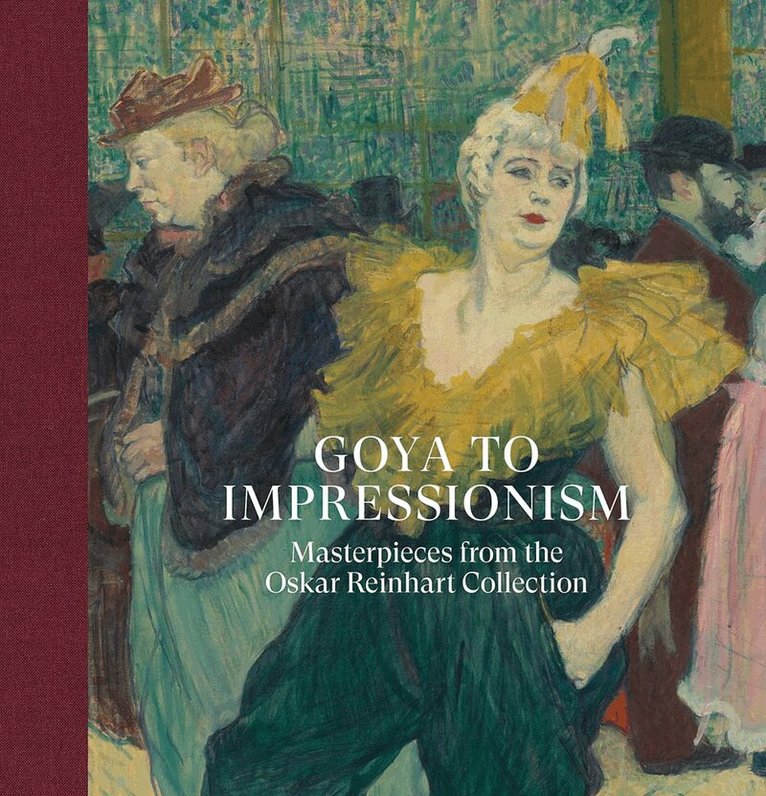
Accompanying an exhibition at the Courtauld Gallery, London, this catalogue presents an extraordinary group of masterpieces from the Oskar Reinhart Collection that are shown outside Winterthur for the first time in the history of the institution.The Oskar Reinhart Collection in Winterthur, Switzerland, is one of the most remarkable of its kind, ranging from superlative Old Master paintings and drawings to exceptional examples of Impressionist art. The catalogue accompanies an exhibition at the Courtauld Gallery, London, which narrates the story of the collector, Oskar Reinhart (1885–1965), and presents an extraordinary group of masterpieces that are shown outside Switzerland for the first time in the history of the institution. Assembled in the first half of the twentieth century by Oskar Reinhart, the collection opened to the public in 1958 in Reinhart’s beautiful villa ‘Am Römerholz’, where it has remained ever since. For the first time in its history, a rich selection of highlights from the Oskar Reinhart Collection ‘Am Römerholz’ will be displayed outside Switzerland, making the Courtauld exhibition a unique opportunity to appreciate its masterpieces. These include major paintings by artists of the generation preceding the Impressionists, such as Goya, Géricault and Courbet. At its heart will be Reinhart’s extraordinary Impressionist and Post-Impressionist holdings, which include some of the greatest paintings of these movements, such as Manet’s groundbreaking depiction of modern life in Au Café, Toulouse-Lautrec’s striking representation of the female performer ClownCha-U-Kao and a group of exceptional works by Paul Cezanne. Equally important is a pair of paintings by Van Gogh of the hospital in Arles, where he returned to paint after spending time there as a patient. The Reinhart Collection has close affinities with that of the Courtauld, which provides therefore the perfect setting to stage this unprecedented exhibition. The publication features essays exploring the formation and significance of Oskar Reinhart’s remarkable collection, followed by detailed entries on each of the works included in the exhibition.Published by Paul Holberton Publishing
456 kr
Kommande
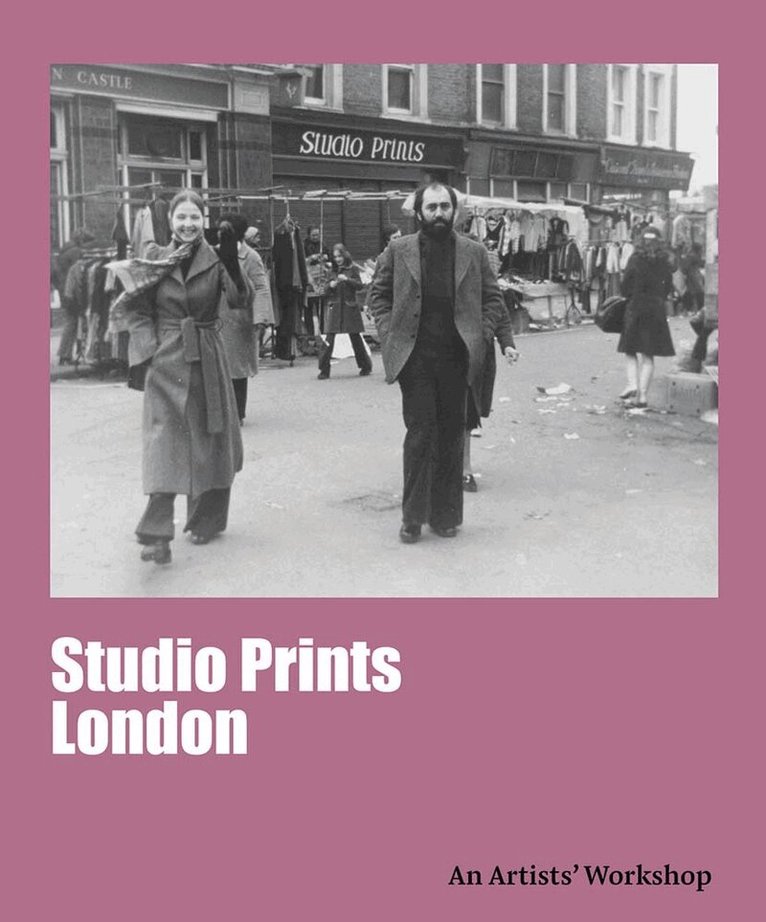
Explores the pivotal role of Studio Prints, London, in the resurgence of printmaking during the 1970s and 1980sDorothea Wight (1944–2013) founded Studio Prints in Kentish Town, London, in 1968. Marc Balakjian (1940–2017), an artist and printmaker of Armenian origins, joined it in 1974. They married in 1977 and, for over forty years, pursued their own artistic careers while also pulling prints for other artists. Thanks to their exceptional skills as master printmakers and to the sensibility with which they interpreted other artists’ ideas and intentions, Dorothea and Marc emerged as leading printers for prominent artists like Lucian Freud, Frank Auerbach, Leon Kossoff, Paula Rego, Celia Paul, Kitaj, Stephen Conroy, Ken Kiff and many others, establishing close friendships and mutual relationships of trust and esteem. Using previously unpublished archival records and a substantial corpus of works by the above-mentioned artists, a group of distinguished contributors to the book provide insights into a thriving and pioneering season of artistic production in London and reveal a relatively unrecognised but hugely influential hub of artistic production.Exhibition Schedule The Courtauld Gallery, London 6 June–13 September 2026 Published by Paul Holberton Publishing/Distributed by Yale University Press