Kevin Dowd - Böcker
Visar alla böcker från författaren Kevin Dowd. Handla med fri frakt och snabb leverans.
13 produkter
13 produkter
193 kr
Tillfälligt slut
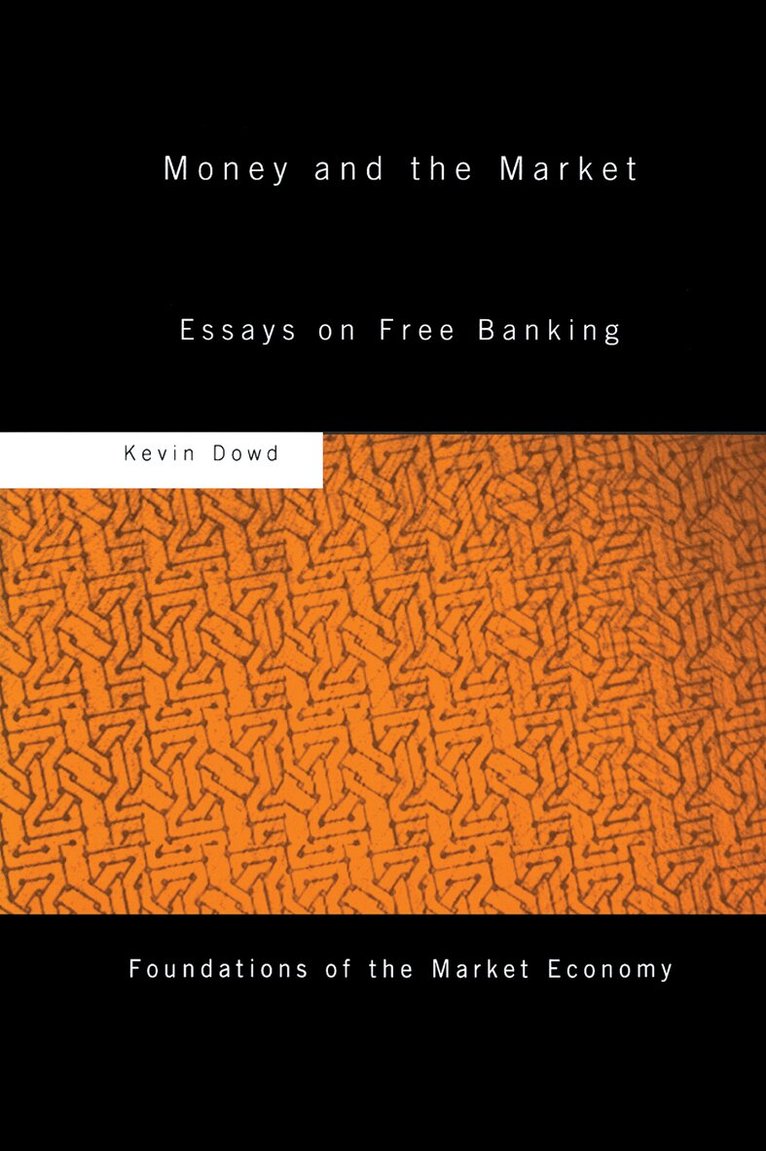
Kevin Dowd explains how central banking and the monopoly issue of currency by government have politicised and greatly destabilised the banking system. The change from money backed by a commodity standard to fiat money has destroyed the mechanism by which price stability was earlier secured, and opened the way for an historically unprecedented inflation. The Bank of England and other central banks have a record of losses which is comparable to those of the worst managed nationalised trading companies. In contrast, the private issue of currency disciplines banks through competitive pressures, and there is no real danger that the currency will be debased by over-issue. Indeed the historical evidence indicates that private monetary systems, as in Scotland from 1728 to 1845, have been stable and successful. Monetary stability can be achieved through a competitive banking system. This requires complete financial deregulation, the abolition of the Bank of England, and a re-definition of the monetary standard in terms of a general commodity index.
193 kr
Skickas inom 5-8 vardagar
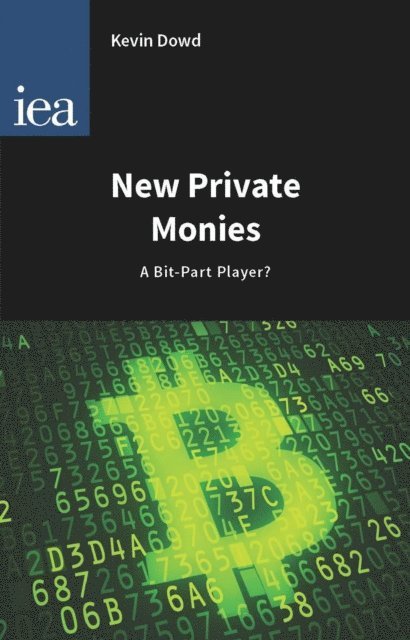
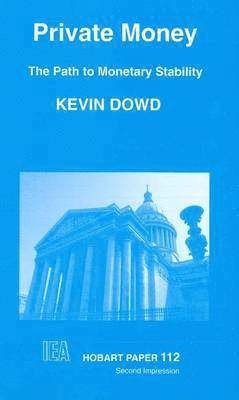
New forms of private monies regularly hit the newspaper headlines. However, there is relatively little discussion of whether such innovations will last the pace and perform effectively the functions that we expect of money. This monograph, by one of the leading scholars in the field of private money and free banking, examines new innovations such as Bitcoin, the Liberty Dollar and e-gold. Kevin Dowd concludes that competition in this field is welcome given the lamentable history of state money which has seen its purchasing power shrink greatly over the years. However, the author also concludes that, whilst recent developments in private monetary systems are welcome and may herald a forthcoming revolution, new monies face many challenges. Some of those challenges relate to the nature of the private monies themselves. Other challenges come from law enforcement agencies that are determined to prevent competition with state money.Kevin Dowd outlines the regulatory and legal changes that will be necessary if beneficial innovation is to thrive and discusses how developments in private money are part of a more general movement amongst people who wish to reduce the role of the state in their lives. This monograph is essential reading for anybody interested in new developments in money, finance and banking.
459 kr
Tillfälligt slut
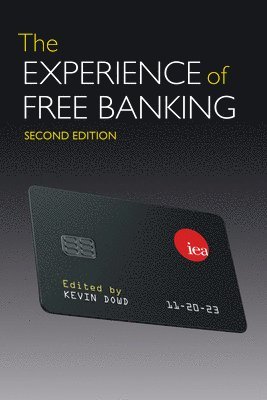
Many people mistakenly - but perhaps understandably - believe that 'free banking' means paying no charges for their bank accounts. But 'free banking' is really an historic term to describe a system in which banks issue their own notes - without the presence of a central bank (such as the Bank of England in the UK). For some, this may seem an alien concept. But free banking has already been explored in many countries around the world. The Experience of Free Banking (first published in 1992) analyses the impact of free banking in such countries as Australia, Canada, France, the US and more. And this revised second edition widens and updates its scope to encompass free banking in Belgium, Italy, China and further afield. Featuring chapters from distinguished economists around the world, it also incorporates an innovative guide, providing an invaluable starting point for researchers delving into the historical impact and effectiveness of free banking - or assessing its future potential.
554 kr
Skickas inom 10-15 vardagar
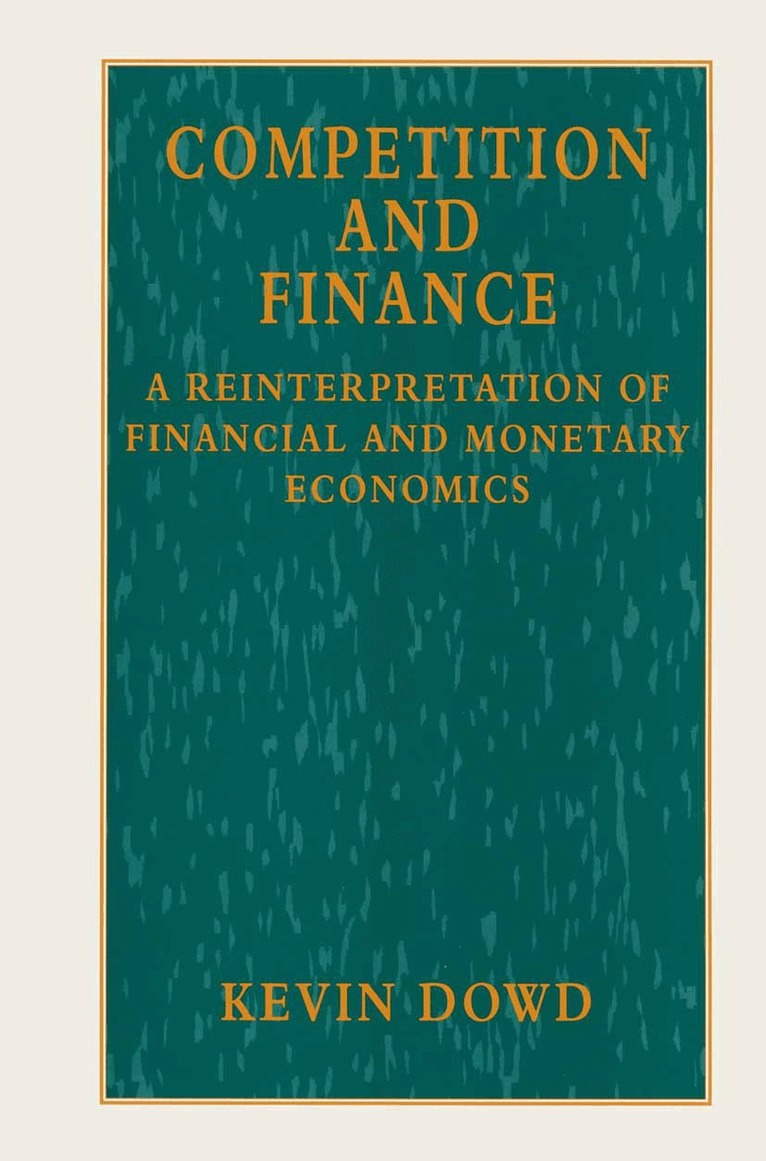
Competition and Finance offers a new, unified treatment of the fields of financial and monetary economics. The first part deals with financial economics and begins by providing a coherent and up-to-date analysis of contract design and capital structure. It integrates recent developments in agency theory, information economics and related fields into a unified financial theory of the firm. It then turns to financial intermediation, and explains why financial intermediaries exist and take the forms they do. The simpler forms of financial intermediary - brokers and mutual funds - are then covered in one chapter each. These are followed by three chapters that set out a new treatment of the economics of banking. These provide an up-to-date theory of the banking firm, but they also cover a variety of other banking issues - including, among others, the structure of the banking industry, a new analysis of free banking, a review of recent theoretical work on banking stability, and an assessment of the need for central banking. The next chapter addresses issues related to exchange media and payment systems, and is followed by a series of chapters on monetary economics.One chapter each is devoted to: the economics of the unit of account, including currency competition, the mechanics of convertible currency systems; gold and bimetallic standards; commodity-basket commodity standards; and the economics of inflation. These chapters cover both theory and empirical evidence, and a number of appendices also cover additional issues such as real-bills systems, the construction of price indices, and tabular standards. A final chapter uses the framework developed in the book to assess present-day systems of central banking and flat currency, and to offer some proposals for financial and monetary reform.
2 299 kr
Skickas inom 10-15 vardagar
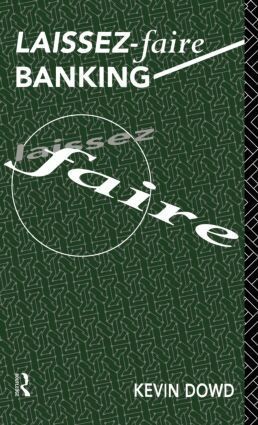
The idea of free (or laissez-faire) banking has enjoyed a remarkable renaissance in recent years. It is a novel idea that challenges much of what many banking scholars still take for granted - that banking is inherently unstable, that the banking system needs a lender of last resort or deposit insurance to defend it in a crisis, and that the Government has to protect the value of the currency. Against this free banking sets an argument which is in essence very simple: if markets are generally better at allocating resources than governments, then what is different about money and the industry that provides it and why? "Laissez-Faire Banking" is divided into three inter-related sections, dealing with the theory of free banking, historical experiences of it and present-day monetary and banking reforms based on free banking principles.
933 kr
Skickas inom 10-15 vardagar
The idea of free (or laissez-faire) banking has enjoyed a remarkable renaissance in recent years. It is a novel idea that challenges much of what many banking scholars still take for granted - that banking is inherently unstable, that the banking system needs a lender of last resort or deposit insurance to defend it in a crisis, and that the Government has to protect the value of the currency. Against this free banking sets an argument which is in essence very simple: if markets are generally better at allocating resources than governments, then what is different about money and the industry that provides it and why? "Laissez-Faire Banking" is divided into three inter-related sections, dealing with the theory of free banking, historical experiences of it and present-day monetary and banking reforms based on free banking principles.
2 647 kr
Skickas inom 10-15 vardagar
Kevin Dowd asserts that state intervention into financial and monetary systems has failed, and that we would be better off if financial markets were left to regulate themselves. This collection will appeal to students, researchers and policy makers in the monetary and financial area.
694 kr
Skickas inom 10-15 vardagar
Kevin Dowd asserts that state intervention into financial and monetary systems has failed, and that we would be better off if financial markets were left to regulate themselves. This collection will appeal to students, researchers and policy makers in the monetary and financial area.
960 kr
Skickas inom 7-10 vardagar
Fully revised and restructured, Measuring Market Risk, Second Edition includes a new chapter on options risk management, as well as substantial new information on parametric risk, non-parametric measurements and liquidity risks, more practical information to help with specific calculations, and new examples including Q&A’s and case studies.
620 kr
Skickas inom 7-10 vardagar
Includes a CD-ROM that contains Excel workbooks and a Matlab manual and software.Covers the subject without advanced or exotic material.
Del 95 - Frontiers in Finance Series
Beyond Value at Risk
The New Science of Risk Management
Häftad, Engelska, 1998
914 kr
Skickas inom 7-10 vardagar
Finance/Investment Beyond Value at Risk The New Science of Risk Management A Comprehensive Guide to Value at Risk and Risk Management Risk management and measurement are now, without doubt, the hottest topics in the finance world. Today, quantifying risk management is not only a management tool - but is also used by regulators for banks and finance houses. Beyond Value at Risk provides a comprehensive guide to recent developments and existing approaches to VaR and risk management, going beyond traditional approaches to the subject and offering a new, far-reaching perspective on investment, hedging and portfolio decision-making. The key to this distinctive approach is a new decision rule - the 'Generalised Sharpe Rule', and its practical applications. Beyond Value at Risk provides the answers to key questions, including:* How to implement VaR and related systems in the real world* How to make vital investment decisions and estimate their effect* How to make hedging decisions* How to manage a portfolioIt offers financial professionals, academics and students comprehensive coverage of VaR both in theory and practice.
1 060 kr
Kommande
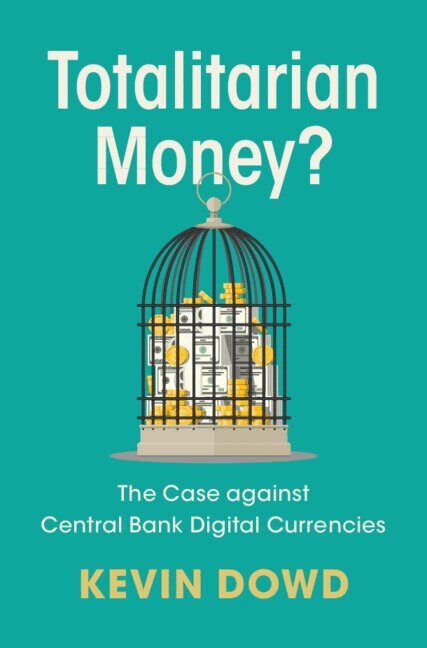
Kevin Dowd's Totalitarian Money? provides a comprehensive critique of proposals to establish CBDCs (central bank digital currencies) around the world. He argues that they are economically inefficient, as they provide no benefits that cannot be obtained by other means. He explains why CBDCs are dangerous to financial stability and personal freedom as they enable digital currency to be weaponised against people to comply with the political or social agendas of those in control. Dowd reveals that, despite being promoted by central banks as the next 'big thing', public demand for CBDCs is negligible and they have been rejected by the public wherever they have been introduced. Evaluating the track record of countries that have introduced CBDCs, Dowd explores the drawbacks of CBDCs and explains why the private sector is better equipped to provide a retail digital currency to the general public.
322 kr
Kommande
Kevin Dowd's Totalitarian Money? provides a comprehensive critique of proposals to establish CBDCs (central bank digital currencies) around the world. He argues that they are economically inefficient, as they provide no benefits that cannot be obtained by other means. He explains why CBDCs are dangerous to financial stability and personal freedom as they enable digital currency to be weaponised against people to comply with the political or social agendas of those in control. Dowd reveals that, despite being promoted by central banks as the next 'big thing', public demand for CBDCs is negligible and they have been rejected by the public wherever they have been introduced. Evaluating the track record of countries that have introduced CBDCs, Dowd explores the drawbacks of CBDCs and explains why the private sector is better equipped to provide a retail digital currency to the general public.