Kevin Haggerty - Böcker
Visar alla böcker från författaren Kevin Haggerty. Handla med fri frakt och snabb leverans.
4 produkter
4 produkter
3 265 kr
Skickas inom 10-15 vardagar
Surveillance is a central organizing practice. Gathering personal data and processing them in searchable databases drives administrative efficiency but also raises questions about security, governance, civil liberties and privacy. Surveillance is both globalized in cooperative schemes, such as sharing biometric data, and localized in the daily minutiae of social life. This innovative Handbook explores the empirical, theoretical and ethical issues around surveillance and its use in daily life. With a collection of over forty essays from the leading names in surveillance studies, the Handbook takes a truly multi-disciplinary approach to critically question issues of: surveillance and population controlpolicing, intelligence and warproduction and consumptionnew mediasecurityidentificationregulation and resistance. The Routledge Handbook of Surveillance Studies is an international, accessible, definitive and comprehensive overview of the rapidly growing multi-disciplinary field of surveillance studies. The Handbook’s direct, authoritative style will appeal to a wide range of scholars and students in the social sciences, arts and humanities.
1 983 kr
Skickas inom 10-15 vardagar
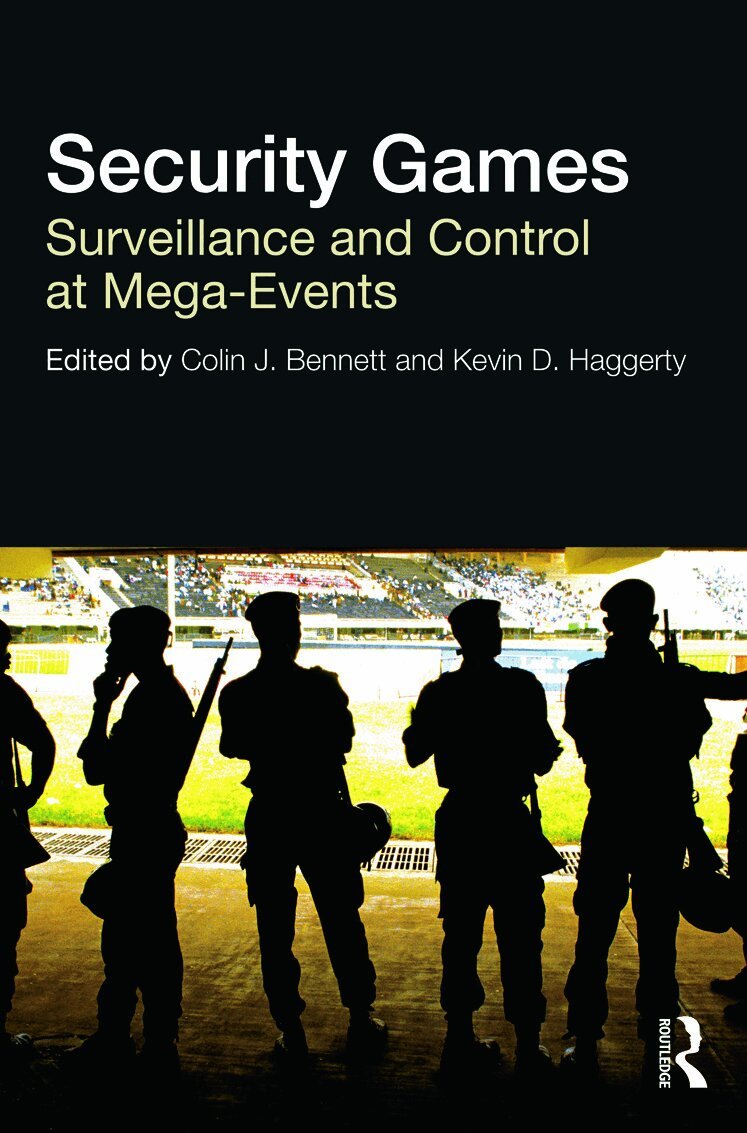
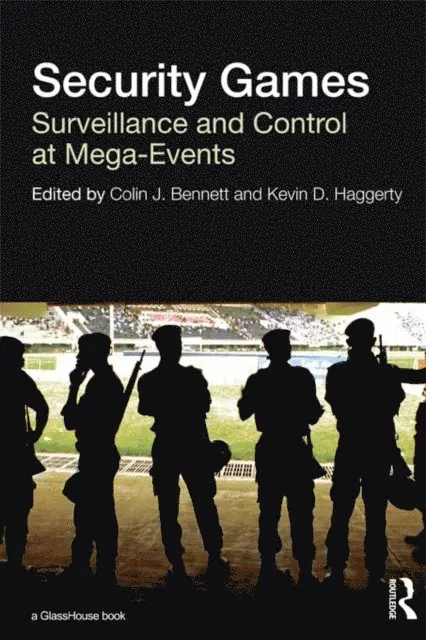
Security Games: Surveillance and Control at Mega-Events addresses the impact of mega-events – such as the Olympic Games and the World Cup – on wider practices of security and surveillance. "Mega-Events" pose peculiar and extensive security challenges. The overwhelming imperative is that "nothing should go wrong." There are, however, an almost infinite number of things that can "go wrong"; producing the perceived need for pre-emptive risk assessments, and an expanding range of security measures, including extensive forms and levels of surveillance. These measures are delivered by a "security/industrial complex" consisting of powerful transnational corporate, governmental and military actors, eager to showcase the latest technologies and prove that they can deliver "spectacular levels of security". Mega-events have thus become occasions for experiments in monitoring people and places. And, as such, they have become important moments in the development and dispersal of surveillance, as the infrastructure established for mega-events are often marketed as security solutions for the more routine monitoring of people and place. Mega-events, then, now serve as focal points for the proliferation of security and surveillance. They are microcosms of larger trends and processes, through which – as the contributors to this volume demonstrate – we can observe the complex ways that security and surveillance are now implicated in unique confluences of technology, institutional motivations, and public-private security arrangements. As the exceptional conditions of the mega-event become the norm, Security Games: Surveillance and Control at Mega-Events therefore provides the glimpse of a possible future that is more intensively and extensively monitored.
618 kr
Skickas inom 10-15 vardagar
Security Games: Surveillance and Control at Mega-Events addresses the impact of mega-events – such as the Olympic Games and the World Cup – on wider practices of security and surveillance. "Mega-Events" pose peculiar and extensive security challenges. The overwhelming imperative is that "nothing should go wrong." There are, however, an almost infinite number of things that can "go wrong"; producing the perceived need for pre-emptive risk assessments, and an expanding range of security measures, including extensive forms and levels of surveillance. These measures are delivered by a "security/industrial complex" consisting of powerful transnational corporate, governmental and military actors, eager to showcase the latest technologies and prove that they can deliver "spectacular levels of security". Mega-events have thus become occasions for experiments in monitoring people and places. And, as such, they have become important moments in the development and dispersal of surveillance, as the infrastructure established for mega-events are often marketed as security solutions for the more routine monitoring of people and place. Mega-events, then, now serve as focal points for the proliferation of security and surveillance. They are microcosms of larger trends and processes, through which – as the contributors to this volume demonstrate – we can observe the complex ways that security and surveillance are now implicated in unique confluences of technology, institutional motivations, and public-private security arrangements. As the exceptional conditions of the mega-event become the norm, Security Games: Surveillance and Control at Mega-Events therefore provides the glimpse of a possible future that is more intensively and extensively monitored.
902 kr
Skickas inom 10-15 vardagar
Surveillance is a central organizing practice. Gathering personal data and processing them in searchable databases drives administrative efficiency but also raises questions about security, governance, civil liberties and privacy. Surveillance is both globalized in cooperative schemes, such as sharing biometric data, and localized in the daily minutiae of social life. This innovative Handbook explores the empirical, theoretical and ethical issues around surveillance and its use in daily life. With a collection of over forty essays from the leading names in surveillance studies, the Handbook takes a truly multi-disciplinary approach to critically question issues of: surveillance and population controlpolicing, intelligence and warproduction and consumptionnew mediasecurityidentificationregulation and resistance. The Routledge Handbook of Surveillance Studies is an international, accessible, definitive and comprehensive overview of the rapidly growing multi-disciplinary field of surveillance studies. The Handbook’s direct, authoritative style will appeal to a wide range of scholars and students in the social sciences, arts and humanities.