Kevin T Barksdale – författare
Visar alla böcker från författaren Kevin T Barksdale. Handla med fri frakt och snabb leverans.
3 produkter
3 produkter
Häftad, Engelska, 2010
500 kr
Skickas inom 3-6 vardagar
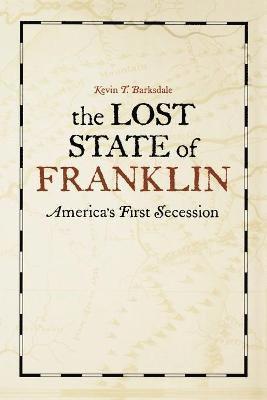
Amid the economic turmoil, Native American warfare, and political unrest following the Revolutionary War, the leadership of the Tennessee Valley declared their region independent from North Carolina and formed the state of Franklin. In The Lost State of Franklin: America's First Secession, Kevin T. Barksdale chronicles the rise and fall of the ill-fated Franklin statehood movement. Barksdale describes the dramatic four years in which the Franklinites crafted a backcountry bureaucracy, expanded their regional market economy, and nearly eradicated the southwestern frontier's Native American population, all with the goal of becoming America's fourteenth state. Although the Franklin statehood movement collapsed in 1788, East Tennesseans still regard Franklin as a symbol of their rugged individualism, regional identity, and civic dignity.
E-bok
PDF, Engelska, 2014465 kr
Läs direkt efter köp
In the years following the Revolutionary War, the young American nation was in a state of chaos. Citizens pleaded with government leaders to reorganize local infrastructures and heighten regulations, but economic turmoil, Native American warfare, and political unrest persisted. By 1784, one group of North Carolina frontiersmen could no longer stand the unresponsiveness of state leaders to their growing demands. This ambitious coalition of Tennessee Valley citizens declared their region independent from North Carolina, forming the state of Franklin.The Lost State of Franklin: America's First Secession chronicles the history of this ill-fated movement from its origins in the early settlement of East Tennessee to its eventual violent demise. Author Kevin T. Barksdale investigates how this lost state failed so ruinously, examining its history and tracing the development of its modern mythology. The Franklin independence movement emerged from the shared desires of a powerful group of landed elite, yeoman farmers, and country merchants. Over the course of four years they managed to develop a functioning state government, court system, and backcountry bureaucracy.Cloaking their motives in the rhetoric of the American Revolution, the Franklinites aimed to defend their land claims, expand their economy, and eradicate the area's Native American population. They sought admission into the union as America's fourteenth state, but their secession never garnered support from outside the Tennessee Valley. Confronted by Native American resistance and the opposition of the North Carolina government, the state of Franklin incited a firestorm of partisan and Indian violence. Despite a brief diplomatic flirtation with the nation of Spain during the state's final days, the state was never able to recover from the warfare, and Franklin collapsed in 1788.East Tennesseans now regard the lost state of Franklin as a symbol of rugged individualism and regional exceptionalism, but outside the region the movement has been largely forgotten. The Lost State of Franklin presents the complete history of this defiant secession and examines the formation of its romanticized local legacy. In reevaluating this complex political movement, Barksdale sheds light on a remarkable Appalachian insurrection and reminds readers of the extraordinary, fragile nature of America's young independence.
Häftad, Engelska, 2025
371 kr
Tillfälligt slut
As the COVID-19 virus swept across the nation in spring 2020, infection and hospitalization rates in states like West Virginia remained relatively low. By that July, each of Appalachia's 423 counties had recorded confirmed cases. The coronavirus pandemic has taken an enormous toll on the health of individuals and institutions throughout the region—a stark reminder that even isolated rural populations are subject to historical, biological, ecological, and geographical factors that have continually created epidemics over the past millennia._x000D_In Appalachian Epidemics: From Smallpox to COVID-19, scholars from diverse disciplinary backgrounds assess two centuries of public health emergencies and the subsequent responses. This volume peers into the trans–Appalachian South's experience with illness, challenging the misconception that rurality provides protection against maladies. In addition to surveying the impact of influenza, polio, and Lyme disease outbreaks, Appalachian Epidemics addresses the less-understood social determinants of health. The effects of the opioid crisis and industrial coal mining complicate the definition of disease and illuminate avenues for responding to future public health threats._x000D_From the significance of regional stereotypes to the spread of misinformation and the impact of racism and poverty on public health policy, Appalachian Epidemics makes clear that many of the natural, political, and socioeconomic forces currently shaping the region's experiences with COVID-19 and other crises have historical antecedents.