Kim Christian Priemel – författare
Visar alla böcker från författaren Kim Christian Priemel. Handla med fri frakt och snabb leverans.
12 produkter
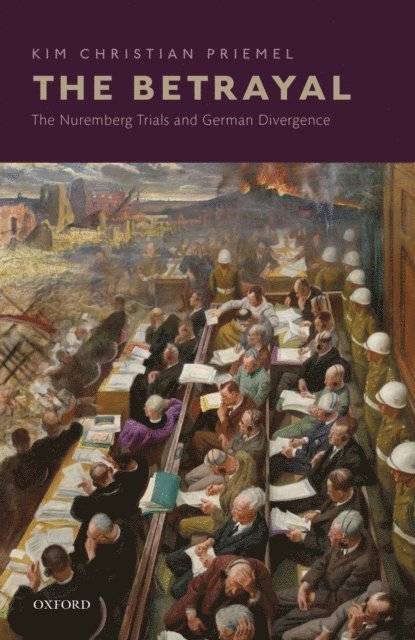
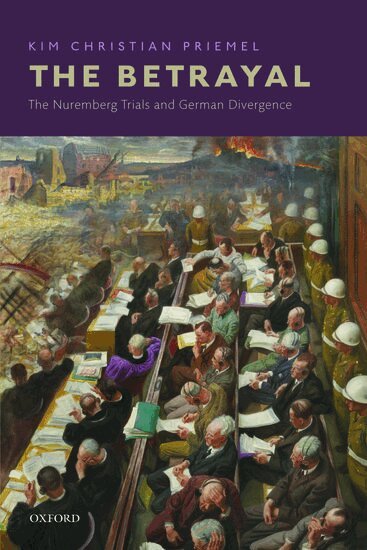
Betrayal
The Nuremberg Trials and German Divergence
E-bok, 2016
567 kr
Lägg i varukorg
At the end of World War II the Allies faced a threefold challenge: how to punish perpetrators of appalling crimes for which the categories of ''genocide'' and ''crimes against humanity'' had to be coined; how to explain that these had been committed by Germany, of all nations; and how to reform …
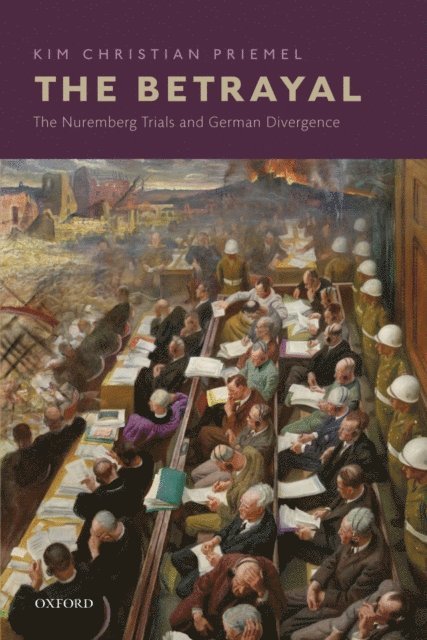
Betrayal
The Nuremberg Trials and German Divergence
E-bok, 2018
567 kr
Lägg i varukorg
At the end of World War II the Allies faced a threefold challenge: how to punish perpetrators of appalling crimes for which the categories of ''genocide'' and ''crimes against humanity'' had to be coined; how to explain that these had been committed by Germany, of all nations; and how to reform …
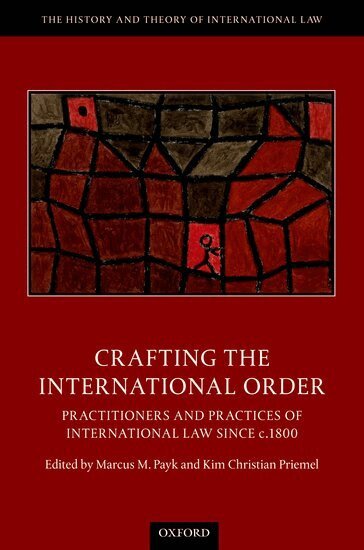
Crafting the International Order
Practitioners and Practices of International Law since c.1800
Av Kim Christian Priemel, Marcus M. Payk
E-bok, 2021
1333 kr
Lägg i varukorg
This volume sheds light on how lawyers have made sense of, engaged in, and shaped international politics over the past three hundred years. Chapters show how politicians and administrators, diplomats and military men, have considered their tasks in legal terms, and how the field of international …
Crafting the International Order
Practitioners and Practices of International Law since c.1800
Av Kim Christian Priemel, Marcus M. Payk
E-bok, 2021
1333 kr
Lägg i varukorg
This volume sheds light on how lawyers have made sense of, engaged in, and shaped international politics over the past three hundred years. Chapters show how politicians and administrators, diplomats and military men, have considered their tasks in legal terms, and how the field of international …
The Betrayal
The Nuremberg Trials and German Divergence
Häftad, 2018
639 kr
Lägg i varukorg
At the end of World War II the Allies faced a threefold challenge: how to punish perpetrators of appalling crimes for which the categories of 'genocide' and 'crimes against humanity' had to be coined; how to explain that these had been committed by Germany, of all nations; and how to reform …
Crafting the International Order
Practitioners and Practices of International Law since c.1800
Av Marcus M. Payk, Kim Christian Priemel
Inbunden, 2021
1482 kr
Lägg i varukorg
This volume sheds light on how lawyers have made sense of, engaged in, and shaped international politics over the past three hundred years. Chapters show how politicians and administrators, diplomats and military men, have considered their tasks in legal terms, and how the field of international …
The Betrayal
The Nuremberg Trials and German Divergence
Inbunden, 2016
2658 kr
Lägg i varukorg
At the end of World War II the Allies faced a threefold challenge: how to punish perpetrators of appalling crimes for which the categories of 'genocide' and 'crimes against humanity' had to be coined; how to explain that these had been committed by Germany, of all nations; and how to reform …
Deutsche Unrechtsgeschichte im 20. Jahrhundert
Av Benjamin Lahusen, Julia Eichenberg m. fl.
Häftad, 2026
582 kr
Lägg i varukorg
Der Flick-Konzern Im Dritten Reich
Herausgegeben Durch Das Institut Für Zeitgeschichte München-Berlin Im Auftrag Der Stiftung Preußischer Kulturbesitz
Av Johannes Bähr, Axel Drecoll m. fl.
Inbunden, 2008
1293 kr
Lägg i varukorg
Der Flick-Konzern steht wie kein anderes Unternehmen für die enge Verbindung zwischen Wirtschaft und NS-Regime. Sein Wachstum wurde während des Dritten Reiches von kaum einem Unternehmen übertroffen. Er profitierte in großem Ausmaß von "Arisierungen", war einer der bedeutendsten Rüstungsproduzenten …
Der Flick-Konzern im Dritten Reich
Herausgegeben durch das Institut für Zeitgeschichte München-Berlin im Auftrag der Stiftung Preußischer Kulturbesitz
Av Harald Wixforth, Kim Christian Priemel m. fl.
E-bok, 2012
1417 kr
Lägg i varukorg
Der Flick-Konzern steht wie kein anderes Unternehmen für die enge Verbindung zwischen Wirtschaft und NS-Regime. Sein Wachstum wurde während des Dritten Reiches von kaum einem Unternehmen übertroffen. Er profitierte in großem Ausmaß von "Arisierungen", war einer der bedeutendsten Rüstungsproduzenten …
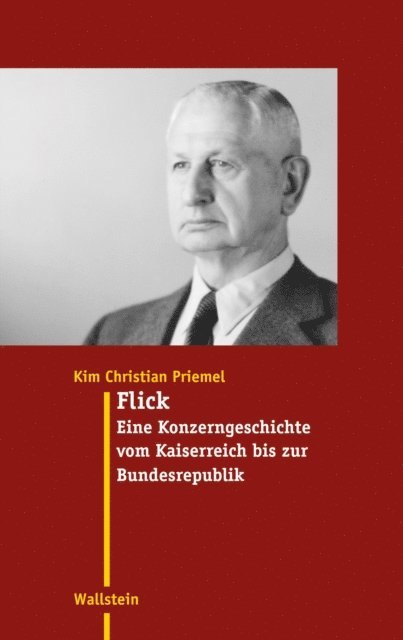
Flick
Eine Konzerngeschichte vom Kaiserreich bis zur Bundesrepublik
E-bok, 2013
431 kr
Lägg i varukorg
Die erste wissenschaftlich fundierte Geschichte des Flick-Konzerns. Der Name Flick steht wie ein Menetekel über der deutschen Wirtschaftsgeschichte des 20. Jahrhunderts. Wie bei keinem anderen Unternehmen sind mit diesem Namen in der öffentlichen Wahrnehmung beispielloser Erfolg und tiefe Krisen, …