Kim Geheb – författare
Visar alla böcker från författaren Kim Geheb. Handla med fri frakt och snabb leverans.
5 produkter
5 produkter
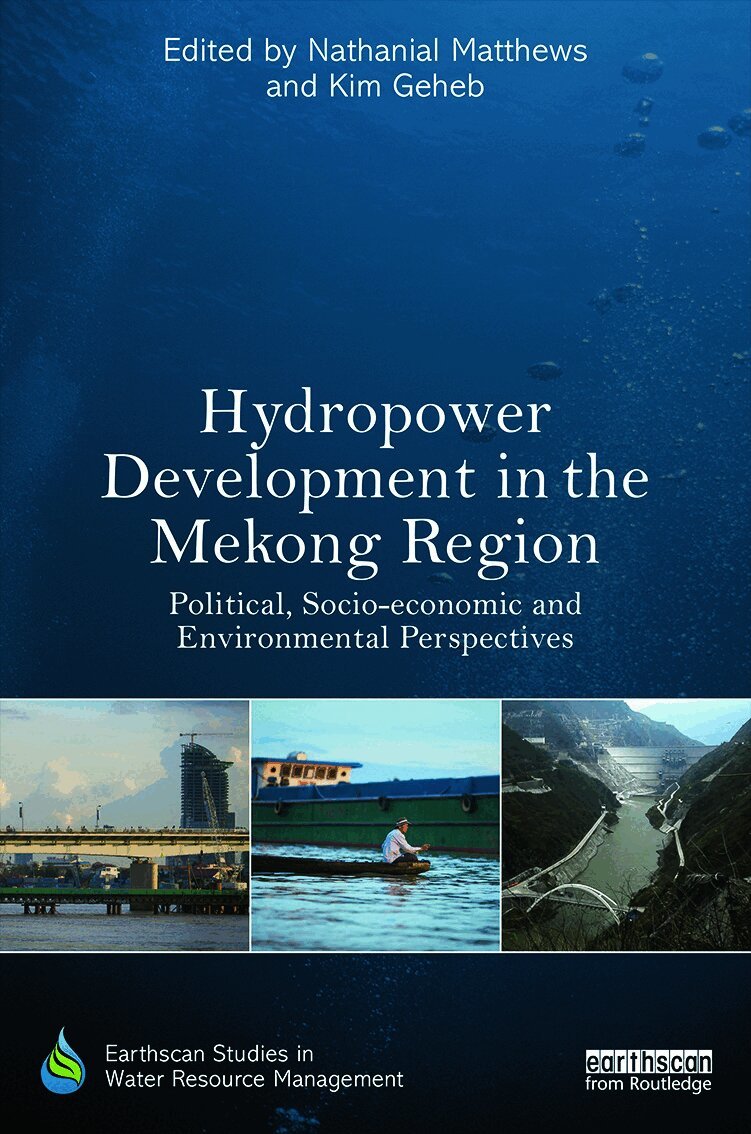
Hydropower Development in the Mekong Region
Political, Socio-economic and Environmental Perspectives
Inbunden, Engelska, 2014
2 204 kr
Skickas inom 10-15 vardagar
The Mekong Basin is home to some 70 million people, for whom this great river is a source of livelihoods, the basis for their ecosystems and a foundation of their economies. But the Mekong is also currently undergoing enormous social, economic, and ecological change of which hydropower development is a significant driver. This book provides a basin-wide analysis of political, socio-economic and environmental perspectives of hydropower development in the Mekong Basin. It includes chapters from China, Thailand, Laos, Cambodia and Vietnam. Written by regional experts from some of the region's leading research institutions, the book provides an holistic analysis of the shifting socio-political contexts within which hydropower is framed, legitimised and executed. Drawing heavily on political ecologies and political economics to examine the economic, social, political and ecological drivers of hydropower, the book's basin wide approach illuminates how hydropower development, and its benefits and impacts, are linked multilaterally across the basin. The research in the book is derived from empirical research conducted from 2012-2013 as part of the CGIAR Challenge Program on Water and Food's Mekong programme.
Hydropower Development in the Mekong Region
Political, Socio-economic and Environmental Perspectives
Häftad, Engelska, 2018
735 kr
Skickas inom 10-15 vardagar
The Mekong Basin is home to some 70 million people, for whom this great river is a source of livelihoods, the basis for their ecosystems and a foundation of their economies. But the Mekong is also currently undergoing enormous social, economic, and ecological change of which hydropower development is a significant driver. This book provides a basin-wide analysis of political, socio-economic and environmental perspectives of hydropower development in the Mekong Basin. It includes chapters from China, Thailand, Laos, Cambodia and Vietnam. Written by regional experts from some of the region's leading research institutions, the book provides an holistic analysis of the shifting socio-political contexts within which hydropower is framed, legitimised and executed. Drawing heavily on political ecologies and political economics to examine the economic, social, political and ecological drivers of hydropower, the book's basin wide approach illuminates how hydropower development, and its benefits and impacts, are linked multilaterally across the basin. The research in the book is derived from empirical research conducted from 2012-2013 as part of the CGIAR Challenge Program on Water and Food's Mekong programme.
1 618 kr
Skickas inom 5-8 vardagar
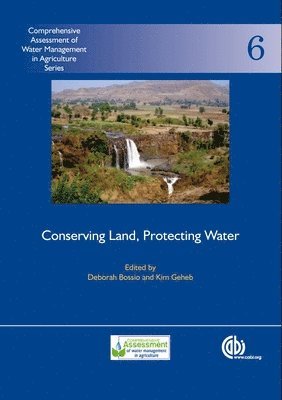
The degradation of land and water resources resulting primarily from agricultural activities has had enormous impact on human society. In order to alleviate this problem an advanced understanding of the state of our resources and the process of degradation is needed. Conserving Land, Protecting Water includes an overview of existing literature focusing on global patterns of land and water degradation and discussions of new insights drawn from successful case studies on reversing soil and water degradation and their impact on food and environmental security.
1 444 kr
Kommande
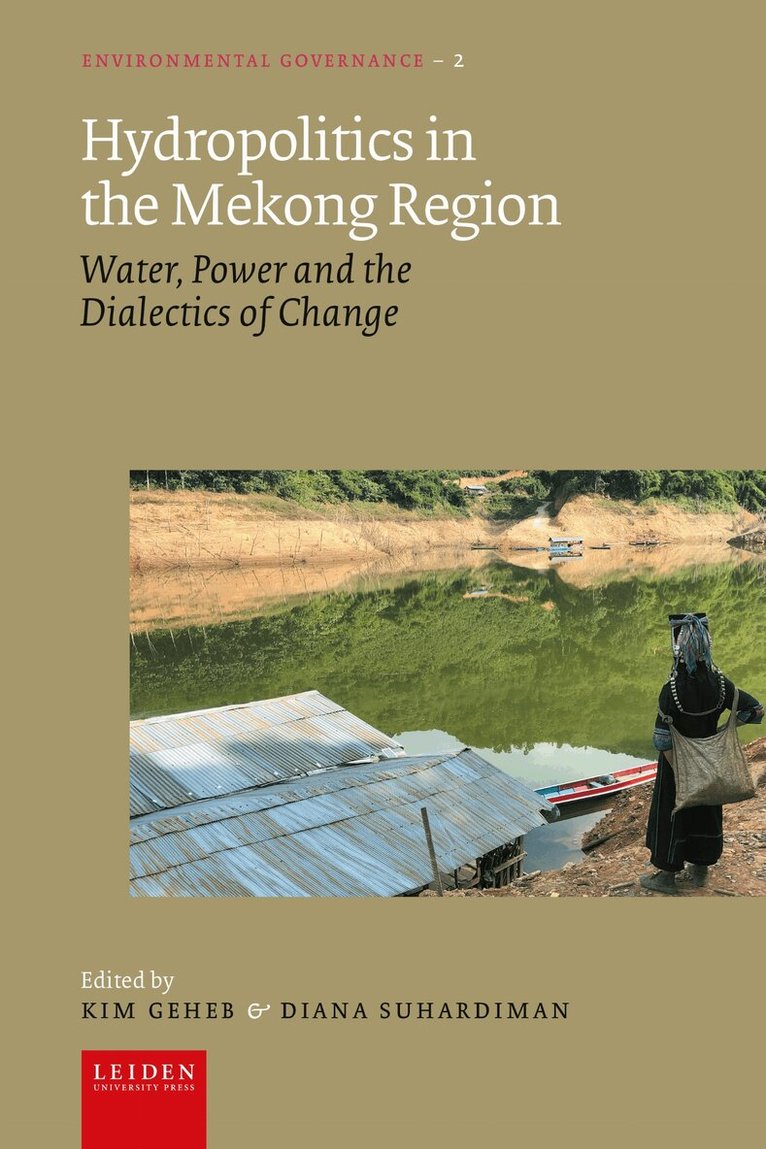
Mainland Southeast Asia's great river systems sustain the world's largest inland fishery and provide food security for over 60 million people. Yet these extraordinary systems are being fundamentally transformed by hydropower development, with consequences that will reverberate for generations. Hydropolitics in the Mekong offers a critical analysis of how this transformation is unfolding across the region — not as an unfortunate byproduct of progress, but as the deliberate outcome of power relations operating across multiple scales. Drawing on political ecology, hydrosocial theory, and critical work on development narratives, this volume demonstrates that the rivers of mainland Southeast Asia are being perpetually reconstituted through hydropolitical processes that pattern space, determining what flows and what is blocked, who benefits and who bears costs. The contributors show how narratives do not merely describe these transformations but constitute the very spaces within which they proceed. Terms like 'sustainable hydropower,' 'win-win cooperation,' and 'the Battery of Southeast Asia' function as nirvana concepts — future-oriented promises that cannot be falsified in the present, directing attention toward luminous horizons while costs accumulate unremarked. Spanning empirical cases from China's Yunnan Province to Vietnam's Mekong Delta, from Myanmar's Salween to Cambodia's Tonle Sap, the chapters examine how provincial interests complicate narratives of Chinese state hegemony; how 'hydrocorruption' drives Lao dam-building regardless of economic rationale; how state capture shapes Tonle Sap fisheries governance; how sediment has only recently entered regional discourse despite its profound ecological significance; and how Karen communities are constructing alternative territories of life through the Salween Peace Park. Throughout, the volume traces how regional institutions like the Mekong River Commission have been simultaneously conserved and dissolved — maintained in form while emptied of regulatory content. By revealing how hydropolitical assemblages are produced and operate across the region, by attending to whose voices are amplified and whose silenced, Hydropolitics in the Mekong provides essential reading for scholars and practitioners seeking to understand — and challenge — the politics of water in mainland Southeast Asia.
652 kr
Skickas inom 5-8 vardagar