Kimberly Juanita Brown - Böcker
Visar alla böcker från författaren Kimberly Juanita Brown. Handla med fri frakt och snabb leverans.
6 produkter
6 produkter
187 kr
Skickas
A powerful examination of the unsettling history of photography and its fraught relationship to global antiblackness.Since photography’s invention, black life has been presented as fraught, short, agonizingly filled with violence, and indifferent to intervention: living death—mortevivum—in a series of still frames that refuse a complex humanity. In Mortevivum, Kimberly Juanita Brown shows us how the visual logic of documentary photography and the cultural legacy of empire have come together to produce the understanding that blackness and suffering—and death—are inextricable. Brown traces this idea from the earliest images of the enslaved to the latest newspaper photographs of black bodies, from the United States and South Africa to Haiti and Rwanda, documenting the enduring, pernicious connection between photography and a global history of antiblackness.Photography's history, inextricably linked to colonialism and white supremacy, is a catalog of othering, surveillance, and the violence of objectification. In the genocide in Rwanda, for instance, photographs after the fact tell viewers that blackness comes with a corresponding violence that no human intervention can abate. In Haiti, the first black republic in the Western Hemisphere, photographic “evidence” of its sovereign failure suggests that the formerly enslaved cannot overthrow their masters and survive to tell the tale. And in South Africa and the United States, a loop of racial violence reminds black subjects of their lower-class status mandated via the state. Illustrating the global nature of antiblackness that pervades photographic archives of the present and the past, Mortevivum reveals how we live in a repetition of imagery signaling who lives and who dies on a gelatin silver print—on a page in a book, on the cover of newspaper, and in the memory of millions.The URL for this publication is https://on-seeing-mortevivum.org/.
198 kr
Skickas
1 241 kr
Skickas inom 10-15 vardagar
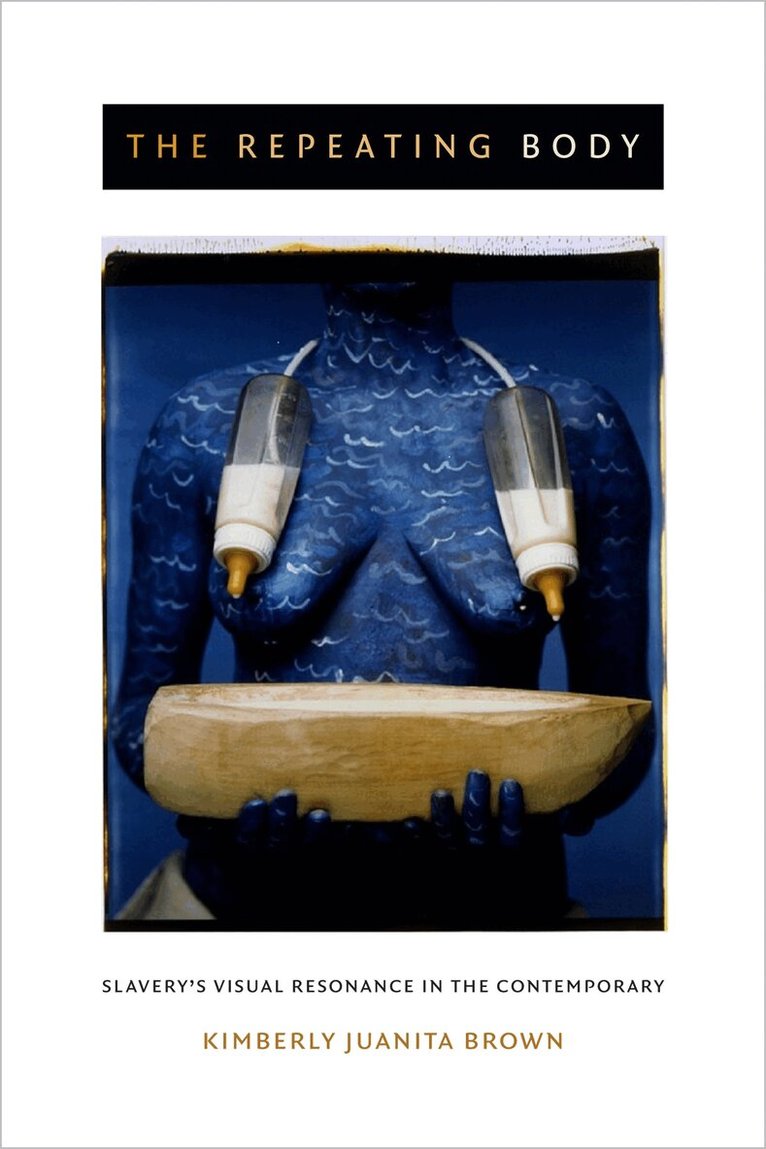
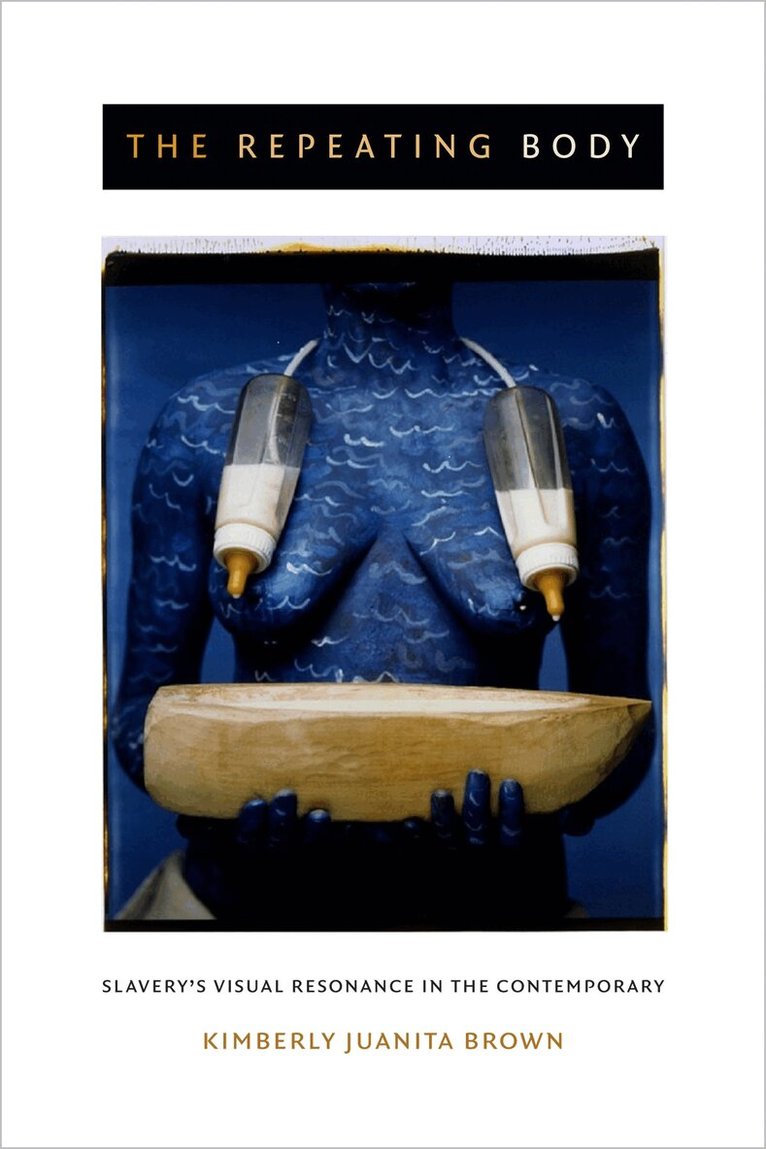
Haunted by representations of black women that resist the reality of the body's vulnerability, Kimberly Juanita Brown traces slavery's afterlife in black women's literary and visual cultural productions. Brown draws on black feminist theory, visual culture studies, literary criticism, and critical race theory to explore contemporary visual and literary representations of black women's bodies that embrace and foreground the body's vulnerability and slavery's inherent violence. She shows how writers such as Gayl Jones, Toni Morrison, Audre Lorde, and Jamaica Kincaid, along with visual artists Carrie Mae Weems and MarÍa Magdalena Campos-Pons, highlight the scarred and broken bodies of black women by repeating, passing down, and making visible the residues of slavery's existence and cruelty. Their work not only provides a corrective to those who refuse to acknowledge that vulnerability, but empowers black women to create their own subjectivities. In The Repeating Body, Brown returns black women to the center of discourses of slavery, thereby providing the means with which to more fully understand slavery's history and its penetrating reach into modern American life.
329 kr
Skickas inom 10-15 vardagar
Haunted by representations of black women that resist the reality of the body's vulnerability, Kimberly Juanita Brown traces slavery's afterlife in black women's literary and visual cultural productions. Brown draws on black feminist theory, visual culture studies, literary criticism, and critical race theory to explore contemporary visual and literary representations of black women's bodies that embrace and foreground the body's vulnerability and slavery's inherent violence. She shows how writers such as Gayl Jones, Toni Morrison, Audre Lorde, and Jamaica Kincaid, along with visual artists Carrie Mae Weems and MarÍa Magdalena Campos-Pons, highlight the scarred and broken bodies of black women by repeating, passing down, and making visible the residues of slavery's existence and cruelty. Their work not only provides a corrective to those who refuse to acknowledge that vulnerability, but empowers black women to create their own subjectivities. In The Repeating Body, Brown returns black women to the center of discourses of slavery, thereby providing the means with which to more fully understand slavery's history and its penetrating reach into modern American life.
210 kr
Skickas inom 7-10 vardagar
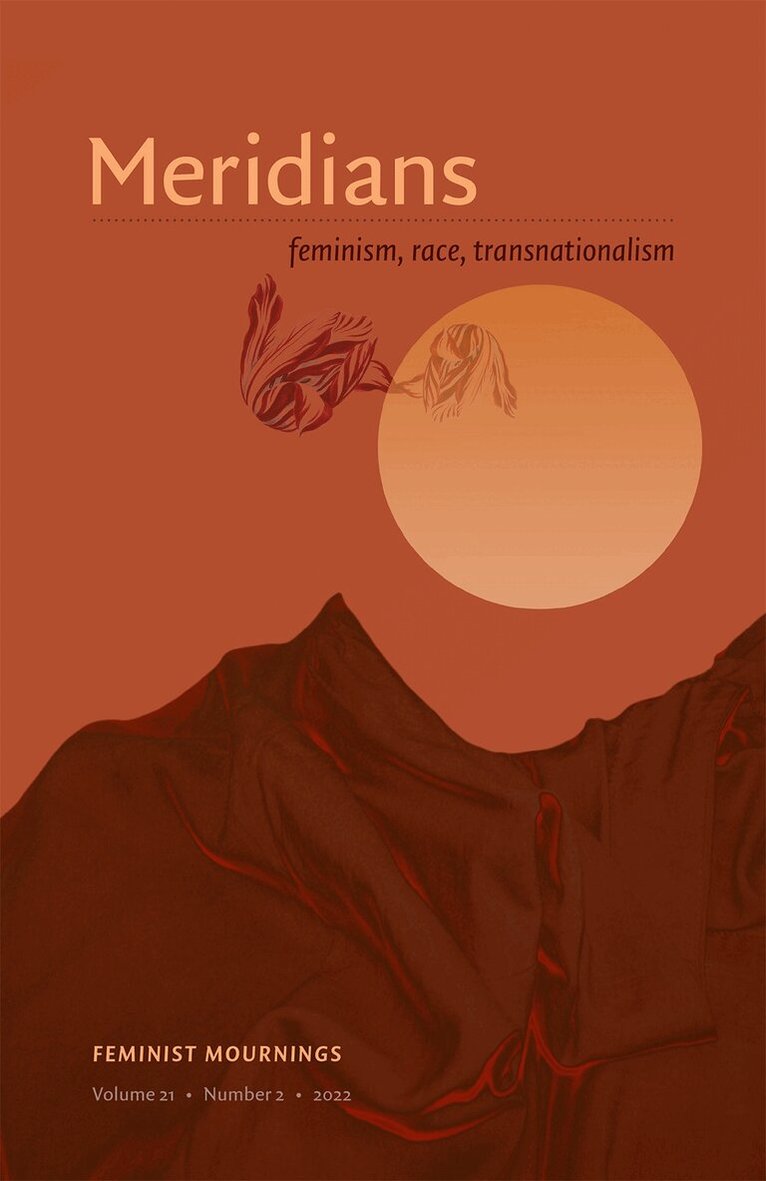
Contributors to this special issue explore feminist articulations of mourning that are anchored in slavery, settler occupation, colonialism, migration, and the violence of modern national states. The authors perceive mourning not as a process of individualized grief to be worked through or overcome but as a collective condition that encompasses historical consciousness and contemporary collective action. Essays in the issue cover mourning the mother tongue in Toni Morrison’s A Mercy, the aesthetics and politics of brown and queer sorrow, Palestinian reflections on death, poems from a lesbian diasporic body, mother loss in Harriet E. Wilson’s Our Nig, Black maternal necropolitics, and more. By acknowledging the spaces and temporalities in which various manifestations of death abound and by examining mourning as both lineages and possibilities of loss and grief, the authors theorize mourning as an orientation to the world where the past, present, and imminent futures are not dead or destined but contain the potentialities for lives that were and are yet to be.Contributors. Courtney Baker, Kimberly Juanita Brown, Tiffany Caesar, Ginetta E. B. Candelario, Eman Ghanayem, K. Melchor Quick Hall, Tara Jones, Nancy Kang, Patricia Ann Lott, Emer Lyons, DesireÉ Melonas, Kelli Moore, Jyoti Puri, Sandra Ruiz, Amanda Russhell Wallace, Asli Zengin
426 kr
Skickas inom 7-10 vardagar