Kira Sanbonmatsu - Böcker
Visar alla böcker från författaren Kira Sanbonmatsu. Handla med fri frakt och snabb leverans.
5 produkter
5 produkter
A Seat at the Table
Congresswomen's Perspectives on Why Their Presence Matters
Inbunden, Engelska, 2018
1 252 kr
Skickas inom 5-8 vardagar
The presence of women in Congress is at an all-time high -- approximately one of every five members is female -- and record numbers of women are running for public office for the 2018 midterms. At the same time, Congress is more polarized than ever, and little research exists on how women in Congress view their experiences and contributions to American politics today. Drawing on personal interviews with over three-quarters of the women serving in the 114th Congress (2015-17), the authors analyze how these women navigate today's stark partisan divisions, and whether they feel effective in their jobs. Through first-person perspectives,A Seat at the Tabl looks at what motivates these women's legislative priorities and behavior, details the ways in which women experience service within a male-dominated institution, and highlights why it matters that women sit in the nation's federal legislative chambers. It describes the strategies women employ to overcome any challenges they confront as well as the opportunit es available to them. The book examines how gender interacts with political party, race and ethnicity, seniority, chamber, and district characteristics to shape women's representational influence and behavior, finding that party and race/ethnicity are the two most complicating factors to a singular narrative of women's congressional representation. While congresswomens perspectives, experiences, and influence are neither uniform nor interchangeable, they strongly believe their presence matters in myriad ways, affecting congressional culture, priorities, processes, debates, and outcomes.
346 kr
Skickas inom 5-8 vardagar
The presence of women in Congress is at an all-time high -- approximately one of every five members is female -- and record numbers of women are running for public office for the 2018 midterms. At the same time, Congress is more polarized than ever, and little research exists on how women in Congress view their experiences and contributions to American politics today. Drawing on personal interviews with over three-quarters of the women serving in the 114th Congress (2015-17), the authors analyze how these women navigate today's stark partisan divisions, and whether they feel effective in their jobs. Through first-person perspectives, A Seat at the Table looks at what motivates these women's legislative priorities and behavior, details the ways in which women experience service within a male-dominated institution, and highlights why it matters that women sit in the nation's federal legislative chambers. It describes the strategies women employ to overcome any challenges they confront as well as the opportunit es available to them. The book examines how gender interacts with political party, race and ethnicity, seniority, chamber, and district characteristics to shape women's representational influence and behavior, finding that party and race/ethnicity are the two most complicating factors to a singular narrative of women's congressional representation. While congresswomens perspectives, experiences, and influence are neither uniform nor interchangeable, they strongly believe their presence matters in myriad ways, affecting congressional culture, priorities, processes, debates, and outcomes.
1 801 kr
Skickas inom 5-8 vardagar
Women remain dramatically underrepresented in elective office, including in entry-level political offices. While they enjoy the freedom to stand for office and therefore have an equal legal footing with men, this persistent gender imbalance raises pressing questions about democratic legitimacy, the inclusivity of American politics, and the quality of political representation. The reasons for women's underrepresentation remain the subject of much debate. One explanation--that the United States lacks sufficient openings for political newcomers--has become less compelling in recent years, as states that have adopted term limits have not seen the expected gains in women's office holding. Other accounts about candidate scarcity, gender inequalities in society, and the lingering effects of gendered socialization have some merit; however, these accounts still fail to explain the relatively low numbers. This book argues that a major problem with current accounts exists in their underlying assumption that there is a single model of candidate emergence. The prediction is that women's office holding will rise automatically as women acquire the same backgrounds as men and assimilate to men's pathways to office. In this view, the main reasons for women's political underrepresentation can be found in society rather than in politics. Carroll and Sanbonmatsu argue for a new approach that considers women on their own terms and that focuses on the political origins of women's representation. Drawing upon an original and comparative survey of women state legislators across all fifty states, from 1981 and 2008, and follow-up surveys after the 2008 elections, the authors find that gender differences in pathways to the legislatures, first evident in 1981, have been surprisingly persistent over time. They found that, while the ambition framework better explains men's decisions to run for office, women are much more reliant on the existence of organizational and party support. By rethinking the nature of women's representation, this study calls for a reorientation of academic research on women's election to office and provides insight into new strategies for political practitioners concerned about women's political equality.
425 kr
Skickas inom 5-8 vardagar
Women remain dramatically underrepresented in elective office, including in entry-level political offices. While they enjoy the freedom to stand for office and therefore have an equal legal footing with men, this persistent gender imbalance raises pressing questions about democratic legitimacy, the inclusivity of American politics, and the quality of political representation. The reasons for women's underrepresentation remain the subject of much debate. One explanation--that the United States lacks sufficient openings for political newcomers--has become less compelling in recent years, as states that have adopted term limits have not seen the expected gains in women's office holding. Other accounts about candidate scarcity, gender inequalities in society, and the lingering effects of gendered socialization have some merit; however, these accounts still fail to explain the relatively low numbers. This book argues that a major problem with current accounts exists in their underlying assumption that there is a single model of candidate emergence. The prediction is that women's office holding will rise automatically as women acquire the same backgrounds as men and assimilate to men's pathways to office. In this view, the main reasons for women's political underrepresentation can be found in society rather than in politics. Carroll and Sanbonmatsu argue for a new approach that considers women on their own terms and that focuses on the political origins of women's representation. Drawing upon an original and comparative survey of women state legislators across all fifty states, from 1981 and 2008, and follow-up surveys after the 2008 elections, the authors find that gender differences in pathways to the legislatures, first evident in 1981, have been surprisingly persistent over time. They found that, while the ambition framework better explains men's decisions to run for office, women are much more reliant on the existence of organizational and party support. By rethinking the nature of women's representation, this study calls for a reorientation of academic research on women's election to office and provides insight into new strategies for political practitioners concerned about women's political equality.
358 kr
Skickas inom 7-10 vardagar
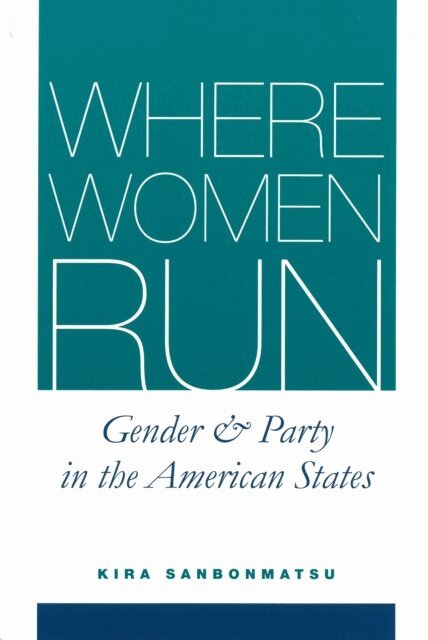
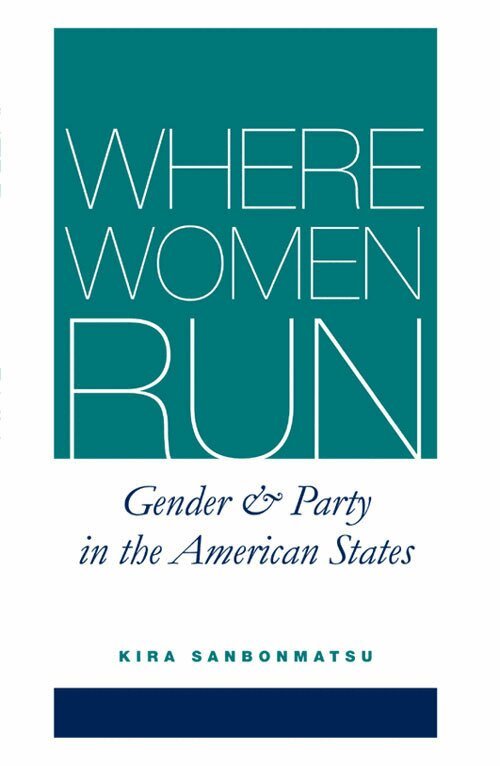
Why don’t more women run for office? Why are certain states more likely to have female candidates and representatives? Would strengthening political parties narrow the national gender gap? Where Women Run addresses these important questions through a rare and incisive look at how candidates are recruited. Drawing on surveys and case studies of party leaders and legislators in six states, political scientist Kira Sanbonmatsu analyzes the links between parties and representation, exposing the mechanism by which parties’ informal recruitment practices shape who runs—or doesn’t run—for political office in America.“Kira Sanbonmatsu has done a masterful job of linking the representation of women in elective office to the activities of party organizations in the states. She combines qualitative and quantitative data to show how women are navigating the campaign process to become elected leaders and the changing role of party organizations in their recruitment and election. It is a significant contribution to the study of representative democracy.”--Barbara Burrell, Northern Illinois University“Sanbonmatsu has produced an excellent study that will invigorate research on the role of political parties and the recruitment of women candidates. Using a variety of methods and data sources, she has crafted a tightly constructed, clearly argued, and exceedingly well-written study. A commendable and convincing job.”--Gary Moncrief, Boise State University“Sanbonmatsu offers important insights in two neglected areas of American politics: the role of political parties in recruiting candidates and the continued under-representation of women in elected office. Connecting the two subjects through careful qualitative and statistical methods, insightful interpretation of the literature and interesting findings, the book is a significant new addition to scholarship on parties, gender, and political recruitment.”--Linda Fowler, Dartmouth CollegeKira Sanbonmatsu is Associate Professor of Political Science at Rutgers University and Senior Scholar at the Eagleton Institute of Politics’ Center for American Women and Politics (CAWP). She was previously associate professor at Ohio State University. She is the author of Democrats, Republicans, and the Politics of Women’s Place.