Kitaro Nishida - Böcker
Visar alla böcker från författaren Kitaro Nishida. Handla med fri frakt och snabb leverans.
5 produkter
5 produkter
1 304 kr
Skickas inom 5-8 vardagar
This book presents two essays by Nishida Kitaro, translated into English for the first time by John Krummel and Shigenori Nagatomo. Nishida is widely regarded as one of the father figures of modern Japanese philosophy and as the founder of the first distinctly Japanese school of philosophy, the Kyoto school, known for its synthesis of western philosophy, Christian theology, and Buddhist thought. The two essays included here are ''Basho'' from 1926/27 and ''Logic and Life'' from 1936/37. Each essay is divided into several sections and each section is preceded by a synopsis added by the translators. The first essay represents the first systematic articulation of Nishida's philosophy of basho, literally meaning ''place,'' a system of thought that came to be known as ''Nishida philosophy.'' In the second essay, Nishida inquires after the pre-logical origin of what we call logic, which he suggests is to be found within the dialectical unfoldings of world-history and human society. A substantial introduction by John Krummel considers the significance of Nishida as a thinker, discusses the key components of Nishida's philosophy as a whole and its development throughout his life, and contextualizes the translated essays within his oeuvre. The Introduction also places Nishida and his work within the historical context of his time, and highlights the relevance of his ideas to the global circumstances of our day. The publication of these two essays by Nishida, a major figure in world philosophy and the most important philosopher of twentieth-century Japan, will be of significant value to the fields not only of Asian philosophy and East-West comparative philosophy but also of philosophy in general as well as of theology and religious studies.
247 kr
Skickas inom 7-10 vardagar
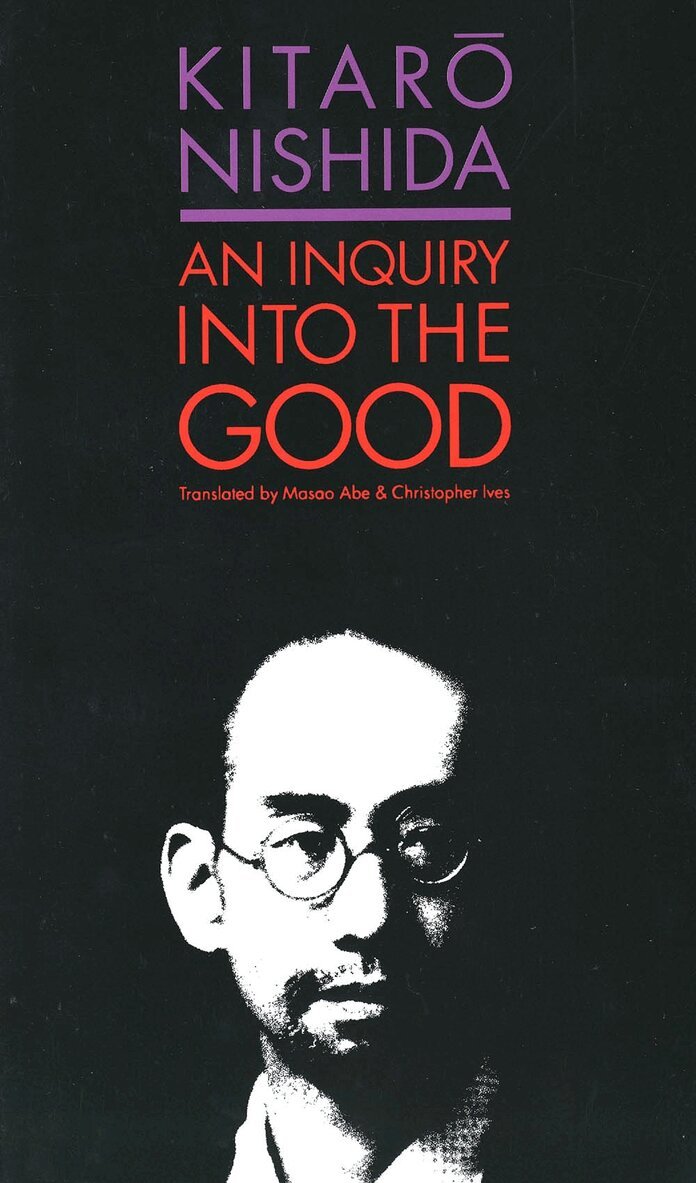
An Inquiry into the Good represented the foundation of Nishida’s philosophy—reflecting both his deep study of Zen Buddhism and his thorough analysis of Western philosophy—and established its author as the foremost Japanese philosopher of this century. In this important new translation, two scholars—one Japanese and one American—have worked together to present a lucid and accurate rendition of Nishida’s ideas. "The translators do an admirable job of adhering to the cadence of the original while avoiding unidiomatic, verbatim constructions."—John C. Maraldo, Philosophy East and West"More accurate and critical than the first translation into English of Nishida's earliest book. . . . An important addition to library collections of twentieth-century philosophy, Japanese intellectual history, and contemporary Buddhist thought."—Choice "A welcome new translation of a work by probably the most original and influential of modern Japanese philosophers."—Hidé Ishiguro, Times Literary Supplement "Undoubtedly the most important work for anyone in the West interested in understanding modern Japanese thought. This work premiered Japanese philosophy as modern but has also shown unusual staying power. In the late twentieth century Japanese thinkers, both religious and secular, insist on its importance and relevance."—William R. La Fleur, University of Pennsylvania
540 kr
Skickas inom 3-6 vardagar
Nishida Kitaro's reformulation of the major issues of Western philosophy from a Zen standpoint of "absolute nothingness" and "absolutely contradictory self-identity" represents the boldest speculative enterprise of modern Japan, continued today by his successors in the "Kyoto School" of philosophy.This English translation of Intuition and Reflection in Self-Consciousness evokes the movement and flavor of the original, clarifies its obscurities, and eliminates the repetitions. It sheds new light on the philosopher's career, revealing a long struggle with such thinkers as Cohen, Natorp, Husserl, Fichte, and Bergson, that ended with Nishida's break from the basic ontological assumptions of the West. Throughout labyrinthine arguments, Nishida never loses sight of his theme: the irreducibility and unobjectifiability of the act of self-consciousness which constitutes the self. Extensive annotation is provided for the first time in any edition of Nishida's work.Historians of Japanese philosophy and culture, and all those interested in the interaction of Eastern and Western thought-forms, now have a document which highlights many of the cultural, psychological, and intellectual dynamics that have shaped Japanese intellectual life in one of its most fascinating and ambitious manifestations.
221 kr
Skickas inom 3-6 vardagar
1 512 kr
Skickas inom 7-10 vardagar