Klaus-Rüdiger Trott – författare
Visar alla böcker från författaren Klaus-Rüdiger Trott. Handla med fri frakt och snabb leverans.
6 produkter
6 produkter
Inbunden, Engelska, 2007
3 361 kr
Skickas inom 10-15 vardagar
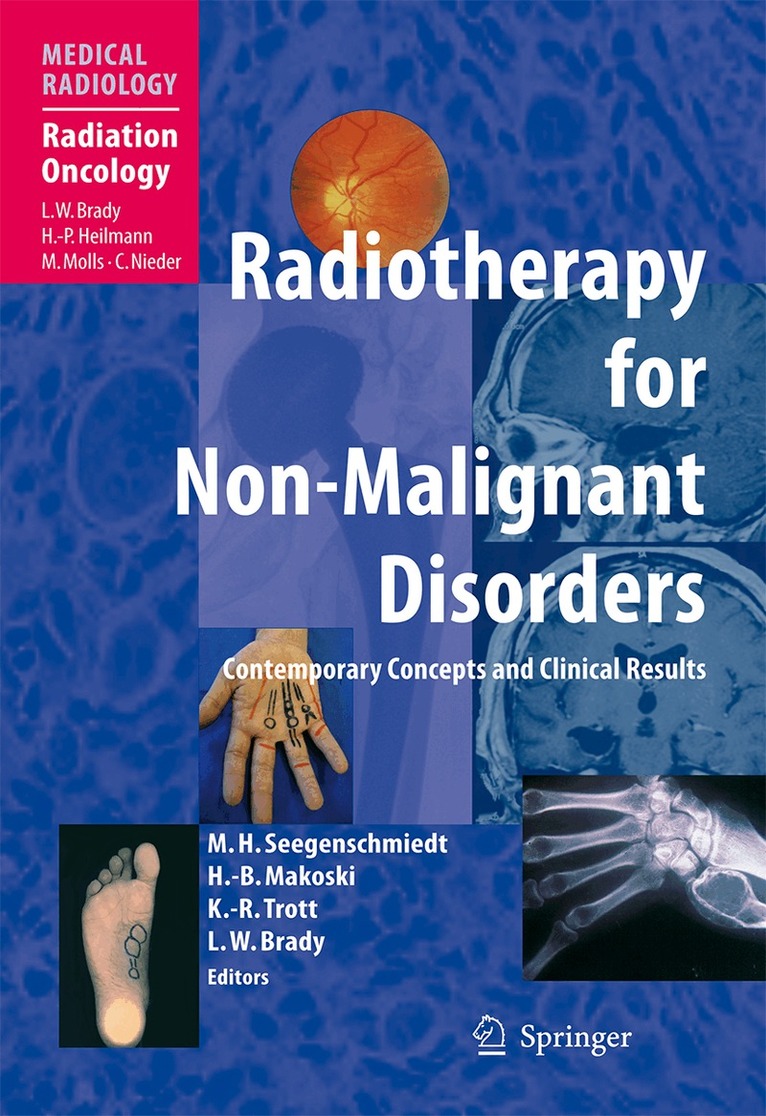
Non-malignant, or "benign", diseases can be successfully treated using ionizing rad- tion technologies. It was first proposed in 1898 by Sokoloff, who reported the analgesic effects of radiotherapy for painful rheumatoid arthritis. Since then, the use of these techniques for painful muscle-skeletal diseases has gained acceptance particularly in Europe but is still carried out actively in the United States. Non-malignant diseases that are amenable to radiotherapy can be classified as inflammatory, degenerative, hype- roliferative, functional, or other disorders. However, the topographic and morphologic considerations are more relevant. Even though radiation therapy for "benign" diseases has not been pursued actively since the 1950s, more recent interest has dictated that it can be a very effective treatment modality. The use of radiotherapy can be justified for invasive and aggressive growth such as that seen with desmoids, for cosmetic d- figurations and functional loss as seen with keloids or endocrine orbitopathy, or for life-threatening complications such as hepatic hemangiomas or juvenile angiofibromas that occur in children or adolescents. Many of the non-malignant diseases can have a major and lasting effect on quality of life by causing pain or other serious symptoms, particularly when other methods of treatment are unavailable, have failed, or may induce more side effects. It is not generally the first choice of therapy in these non-malignant diseases, but it is acceptable as defined. The book edited by Seegenschmiedt et al.
E-bok
PDF, Engelska, 20093 165 kr
Läs direkt efter köp
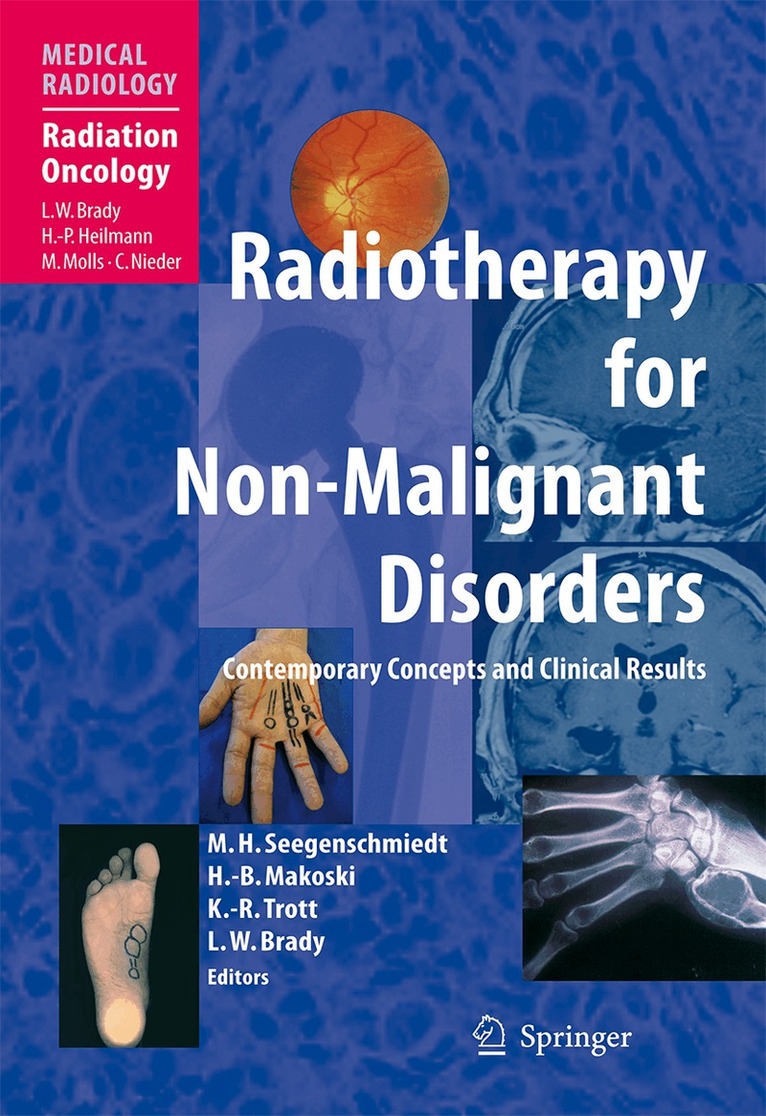
Non-malignant, or "benign", diseases can be successfully treated using ionizing rad- tion technologies. It was first proposed in 1898 by Sokoloff, who reported the analgesic effects of radiotherapy for painful rheumatoid arthritis. Since then, the use of these techniques for painful muscle-skeletal diseases has gained acceptance particularly in Europe but is still carried out actively in the United States. Non-malignant diseases that are amenable to radiotherapy can be classified as inflammatory, degenerative, hype- roliferative, functional, or other disorders. However, the topographic and morphologic considerations are more relevant. Even though radiation therapy for "benign" diseases has not been pursued actively since the 1950s, more recent interest has dictated that it can be a very effective treatment modality. The use of radiotherapy can be justified for invasive and aggressive growth such as that seen with desmoids, for cosmetic d- figurations and functional loss as seen with keloids or endocrine orbitopathy, or for life-threatening complications such as hepatic hemangiomas or juvenile angiofibromas that occur in children or adolescents. Many of the non-malignant diseases can have a major and lasting effect on quality of life by causing pain or other serious symptoms, particularly when other methods of treatment are unavailable, have failed, or may induce more side effects. It is not generally the first choice of therapy in these non-malignant diseases, but it is acceptable as defined. The book edited by Seegenschmiedt et al.
Häftad, Engelska, 2010
2 455 kr
Skickas inom 10-15 vardagar
Non-malignant, or "benign", diseases can be successfully treated using ionizing rad- tion technologies. It was first proposed in 1898 by Sokoloff, who reported the analgesic effects of radiotherapy for painful rheumatoid arthritis. Since then, the use of these techniques for painful muscle-skeletal diseases has gained acceptance particularly in Europe but is still carried out actively in the United States. Non-malignant diseases that are amenable to radiotherapy can be classified as inflammatory, degenerative, hype- roliferative, functional, or other disorders. However, the topographic and morphologic considerations are more relevant. Even though radiation therapy for "benign" diseases has not been pursued actively since the 1950s, more recent interest has dictated that it can be a very effective treatment modality. The use of radiotherapy can be justified for invasive and aggressive growth such as that seen with desmoids, for cosmetic d- figurations and functional loss as seen with keloids or endocrine orbitopathy, or for life-threatening complications such as hepatic hemangiomas or juvenile angiofibromas that occur in children or adolescents. Many of the non-malignant diseases can have a major and lasting effect on quality of life by causing pain or other serious symptoms, particularly when other methods of treatment are unavailable, have failed, or may induce more side effects. It is not generally the first choice of therapy in these non-malignant diseases, but it is acceptable as defined. The book edited by Seegenschmiedt et al.
Häftad, Engelska, 2011
1 125 kr
Skickas inom 10-15 vardagar
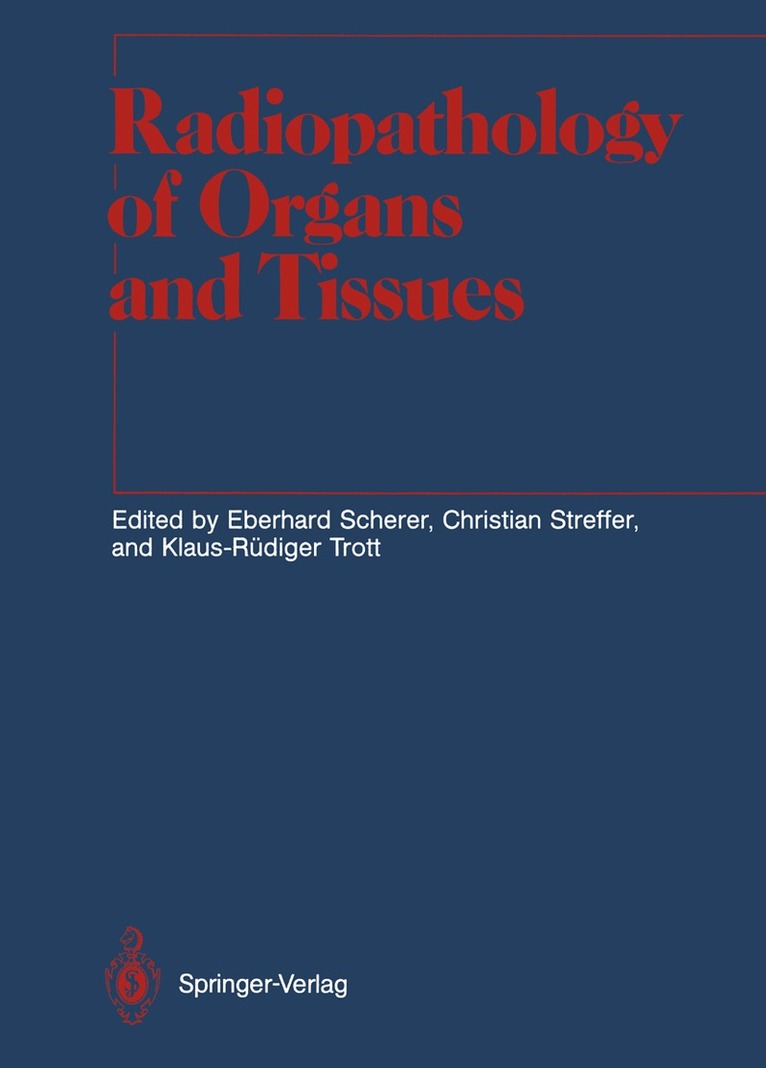
The biologic effects of radiation on normal tissues and tumors represent a complex area for investigation. These effects are of far-reaching consequence to the diagnostic radiologist and the radiation oncologist having a significant impact not only in concepts relative to radiation protection but also in concepts relative to tumor biology and its response to radiation injury. The volume edited by SCHERER, STREFFER, and TROTT represents an extension of basic radiation biology data into the effects of radiation in producing pathology in organs and tissues. The data presented by the multiple authors involved in this text cover essentially all tissues in the body with specific definition of radiopathology changes and their impact on clinical care of the patient. This volume represents an important and significant contribution toward a better understanding of these effects and the pathology produced by radiations. L. W. BRADY H.-P. HEILMANN F. HEUCK M. W. DONNER Philadelphia Hamburg Stuttgart Baltimore Preface This book represents an attempt to describe the clinical radiobiology of complications arising in different organs after radiotherapy of cancer patients. Since by their very nature malignant tumors infiltrate the organ in which they have arisen and the neighboring tissues, curative radiotherapy requires the planned irradiation of considerable amounts of healthy but potentially or microscopically involved normal tissues and organs with the full target dose. This may lead to early or late normal tissue radiation injury.
E-bok
PDF, Engelska, 2012734 kr
Läs direkt efter köp
The aim of radiation protection standards is to make the radiation workplace as safe as is humanly possible. The gradual evolution over the last 20 years has been towards a more precise definition of the limits for occupational exposure. These have been created not only in terms of short-term effects but also more importantly in terms of long-term risks involving such problems as the potential for carcinogenesis and genetic change. In the United States the National Committee for Radiation Protection has recom mended that 5 rems (50 mSv) should remain as the maximum permissible dose equiva lent for total body exposure. This would represent the sum of internal and external ex posure and should be regarded as the upper limit allowed. The community of radiation users is required to conduct its operations in such a man ner that the absolute value of the individual''s dose equivalent in rems does not exceed his age in years. There should be additional limits for tissues and organs based on short term effects. Therefore, individual organs are limited to dose equivalents low enough to ensure that the dose threshold values are not exceeded.
Häftad, Engelska, 2012
566 kr
Skickas inom 10-15 vardagar
The aim of radiation protection standards is to make the radiation workplace as safe as is humanly possible. The gradual evolution over the last 20 years has been towards a more precise definition of the limits for occupational exposure. These have been created not only in terms of short-term effects but also more importantly in terms of long-term risks involving such problems as the potential for carcinogenesis and genetic change. In the United States the National Committee for Radiation Protection has recom mended that 5 rems (50 mSv) should remain as the maximum permissible dose equiva lent for total body exposure. This would represent the sum of internal and external ex posure and should be regarded as the upper limit allowed. The community of radiation users is required to conduct its operations in such a man ner that the absolute value of the individual's dose equivalent in rems does not exceed his age in years. There should be additional limits for tissues and organs based on short term effects. Therefore, individual organs are limited to dose equivalents low enough to ensure that the dose threshold values are not exceeded.