Konstantinos I. Arvanitakis - Böcker
Visar alla böcker från författaren Konstantinos I. Arvanitakis. Handla med fri frakt och snabb leverans.
3 produkter
3 produkter
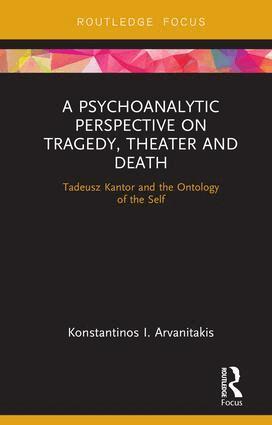
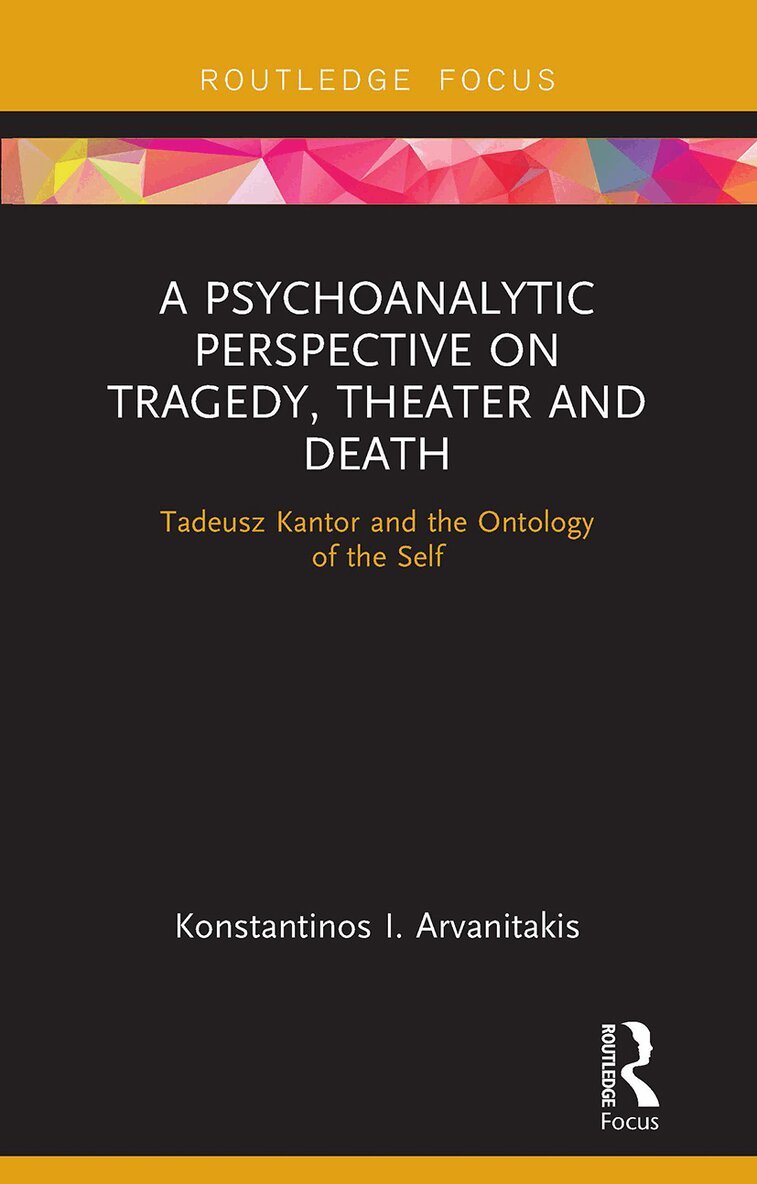
Psychoanalytic Perspective on Tragedy, Theater and Death
Tadeusz Kantor and the Ontology of the Self
Häftad, Engelska, 2023
301 kr
Skickas inom 10-15 vardagar
A Psychoanalytic Perspective on Tragedy, Theater and Death shines a spotlight on what theater, and especially tragedy, tells us about our ontological selves, by exploring both Euripides’ Bacchae and the work of Tadeusz Kantor.Focusing on the theatrical tradition of the West, the book examines Euripides’ Bacchae, a tragedy about the nature of tragedy, suggesting that the tragic can be defined as an ontological duality rooted in the early experience of the infant’s separation from mother, with whom s/he had, until then, formed a fused Unit. The traumatic rupture of this primal Unit is inscribed in the unconscious as death. The book then considers the defining binary structure of the theatrical setting – (spectator/spectated or fantasy/reality) – before arguing that in staging our ontological dividedness, theater shows its relation to death to be organic. The book concludes by examining in detail the principal works of Polish theater director Tadeusz Kantor, whose search for theater’s identity was, essentially, a search for human identity.Erudite and far-reaching, A Psychoanalytic Perspective on Tragedy, Theater and Death will interest psychoanalysts as well as students, scholars and researchers across the dramatic arts wishing to draw on psychoanalytic ideas.
Psychoanalytic Perspective on Tragedy, Theater and Death
Tadeusz Kantor and the Ontology of the Self
Inbunden, Engelska, 2019
735 kr
Skickas inom 10-15 vardagar
A Psychoanalytic Perspective on Tragedy, Theater and Death shines a spotlight on what theater, and especially tragedy, tells us about our ontological selves, by exploring both Euripides’ Bacchae and the work of Tadeusz Kantor.Focusing on the theatrical tradition of the West, the book examines Euripides’ Bacchae, a tragedy about the nature of tragedy, suggesting that the tragic can be defined as an ontological duality rooted in the early experience of the infant’s separation from mother, with whom s/he had, until then, formed a fused Unit. The traumatic rupture of this primal Unit is inscribed in the unconscious as death. The book then considers the defining binary structure of the theatrical setting – (spectator/spectated or fantasy/reality) – before arguing that in staging our ontological dividedness, theater shows its relation to death to be organic. The book concludes by examining in detail the principal works of Polish theater director Tadeusz Kantor, whose search for theater’s identity was, essentially, a search for human identity.Erudite and far-reaching, A Psychoanalytic Perspective on Tragedy, Theater and Death will interest psychoanalysts as well as students, scholars and researchers across the dramatic arts wishing to draw on psychoanalytic ideas.
Del 20 - Contemporary Psychoanalytic Studies
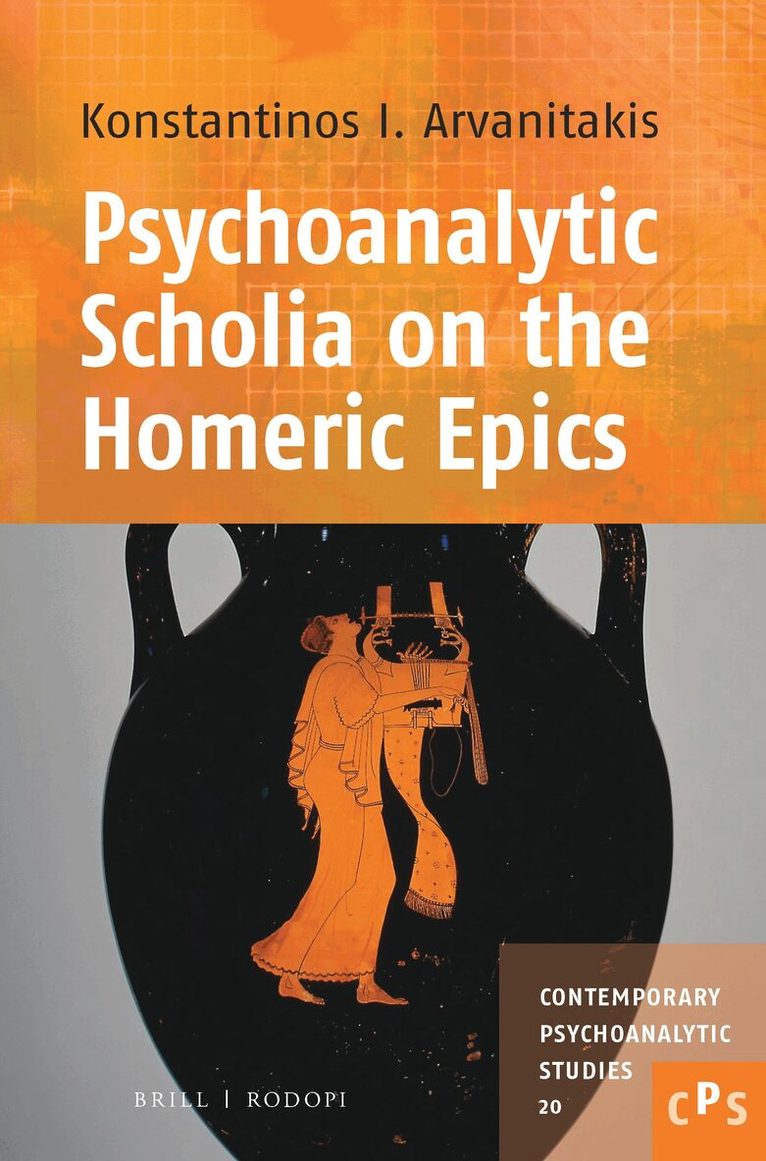
Psychoanalytic Scholia on the Homeric Epics
Häftad, Engelska, 2015
681 kr
Skickas inom 5-8 vardagar
This work attempts a psychoanalytic listening to the ‘oral’ Homeric epics in an effort to extract, as it were, from the ancient text certain elements of psychoanalytic understanding that are of relevance to contemporary psychoanalysis. There is, in addition, a consideration of related philosophical and linguistic issues that are linked to the basic psychoanalytic concepts that emerge from such a listening.The main themes treated rotate around the central axis of time as it is expressed in the Homeric epics. Thus, questions of transition, loss, mourning, tolerance, identity, metaphor and tragic fragmentation are addressed as they relate to the ancient text. The process of metabasis along contrasting psychic states of being is discussed as it provides the frame for the construction of the basic interval of time and of the flux of human identity.Although psychoanalysis from its early beginnings has shown – largely owing to Freud’s positing the Oedipus complex as the nuclear conflict – a distinct interest in classical Antiquity, the area of the great Homeric Epics has been singularly neglected as a chosen focus of psychoanalytic attention. It is as if the Homeric Epics belonged to a prehistoric pre-oedipal world which, for a long time, was not the dominant concern of psychoanalysis. The merit of this book lies in the fact that it fills part of this lacuna in psychoanalytic studies.