Kostas Vlassopoulos - Böcker
Visar alla böcker från författaren Kostas Vlassopoulos. Handla med fri frakt och snabb leverans.
12 produkter
12 produkter
2 213 kr
Skickas inom 5-8 vardagar
This volume examines the diversity of networks and communities in the classical and early Hellenistic Greek world, with particular emphasis on those which took shape within and around Athens. In doing so it highlights not only the processes that created, modified, and dissolved these communities, but shines a light on the interactions through which individuals with different statuses, identities, levels of wealth, and connectivity participated in ancient society. By drawing on two distinct conceptual approaches, that of network studies and that of community formation, Communities and Networks in the Ancient Greek World showcases a variety of approaches which fall under the umbrella of 'network thinking' in order to move the study of ancient Greek history beyond structuralist polarities and functionalist explanations. The aim is to reconceptualize the polis not simply as a citizen club, but as one inter-linked community amongst many. This allows subaltern groups to be seen not just as passive objects of exclusion and exploitation but active historical agents, emphasizes the processes of interaction as well as the institutions created through them, and reveals the interpenetration between public institutions and private networks which integrated different communities within the borders of a polis and connected them with the wider world.
Violence and Community
Law, Space and Identity in the Ancient Eastern Mediterranean World
Häftad, Engelska, 2020
649 kr
Skickas inom 10-15 vardagar
Violence and community were intimately linked in the ancient world. While various aspects of violence have been long studied on their own (warfare, revolution, murder, theft, piracy), there has been little effort so far to study violence as a unified field and explore its role in community formation. This volume aims to construct such an agenda by exploring the historiography of the study of violence in antiquity, and highlighting a number of important paradoxes of ancient violence. It explores the forceful nexus between wealth, power and the passions by focusing on three major aspects that link violence and community: the attempts of communities to regulate and canalise violence through law, the constitutive role of violence in communal identities, and the ways in which communities dealt with violence in regards to private and public space, landscapes and territories. The contributions to this volume range widely in both time and space: temporally, they cover the full span from the archaic to the Roman imperial period, while spatially they extend from Athens and Sparta through Crete, Arcadia and Macedonia to Egypt and Israel.
422 kr
Skickas inom 7-10 vardagar
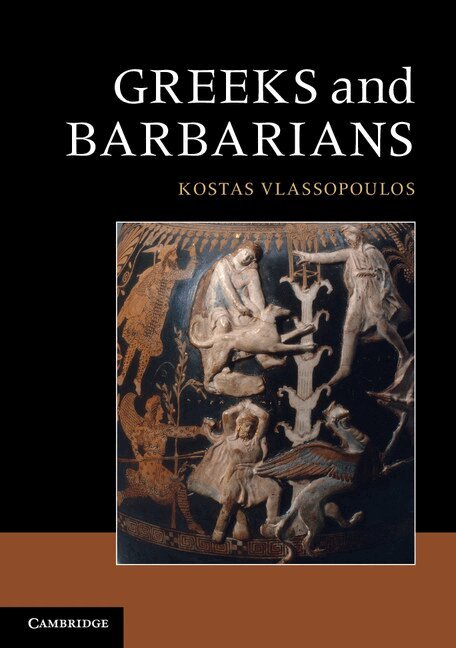
This book is an ambitious synthesis of the social, economic, political and cultural interactions between Greeks and non-Greeks in the Mediterranean world during the Archaic, Classical and Hellenistic periods. Instead of traditional and static distinctions between Greeks and Others, Professor Vlassopoulos explores the diversity of interactions between Greeks and non-Greeks in four parallel but interconnected worlds: the world of networks, the world of apoikiai ('colonies'), the Panhellenic world and the world of empires. These diverse interactions set into motion processes of globalisation; but the emergence of a shared material and cultural koine across the Mediterranean was accompanied by the diverse ways in which Greek and non-Greek cultures adopted and adapted elements of this global koine. The book explores the paradoxical role of Greek culture in the processes of ancient globalisation, as well as the peculiar way in which Greek culture was shaped by its interaction with non-Greek cultures.
577 kr
Skickas inom 7-10 vardagar
This 2007 study explores how modern scholars came to write Greek history from a Eurocentric perspective and challenges orthodox readings of Greek history as part of the history of the West. Since the Greeks lacked a national state or a unified society, economy or culture, the polis has helped to create a homogenising national narrative. This book re-examines old polarities such as those between the Greek poleis and Eastern monarchies, or between the ancient consumer and the modern producer city, in order to show the fallacies of standard approaches. It argues for the relevance of Aristotle's concept of the polis, which is interpreted in an intriguing manner. Finally, it proposes an alternative way of looking at Greek history as part of a Mediterranean world-system. This interdisciplinary study engages with debates on globalisation, nationalism, Orientalism and history writing, while also debating developments in classical studies.
1 200 kr
Skickas inom 7-10 vardagar
This book is an ambitious synthesis of the social, economic, political and cultural interactions between Greeks and non-Greeks in the Mediterranean world during the Archaic, Classical and Hellenistic periods. Instead of traditional and static distinctions between Greeks and Others, Professor Vlassopoulos explores the diversity of interactions between Greeks and non-Greeks in four parallel but interconnected worlds: the world of networks, the world of apoikiai ('colonies'), the Panhellenic world and the world of empires. These diverse interactions set into motion processes of globalisation; but the emergence of a shared material and cultural koine across the Mediterranean was accompanied by the diverse ways in which Greek and non-Greek cultures adopted and adapted elements of this global koine. The book explores the paradoxical role of Greek culture in the processes of ancient globalisation, as well as the peculiar way in which Greek culture was shaped by its interaction with non-Greek cultures.
1 282 kr
Skickas inom 7-10 vardagar
This 2007 study explores how modern scholars came to write Greek history from a Eurocentric perspective and challenges orthodox readings of Greek history as part of the history of the West. Since the Greeks lacked a national state or a unified society, economy or culture, the polis has helped to create a homogenising national narrative. This book re-examines old polarities such as those between the Greek poleis and Eastern monarchies, or between the ancient consumer and the modern producer city, in order to show the fallacies of standard approaches. It argues for the relevance of Aristotle's concept of the polis, which is interpreted in an intriguing manner. Finally, it proposes an alternative way of looking at Greek history as part of a Mediterranean world-system. This interdisciplinary study engages with debates on globalisation, nationalism, Orientalism and history writing, while also debating developments in classical studies.
508 kr
Skickas inom 7-10 vardagar
Greek and Roman SlaveriesSlavery was foundational to Greek and Roman societies, affecting nearly all of their economic, social, political, and cultural practices. Greek and Roman Slaveries offers a rich collection of literary, epigraphic, papyrological, and archaeological sources, including many unfamiliar ones. This sourcebook ranges chronologically from the archaic period to late antiquity, covering the whole of the Mediterranean, the Near East, and temperate Europe.Readers will find an interactive and user-friendly engagement with past scholarship and new research agendas that focuses particularly on the agency of ancient slaves, the processes in which slavery was inscribed, the changing history of slavery in antiquity, and the comparative study of ancient slaveries.Perfect for undergraduate and graduate students taking courses on ancient slavery, as well as courses on slavery more generally, this sourcebook's questions, cross-references, and bibliographies encourage an analytical and interactive approach to the various economic, social, and political processes and contexts in which slavery was employed while acknowledging the agency of enslaved persons.
Violence and Community
Law, Space and Identity in the Ancient Eastern Mediterranean World
Inbunden, Engelska, 2017
2 150 kr
Skickas inom 10-15 vardagar
Violence and community were intimately linked in the ancient world. While various aspects of violence have been long studied on their own (warfare, revolution, murder, theft, piracy), there has been little effort so far to study violence as a unified field and explore its role in community formation. This volume aims to construct such an agenda by exploring the historiography of the study of violence in antiquity, and highlighting a number of important paradoxes of ancient violence. It explores the forceful nexus between wealth, power and the passions by focusing on three major aspects that link violence and community: the attempts of communities to regulate and canalise violence through law, the constitutive role of violence in communal identities, and the ways in which communities dealt with violence in regards to private and public space, landscapes and territories. The contributions to this volume range widely in both time and space: temporally, they cover the full span from the archaic to the Roman imperial period, while spatially they extend from Athens and Sparta through Crete, Arcadia and Macedonia to Egypt and Israel.
2 085 kr
Skickas inom 3-6 vardagar
Informed by the global history of slavery, Kostas Vlassopoulos avoids traditional approaches to slavery as a static institution and instead explores the diverse strategies and various contexts in which it was employed. In doing so he offers a new historicist approach to the study of slave identity and the various networks and communities that slaves created or participated in. Instead of seeing slaves merely as passive objects of exploitation and domination, his focus is on slave agency and the various ways in which they played an active role in the history of ancient societies. Vlassopoulos examines slavery not only as an economic and social phenomenon, but also in its political, religious and cultural ramifications. A comparative framework emerges as he examines Greek and Roman slaveries alongside other slaving systems in the Near East, the Mediterranean and the Black Sea.
342 kr
Skickas
A new framework for studying slaves and slavery in ancient societiesOffers a new theoretical framework for the study of ancient slaveryEmploys a global historical perspectiveFocuses on the agency of ancient slavesExplores the link between slavery and historical change in antiquityExamines the multiple contradictions within slave systemsExamines slavery from an economic, social, political and cultural perspectiveInformed by the global history of slavery, Kostas Vlassopoulos avoids traditional approaches to slavery as a static institution and instead explores the diverse strategies and various contexts in which it was employed. In doing so he offers a new historicist approach to the study of slave identity and the various networks and communities that slaves created or participated in. Instead of seeing slaves merely as passive objects of exploitation and domination, his focus is on slave agency and the various ways in which they played an active role in the history of ancient societies. Vlassopoulos examines slavery not only as an economic and social phenomenon, but also in its political, religious and cultural ramifications. A comparative framework emerges as he examines Greek and Roman slaveries alongside other slaving systems in the Near East, the Mediterranean and the Black Sea.
1 343 kr
Skickas inom 10-15 vardagar
Ancient Greece is famous as the civilization which 'gave' the world democracy. Democracy has in modern times become the rallying cry of liberation from supposed totalitarianism and dictatorship. And the desire by the western powers, especially America, to foment (or impose) democracy across the globe is one of the most powerful driving motors in present-day geopolitics: not least in Iraq and Afghanistan. Thus, a lively and well informed treatment of the nexus between politics in antiquity and political discourse in the modern era is both timely and apposite. As Kostas Vlassopoulos shows, much can be learned about the practice of politics from a comparative discussion of the classical and the contemporary. His starting point is that the value of looking back to a political system with different assumptions and elements can help us think, and even shape, what the future of modern politics might be.He discusses the contrasting political systems prevalent in the Greek city-states of Athens, Sparta and Corinth; tensions between democrats and oligarchs in Periclean Athens; the bitter rivalries which led to the Peloponnesian Wars in the fifth century BCE; and, the delicate balance of powers between people, senate and emperor in the hierarchical society of republican and latterly imperial Rome. Above all, the book shows how important and surprising the study of antiquity can be in reassessing and revaluating modern political debates.
274 kr
Skickas inom 10-15 vardagar
Ancient Greece is famous as the civilization which 'gave' the world democracy. Democracy has in modern times become the rallying cry of liberation from supposed totalitarianism and dictatorship. And the desire by the western powers, especially America, to foment (or impose) democracy across the globe is one of the most powerful driving motors in present-day geopolitics: not least in Iraq and Afghanistan. Thus, a lively and well informed treatment of the nexus between politics in antiquity and political discourse in the modern era is both timely and apposite. As Kostas Vlassopoulos shows, much can be learned about the practice of politics from a comparative discussion of the classical and the contemporary. His starting point is that the value of looking back to a political system with different assumptions and elements can help us think, and even shape, what the future of modern politics might be.He discusses the contrasting political systems prevalent in the Greek city-states of Athens, Sparta and Corinth; tensions between democrats and oligarchs in Periclean Athens; the bitter rivalries which led to the Peloponnesian Wars in the fifth century BCE; and, the delicate balance of powers between people, senate and emperor in the hierarchical society of republican and latterly imperial Rome. Above all, the book shows how important and surprising the study of antiquity can be in reassessing and revaluating modern political debates.