Kovalchuk - Böcker
Visar alla böcker från författaren Kovalchuk. Handla med fri frakt och snabb leverans.
5 produkter
5 produkter
340 kr
Skickas inom 11-20 vardagar
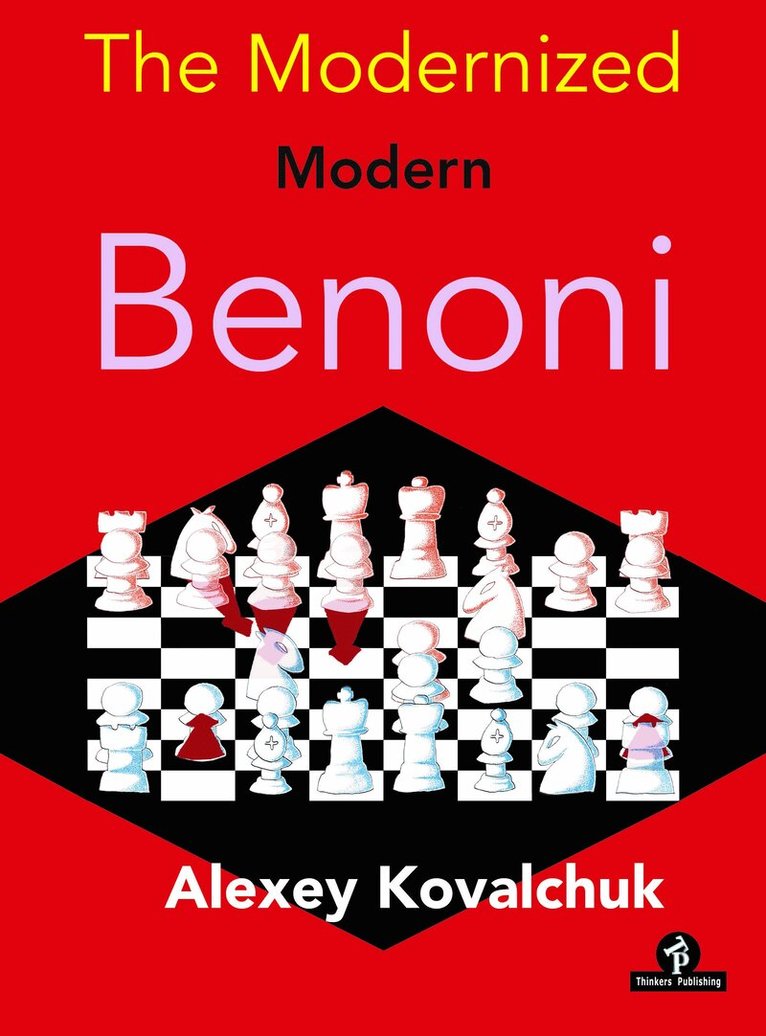
The Modern Benoni is one of the most controversial but also dynamic answers to 1.d4. This opening remained the favorite of famous attacking players as Tal, Kasparov, Gashimov and Topalov. From the outset, Black creates a new pawn structure and deploying his active piece play against White’s central majority. In his book Alexey Kovalchuk focuses on a set of new ideas and deep analyses supported by his silicon friends. His book supplies all Black needs to know to fight for the initiative from move two!
377 kr
Skickas inom 11-20 vardagar
Any and every opening book is out of date. Unfortunately this is true and there isno getting away from it. But why do I recommend my book to you, dear reader?First of all, the lines are all analyzed very deeply. You do not have to turn on theengine and wait for the computer to produce a ready-made solution. Believe me,in analyzing this book, I used the most modern equipment, and thus the readersaves a lot of time. In our information age, time is very precious, and by buying mybook you will gain at least time. I have spent a huge amount of my own timeanalyzing the various lines, but also commenting on the options especially for you,my friends.In addition, in this book’s pages you will find tons of novelties not seen in practice,and in many of the lines I offer strong improvements. Many sources were reviewed,where the authors defended certain options from White’spoint of view, while Idefended Black’s side. In addition, this book has absorbed my attitude andapproach to various positions, and I have been analyzing the Benko Gambit formore than 10 years! I wanted to approach each position from the point of view ofa human, as close as possible to a practical game. In addition, even if this bookbecomes outdated at some point, I am sure that it will always be possible toimprove the variations – but the backbone of studying this opening can be takenfrom this book; this is normal work on chess IM Alexey Kovalchuk
321 kr
Skickas inom 5-8 vardagar
You can play this opening against anyone. This opening is especially well suited forrapid and blitz games, since in the reduced time control in particular the role of theinitiative increases. Generally speaking, not in every opening will you find such athing as Black having the initiative from the very first moves (although this pleasureis paid for with a whole pawn!). I played this opening with a classical time controlagainst the ex-champion of Russia, Grandmaster Igor Lysyj, and very comfortablyequalized in the opening, although later the class difference showed and myeminent opponent beat me. Nevertheless, the opening had absolutely nothing todo with it. This opening worked great when I played it in Rostov-on-Don, when Ibeat many strong players and after that they preferred to play 1.c4, doing whateverthey could to avoid the Benko Gambit. Of course, to my understanding this openingis especially good to play against amateurs, or weaker players than yourself, whodo not know its intricacies – you can quickly get a promising position. This openingis suitable for active players striving for a lively, initiative-rich game, with a strongspirit. After all, you need to understand that if something goes wrong, you may facebig problems, since you do not have a pawn, but as in any opening there are plusesand minuses, and in the Benko Gambit there are also disadvantages. First of all, insome places you need to play very accurately (this will be especially evident in thepositions that we will consider in volume 2) and the cost of an error is quite high.But if the reader carefully studies the books, then I think that there should be noproblems and the Benko Gambit will give you many of your most interesting fights!
Practical Opening Repertoire for White - Volume 1
Battling the French & Caro-Kann
Inbunden, Engelska, 2025
377 kr
Skickas inom 5-8 vardagar
For whom would I recommend playing the exchange variation of the French Defense? First of all, for those players who strive for a clear and understandable game withgood endgame technique. We would also like to surprise our opponent to someextent, throw him off his preparation, and dull his vigilance. With good knowledge, we can not only claim a theoretical advantage, butalso exert some psychological pressure, since the opponent will lose his chances ofwinning. Perhaps they will become bored, and this will contribute to some kind ofaggressive action on the part of our rivals; perhaps this will only lead to a weakening,which is what we are trying to provoke. In the Caro-Kann Defense, I recommend playing 2.с4!?, the so-called English variation!So-named because the English maestro Elijah Williams played 2.c4 for the firsttime in 1845. The idea of exploring this option also came about by chance. I alwaysliked to study the opening and look for new, interesting and non-standard ideas. Atsome point, the old ideas became boring to me, and I wanted to look for somethingnew. My gaze and attention was drawn to how Oleksandr Bortnyk plays against theCaro-Kann defense. I began further study after the moves: 1.е4 c6 2.c4 d5 3.cxd5 exd5 4.exd5 Nf6. Iwas surprised by the move: 5. Qа4!? You could say that I immediately fell in lovewith this move. Later, analyzing this option with engines a lot, I decided to create afile on my computer. The analysis expanded, I found interesting and new ideas, andthen I started playing them in online games and the results surprised me.
535 kr
Kommande
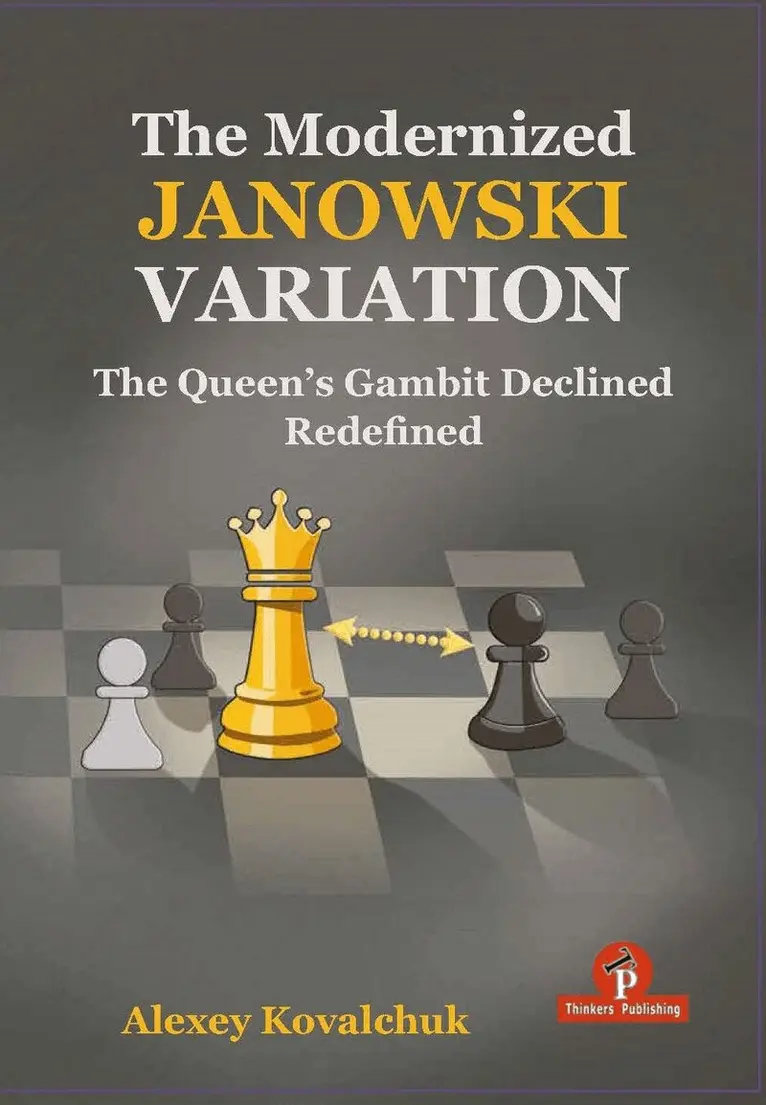
The JanowskiVariation of the Queen'sGambit Declined arises after 1.d4 d5 2.c4 e6 3.Nc3 a6. Black plays …a6to prepare the queenside expansion …b5, aiming to challenge White’s c4 pawn and gainspace. The idea was introduced by the Polish-French grandmaster Dawid Janowski around the turn of the 20th century.Compared withclassical QGD lines, this variation is less theoretical and offers flexibledevelopment for Black. White usually responds by strengthening the center andpreventing …b5,often with moves like a4, Nf3, or cxd5. The resulting positions typically feature astrategic battle between White’s central control and Black’s queenside expansion.