Kris Pint - Böcker
Visar alla böcker från författaren Kris Pint. Handla med fri frakt och snabb leverans.
2 produkter
2 produkter
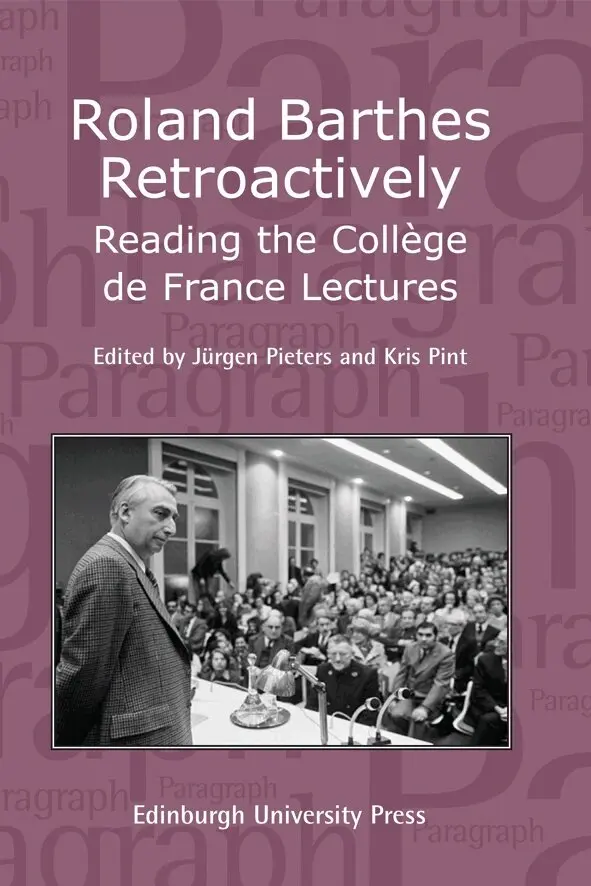
Roland Barthes Retroactively: Reading the Collège de France Lectures
Paragraph Volume 31 Number 1
Häftad, Engelska, 2008
428 kr
Skickas inom 7-10 vardagar
In January 1977 Roland Barthes became professor of literary semiology at the Collège de France, where he taught for three years until his death in March 1980. His lectures from those years, published more than two decades after his death, represent the final intellectual journey of one of the most influential thinkers of the twentieth century. In his late teaching, Barthes continuously challenged his previous work, seeking out new ways of reading and living. In his idiosyncratic style, he sketched the outlines of a critical and ethical project that is still thought- provoking and relevant today.Taking the Collège de France lectures as a starting point, leading specialists assess Barthes's legacy and the constituent fantasies that haunted his entire oeuvre. This volume reveals the untimely force of Barthes's thinking, whereby looking back often means discovering unexpected possibilities for contemporary literary and cultural studies.This is also published as a Special Issue of the journal Paragraph.
Del 353 - Faux Titre
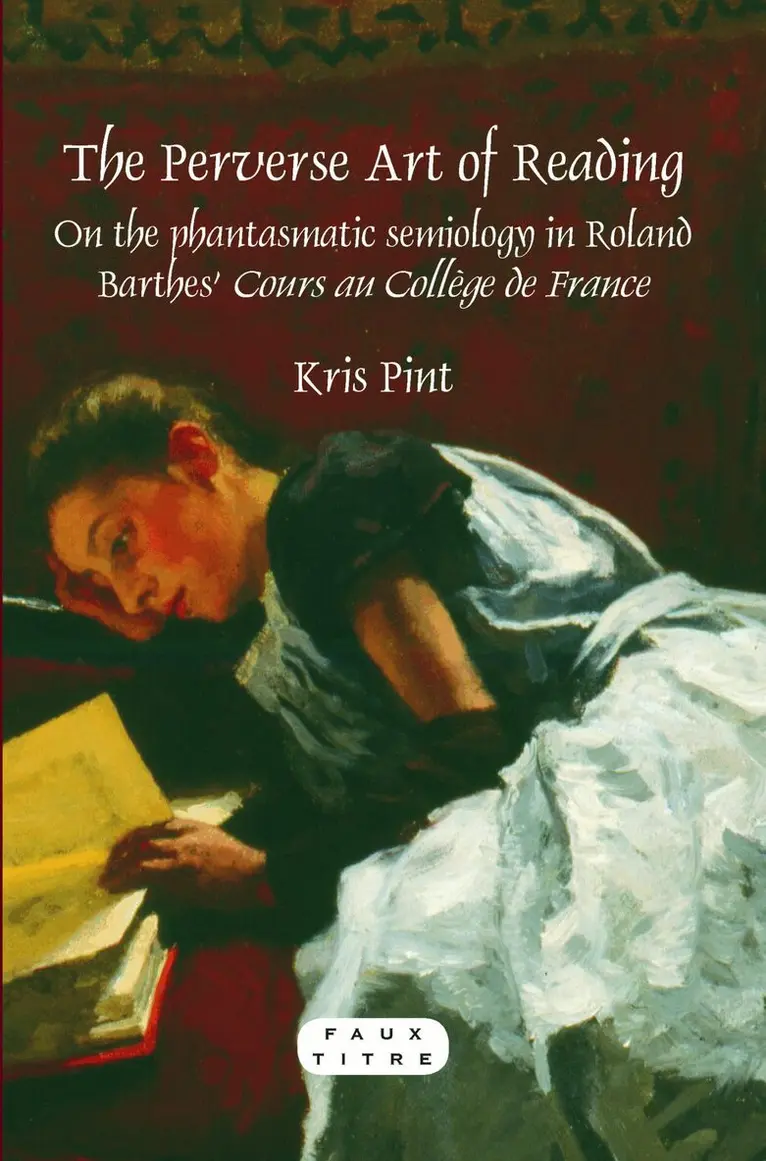
Perverse Art of Reading
On the phantasmatic semiology in Roland Barthes’ Cours au Collège de France
Häftad, Engelska, 2010
1 685 kr
Skickas inom 5-8 vardagar
‘I sincerely believe that at the origin of teaching such as this we must always locate a fantasy’. This provoking remark was the starting point of the four lecture courses Roland Barthes taught as professor of literary semiology at the Collège de France. In these last years of his life, Barthes developed a perverse reading theory in which the demonic stupidity of the fantasy becomes an active force in the creation of new ways of thinking and feeling. The perverse art of reading offers the first extensive monograph on these lecture courses. The first part examines the psychoanalytical and philosophical intertexts of Barthes’ ‘active semiology’ (Lacan, Kristeva, Winnicott, Nietzsche, Deleuze and Foucault), while the second part discusses his growing attention for the intimate, bodily involvement in the act of reading. Subsequently, this study shows how Barthes’ phantasmatic reading strategy radically reviews the notions of space, detail and the untimely in fiction, as well as the figure of the author and his own role as a teacher. It becomes clear that the interest of Barthes’ lecture courses goes well beyond semiology and literary criticism, searching the answer to the ethical question par excellence: how to become what one is, how to live a good life.