Kristen Block - Böcker
Visar alla böcker från författaren Kristen Block. Handla med fri frakt och snabb leverans.
3 produkter
3 produkter
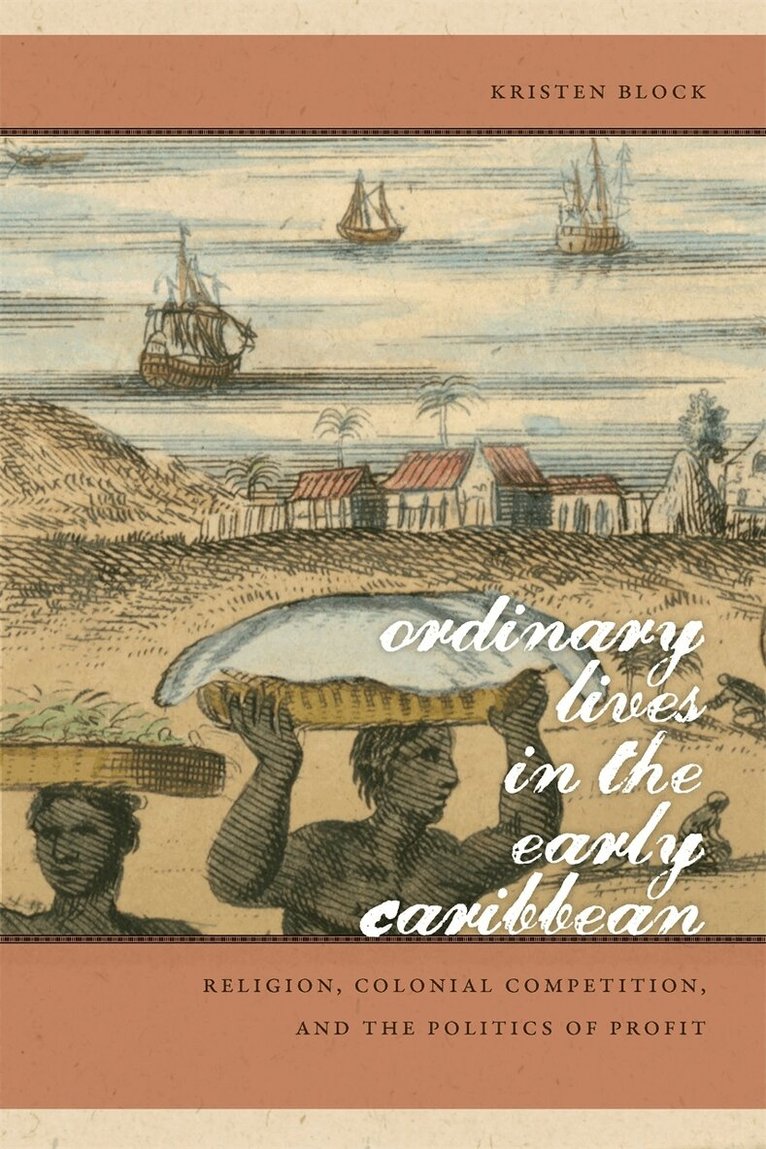
Ordinary Lives in the Early Caribbean
Religion, Colonial Competition, and the Politics of Profit
Inbunden, Engelska, 2012
1 274 kr
Skickas inom 5-8 vardagar
Kristen Block examines the entangled histories of Spain and England in the Caribbean during the long seventeenth century, focusing on colonialism’s two main goals: the search for profit and the call to Christian dominance.Using the stories of ordinary people, Block illustrates how engaging with the powerful rhetoric and rituals of Christianity was central to survival. Isobel Criolla was a runaway slave in Cartagena who successfully lobbied the Spanish governor not to return her to an abusive mistress. Nicolas Burundel was a French Calvinist who served as henchman to the Spanish governor of Jamaica before his arrest by the Inquisition for heresy. Henry Whistler was an English sailor sent to the Caribbean under Oliver Cromwell’s plan for holy war against Catholic Spain. Yaff and Nell were slaves who served a Quaker plantation owner, Lewis Morris, in Barbados. Seen from their on-the-ground perspective, the development of modern capitalism, race, and Christianity emerges as a story of negotiation, contingency, humanity, and the quest for community.Ordinary Lives in the Early Caribbean works in both a comparative and an integrative Atlantic world frame, drawing on archival sources from Spain, England, Barbados, Colombia, and the United States. It pushes the boundaries of how historians read silences in the archive, asking difficult questions about how self-censorship, anxiety, and shame have shaped the historical record. The book also encourages readers to expand their concept of religious history beyond a focus on theology, ideals, and pious exemplars to examine the communal efforts of pirates, smugglers, slaves, and adventurers who together shaped the Caribbean’s emerging moral economy.
Ordinary Lives in the Early Caribbean
Religion, Colonial Competition, and the Politics of Profit
Häftad, Engelska, 2012
517 kr
Skickas inom 5-8 vardagar
Kristen Block examines the entangled histories of Spain and England in the Caribbean during the long seventeenth century, focusing on colonialism’s two main goals: the search for profit and the call to Christian dominance.Using the stories of ordinary people, Block illustrates how engaging with the powerful rhetoric and rituals of Christianity was central to survival. Isobel Criolla was a runaway slave in Cartagena who successfully lobbied the Spanish governor not to return her to an abusive mistress. Nicolas Burundel was a French Calvinist who served as henchman to the Spanish governor of Jamaica before his arrest by the Inquisition for heresy. Henry Whistler was an English sailor sent to the Caribbean under Oliver Cromwell’s plan for holy war against Catholic Spain. Yaff and Nell were slaves who served a Quaker plantation owner, Lewis Morris, in Barbados. Seen from their on-the-ground perspective, the development of modern capitalism, race, and Christianity emerges as a story of negotiation, contingency, humanity, and the quest for community.Ordinary Lives in the Early Caribbean works in both a comparative and an integrative Atlantic world frame, drawing on archival sources from Spain, England, Barbados, Colombia, and the United States. It pushes the boundaries of how historians read silences in the archive, asking difficult questions about how self-censorship, anxiety, and shame have shaped the historical record. The book also encourages readers to expand their concept of religious history beyond a focus on theology, ideals, and pious exemplars to examine the communal efforts of pirates, smugglers, slaves, and adventurers who together shaped the Caribbean’s emerging moral economy.
529 kr
Skickas inom 10-15 vardagar
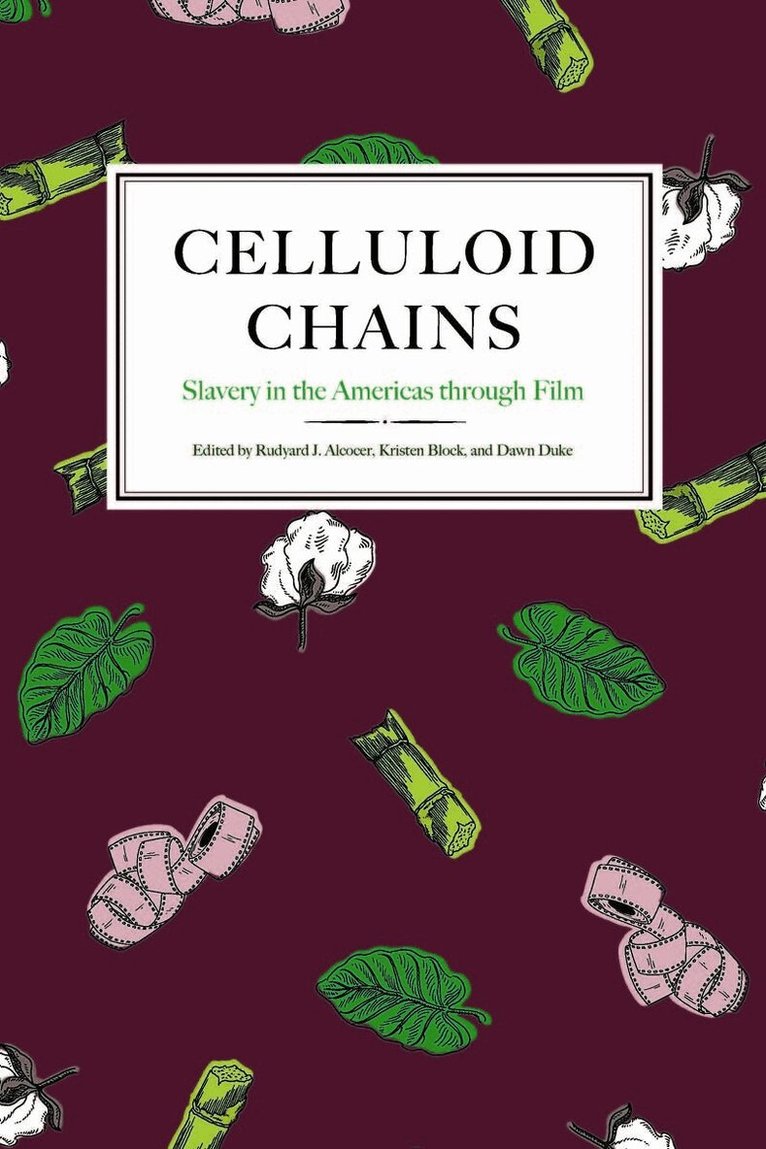
Featuring a variety of disciplinary perspectives and analytical approaches, Celluloid Chains is the most comprehensive volume to date on films about slavery. This collection examines works from not only the United States but elsewhere in the Americas, and it attests to slavery’s continuing importance as a source of immense fascination for filmmakers and their audiences.Each of the book’s fifteen original essays focuses on a particular film that directly treats the enslavement of Africans and their descendants in the New World. Beginning with an essay on the Cuban film El otro Francisco (1975), Sergio Giral’s reworking of a nineteenth-century abolitionist novel, the book proceeds to examine such works as the landmark miniseries Roots (1977), which sparked intense controversy over its authenticity; Werner Herzog’s Cobra Verde (1987), which raises questions about what constitutes a slavery film; Guy Deslauriers’s Passage du milieu (1999), a documentary-style reconstruction of what Africans experienced during the Middle Passage; and Steve McQueen’s Oscar-winning 12 Years a Slave (2013), which embodies the tensions between faithfully adapting a nineteenth-century slave narrative and bending it for modern purposes.Films about slavery have shown a special power to portray the worst and best of humanity, and Celluloid Chains is an essential guide to this important genre.