Kristen Tegtmeier Oertel - Böcker
Visar alla böcker från författaren Kristen Tegtmeier Oertel. Handla med fri frakt och snabb leverans.
2 produkter
2 produkter
322 kr
Skickas inom 10-15 vardagar
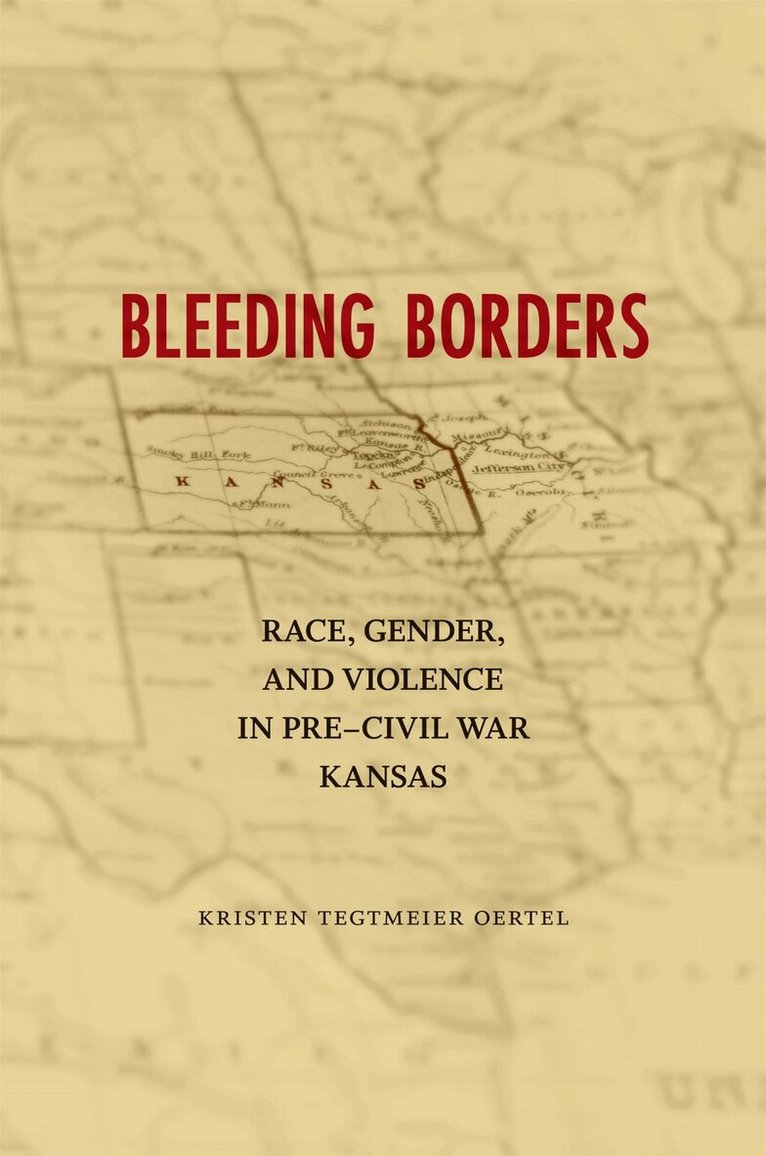
In Bleeding Borders, Kristen Tegtmeier Oertel offers a fresh, multifaceted interpretation of the quintessential sectional conflict in pre-Civil War Kansas. Instead of focusing on the white, male politicians and settlers who vied for control of the Kansas territorial legislature, Oertel explores the crucial roles Native Americans, African Americans, and white women played in the literal and rhetorical battle between proslavery and antislavery settlers in the region. She brings attention to the local debates and the diverse peoples who participated in them during that contentious period.Oertel begins by detailing the settlement of eastern Kansas by emigrant Indian tribes and explores their interaction with the growing number of white settlers in the region. She analyses the attempts by southerners to plant slavery in Kansas and the ultimately successful resistance of slaves and abolitionists. Oertel then considers how crude frontier living conditions, Indian conflict, political upheaval, and sectional violence reshaped traditional Victorian gender roles in Kansas and explores women's participation in the political and physical conflicts between proslavery and antislavery settlers. Oertel goes on to examine northern and southern definitions of ""true manhood"" and how competing ideas of masculinity infused political and sectional tensions. She concludes with an analysis of miscegenation, not only how racial mixing between Indians, slaves, and whites influenced events in territorial Kansas, but more importantly, how the fear of miscegenation fueled both proslavery and antislavery arguments about the need for civil war.As Oertel demonstrates, the players in Bleeding Kansas used weapons other than their Sharpes rifles and Bowie knives to wage war over the extension of slavery: they attacked each other's cultural values and struggled to assert their own political wills. They jealously guarded ideals of manhood, womanhood, and whiteness even as the presence of Indians and blacks and the debate over slavery raised serious questions about the efficacy of these principles. Oertel argues that, ultimately, many Native Americans, blacks, and women shaped the political and cultural terrain in ways that ensured the destruction of slavery, but they, along with their white male counterparts, failed to defeat the resilient power of white supremacy. Moving beyond a conventional political history of Bleeding Kansas, Bleeding Borders breaks new ground by revealing how the struggles of this highly diverse region contributed to the national move toward disunion and how the ideologies that governed race and gender relations were challenged as North, South, and West converged on the border between slavery and freedom.
Seeking Freedom in Indian Country
Slavery, Sovereignty, and Resistance Within the Five Tribes, 1790–1861
Inbunden, Engelska, 2026
475 kr
Kommande
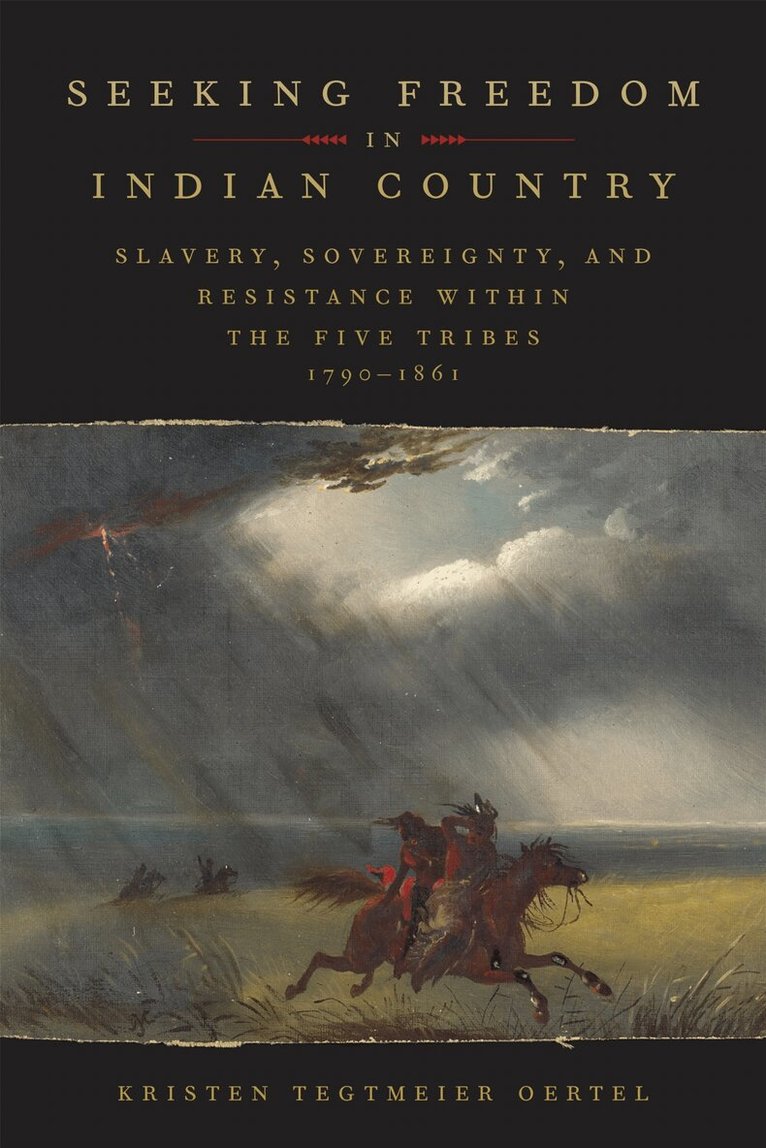
Kristen Tegtmeier Oertel's Seeking Freedom in Indian Country is the first comprehensive study of African chattel slavery within the Five Tribes: the Cherokee, Chickasaw, Choctaw, Muscogee (Creek), and Seminole Nations. Oertel examines how chattel slavery functioned among all Five Tribes before and during the removal process, how the tribes reconstituted slavery post-removal in Indian Territory, and how enslaved Black people promoted freedom-seeking strategies at each stage. Furthermore, her work considers how the conflict over slavery in Indian Territory contributed to the larger national debate over slavery's fate on the eve of the Civil War. Historians have examined how the practice of African enslavement emerged within one or two tribes, how forced migration affected slavery within particular nations, and how the debate over slavery divided multiple Indigenous nations. Oertel, however, is the first to examine Indian Territory as a whole, its significance to the sectional debates, and its role as an incubator of emancipation policies in the United States. Knitting together these individual tribal narratives and supplementing them with extensive primary research on how slavery functioned across Indian Territory, she integrates Indian country into the antebellum march toward the Civil War. Seeking Freedom in Indian Country joins a rising chorus of studies that integrate southern and western history, which, by default, also pulls together the history of the so-called Indian Wars with the Civil War. Oertel suggests that we cannot fully understand the causes of the Civil War without also considering the changes brought about by the forced removal of Indians. She argues that settler colonialism and the expansion of African chattel slavery together set the stage for sectional conflict to explode in the West. Ironically, both Indigenous resistance to settler colonialism and Black resistance to slavery challenged white supremacy in ways that foretold the end of slavery but also furthered the settler colonial project.