Kristin B. Aavitsland - Böcker
Visar alla böcker från författaren Kristin B. Aavitsland. Handla med fri frakt och snabb leverans.
4 produkter
4 produkter
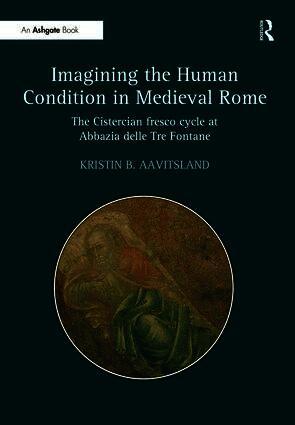
Imagining the Human Condition in Medieval Rome
The Cistercian fresco cycle at Abbazia delle Tre Fontane
Häftad, Engelska, 2017
786 kr
Skickas inom 10-15 vardagar
The first monograph on the Vita Humana cycle at Tre Fontane, this book includes an overview of the medieval history of the Roman Cistercian abbey and its architecture, as well as a consideration of the political and cultural standing of the abbey both within Papal Rome and within the Cistercian order. Furthermore, it considers the commission of the fresco cycle, the circumstances of its making, and its position within the art historical context of the Roman Duecento. Examining the unusual blend of images in the Vita Humana cycle, this study offers a more nuanced picture of the iconographic repertoire of medieval art. Since the discovery of the frescoes in the 1960s, the iconographic programme of the cycle has remained mysterious, and an adequate analysis of the Vita Humana cycle as a whole has so far been lacking. Kristin B. Aavitsland covers this gap in the scholarship on Roman art circa 1300, and also presents the first interpretative discussion of the frescoes that is up-to-date with the architectural investigations undertaken in the monastery around 2000. Aavitsland proposes a rationale behind the conception of the fresco cycle, thereby providing a key for understanding its iconography and shedding new light on thirteenth-century Cistercian culture.
Imagining the Human Condition in Medieval Rome
The Cistercian fresco cycle at Abbazia delle Tre Fontane
Inbunden, Engelska, 2012
2 221 kr
Skickas inom 7-10 vardagar
The first monograph on the Vita Humana cycle at Tre Fontane, this book includes an overview of the medieval history of the Roman Cistercian abbey and its architecture, as well as a consideration of the political and cultural standing of the abbey both within Papal Rome and within the Cistercian order. Furthermore, it considers the commission of the fresco cycle, the circumstances of its making, and its position within the art historical context of the Roman Duecento. Examining the unusual blend of images in the Vita Humana cycle, this study offers a more nuanced picture of the iconographic repertoire of medieval art. Since the discovery of the frescoes in the 1960s, the iconographic programme of the cycle has remained mysterious, and an adequate analysis of the Vita Humana cycle as a whole has so far been lacking. Kristin B. Aavitsland covers this gap in the scholarship on Roman art circa 1300, and also presents the first interpretative discussion of the frescoes that is up-to-date with the architectural investigations undertaken in the monastery around 2000. Aavitsland proposes a rationale behind the conception of the fresco cycle, thereby providing a key for understanding its iconography and shedding new light on thirteenth-century Cistercian culture.
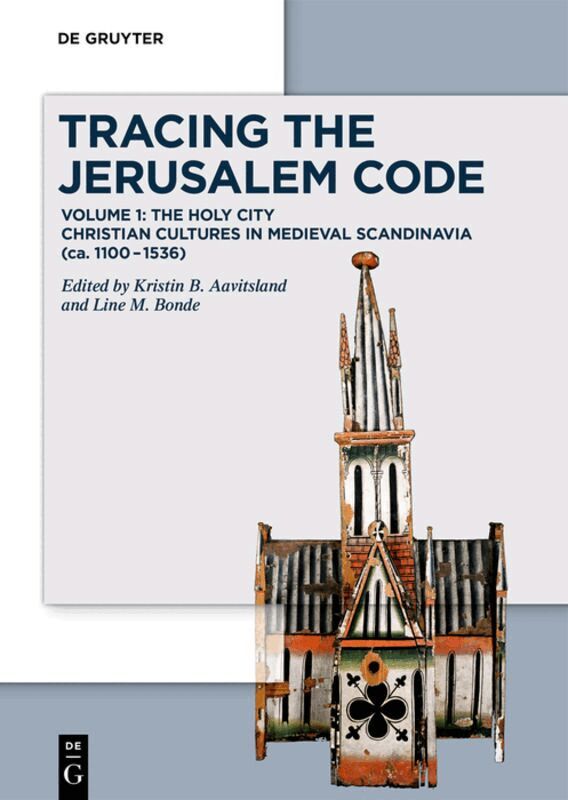
Tracing the Jerusalem Code
Volume 1: The Holy City Christian Cultures in Medieval Scandinavia (ca. 1100–1536)
Inbunden, Engelska, 2021
1 409 kr
Skickas inom 5-8 vardagar
With the aim to write the history of Christianity in Scandinavia with Jerusalem as a lens, this book investigates the image – or rather the imagination – of Jerusalem in the religious, political, and artistic cultures of Scandinavia through most of the second millennium. Jerusalem is conceived as a code to Christian cultures in Scandinavia. The first volume is dealing with the different notions of Jerusalem in the Middle Ages. Tracing the Jerusalem Code in three volumesVolume 1: The Holy City Christian Cultures in Medieval Scandinavia (ca. 1100–1536)Volume 2: The Chosen People Christian Cultures in Early Modern Scandinavia (1536–ca. 1750)Volume 3: The Promised Land Christian Cultures in Modern Scandinavia (ca. 1750–ca. 1920)
678 kr
Skickas inom 7-10 vardagar
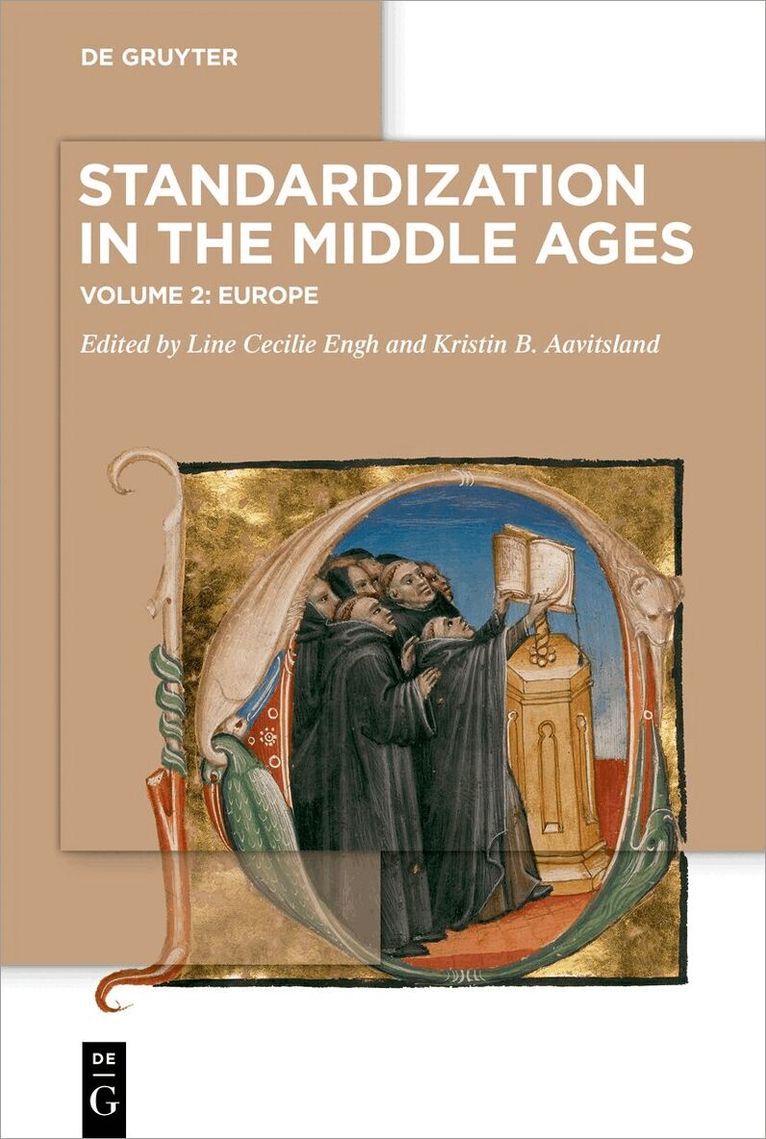
We live in a world riven through with standards. To understand more of their deep, rich past is to understand ourselves better.The two volumes, Standardization in the Middle Ages. Volume 1: The North and Standardization in the Middle Ages. Volume 2: Europe, turn to the Middle Ages to give a deeper understanding of the medieval ideas and practices that produced—and were produced by—standards and standardization. At first glance, the Middle Ages might appear an unlikely place to look for standardization. The editors argue that, on the contrary, generating predictability is a precondition for meaningful cultural interaction in any historical period and that we may look to the Middle Ages to learn more about the historical, social, and cognitive processes of standardization.This multidisciplinary venture, which includes medievalists from the fields of history, intellectual history, art history, philology, numismatics, and more, as well as scholars of cognitive science, informatics, and anthropology, interrogates how medieval people and groups envisioned and enforced predictability, uniformity, and order, and how they attempted to obtain and maintain standards across vast distances and heterogeneous social and cultural structures.