Kristin Hagen - Böcker
Visar alla böcker från författaren Kristin Hagen. Handla med fri frakt och snabb leverans.
6 produkter
6 produkter
Del 45 - Ethics of Science and Technology Assessment
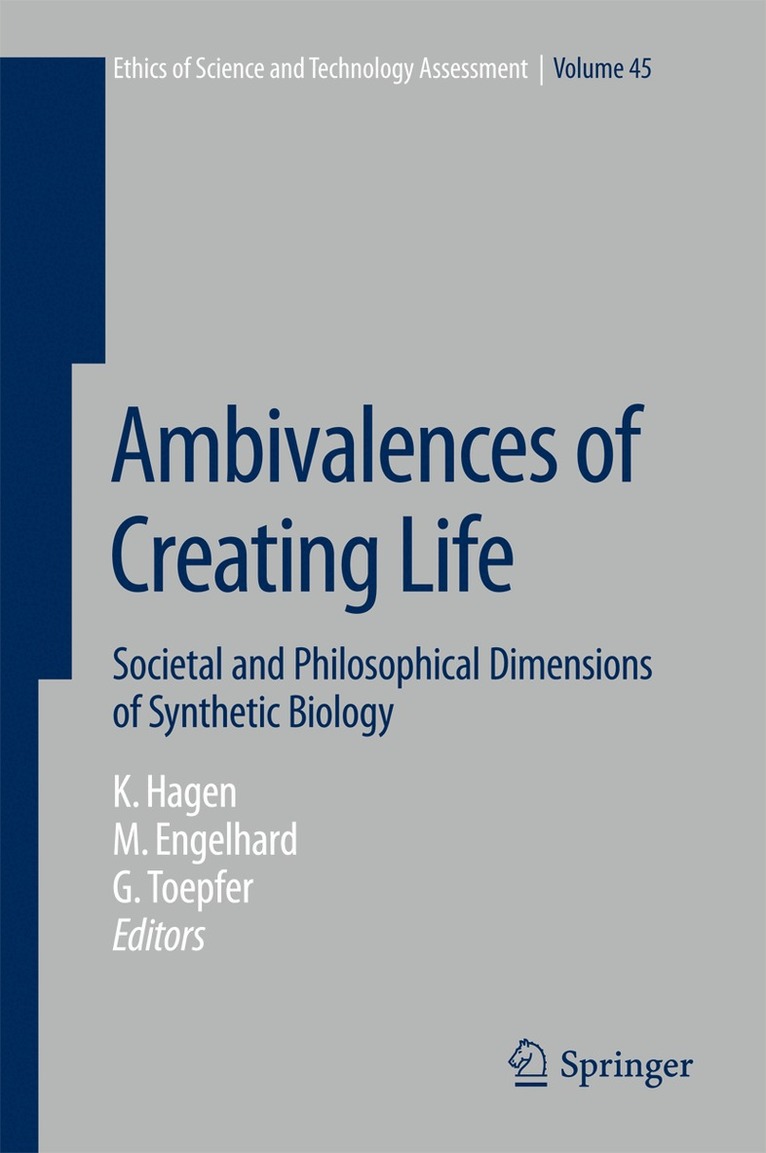
Ambivalences of Creating Life
Societal and Philosophical Dimensions of Synthetic Biology
Inbunden, Engelska, 2015
536 kr
Skickas inom 10-15 vardagar
"Synthetic biology" is the label of a new technoscientific field with many different facets and agendas. One common aim is to "create life", primarily by using engineering principles to design and modify biological systems for human use. In a wider context, the topic has become one of the big cases in the legitimization processes associated with the political agenda to solve global problems with the aid of (bio-)technological innovation. Conceptual-level and meta-level analyses are needed: we should sort out conceptual ambiguities to agree on what we talk about, and we need to spell out agendas to see the disagreements clearly.The book is based on the interdisciplinary summer school "Analyzing the societal dimensions of synthetic biology", which took place in Berlin in September 2014. The contributions address controversial discussions around the philosophical examination, public perception, moral evaluation and governance of synthetic biology.
Del 45 - Ethics of Science and Technology Assessment
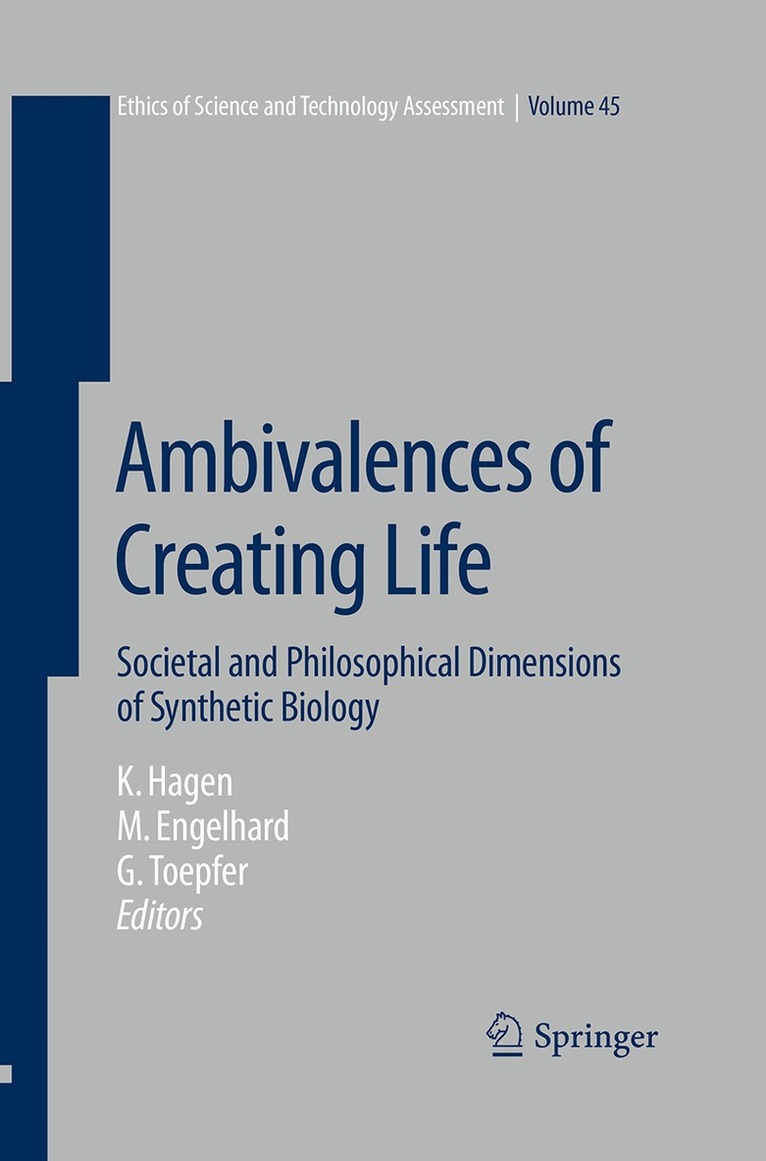
Ambivalences of Creating Life
Societal and Philosophical Dimensions of Synthetic Biology
Häftad, Engelska, 2016
536 kr
Skickas inom 10-15 vardagar
"Synthetic biology" is the label of a new technoscientific field with many different facets and agendas. One common aim is to "create life", primarily by using engineering principles to design and modify biological systems for human use. In a wider context, the topic has become one of the big cases in the legitimization processes associated with the political agenda to solve global problems with the aid of (bio-)technological innovation. Conceptual-level and meta-level analyses are needed: we should sort out conceptual ambiguities to agree on what we talk about, and we need to spell out agendas to see the disagreements clearly.The book is based on the interdisciplinary summer school "Analyzing the societal dimensions of synthetic biology", which took place in Berlin in September 2014. The contributions address controversial discussions around the philosophical examination, public perception, moral evaluation and governance of synthetic biology.
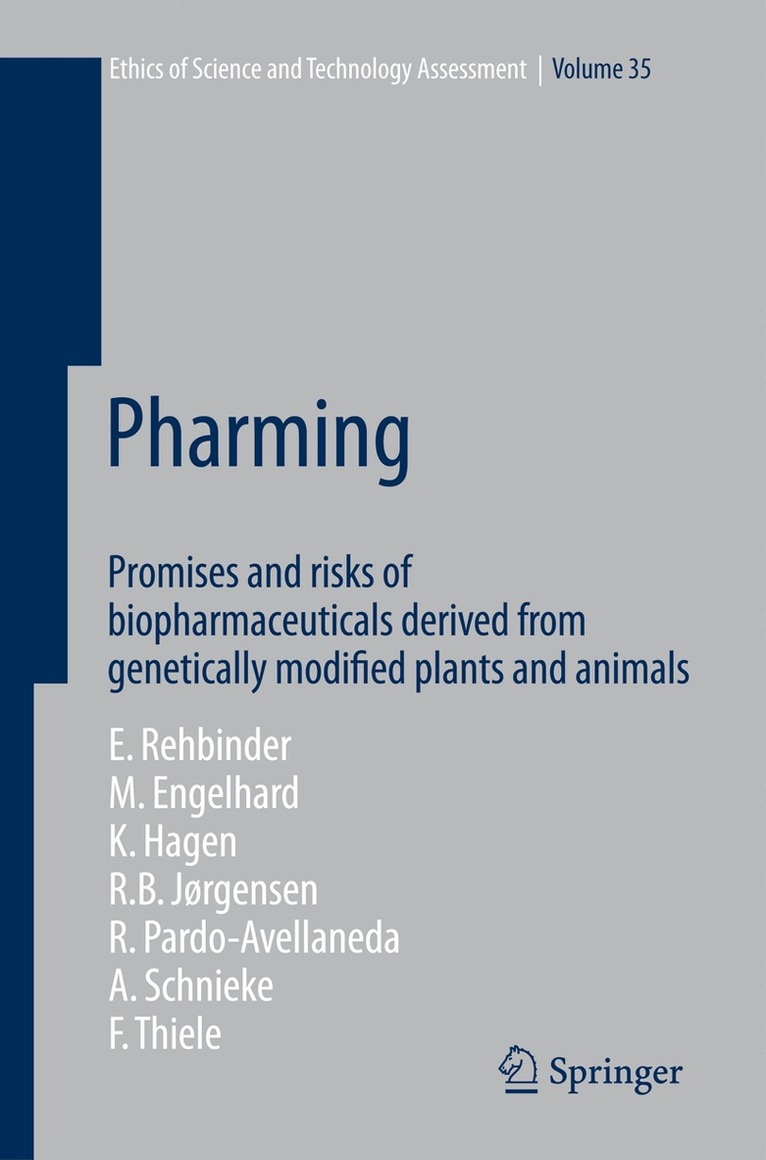
Pharming
Promises and risks ofbBiopharmaceuticals derived from genetically modified plants and animals
Inbunden, Engelska, 2008
1 096 kr
Skickas inom 10-15 vardagar
Recent scientific advances have made it possible to produce biopharmaceuticals in genetically modified plants and animals, such as maize, tobacco, goats, and chickens. This new branch of biotechnology is termed pharming, composed of the terms pharmaceuticals and farming. Pharming constitutes an overlap of red and green biotechnology. It offers the prospect of a quicker, cheaper, and more flexible production of biopharmaceuticals compared with current production processes. This is a promising perspective in light of the rapidly growing market of biopharmaceuticals, although the economic competitiveness of pharming remains to be proven. Besides possible benefits for producers, patients and health care systems, pharming also raises a number of complex ecological, social, moral and legal questions that have as yet not been thoroughly discussed. The present book contains the findings of an interdisciplinary research project that has addressed a large range of questions associated with pharming: An analysis of the state-of-the-art of plant pharming and animal pharming technologies is followed by an assessment of environmental risks related to pharming and welfare risks for pharming animals. Public views and attitudes to pharming are investigated on the basis of a comprehensive survey in 15 countries. Moreover, ethical and legal questions, posed by present and foreseeable future practices of pharming, are analysed. The concluding chapter presents the authors’ main findings and recommendations, addressed to science, industry, politics and general public interested in the chances and risks of this upcoming field of biotechnology.
Del 34 - Ethics of Science and Technology Assessment
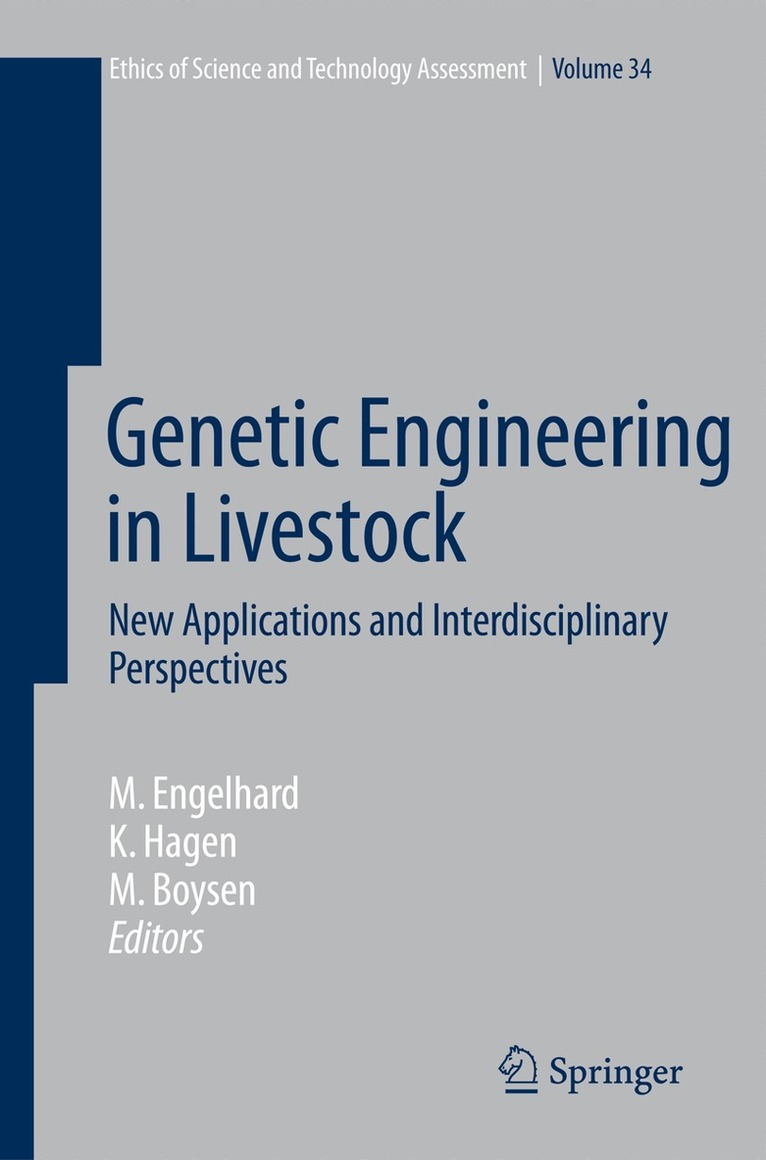
Genetic Engineering in Livestock
New Applications and Interdisciplinary Perspectives
Inbunden, Engelska, 2008
536 kr
Skickas inom 10-15 vardagar
Recently, the first "zoopharming" product has reached market approval: it is a recombinant human protein for medical use that is produced in the milk of transgenic goats. In addition, other transgenic animals, including faster-growing salmon and environmentally friendly" pigs with reduced levels of phosphate in their faeces are awaiting regulatory approval. These are only some examples of upcoming applications of genetic engineering in farm animals. Other potential applications include traditional breeding goals such as higher milk or meat yields, leaner meat, and disease resistance. While genetic engineering in livestock opens a huge range of possibilities, it also brings about concerns of safety and justification: does genetic engineering affect animal welfare? Is it safe and morally acceptable to apply genetic engineering to farm animals for the various purposes that are envisaged? It is against this background that the Europaische Akademie GmbH and the Berlin-Brandenburgische Akademie der Wissenschaften addressed the topic of transgenic farm animals in an interdisciplinary symposium in 2007.In these proceedings the following topics are covered: an analysis of the state of the art of the technology and its applications, an introduction to the specific application zoopharming (including its historical industrial development and the market for biopharmaceuticals), an assessment of ethical aspects, and considerations regarding the investigation of animal welfare implications of livestock biotechnology.The proceedings address science, industry, politics and the general public interested in the chances and risks of this upcoming field of biotechnology.
Del 35 - Ethics of Science and Technology Assessment
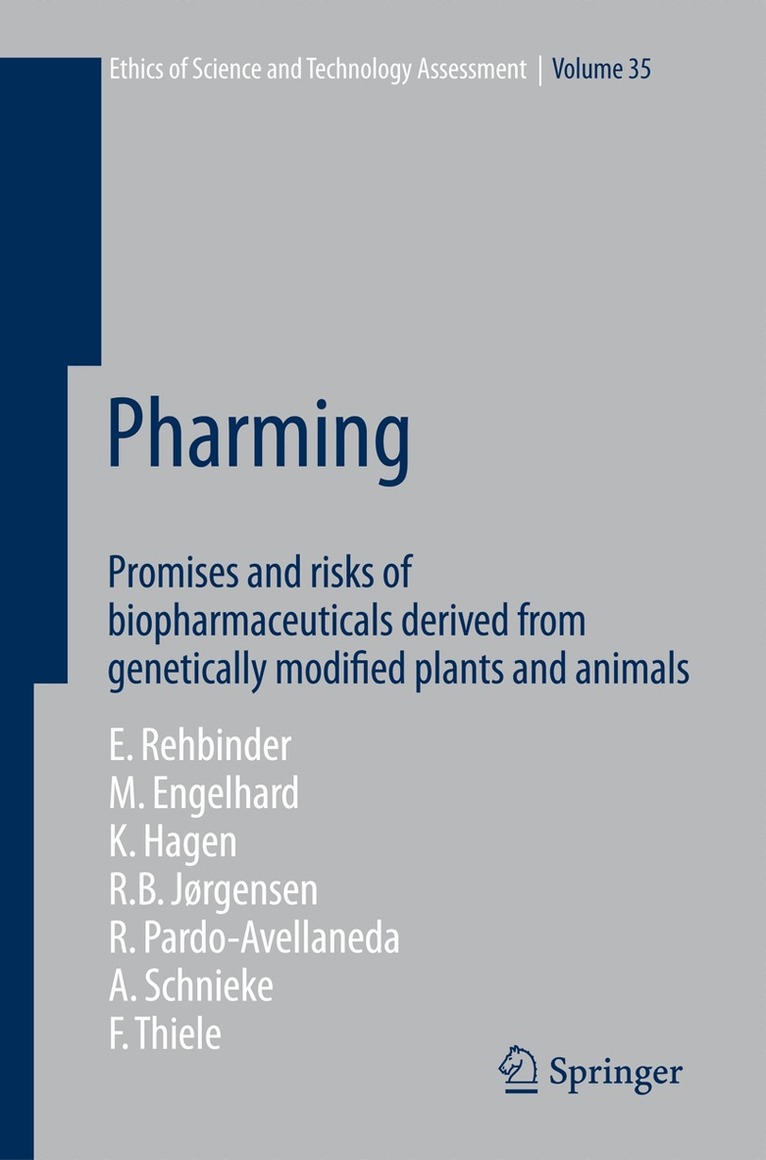
Pharming
Promises and risks ofbBiopharmaceuticals derived from genetically modified plants and animals
Häftad, Engelska, 2010
1 064 kr
Skickas inom 10-15 vardagar
Recent scientific advances have made it possible to produce biopharmaceuticals in genetically modified plants and animals, such as maize, tobacco, goats, and chickens. This new branch of biotechnology is termed pharming, composed of the terms pharmaceuticals and farming. Pharming constitutes an overlap of red and green biotechnology. It offers the prospect of a quicker, cheaper, and more flexible production of biopharmaceuticals compared with current production processes. This is a promising perspective in light of the rapidly growing market of biopharmaceuticals, although the economic competitiveness of pharming remains to be proven. Besides possible benefits for producers, patients and health care systems, pharming also raises a number of complex ecological, social, moral and legal questions that have as yet not been thoroughly discussed. The present book contains the findings of an interdisciplinary research project that has addressed a large range of questions associated with pharming: An analysis of the state-of-the-art of plant pharming and animal pharming technologies is followed by an assessment of environmental risks related to pharming and welfare risks for pharming animals. Public views and attitudes to pharming are investigated on the basis of a comprehensive survey in 15 countries. Moreover, ethical and legal questions, posed by present and foreseeable future practices of pharming, are analysed. The concluding chapter presents the authors’ main findings and recommendations, addressed to science, industry, politics and general public interested in the chances and risks of this upcoming field of biotechnology.
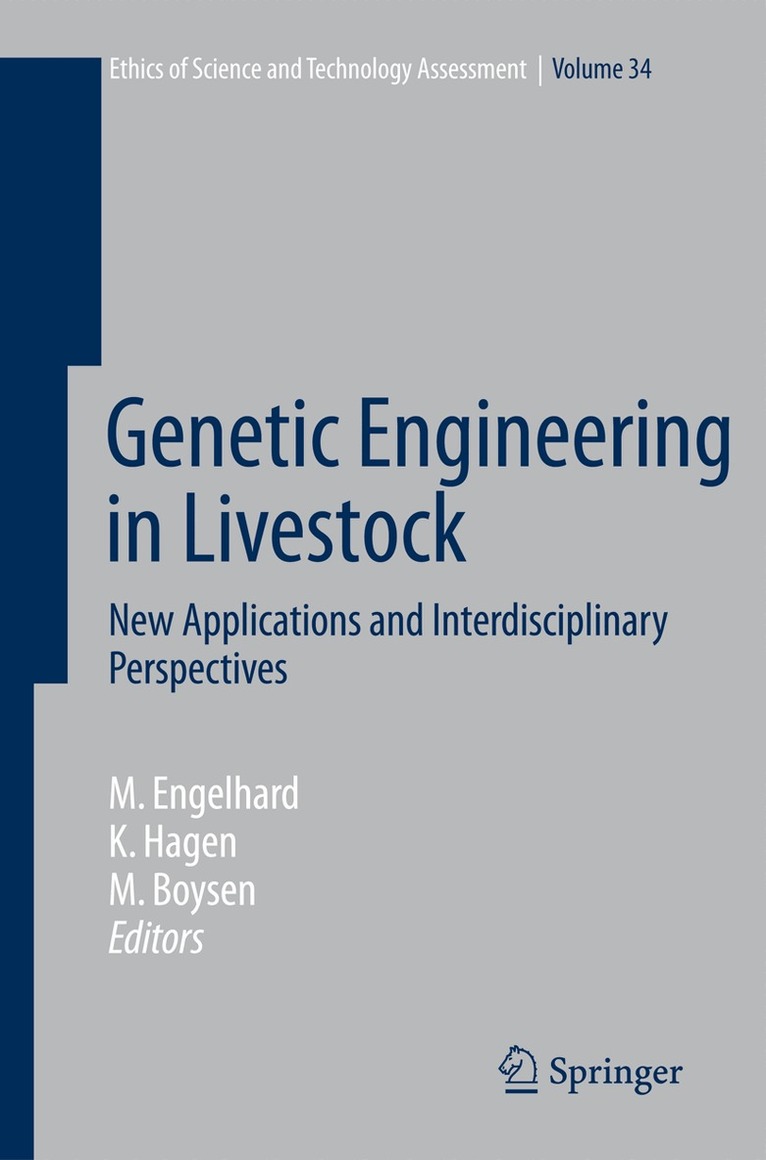
Del 34 - Ethics of Science and Technology Assessment
Genetic Engineering in Livestock
New Applications and Interdisciplinary Perspectives
Häftad, Engelska, 2010
536 kr
Skickas inom 10-15 vardagar
Recently, the first "zoopharming" product has reached market approval: it is a recombinant human protein for medical use that is produced in the milk of transgenic goats. In addition, other transgenic animals, including faster-growing salmon and „environmentally friendly" pigs with reduced levels of phosphate in their faeces are awaiting regulatory approval. These are only some examples of upcoming applications of genetic engineering in farm animals. Other potential applications include traditional breeding goals such as higher milk or meat yields, leaner meat, and disease resistance. While genetic engineering in livestock opens a huge range of possibilities, it also brings about concerns of safety and justification: does genetic engineering affect animal welfare? Is it safe and morally acceptable to apply genetic engineering to farm animals for the various purposes that are envisaged?