Kristina Mendicino - Böcker
Visar alla böcker från författaren Kristina Mendicino. Handla med fri frakt och snabb leverans.
12 produkter
12 produkter
1 411 kr
Skickas inom 10-15 vardagar
The scenes of Babel and Pentecost, the original confusion of tongues and their redemption through translation, haunt German Romanticism and Idealism. This book begins by retracing the ways in which the task of translation, so crucial to Romantic writing, is repeatedly tied to prophecy, not in the sense of telling future events, but in the sense of speaking in the place of another—most often unbeknownst to the speaker herself. In prophetic speech, the confusion of tongues repeats, each time anew, as language takes place unpredictably in more than one voice and more than one tongue at once. Mendicino argues that the relation between translation and prophecy drawn by German Romantic writers fundamentally changes the way we must approach this so-called "Age of Translation." Whereas major studies of the period have taken as their point of departure the opposition of the familiar and the foreign, Mendicino suggests that Romantic writing provokes the questions: how could one read a language that is not one? And what would such a polyvocal, polyglot language, have to say about philology—both for the Romantics, whose translation projects are most intimately related to their philological preoccupations, and for us? In Prophecies of Language, these questions are pursued through readings of major texts by G.W.F. Hegel, Wilhelm von Humboldt, Friedrich Schlegel, and Friedrich Hölderlin. These readings show how, when one questions the presupposition of works composed by individual authors in one tongue, these texts disclose more than a monoglot reading yields, namely the "plus" of their linguistic plurality. From such a surplus, each chapter goes on to advocate for a philology that, in and through an inclination toward language, takes neither its unity nor its structure for granted but allows itself to be most profoundly affected, addressed—and afflicted—by it.
420 kr
Skickas inom 10-15 vardagar
The scenes of Babel and Pentecost, the original confusion of tongues and their redemption through translation, haunt German Romanticism and Idealism. This book begins by retracing the ways in which the task of translation, so crucial to Romantic writing, is repeatedly tied to prophecy, not in the sense of telling future events, but in the sense of speaking in the place of another—most often unbeknownst to the speaker herself. In prophetic speech, the confusion of tongues repeats, each time anew, as language takes place unpredictably in more than one voice and more than one tongue at once. Mendicino argues that the relation between translation and prophecy drawn by German Romantic writers fundamentally changes the way we must approach this so-called "Age of Translation." Whereas major studies of the period have taken as their point of departure the opposition of the familiar and the foreign, Mendicino suggests that Romantic writing provokes the questions: how could one read a language that is not one? And what would such a polyvocal, polyglot language, have to say about philology—both for the Romantics, whose translation projects are most intimately related to their philological preoccupations, and for us? In Prophecies of Language, these questions are pursued through readings of major texts by G.W.F. Hegel, Wilhelm von Humboldt, Friedrich Schlegel, and Friedrich Hölderlin. These readings show how, when one questions the presupposition of works composed by individual authors in one tongue, these texts disclose more than a monoglot reading yields, namely the "plus" of their linguistic plurality. From such a surplus, each chapter goes on to advocate for a philology that, in and through an inclination toward language, takes neither its unity nor its structure for granted but allows itself to be most profoundly affected, addressed—and afflicted—by it.
507 kr
Skickas inom 5-8 vardagar
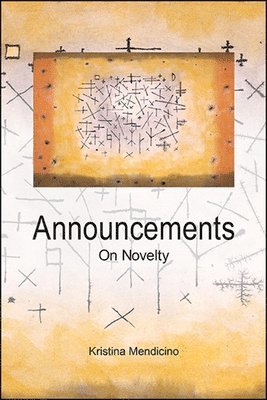
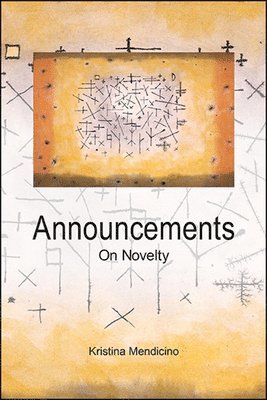
A study of novelty through analyses of the language of announcement in revolutionary texts.Walter Benjamin claimed that the notion of novelty took on unprecedented importance with the growth of high capitalism in the nineteenth century. In this book, Kristina Mendicino analyzes a selection of canonical texts that reflect profound concern with novelty and its apparent contrary, the eternal return of the same, including Nietzsche's Thus Spoke Zarathustra, Baudelaire's lyric and prose poetry, and Marx and Engels's Communist Manifesto. She also addresses Eternity by the Stars by Louis-Auguste Blanqui, who is less well known and often underestimated in considerations of his significance for revolutionary political theory.Mendicino argues that the notion of a novum cannot be understood without attentiveness to the language of announcement, not least of all because the "new" has always been associated with a particular mode of linguistic performance. Through close readings of emphatically annunciatory texts, she demonstrates how the extreme possibilities of expression that they present through specific citational and rhetorical praxes render the language of announcement overdetermined and anachronistic in ways that exceed any systematic account of historical time and experience. This excess in and through language is precisely what opens hitherto unheard of alternatives for conceiving of historical temporality and political possibility.
1 674 kr
Skickas inom 3-6 vardagar
A study of novelty through analyses of the language of announcement in revolutionary texts.Walter Benjamin claimed that the notion of novelty took on unprecedented importance with the growth of high capitalism in the nineteenth century. In this book, Kristina Mendicino analyzes a selection of canonical texts that reflect profound concern with novelty and its apparent contrary, the eternal return of the same, including Nietzsche's Thus Spoke Zarathustra, Baudelaire's lyric and prose poetry, and Marx and Engels's Communist Manifesto. She also addresses Eternity by the Stars by Louis-Auguste Blanqui, who is less well known and often underestimated in considerations of his significance for revolutionary political theory.Mendicino argues that the notion of a novum cannot be understood without attentiveness to the language of announcement, not least of all because the "new" has always been associated with a particular mode of linguistic performance. Through close readings of emphatically annunciatory texts, she demonstrates how the extreme possibilities of expression that they present through specific citational and rhetorical praxes render the language of announcement overdetermined and anachronistic in ways that exceed any systematic account of historical time and experience. This excess in and through language is precisely what opens hitherto unheard of alternatives for conceiving of historical temporality and political possibility.
683 kr
Skickas inom 3-6 vardagar
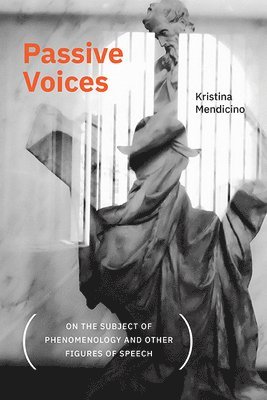
Addresses the question of how language affects the subject of speech through readings of confessional, philosophical, and fictional writings.At least since Aristotle's Peri hermeneias, there has been talk of the pathos of language, of language as "symbols of the affections in the soul." The way these affections are registered, however, suggests that they are themselves structured like language. For Aristotle and others, language is suffered before any sense can be voiced. The pathos of language thus becomes a question of how language affects the subject of speech and, in the last analysis, of how language could respond to these questions of language. Passive Voices (On the Subject of Phenomenology and Other Figures of Speech) approaches these questions, first, through readings of Augustine's investigations into language and mind and Edmund Husserl's descriptions of passive synthesis. It then traces the further resonance of Augustine's and Husserl's interventions in selected literary experiments by Georges Bataille, Franz Kafka, and Maurice Blanchot that recall Husserl and Augustine while exceeding the restrictive fictions of phenomenological "science." In drawing out the echoes that emerge across confessional, philosophical, and fictional writings, this book exposes the ways in which speech occurs in the passive voice and affects any claim to experience.
Passive Voices (On the Subject of Phenomenology and Other Figures of Speech)
Inbunden, Engelska, 2023
1 674 kr
Skickas inom 3-6 vardagar
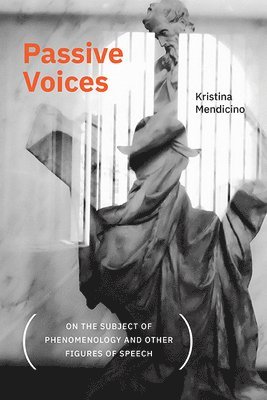
Addresses the question of how language affects the subject of speech through readings of confessional, philosophical, and fictional writings.At least since Aristotle's Peri hermeneias, there has been talk of the pathos of language, of language as "symbols of the affections in the soul." The way these affections are registered, however, suggests that they are themselves structured like language. For Aristotle and others, language is suffered before any sense can be voiced. The pathos of language thus becomes a question of how language affects the subject of speech and, in the last analysis, of how language could respond to these questions of language. Passive Voices (On the Subject of Phenomenology and Other Figures of Speech) approaches these questions, first, through readings of Augustine's investigations into language and mind and Edmund Husserl's descriptions of passive synthesis. It then traces the further resonance of Augustine's and Husserl's interventions in selected literary experiments by Georges Bataille, Franz Kafka, and Maurice Blanchot that recall Husserl and Augustine while exceeding the restrictive fictions of phenomenological "science." In drawing out the echoes that emerge across confessional, philosophical, and fictional writings, this book exposes the ways in which speech occurs in the passive voice and affects any claim to experience.
683 kr
Skickas inom 3-6 vardagar
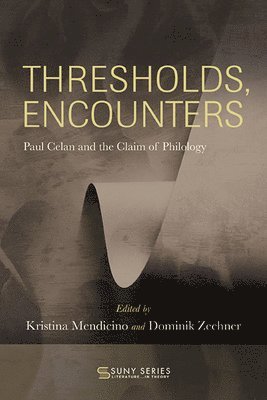
Explores the various ways in which poetic and philosophical writing meet in texts by, and on, Paul Celan.Paul Celan's works dwell on the threshold between the extremes of poetic expression and philosophical reflection. The divergent literary and critical idioms that have marked Celan's writing-and that Celan's writing has come to mark for others (Hamacher, Derrida, Szondi)-thus call for a new philology. This philology cannot be situated within presupposed genres or fields but rather explores the ways in which poetic and philosophical ambitions meet in texts by, and on, Celan. The first part of Thresholds, Encounters ("Ex-posing the Poem") speaks to issues of history, ecology, and aurality; the second part ("Language Dislodged") delves into Celan's articulations of encounter, positionality, and translation. Throughout, contributors probe the consequences of Celan's poetry for thinking and writing, while inviting readers from different disciplinary spaces to further pace out the liminal zones opened by his oeuvre.
1 674 kr
Skickas inom 3-6 vardagar
Explores the various ways in which poetic and philosophical writing meet in texts by, and on, Paul Celan.Paul Celan's works dwell on the threshold between the extremes of poetic expression and philosophical reflection. The divergent literary and critical idioms that have marked Celan's writing-and that Celan's writing has come to mark for others (Hamacher, Derrida, Szondi)-thus call for a new philology. This philology cannot be situated within presupposed genres or fields but rather explores the ways in which poetic and philosophical ambitions meet in texts by, and on, Celan. The first part of Thresholds, Encounters ("Ex-posing the Poem") speaks to issues of history, ecology, and aurality; the second part ("Language Dislodged") delves into Celan's articulations of encounter, positionality, and translation. Throughout, contributors probe the consequences of Celan's poetry for thinking and writing, while inviting readers from different disciplinary spaces to further pace out the liminal zones opened by his oeuvre.
Del 20 - Cultural History & Literary Imagination
Playing False
Representations of Betrayal
Häftad, Engelska, 2013
1 271 kr
Skickas inom 5-8 vardagar
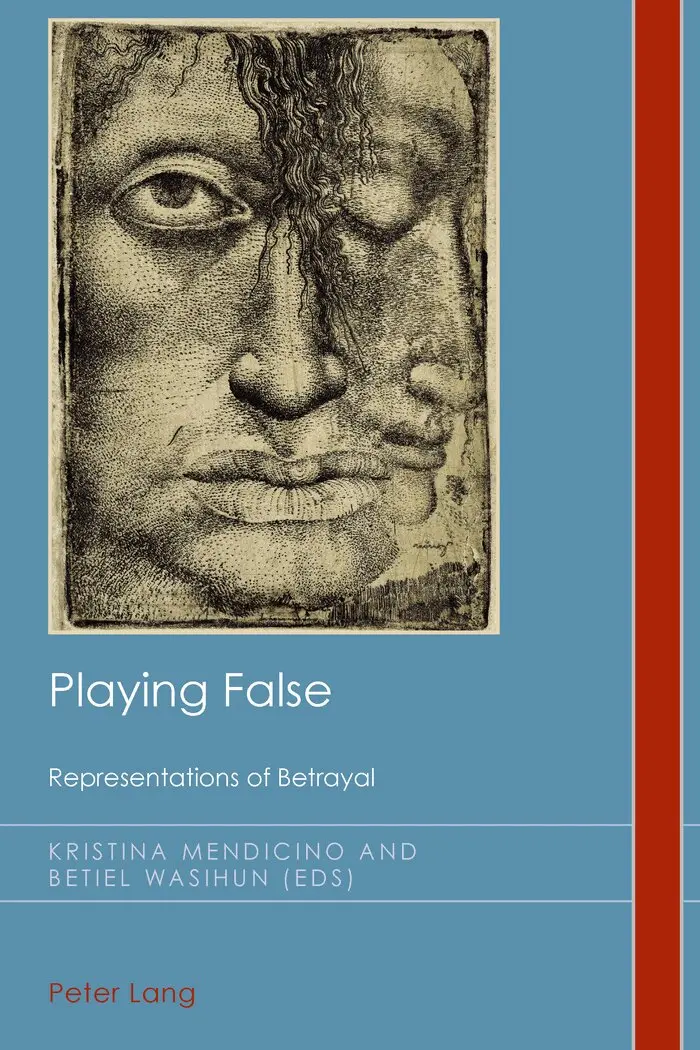
Betrayal has never gone out of fashion. It is a ubiquitous phenomenon – from antiquity to the present, from the realm of politics to the most personal relationships. This book gathers essays by scholars from the fields of philosophy, comparative literature, classics, English literature, German studies and film studies to develop a fresh dialogue on betrayal as a problem that, above all, concerns representation. In contradistinction to approaches that privilege a notion of betrayal as a political or personal event, the working premise of this book is that all betrayals presuppose representational strategies.What are the conditions, structures, masks and moves that allow one to play false? This question is posed with special attention to the theological, political, ethical and theatrical dimensions of betrayal, as they emerge in specific texts throughout the Western tradition. Works by Chariton, Seneca, Chaucer, Machiavelli, Shakespeare, Kant, Goethe, Schiller, Hegel, Kleist, Hamsun, Pound, Benjamin, Borges, Koestler, Roth, Bruno Dössekker alias Binjamin Wilkomirski and Fassbinder take centre stage in these diverse examinations of betrayal.
1 812 kr
Skickas inom 5-8 vardagar
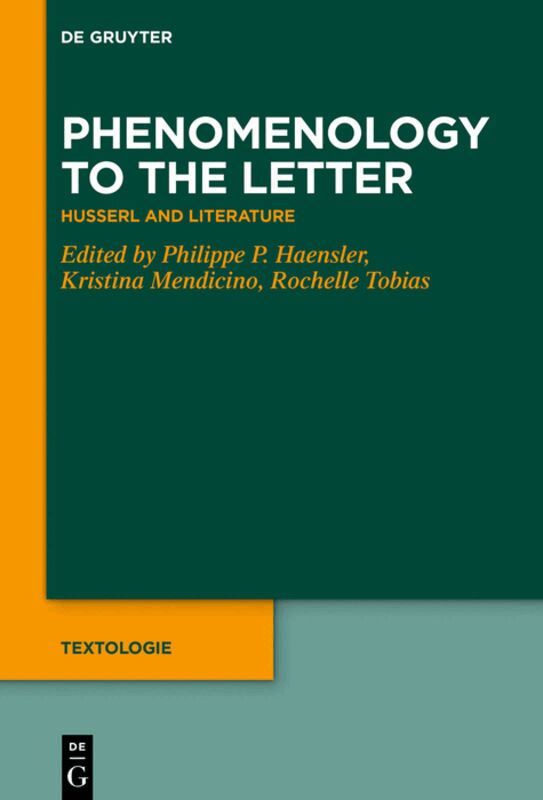
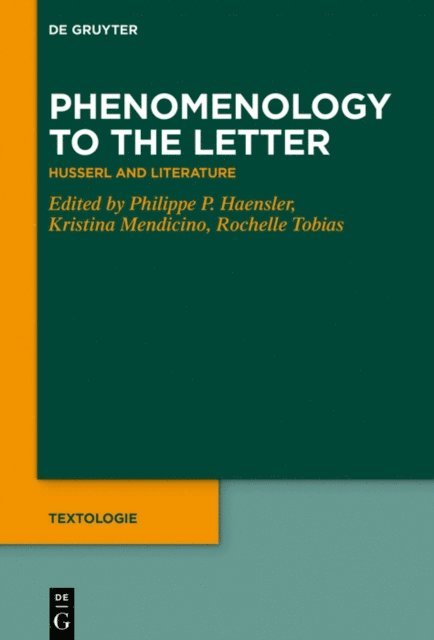
Regarding philosophical importance, Edmund Husserl is arguably "the" German export of the early twentieth century. In the wake of the linguistic turn(s) of the humanities, however, his claim to return to the "Sachen selbst" became metonymic for the neglect of language in Western philosophy. This view has been particularly influential in post-structural literary theory, which has never ceased to attack the supposed "logophobie" of phenomenology. "Phenomenology to the Letter. Husserl and Literature" challenges this verdict regarding the poetological and logical implications of Husserl’s work through a thorough re-examination of his writing in the context of literary theory, classical rhetoric, and modern art. At issue is an approach to phenomenology and literature that does not merely coordinate the two discourses but explores their mutual implication. Contributions to the volume attend to the interplay between phenomenology and literature (both fiction and poetry), experience and language, as well as images and embodiment. The volume is the first of its kind to chart a phenomenological approach to literature and literary approach to phenomenology. As such it stands poised to make a novel contribution to literary studies and philosophy.
1 307 kr
Skickas
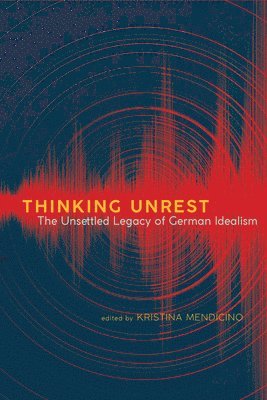
Reconsiders major thinkers and works of German Idealism and their legacy for our own restless times.From the longing in which Schelling based human freedom to the "restlessness of the negative" that Jean-Luc Nancy famously traced through Hegel's corpus, unrest centrally preoccupied many thinkers associated with German Idealism. Thinking Unrest gathers original essays from eight leading scholars to reopen the question of what moves thought both within German Idealism and among the movement’s heirs. Through readings of Fichte, Hegel, Hölderlin, Novalis, and Schelling, as well as more contemporary writers such as Nicolas Abraham, Ernst Bloch, Antonio Gramsci, and Rainer Maria Rilke, contributors expose more broadly what it may mean for philosophy to be a matter of responding to that which provokes, troubles, and withdraws from thought. Drawing on various theoretical perspectives—poststructuralism, psychoanalysis, the history of science, political theory—the volume reconsiders the legacy of German Idealism for thinking unrest today.
394 kr
Skickas
Reconsiders major thinkers and works of German Idealism and their legacy for our own restless times.From the longing in which Schelling based human freedom to the "restlessness of the negative" that Jean-Luc Nancy famously traced through Hegel's corpus, unrest centrally preoccupied many thinkers associated with German Idealism. Thinking Unrest gathers original essays from eight leading scholars to reopen the question of what moves thought both within German Idealism and among the movement’s heirs. Through readings of Fichte, Hegel, Hölderlin, Novalis, and Schelling, as well as more contemporary writers such as Nicolas Abraham, Ernst Bloch, Antonio Gramsci, and Rainer Maria Rilke, contributors expose more broadly what it may mean for philosophy to be a matter of responding to that which provokes, troubles, and withdraws from thought. Drawing on various theoretical perspectives—poststructuralism, psychoanalysis, the history of science, political theory—the volume reconsiders the legacy of German Idealism for thinking unrest today.