Kristina Wirtz - Böcker
Visar alla böcker från författaren Kristina Wirtz. Handla med fri frakt och snabb leverans.
2 produkter
2 produkter
258 kr
Skickas inom 7-10 vardagar
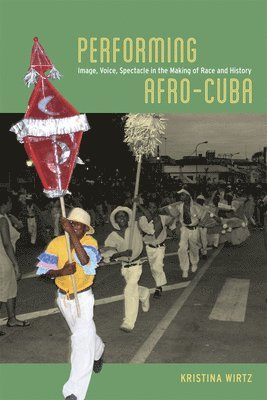
Visitors to Cuba will notice that Afro-Cuban figures and references are everywhere: in popular music and folklore shows, paintings and dolls of Santeria saints in airport shops, and even restaurants with plantation themes. In Performing Afro-Cuba, Kristina Wirtz examines how the animation of Cuba's colonial past and African heritage through such figures and performances not only reflects but also shapes the Cuban experience of Blackness. She also investigates how this process operates at different spatial and temporal scales - from the immediate present to the imagined past, from the barrio to the socialist state. Wirtz analyzes a variety of performances and the ways they construct Cuban racial and historical imaginations. She offers a sophisticated view of performance as enacting diverse revolutionary ideals, religious notions, and racial identity politics, and she outlines how these concepts play out in the ongoing institutionalization of folklore as an official, even state-sponsored, category.Employing Bakhtin's concept of "chronotopes" - the semiotic construction of space-time - she examines the roles of voice, temporality, embodiment, imagery, and memory in the racializing process. The result is a deftly balanced study that marries racial studies, performance studies, anthropology, and semiotics to explore the nature of race as a cultural sign, one that is always in process, always shifting.
286 kr
Skickas inom 10-15 vardagar
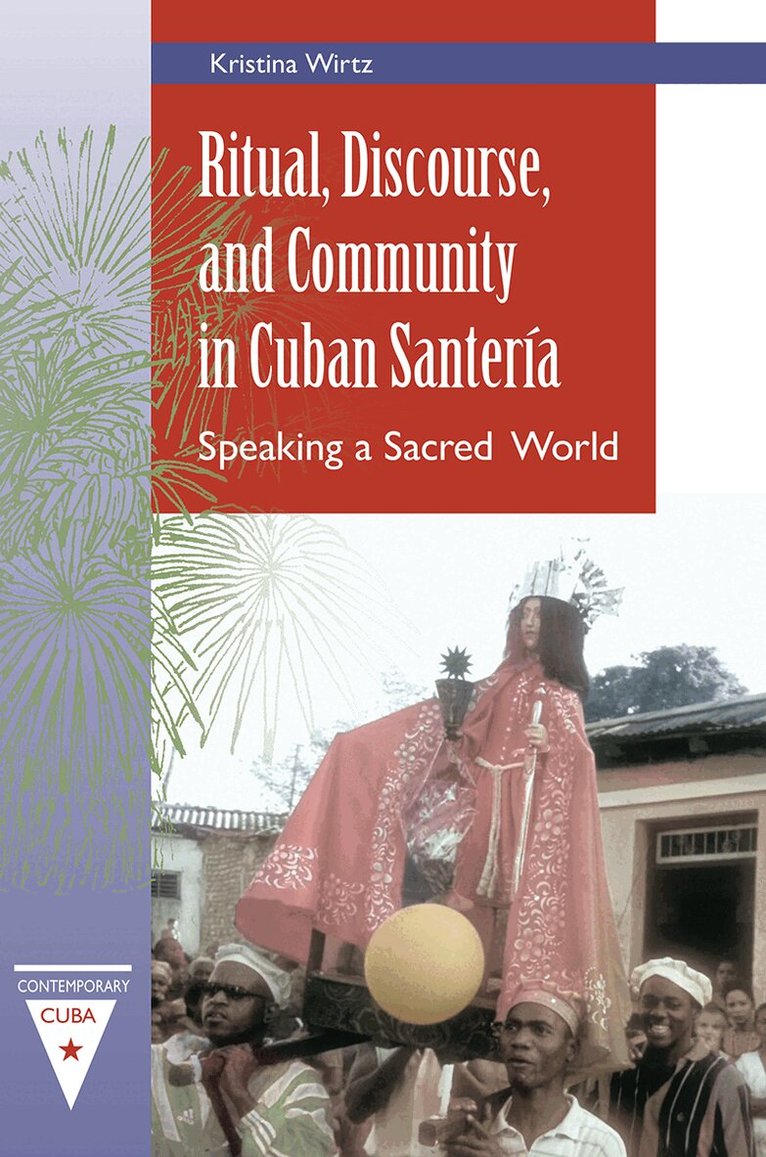
An insightful ethnographic account of the lives of Santería practitioners in CubaHow do Santería practitioners in Cuba create and maintain religious communities amidst tensions, disagreements, and competition among them, and in the absence of centralized institutional authority? What serves as the "glue" that holds practitioners of different backgrounds together in the creation of a moral community? Examining the religious lives of santeros in Santiago de Cuba, Wirtz argues that these communities hold together not because members agree on their interpretations of rituals but because they often disagree.Religious life is marked by a series of "telling moments"—not only the moments themselves but their narrated representations as they are retold and mined for religious meanings. Long after they occur, spiritually elevated experiences circulate in narratives that may express skepticism or awe and hold the promise of more such experiences. The author finds that these episodes resonate in gossip and other forms of public commentary about the experiences of their fellow Santería practitioners.Drawing on ethnographic research about Santería beliefs and practices, Wirtz observes that practitioners are constantly engaged in reflection about what they and other practitioners are doing, how the orichas (deities) have responded, and what the consequences of their actions were or will be. By focusing their reflective attention on particular events, santeros re-create, moment to moment, what their religion is. Wirtz also argues that Santeria cannot be considered in isolation from the complex religious landscape of contemporary Cuba, in which African-based traditions are viewed with a mix of fascination, folkloric pride, and suspicion. Interactions among the conflicting discourses about these religions—as sacred practices, folklore, or dangerous superstitions, for example—have played a central role in constituting them as social entities. This book will interest scholars of religion, the African diaspora, the Caribbean, and Latin America, as well as linguistic and cultural anthropologists.