Krzysztof Michalski – författare
Visar alla böcker från författaren Krzysztof Michalski. Handla med fri frakt och snabb leverans.
14 produkter
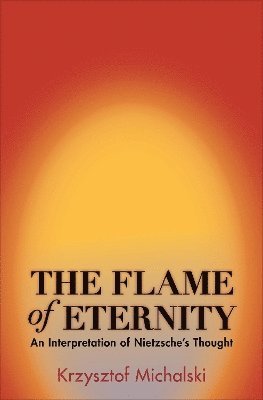
Flame of Eternity
An Interpretation of Nietzsche's Thought
Häftad, 2013
290 kr
Lägg i varukorg
The Flame of Eternity provides a reexamination and new interpretation of Nietzsche's philosophy and the central role that the concepts of eternity and time, as he understood them, played in it. According to Krzysztof Michalski, Nietzsche's reflections on human life are inextricably linked to time, …
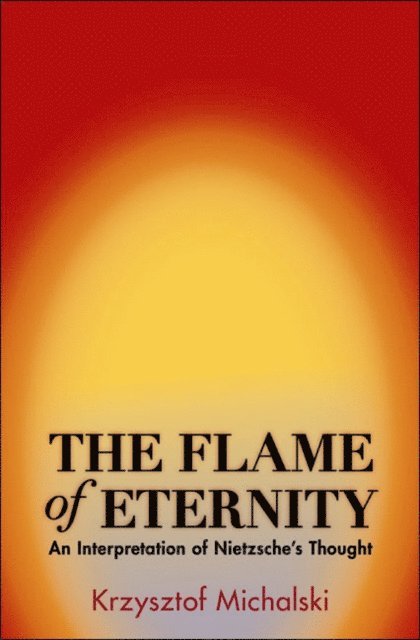
Flame of Eternity
An Interpretation of Nietzsche''s Thought
E-bok, 2011
391 kr
Lägg i varukorg
The Flame of Eternity provides a reexamination and new interpretation of Nietzsche''s philosophy and the central role that the concepts of eternity and time, as he understood them, played in it. According to Krzysztof Michalski, Nietzsche''s reflections on human life are inextricably linked to …
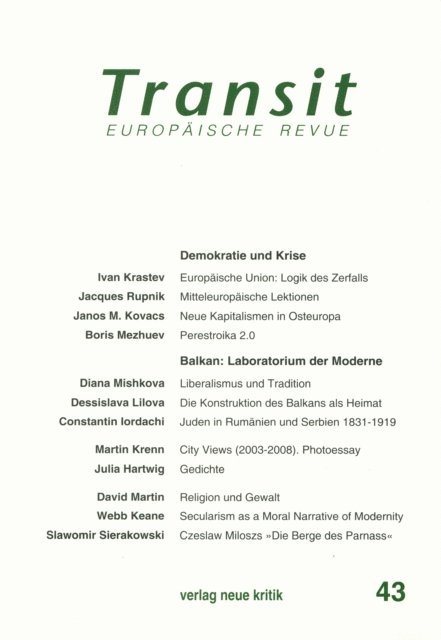
Transit 43. Europäische Revue
Demkoratie und Krise / Balkan: Laboratorium der Moderne
Av Diana Mishkova, Boris Mezhuev m. fl.
E-bok, 2014
128 kr
Lägg i varukorg
Gegenwärtig erlebt die Europäische Union die Erosion ihrer Fundamente: die gemeinsame Erinnerung an den Zweiten Weltkrieg, der geopolitische Pakt in Abgrenzung zur Sowjetunion sind nicht mehr von entscheidender Bedeutung. Mit der Verringerung des allgemeinen Wohlstands verliert die Europäische …
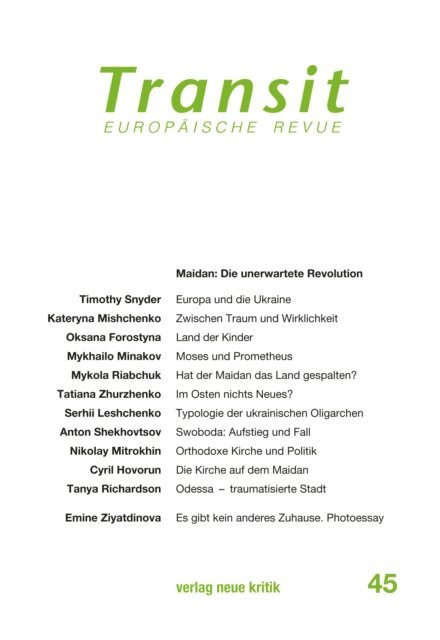
Transit 45. Europäische Revue
Maidan: Die unerwartete Revolution
Av Mykola Riabchuk, Kateryna Mishchenko m. fl.
E-bok, 2015
128 kr
Lägg i varukorg
Ihre Unabhängigkeit war den Ukrainern 1991 zugefallen, erkämpft haben sie sie erst auf dem Maidan. Sie stürzten ihr korruptes Regime, doch nur, um sich mit einem weitaus mächtigeren Gegner konfrontiert zu sehen, der mit allen Mitteln versucht, ihnen die neu gewonnene Chance zu nehmen.Im Moment der …
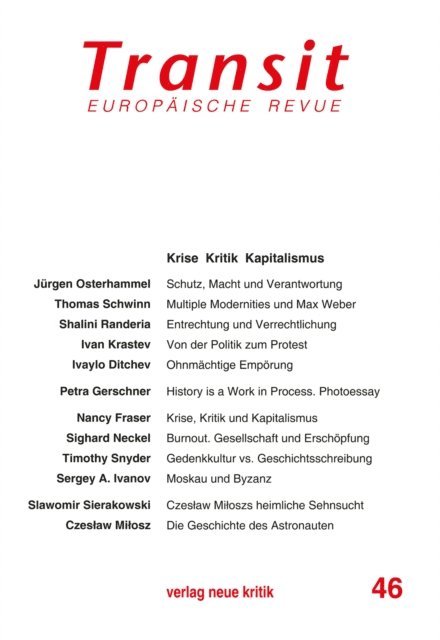
Transit 46. Europäische Revue
Krise Kritik Kapitalismus
Av Nancy Fraser, Thomas Schwinn m. fl.
E-bok, 2015
121 kr
Lägg i varukorg
2015 geht die Zeitschrift Transit in ihr fünfundzwanzigtes Jahr. Die Herausgeberschaft übernimmt, nach Krzysztof Michalski, nun die Sozialanthropologin und Soziologin Shalini Randeria, die im Januar das Amt der Rektorin des Instituts für die Wissenschaften vom Menschen (IWM) angetreten hat. Das …
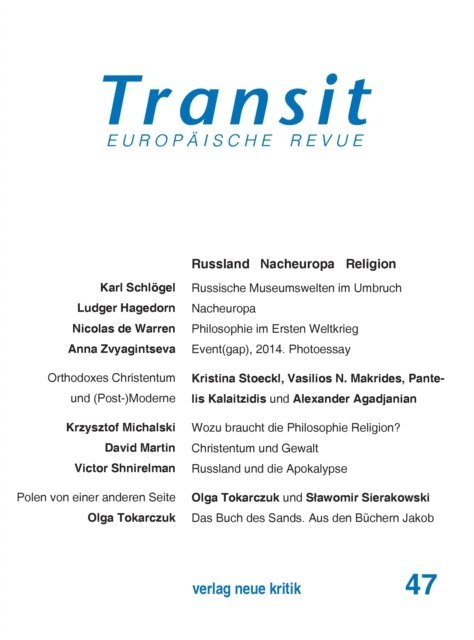
Transit 47. Europäische Revue
Russland Nacheuropa Religion
Av Vasilios N. Makrides, Victor Shnirelmann m. fl.
E-bok, 2015
128 kr
Lägg i varukorg
»Die Auflösung von Imperien ist immer so etwas wie eine glückliche Katastrophe«, beginnt Karl Schlögel seinen Parcours durch die Museumslandschaften Russlands nach dem Ende der Sowjetunion. Der damit einsetzende Umbruch bringt Gefahren für die fragile Institution Museum mit sich, aber auch Chancen …
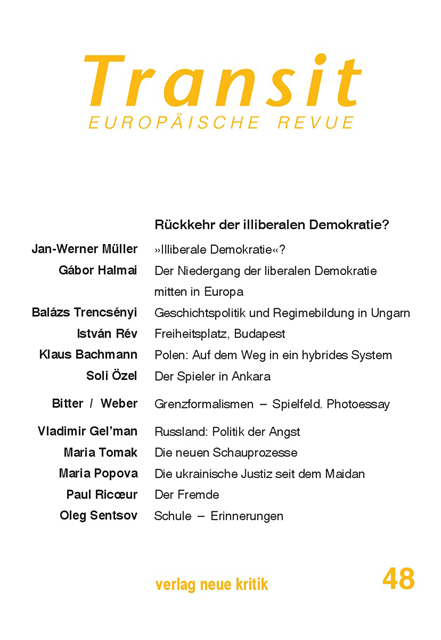
Transit 48. Europäische Revue
Rückkehr der illiberalen Demokratie?
Av Klaus Bachmann, Gabor Halmai m. fl.
E-bok, 2016
128 kr
Lägg i varukorg
Die Diagnose vom Aufstieg der ›illiberalen Demokratie‹ war Symptom einer allgemeinen philosophischen und politischen Katerstimmung nach 1989: In den berauschenden Tagen, als der Staatssozialismus implodierte und die Welt geradezu demokratietrunken wirkte, hatte es den Anschein, als würden sich …
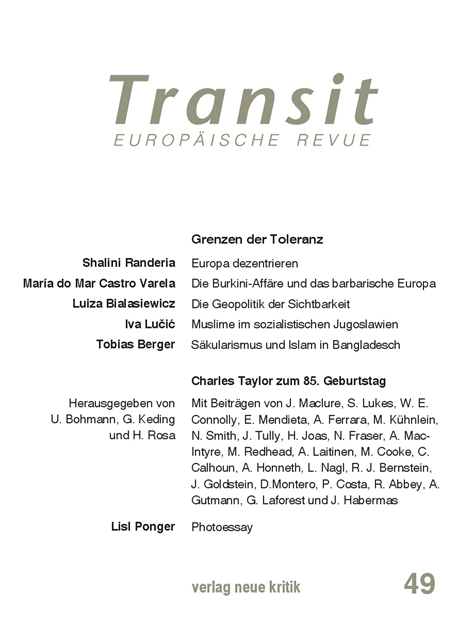
Transit 49. Europäische Revue
Grenzen der Toleranz / Charles Taylor zum 85. Geburtstag
Av Tobias Berger, Iva Lucic m. fl.
E-bok, 2016
128 kr
Lägg i varukorg
Am 5. November 2016 feiert der große Philosoph Charles Taylor seinen 85. Geburtstag. Mit Wien verbindet ihn seit vielen Jahren eine innige Freundschaft. Seit 2009 ist er ein Permanent Fellow am Institut für die Wissenschaften vom Menschen, wo er einen Forschungsschwerpunkt zum Thema »Religion und …
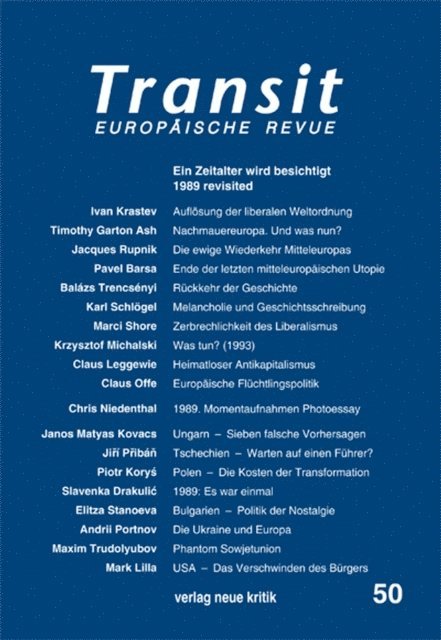
Transit 50. Europäische Revue
Ein Zeitalter wird besichtigt. 1989 revisited
Av Karl Schlogel, Jacques Rupnik m. fl.
E-bok, 2017
125 kr
Lägg i varukorg
Die erste Ausgabe von Transit erschien kurz nach 1989, in einem historischen Moment, der das Ende des Kalten Krieges markierte, Europa wiedervereinigte und für seinen östlichen Teil eine Wende zu Demokratie und Marktwirtschaft versprach. Seitdem hat Transit die Transformationsprozesse, die ganz …
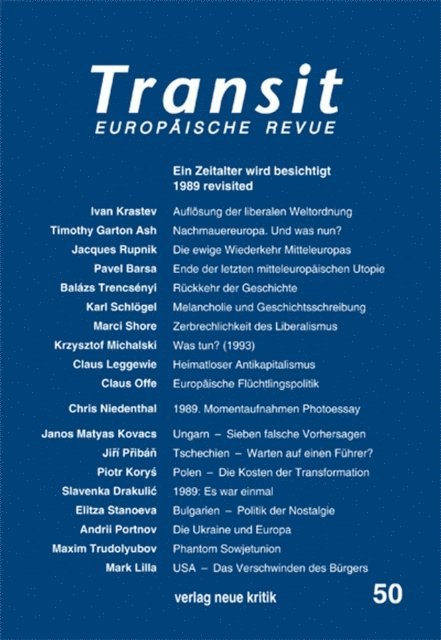
Transit 50. Europäische Revue
Ein Zeitalter wird besichtigt. 1989 revisited
Av Karl Schlogel, Jacques Rupnik m. fl.
E-bok, 2017
125 kr
Lägg i varukorg
Die erste Ausgabe von Transit erschien kurz nach 1989, in einem historischen Moment, der das Ende des Kalten Krieges markierte, Europa wiedervereinigte und für seinen östlichen Teil eine Wende zu Demokratie und Marktwirtschaft versprach. Seitdem hat Transit die Transformationsprozesse, die ganz …
What Holds Europe Together?
Av Krzysztof Michalski, Krzysztof Michalski
Inbunden, 2006
1608 kr
Lägg i varukorg
The book addresses contemporary developments in European identity politics as part of a larger historical trajectory of a common European identity based on the idea of 'solidarity.' The authors explain the special sense in which Europeans perceive their obligations to their less fortunate …
What Holds Europe Together?
Av Krzysztof Michalski, Krzysztof Michalski
Häftad, 2006
682 kr
Lägg i varukorg
The book addresses contemporary developments in European identity politics as part of a larger historical trajectory of a common European identity based on the idea of 'solidarity.' The authors explain the special sense in which Europeans perceive their obligations to their less fortunate …
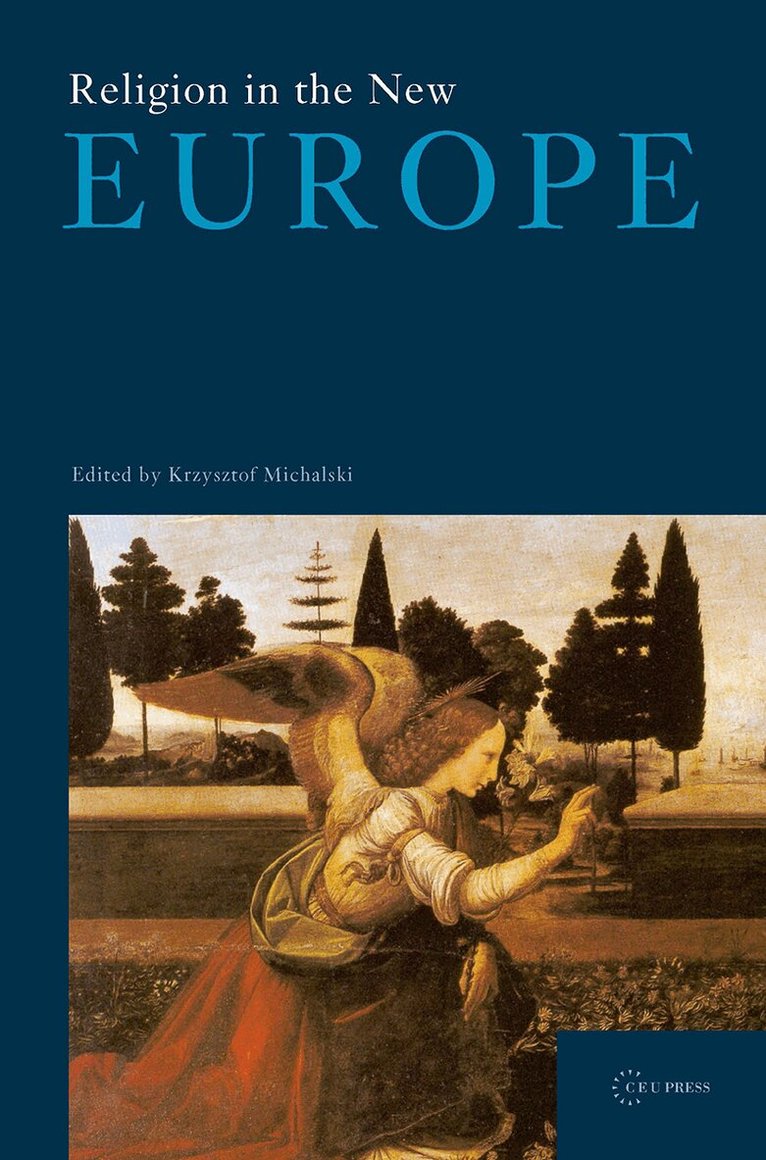
Religion in the New Europe
Inbunden, 2006
1466 kr
Lägg i varukorg
The articles in this volume deal with the role of Christianity in the definition of European identity. Europeans often identify advanced civilizations with secularity. But religion is very much alive in other fast developing countries of the world. In Europe, nevertheless, the organized churches …
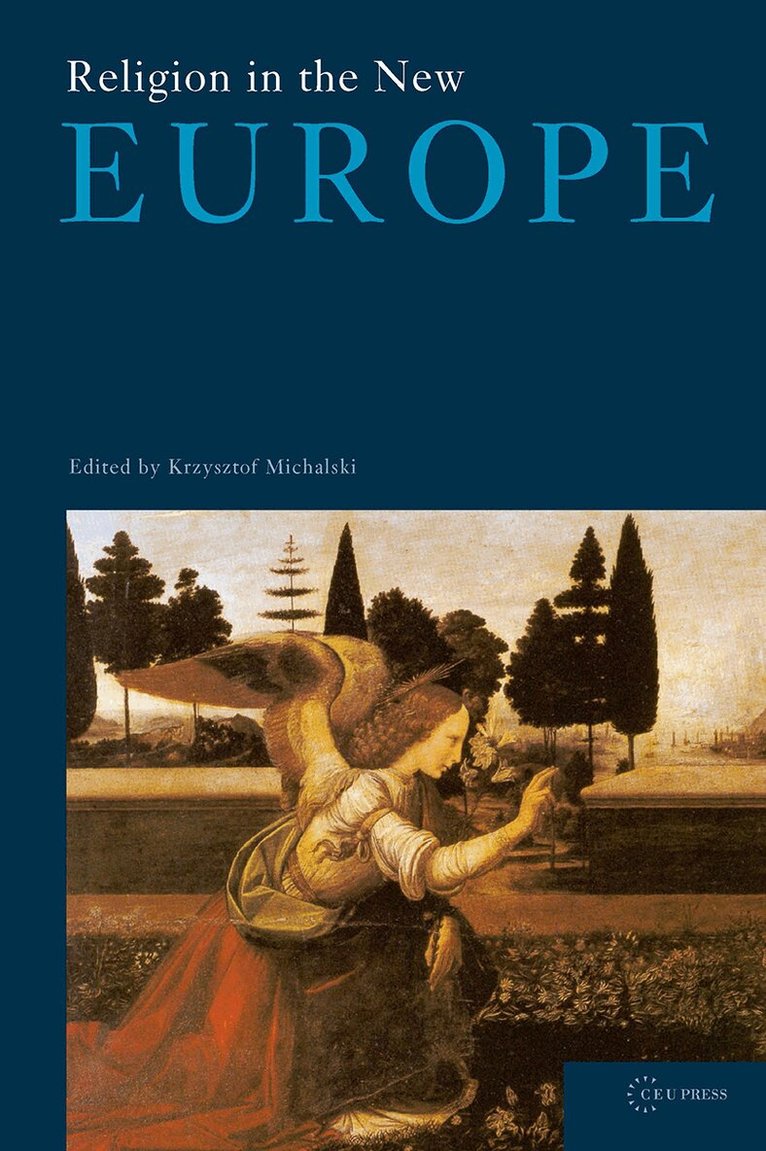
Religion in the New Europe
Häftad, 2006
561 kr
Lägg i varukorg
The articles in this volume deal with the role of Christianity in the definition of European identity. Europeans often identify advanced civilizations with secularity. But religion is very much alive in other fast developing countries of the world. In Europe, nevertheless, the organized churches …