Kwang-Ting (Tim) Cheng - Böcker
Visar alla böcker från författaren Kwang-Ting (Tim) Cheng. Handla med fri frakt och snabb leverans.
6 produkter
6 produkter
983 kr
Skickas inom 7-10 vardagar
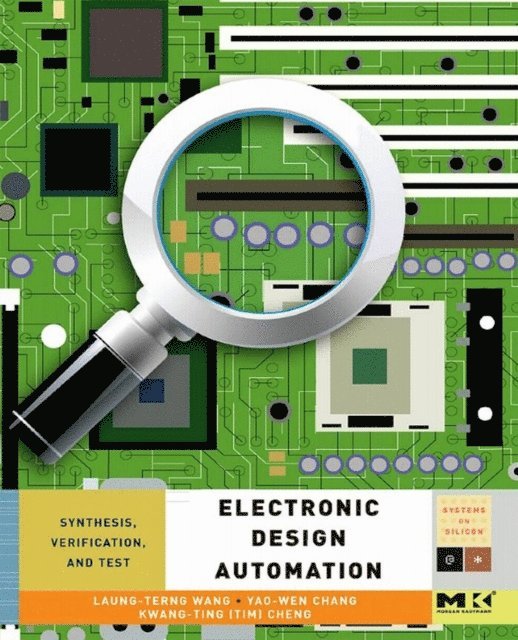
This book provides broad and comprehensive coverage of the entire EDA flow. EDA/VLSI practitioners and researchers in need of fluency in an "adjacent" field will find this an invaluable reference to the basic EDA concepts, principles, data structures, algorithms, and architectures for the design, verification, and test of VLSI circuits. Anyone who needs to learn the concepts, principles, data structures, algorithms, and architectures of the EDA flow will benefit from this book. Covers complete spectrum of the EDA flow, from ESL design modeling to logic/test synthesis, verification, physical design, and test - helps EDA newcomers to get "up-and-running" quickly Includes comprehensive coverage of EDA concepts, principles, data structures, algorithms, and architectures - helps all readers improve their VLSI design competence Contains latest advancements not yet available in other books, including Test compression, ESL design modeling, large-scale floorplanning, placement, routing, synthesis of clock and power/ground networks - helps readers to design/develop testable chips or products Includes industry best-practices wherever appropriate in most chapters - helps readers avoid costly mistakes
Del 12 - Frontiers in Electronic Testing
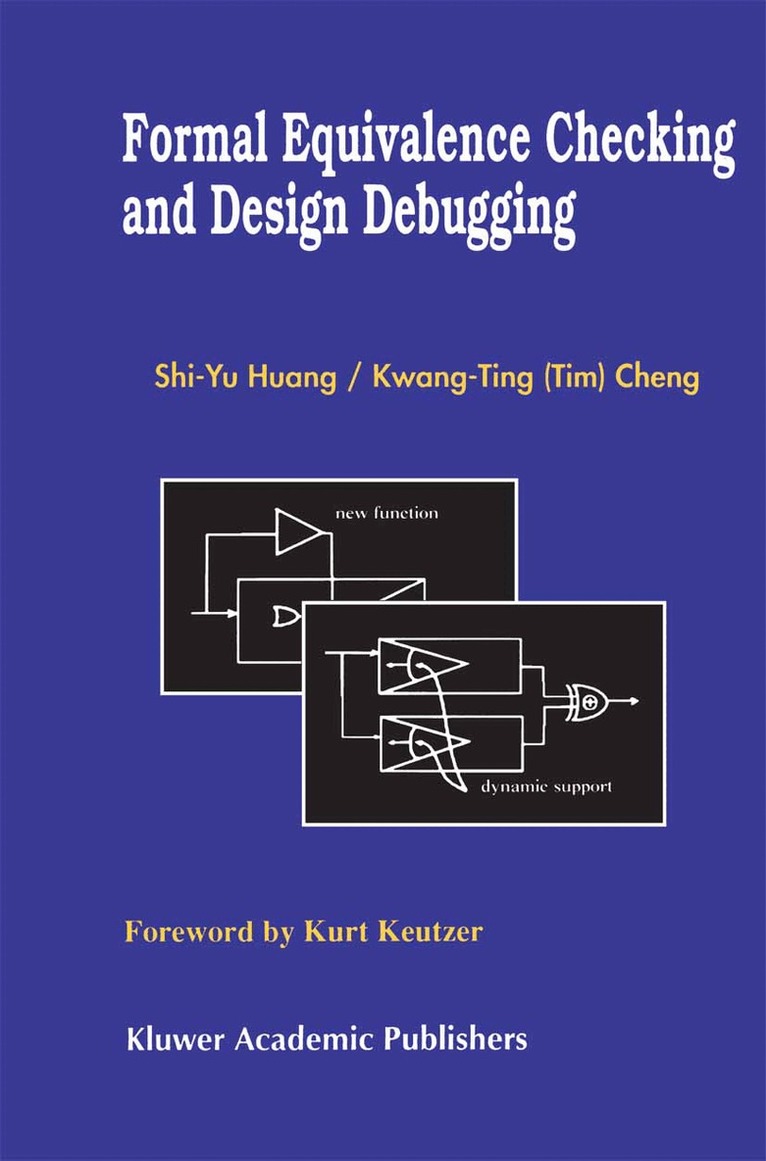
Formal Equivalence Checking and Design Debugging
Inbunden, Engelska, 1998
1 967 kr
Skickas inom 10-15 vardagar
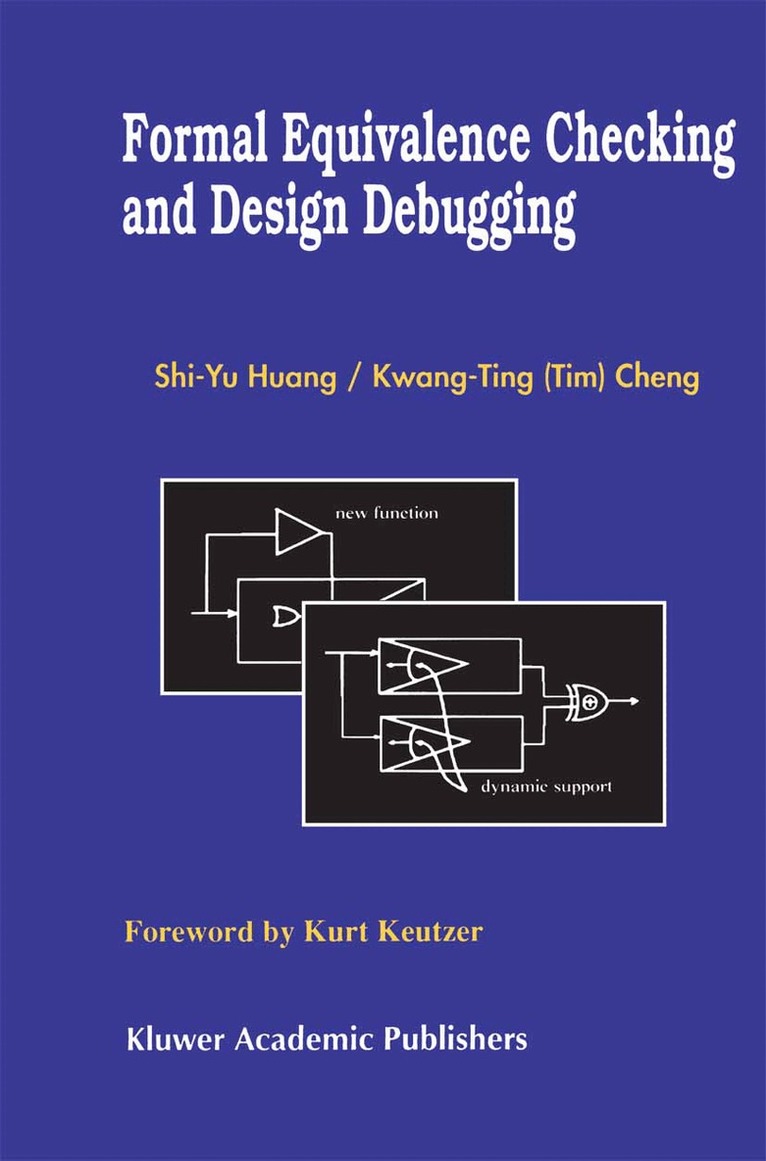
This text covers two major topics in design verification: logic equivalence checking and design debugging. The first part of the book reviews the design problems that require logic equivalence checking and describes the underlying technologies that are used to solve them. Some novel approaches to the problems of verifying design revisions after intensive sequential transformations such as retiming are described in detail. The second part of the book gives a thorough survey of previous and recent literature on design error diagnosis and design error correction. This part also provides an in-depth analysis of the algorithms used in two logic debugging software programs, ErrorTracer and AutoFix, developed by the authors. With the adoption of the static sign-off approach to verifying circuit implementations the application-specific integrated circuit (ASIC) industry will experience the first radical methodological revolution since the adoption of logic synthesis. Equivalence checking is one of the two critical elements of this methodological revolution.This book is intended for the designer seeking to better understand the mechanics of equivalence checking or for the CAD researcher who wishes to investigate well-motivated research problems such as equivalence checking of retimed designs or error diagnosis in sequential circuits.
1 593 kr
Skickas inom 10-15 vardagar
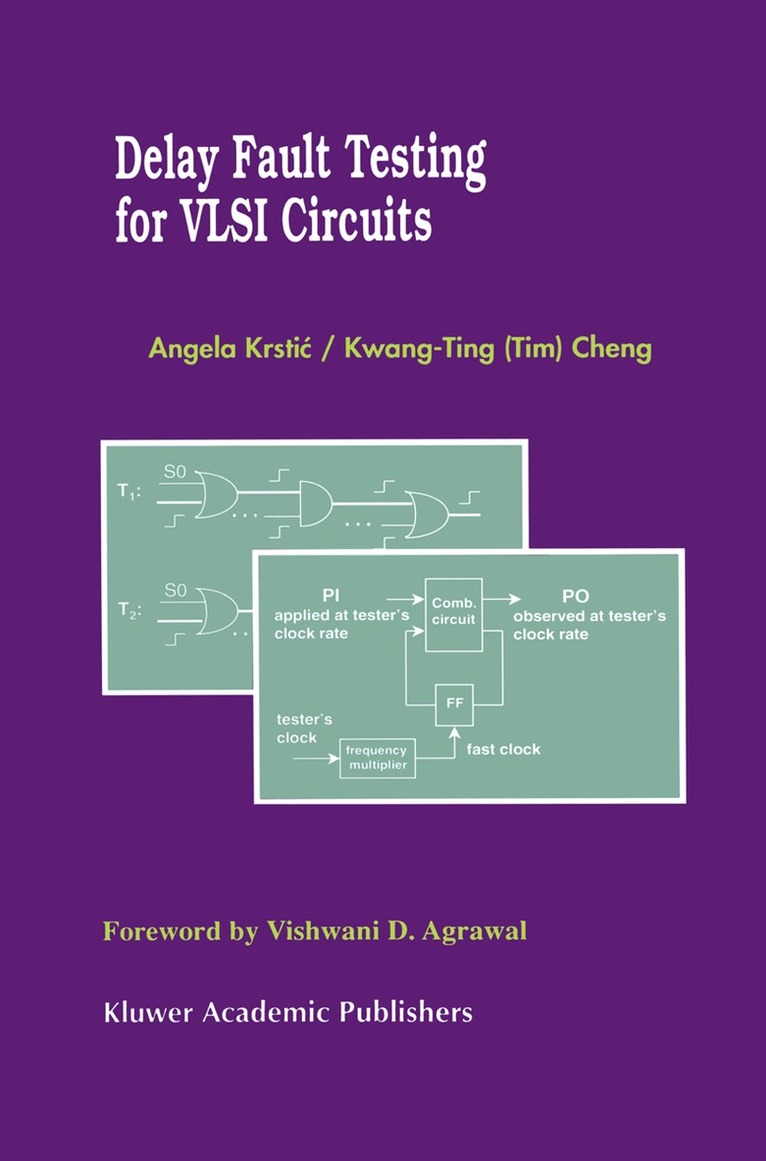
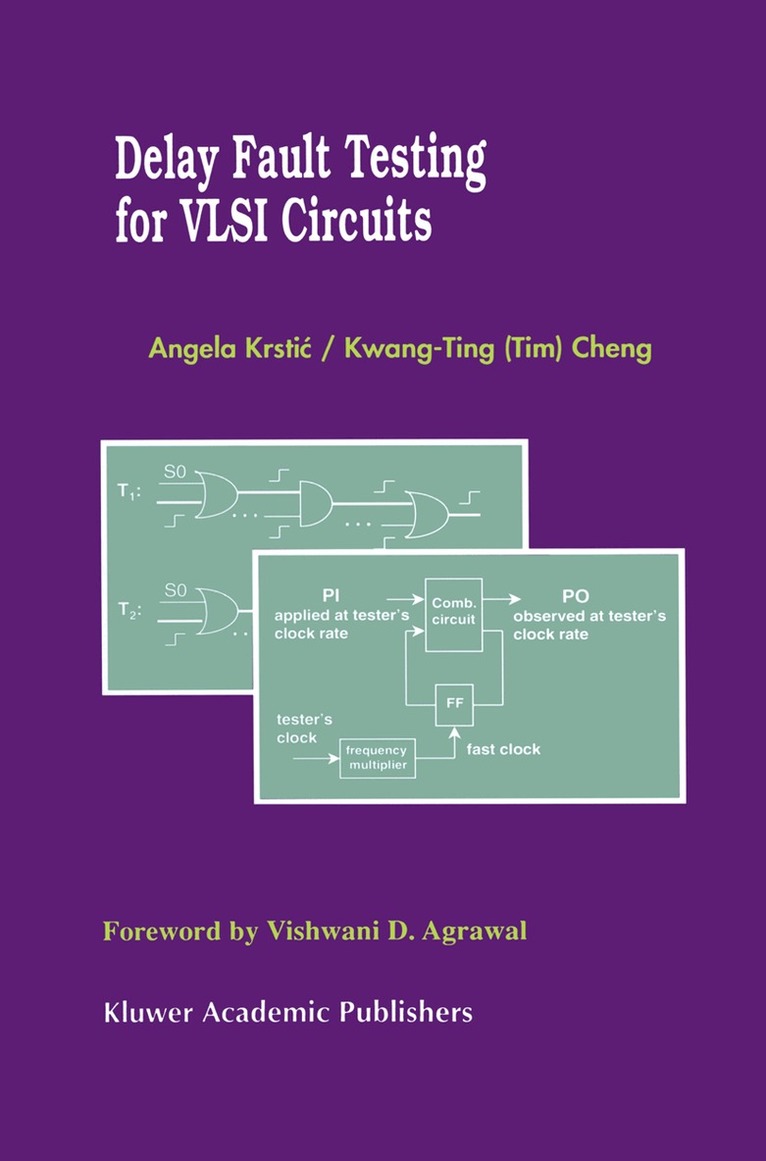
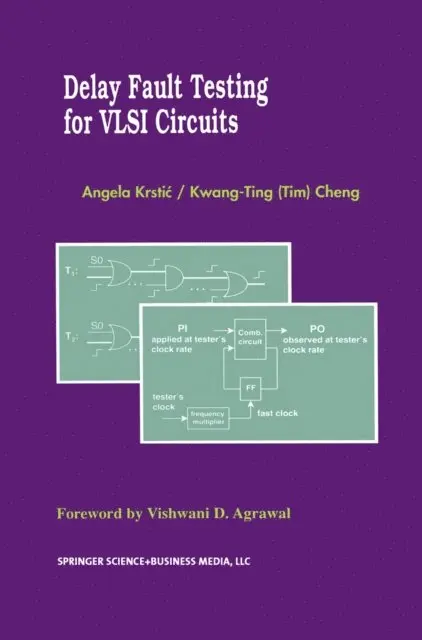
With the ever-increasing speed of integrated circuits, violations of the performance specifications are becoming a major factor affecting the product quality level. The need for testing timing defects is further expected to grow with the late 20th-century design trend of moving towards deep submicron devices. After a long period of prevailing belief that high stuck-at fault coverage is sufficient to guarantee high quality of shipped products, the industry is now forced to rethink other types of testing. Delay testing has been a topic of extensive research both in industry and in academia for more than a decade. As a result, several delay fault models and numerous testing methodologies have been proposed. Presenting a selection of existing delay testing research results, this volume combines introductory material with state-of-the-art techniques that address some of the problems in delay testing in the late 1990s. This text covers some basic topics such as fault modelling and test application schemes for detecting delay defects. It also presents summaries and conclusions of several recent case studies and experiments related to delay testing.A selection of delay testing issues and test techniques such as delay fault simulation, test generation, design for testability and synthesis for testability are also covered. The book is intended for use by CAD and test engineers, researchers, tool developers and graduate students. It requires a basic background in digital testing. It can also be used as supplementary material for a graduate-level course on VLSI testing.
1 064 kr
Skickas inom 10-15 vardagar
1 593 kr
Skickas inom 10-15 vardagar
In the early days of digital design, we were concerned with the logical correctness of circuits. We knew that if we slowed down the clock signal sufficiently, the circuit would function correctly. With improvements in the semiconductor process technology, our expectations on speed have soared. A frequently asked question in the last decade has been how fast can the clock run. This puts significant demands on timing analysis and delay testing. Fueled by the above events, a tremendous growth has occurred in the research on delay testing. Recent work includes fault models, algorithms for test generation and fault simulation, and methods for design and synthesis for testability. The authors of this book, Angela Krstic and Tim Cheng, have personally contributed to this research. Now they do an even greater service to the profession by collecting the work of a large number of researchers. In addition to expounding such a great deal of information, they have delivered it with utmost clarity. To further the reader's understanding many key concepts are illustrated by simple examples. The basic ideas of delay testing have reached a level of maturity that makes them suitable for practice. In that sense, this book is the best x DELAY FAULT TESTING FOR VLSI CIRCUITS available guide for an engineer designing or testing VLSI systems. Tech niques for path delay testing and for use of slower test equipment to test high-speed circuits are of particular interest.
Del 12 - Frontiers in Electronic Testing
Formal Equivalence Checking and Design Debugging
Häftad, Engelska, 2012
1 910 kr
Skickas inom 10-15 vardagar
Formal Equivalence Checking and Design Debugging covers two major topics in design verification: logic equivalence checking and design debugging. The first part of the book reviews the design problems that require logic equivalence checking and describes the underlying technologies that are used to solve them. Some novel approaches to the problems of verifying design revisions after intensive sequential transformations such as retiming are described in detail. The second part of the book gives a thorough survey of previous and recent literature on design error diagnosis and design error correction. This part also provides an in-depth analysis of the algorithms used in two logic debugging software programs, ErrorTracer and AutoFix, developed by the authors. From the Foreword: `With the adoption of the static sign-off approach to verifying circuit implementations the application-specific integrated circuit (ASIC) industry will experience the first radical methodological revolution since the adoption of logic synthesis. Equivalence checking is one of the two critical elements of this methodological revolution. This book is timely for either the designer seeking to better understand the mechanics of equivalence checking or for the CAD researcher who wishes to investigate well-motivated research problems such as equivalence checking of retimed designs or error diagnosis in sequential circuits.'Kurt Keutzer, University of California, Berkeley