L. Ayu Saraswati - Böcker
Visar alla böcker från författaren L. Ayu Saraswati. Handla med fri frakt och snabb leverans.
9 produkter
9 produkter
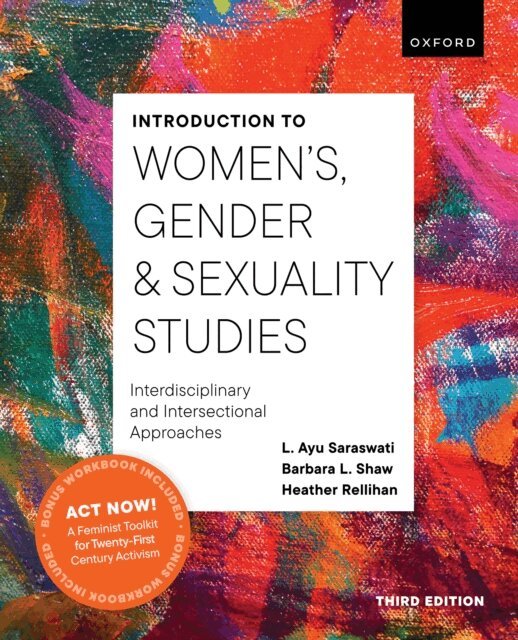
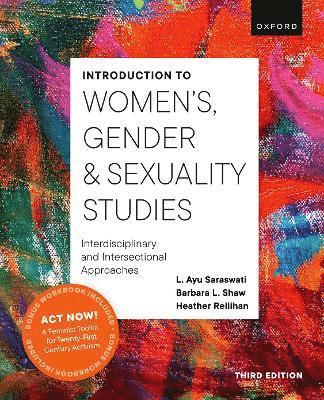
Introduction to Women's, Gender and Sexuality Studies
Interdisciplinary and Intersectional Approaches
Häftad, Engelska, 2025
1 733 kr
Skickas inom 3-6 vardagar
Introduction to Women's, Gender & Sexuality Studies: Interdisciplinary and Intersectional Approaches, third edition, reflects the exciting changes taking place in this field. Emphasizing both interdisciplinarity and intersectionality, this innovative mix of anthology and textbook includes key primary historical sources and debates on contemporary issues. Readings from a range of genres and perspectives illustrate the diversity of the field. While many of the readings are foundational texts, the book also integrates new work from established scholars and emerging voices to expand current debates in the field. The text is enhanced by thorough overviews that begin each section that encourage students to think critically and self-reflexively. The addition of Act Now! A Feminist Toolkit for Twenty-first Century Activism to this edition enables students to take their theoretical classroom learning and apply it to activism in their daily lives and the broader world. Act Now! encourages students to use what they have learned to enact change.
566 kr
Skickas inom 10-15 vardagar
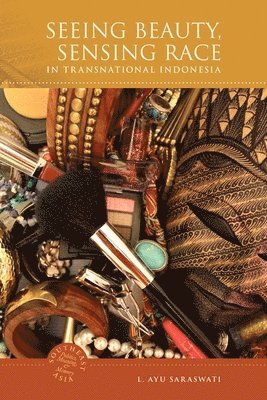
In Indonesia, light skin colour has been desirable throughout recorded history. Seeing Beauty, Sensing Race explores Indonesia’s changing beauty ideals and traces them to a number of influences: first to ninth-century India and some of the oldest surviving Indonesian literary works; then, a thousand years later, to the impact of Dutch colonialism and the wartime occupation of Japan; and finally, in the post-colonial period, to the popularity of American culture. The book shows how the transnational circulation of people, images, and ideas have shaped and shifted discourses and hierarchies of race, gender, skin colour, and beauty in Indonesia. The author employs “affect” theories and feminist cultural studies as a lens through which to analyse a vast range of materials, including the Old Javanese epic poem Ramayana, archival materials, magazine advertisements, commercial products, and numerous interviews with Indonesian women.The book offers a rich repertoire of analytical and theoretical tools that allow readers to rethink issues of race and gender in a global context and understand how feelings and emotions--Western constructs as well as Indian, Javanese, and Indonesian notions such as rasa and malu—contribute to and are constitutive of transnational and gendered processes of racialisation. Saraswati argues that it is how emotions come to be attached to certain objects and how they circulate that shape the “emotionscape” of white beauty in Indonesia. Her ground-breaking work is a nuanced theoretical exploration of the ways in which representations of beauty and the emotions they embody travel geographically and help shape attitudes and beliefs toward race and gender in a transnational world.
256 kr
Skickas inom 7-10 vardagar
In Indonesia, light skin colour has been desirable throughout recorded history. Seeing Beauty, Sensing Race explores Indonesia’s changing beauty ideals and traces them to a number of influences: first to ninth-century India and some of the oldest surviving Indonesian literary works; then, a thousand years later, to the impact of Dutch colonialism and the wartime occupation of Japan; and finally, in the post-colonial period, to the popularity of American culture. The book shows how the transnational circulation of people, images, and ideas have shaped and shifted discourses and hierarchies of race, gender, skin colour, and beauty in Indonesia. The author employs “affect” theories and feminist cultural studies as a lens through which to analyse a vast range of materials, including the Old Javanese epic poem Ramayana, archival materials, magazine advertisements, commercial products, and numerous interviews with Indonesian women.The book offers a rich repertoire of analytical and theoretical tools that allow readers to rethink issues of race and gender in a global context and understand how feelings and emotions--Western constructs as well as Indian, Javanese, and Indonesian notions such as rasa and malu—contribute to and are constitutive of transnational and gendered processes of racialisation. Saraswati argues that it is how emotions come to be attached to certain objects and how they circulate that shape the “emotionscape” of white beauty in Indonesia. Her ground-breaking work is a nuanced theoretical exploration of the ways in which representations of beauty and the emotions they embody travel geographically and help shape attitudes and beliefs toward race and gender in a transnational world.
282 kr
Skickas inom 7-10 vardagar
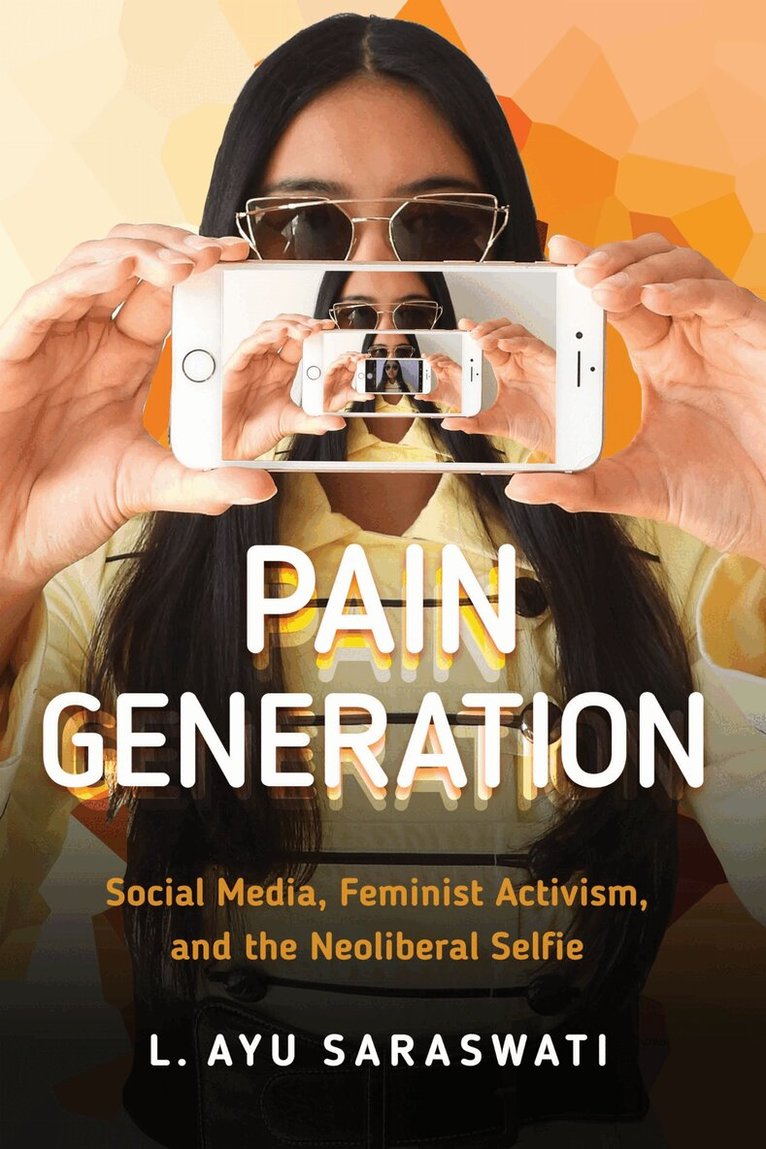
Explores the perils and promise of feminist social media activismSocial media has become the front-and-center arena for feminist activism. Responding to and enacting the political potential of pain inflicted in acts of sexual harassment, violence, and abuse, Asian American and Asian Canadian feminist icons such as rupi kaur, Margaret Cho, and Mia Matsumiya have turned to social media to share their stories with the world. But how does such activism reconcile with the platforms on which it is being cultivated, when its radical messaging is at total odds with the neoliberal logic governing social media?Pain Generation troubles this phenomenon by articulating a "neoliberal self(ie) gaze" through which these feminist activistssee and storify the self on social media as "good" neoliberal subjects who are appealing, inspiring, and entertaining. This book offers a fresh perspective on feminist activism by demonstrating how the problematic neoliberal logic governing digital spaces like Instagram and Twitter limits the possibilities of how one might use social media for feminist activism.
1 005 kr
Skickas inom 10-15 vardagar
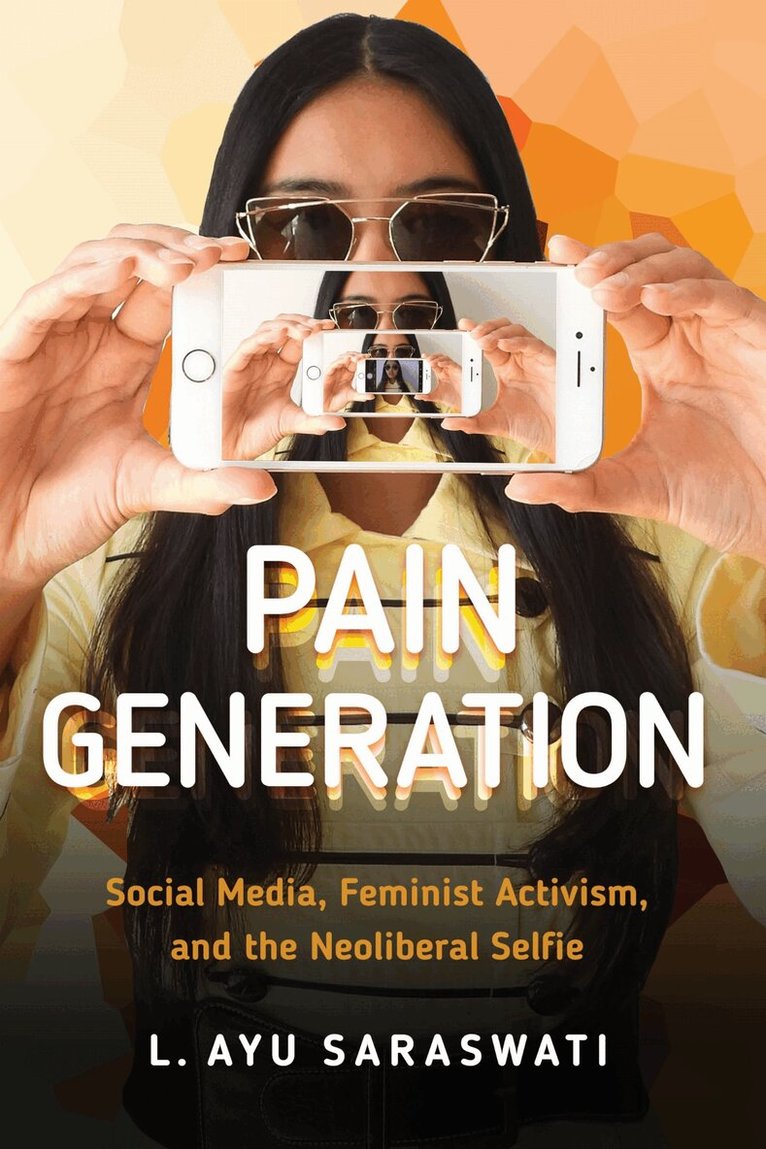
Explores the perils and promise of feminist social media activismSocial media has become the front-and-center arena for feminist activism. Responding to and enacting the political potential of pain inflicted in acts of sexual harassment, violence, and abuse, Asian American and Asian Canadian feminist icons such as rupi kaur, Margaret Cho, and Mia Matsumiya have turned to social media to share their stories with the world. But how does such activism reconcile with the platforms on which it is being cultivated, when its radical messaging is at total odds with the neoliberal logic governing social media?Pain Generation troubles this phenomenon by articulating a "neoliberal self(ie) gaze" through which these feminist activistssee and storify the self on social media as "good" neoliberal subjects who are appealing, inspiring, and entertaining. This book offers a fresh perspective on feminist activism by demonstrating how the problematic neoliberal logic governing digital spaces like Instagram and Twitter limits the possibilities of how one might use social media for feminist activism.
952 kr
Skickas inom 10-15 vardagar
PROSE Award Winner for Biography and AutobiographyNamed one of Library Journal's Best Books of 2023Winner, Next Generation Indie Book Awards - Women's Nonfiction Offers thought-provoking theories and life-transforming ways to deal with painWhat can we ask of pain? How can we be more creative and courageous in carrying pain in our lives? In this genre-bending work that is equal parts memoir and scholarly criticism, L. Ayu Saraswati provides thought-provoking theories and life-transforming ways to understand pain, specifically in relation to feminism. Arguing that pain is not merely a state we are in, Scarred reframes pain as a "transnational feminist object," something that we can carry across international borders. Drawing on her own experience traveling across twenty countries within just over a year, Saraswati aims to bring readers along on her journey so that they might ask themselves, "How can I live with pain differently?"By using pain as a lens of feminist analysis, Scarred allows us to chart how power produces and operates through pain, and how pain is embodied and embedded in relationships. Saraswati provides a heartfelt and engaging recount of her experiences while also pushing the boundaries of the respective fields her story engages with. She allows for renewed academic and personal insights to blossom by using a blend of transnational feminist theory, travel studies, and pain studies. Ultimately, Scarred invites us to reframe pain and ask how might we carry it in a more humane, life-sustaining, enchanting, and feminist way.
208 kr
Skickas
PROSE Award Winner for Biography and AutobiographyNamed one of Library Journal's Best Books of 2023Winner, Next Generation Indie Book Awards - Women's Nonfiction Offers thought-provoking theories and life-transforming ways to deal with painWhat can we ask of pain? How can we be more creative and courageous in carrying pain in our lives? In this genre-bending work that is equal parts memoir and scholarly criticism, L. Ayu Saraswati provides thought-provoking theories and life-transforming ways to understand pain, specifically in relation to feminism. Arguing that pain is not merely a state we are in, Scarred reframes pain as a "transnational feminist object," something that we can carry across international borders. Drawing on her own experience traveling across twenty countries within just over a year, Saraswati aims to bring readers along on her journey so that they might ask themselves, "How can I live with pain differently?"By using pain as a lens of feminist analysis, Scarred allows us to chart how power produces and operates through pain, and how pain is embodied and embedded in relationships. Saraswati provides a heartfelt and engaging recount of her experiences while also pushing the boundaries of the respective fields her story engages with. She allows for renewed academic and personal insights to blossom by using a blend of transnational feminist theory, travel studies, and pain studies. Ultimately, Scarred invites us to reframe pain and ask how might we carry it in a more humane, life-sustaining, enchanting, and feminist way.
Contours of Endearment
Exploring New Dimensions in Southeast Asia-Japan Relations
Inbunden, Engelska, 2026
901 kr
Skickas
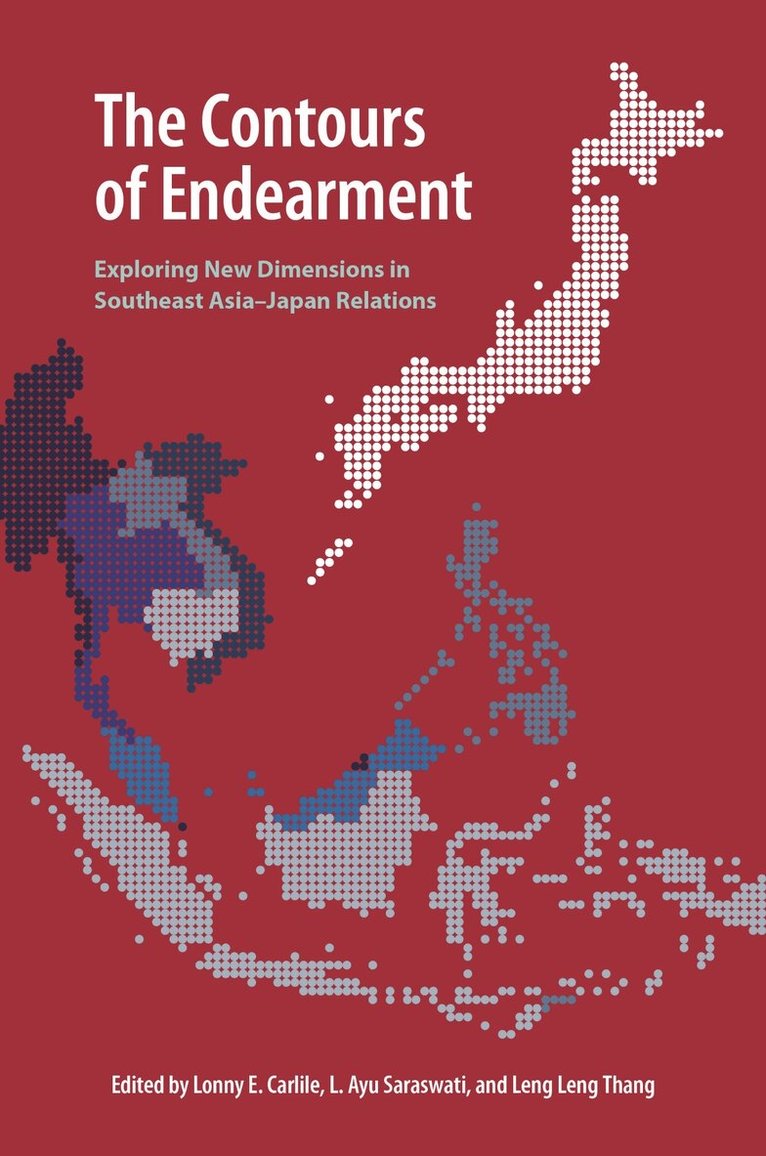
The Contours of Endearment offers a fresh, Southeast Asia–centered perspective on the complex and evolving relationship between Japan and the nations of Southeast Asia. While much scholarship has emphasized state-to-state political and economic ties, this volume highlights the softer, more nuanced dimensions of these connections—those that emerge through culture, migration, education, and everyday encounters.Through case studies of the original five members of the Association of Southeast Asian Nations (ASEAN-5)—Indonesia, Malaysia, Singapore, the Philippines, and Thailand—the contributors trace how Southeast Asians themselves have engaged with Japan across multiple arenas. Chapters explore themes such as the historical context of post–World War II relations, the development of Japanese studies in Southeast Asian universities, labor migration from Indonesia and the Philippines, and the circulation and localization of Japanese popular culture, including anime and manga, in Singapore and Indonesia.Employing an innovative "inter-area studies" approach, the volume shows how Southeast Asia–Japan relations cannot be reduced to simple economic partnerships or geopolitical strategies, but must be understood as multi-layered interactions shaped by local histories, aspirations, and cultural flows. By privileging Southeast Asian experiences, The Contours of Endearment broadens the "Japan (plus)" model of inquiry and offers new ways of thinking about Japanese studies that move beyond the Japan-centric frameworks that have long dominated the field.This timely collection not only deepens understanding of Southeast Asia–Japan relations but also demonstrates how area studies can evolve beyond Eurocentric limitations to embrace more dynamic, multidirectional perspectives. Rich in detail and comparative insight, it will appeal to students and researchers of Japanese studies, Southeast Asian studies, cultural studies, migration, and international relations.
Contours of Endearment
Exploring New Dimensions in Southeast Asia-Japan Relations
Häftad, Engelska, 2026
305 kr
Skickas
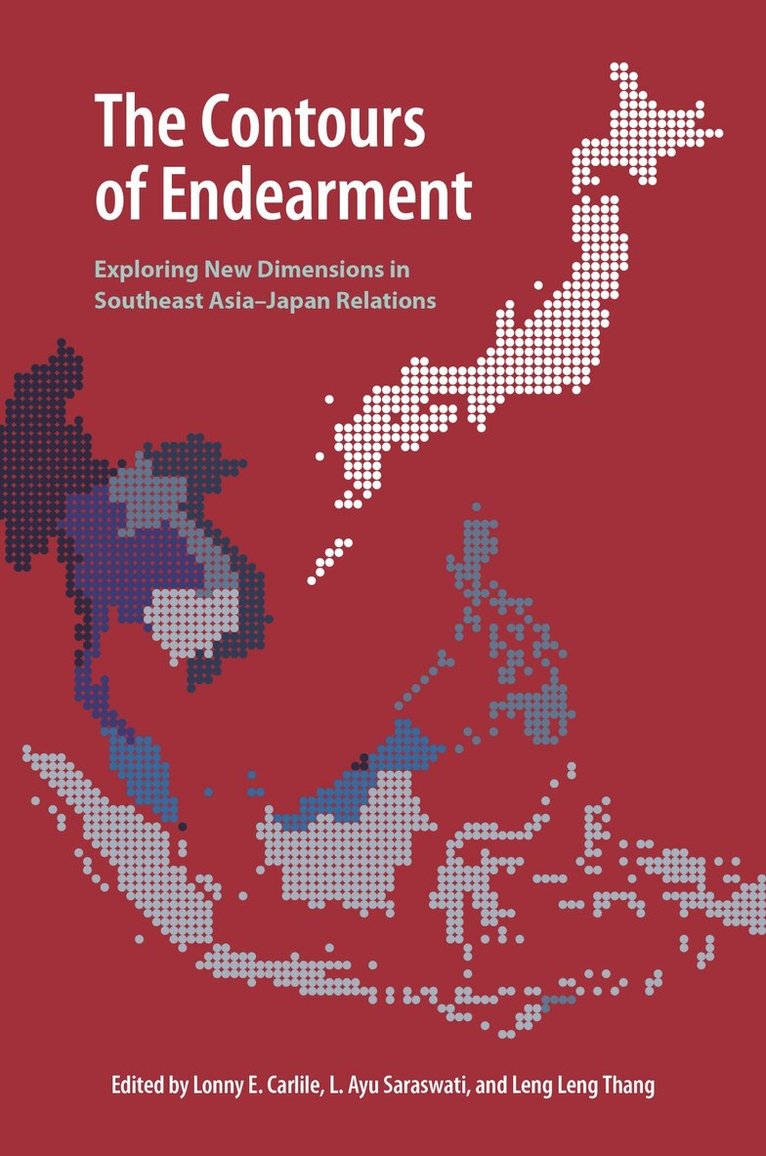
The Contours of Endearment offers a fresh, Southeast Asia–centered perspective on the complex and evolving relationship between Japan and the nations of Southeast Asia. While much scholarship has emphasized state-to-state political and economic ties, this volume highlights the softer, more nuanced dimensions of these connections—those that emerge through culture, migration, education, and everyday encounters.Through case studies of the original five members of the Association of Southeast Asian Nations (ASEAN-5)—Indonesia, Malaysia, Singapore, the Philippines, and Thailand—the contributors trace how Southeast Asians themselves have engaged with Japan across multiple arenas. Chapters explore themes such as the historical context of post–World War II relations, the development of Japanese studies in Southeast Asian universities, labor migration from Indonesia and the Philippines, and the circulation and localization of Japanese popular culture, including anime and manga, in Singapore and Indonesia.Employing an innovative "inter-area studies" approach, the volume shows how Southeast Asia–Japan relations cannot be reduced to simple economic partnerships or geopolitical strategies, but must be understood as multi-layered interactions shaped by local histories, aspirations, and cultural flows. By privileging Southeast Asian experiences, The Contours of Endearment broadens the "Japan (plus)" model of inquiry and offers new ways of thinking about Japanese studies that move beyond the Japan-centric frameworks that have long dominated the field.This timely collection not only deepens understanding of Southeast Asia–Japan relations but also demonstrates how area studies can evolve beyond Eurocentric limitations to embrace more dynamic, multidirectional perspectives. Rich in detail and comparative insight, it will appeal to students and researchers of Japanese studies, Southeast Asian studies, cultural studies, migration, and international relations.