Lance Schachterle - Böcker
Visar alla böcker från författaren Lance Schachterle. Handla med fri frakt och snabb leverans.
6 produkter
6 produkter
Del 14 - Worcester Polytechnic Institute (WPI Studies) Studies in Science, Technology and Culture
Engineer in History
Häftad, Engelska, 2001
457 kr
Tillfälligt slut
509 kr
Tillfälligt slut
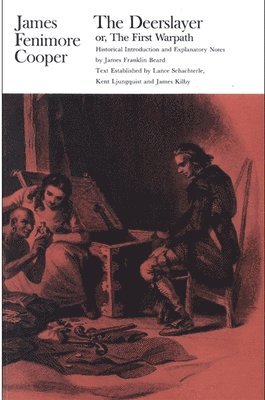
Written during a nostalgic interval during Cooper's stormy battles with the Whig Press, The Deerslayer (1841) is the last of the world-famous Leatherstocking Tales in point of composition, though first in the biographical sequence. Employing physical adventure and violence in a mythopoetic setting drawn largely from his own youthful experience, Cooper evokes the stages of Natty's initiation as a subtly allegorical medium for instilling permanent values, values he thought should pervade the conduct of the American press and all segments of American society. According to Edmund Wilson, this book-which D. H. Lawrence called "the loveliest and best" of the Leatherstocking series-contains description which "owes its power, like Melville's description of the Pacific or one of Poe's pieces on landscape gardening, to an emotional content which has charged the object and transformed it into a symbol. And the action has a reality which we recognize and accept as we read: the reality of a dream full of danger." - The Shock of Recognition
544 kr
Skickas inom 3-6 vardagar
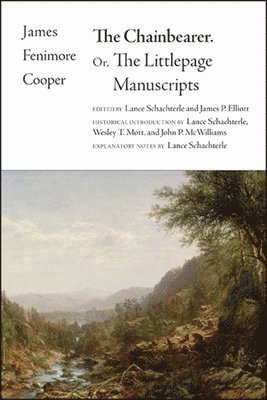
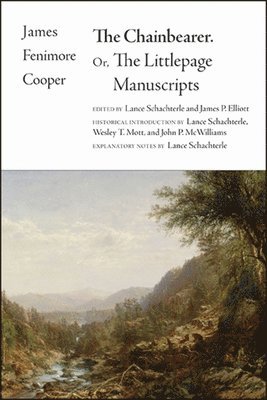
Cooper's The Chainbearer presents an exciting narrative that interrogates issues of what it means to own land. The novel examines the claims of ownership of wilderness land among Native Americans, New England squatters, and the old New York families with legal deeds.In 1845 and 1846, James Fenimore Cooper published The Littlepage Manuscripts, a trilogy reflecting on the anti-rent movement among small farmers leasing parcels in the Hudson Valley who had begun protesting against the land ownership of the old Dutch patroons. Tracing four generations of the landowners, the trilogy focused on fundamental issues of what land ownership meant under the US Constitution-which Cooper understood to guarantee absolute rights of property ownership-and also the legitimacy of such ownership of land taken from the Native Americans who did not hold such doctrines.Cooper told his British publisher that the guiding theme of The Chainbearer (1845), the second novel in the series, was "Revolution," which he presented by beginning the novel with recounting the heroic participation of his hero, Mordaunt Littlepage, in the American Revolution. In 1784, to manage his family's holdings, Mordaunt ventures into the wilds of upper New York, where settlers, many from New England, hoped the Revolution had dissolved their "feudal" commitments to the legal owners. There he encounters one of Cooper's archetypal demagogues, Jason Newcome, who manipulates the settlers to his advantage, as well as an old family friend, Susquesus, the "upright Onondago," who challenges Mordaunt to justify what it means to claim private ownership of land his people held in common. The plot culminates with characteristic flee-and-capture excitement when a lawless squatter, Aaron "Thousandacres," imprisons the hero, who is ultimately freed through the agency of his faithful Dutch surveyor, Andries Coejemans, the "Chainbearer," and his beautiful niece Ursula, whom Mordant ultimately marries-despite her lower-class heritage.The editors have prepared this scholarly edition from the extant manuscript at the American Antiquarian Society. They provide detailed accounts of the genesis of the novel and of their editorial procedures. This edition also contains explanatory notes for the historical references, as well as an essay on the history of the anti-rent movement by John P. McWilliams.The Writings of James Fenimore Cooper The distinguished Cooper scholar James Franklin Beard (1919–1989) began organizing the Writings of James Fenimore Cooper in the late 1960s, as his work on publishing the monumental Letters and Journals of James Fenimore Cooper came to fulfillment. Beard's intention was to provide readers with sound scholarly editions of Cooper's major works, based wherever possible on authorial manuscripts. To date, the Writings of James Fenimore Cooper has made available texts of many of Cooper's best-known novels, as well as some of his most important works of political and social commentary.
1 215 kr
Skickas inom 5-8 vardagar
Cooper's The Chainbearer presents an exciting narrative that interrogates issues of what it means to own land. The novel examines the claims of ownership of wilderness land among Native Americans, New England squatters, and the old New York families with legal deeds.In 1845 and 1846, James Fenimore Cooper published The Littlepage Manuscripts, a trilogy reflecting on the anti-rent movement among small farmers leasing parcels in the Hudson Valley who had begun protesting against the land ownership of the old Dutch patroons. Tracing four generations of the landowners, the trilogy focused on fundamental issues of what land ownership meant under the US Constitution-which Cooper understood to guarantee absolute rights of property ownership-and also the legitimacy of such ownership of land taken from the Native Americans who did not hold such doctrines.Cooper told his British publisher that the guiding theme of The Chainbearer (1845), the second novel in the series, was "Revolution," which he presented by beginning the novel with recounting the heroic participation of his hero, Mordaunt Littlepage, in the American Revolution. In 1784, to manage his family's holdings, Mordaunt ventures into the wilds of upper New York, where settlers, many from New England, hoped the Revolution had dissolved their "feudal" commitments to the legal owners. There he encounters one of Cooper's archetypal demagogues, Jason Newcome, who manipulates the settlers to his advantage, as well as an old family friend, Susquesus, the "upright Onondago," who challenges Mordaunt to justify what it means to claim private ownership of land his people held in common. The plot culminates with characteristic flee-and-capture excitement when a lawless squatter, Aaron "Thousandacres," imprisons the hero, who is ultimately freed through the agency of his faithful Dutch surveyor, Andries Coejemans, the "Chainbearer," and his beautiful niece Ursula, whom Mordant ultimately marries-despite her lower-class heritage.The editors have prepared this scholarly edition from the extant manuscript at the American Antiquarian Society. They provide detailed accounts of the genesis of the novel and of their editorial procedures. This edition also contains explanatory notes for the historical references, as well as an essay on the history of the anti-rent movement by John P. McWilliams.The Writings of James Fenimore Cooper The distinguished Cooper scholar James Franklin Beard (1919–1989) began organizing the Writings of James Fenimore Cooper in the late 1960s, as his work on publishing the monumental Letters and Journals of James Fenimore Cooper came to fulfillment. Beard's intention was to provide readers with sound scholarly editions of Cooper's major works, based wherever possible on authorial manuscripts. To date, the Writings of James Fenimore Cooper has made available texts of many of Cooper's best-known novels, as well as some of his most important works of political and social commentary.
1 135 kr
Skickas inom 11-20 vardagar
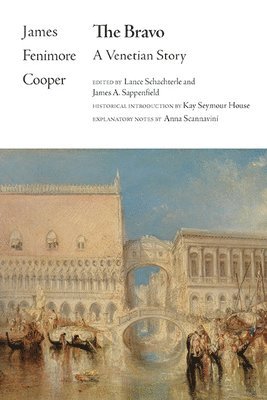
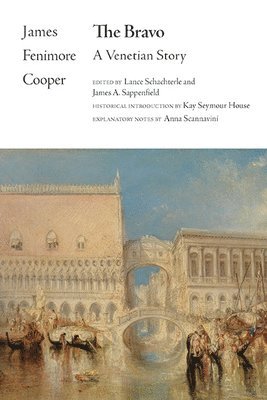
A novel of early eighteenth-century Venice that Cooper called "in spirit, the most American book I ever wrote."The Bravo (1831) takes place in early eighteenth-century Venice, when the "Serene Republic" had lost much of its glory, leaving its oligarchs struggling to hold on to their family wealth by manipulating the government and people through secret councils and a figure-head doge. In 1844, Cooper called it "in spirit, the most American book I ever wrote" because of its depiction of the masses duped by demagoguery and the attempts of Congress to rein in President Jackson, who Cooper saw as representing the popular will. In the novel, the low-born hero, Jacopo Frontoni, is forced to become an agent of the state because his unjustly imprisoned father languishes in the infamous state prison. On the last page, Jacopo is executed as a scapegoat for the crimes attributed to him of which he is innocent, rendering his beloved insane. Only in a subplot does a noble couple escape Venice to enjoy marriage.The present text is based on all extant manuscript witnesses (including a lengthy deleted section) and offers extensive explanatory notes.
731 kr
Skickas inom 3-6 vardagar
A novel of early eighteenth-century Venice that Cooper called "in spirit, the most American book I ever wrote."The Bravo (1831) takes place in early eighteenth-century Venice, when the "Serene Republic" had lost much of its glory, leaving its oligarchs struggling to hold on to their family wealth by manipulating the government and people through secret councils and a figure-head doge. In 1844, Cooper called it "in spirit, the most American book I ever wrote" because of its depiction of the masses duped by demagoguery and the attempts of Congress to rein in President Jackson, who Cooper saw as representing the popular will. In the novel, the low-born hero, Jacopo Frontoni, is forced to become an agent of the state because his unjustly imprisoned father languishes in the infamous state prison. On the last page, Jacopo is executed as a scapegoat for the crimes attributed to him of which he is innocent, rendering his beloved insane. Only in a subplot does a noble couple escape Venice to enjoy marriage.The present text is based on all extant manuscript witnesses (including a lengthy deleted section) and offers extensive explanatory notes.