Larry R. Churchill - Böcker
Visar alla böcker från författaren Larry R. Churchill. Handla med fri frakt och snabb leverans.
13 produkter
13 produkter
346 kr
Skickas inom 5-8 vardagar
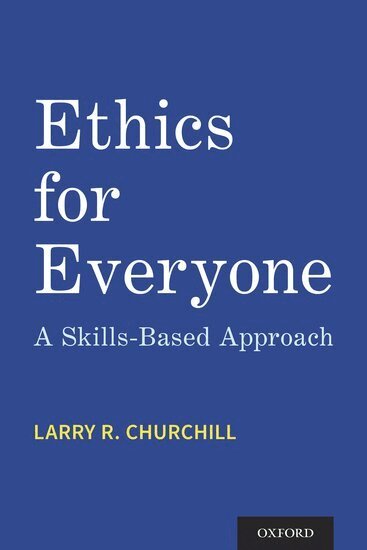
Most of us desire to be moral people, but too often we struggle to translate philosophical concepts about morality and ethics to everyday life. One way we can bridge this gap is by approaching ethics as skills that we can develop rather than a set of ideas we must grasp. Taking this practical approach, and writing especially for medicine, law, and business students trying to understand ethics in the real world Larry R. Churchill examines morality in the context of human experience. His book builds readers' understanding of ethics from the raw materials of moral life: the curiosity we feel when confronted with moral differences, the perplexities of practical life, and the satisfactions of moral growth. The book orients ethics around the skills that are needed for sound ethical reflection and deliberation, acknowledging that ethical issues change as we change, and their concerns extend over a lifespan. To Churchill, learning and honing these personal and relational skills is the fundamental work of ethics and the foundation for judicious use of more theoretical approaches. A succinct and compassionate guide to ethical living, this book draws from literature, as well as philosophical and religious writings. It encompasses both popular and underemphasized concepts, and demonstrates their centrality to ethics. Exercises and case studies reinforce the practical skills it teaches. Ethics for Everyone shows the wide range of skills and human capacities that make the field of ethics true to human experience. It is a book to be read and then re-read at life's major junctures.
392 kr
Skickas inom 5-8 vardagar
Being a patient is a unique interpersonal experience but it is also a universal human experience. The relationships formed when we are patients can also teach some of life's most important lessons, and these relationships provide a special window into ethics, especially the ethics of healthcare professionals. This book answers two basic questions: As patients see it, what things allow relationships with healthcare providers to become therapeutic? What can this teach us about healthcare ethics? This volume presents detailed descriptions and analyses of 50 interviews with 58 patients, representing a wide spectrum of illnesses and clinician specialties. The authors argue that the structure, rhythm, and horizon of routine patient care are ultimately grounded in patient vulnerability and clinician responsiveness. From the short interview segments, the longer vignettes and the full patient stories presented here emerge the neglected dimensions of healthcare and healthcare ethics. What becomes visible is an ethics of everyday interdependence, with mutual responsibilities that follow from this moral symbiosis. Both professional expressions of healthcare ethics and the field of bioethics need to be informed and reformed by this distinctive, more patient-centered, turn in how we understand both patient care as a whole and the ethics of care more specifically. The final chapters present revised codes of ethics for health professionals, as well as the implications for medical and health professions education.
580 kr
Skickas inom 5-8 vardagar
Being a patient is a unique interpersonal experience but it is also a universal human experience. The relationships formed when we are patients can also teach some of life's most important lessons, and these relationships provide a special window into ethics, especially the ethics of healthcare professionals. This book answers two basic questions: As patients see it, what things allow relationships with healthcare providers to become therapeutic? What can this teach us about healthcare ethics? This volume presents detailed descriptions and analyses of 50 interviews with 58 patients, representing a wide spectrum of illnesses and clinician specialties. The authors argue that the structure, rhythm, and horizon of routine patient care are ultimately grounded in patient vulnerability and clinician responsiveness. From the short interview segments, the longer vignettes and the full patient stories presented here emerge the neglected dimensions of healthcare and healthcare ethics. What becomes visible is an ethics of everyday interdependence, with mutual responsibilities that follow from this moral symbiosis. Both professional expressions of healthcare ethics and the field of bioethics need to be informed and reformed by this distinctive, more patient-centered, turn in how we understand both patient care as a whole and the ethics of care more specifically. The final chapters present revised codes of ethics for health professionals, as well as the implications for medical and health professions education.
Self-Interest and Universal Health Care
Why Well-Insured Americans Should Support Coverage for Everyone
Inbunden, Engelska, 1998
570 kr
Skickas inom 10-15 vardagar
“I’m covered—why should I foot the bill for somebody who isn’t?”This question, unspoken but simmering at the center of the debate over universal health care coverage, comes in for a thoughtful hearing—and, perhaps, gentle corrective—in Larry Churchill’s timely book. Churchill, whose Rationing Health Care in America put the nation’s health care crisis into perspective, here does the same for our crisis of conscience over health care coverage. As Clinton and Congress spar over the financing and organization of a national health system, the true debate, this book reveals, is about moral and political values, about the meaning and ethics of health care reform.Churchill begins by cutting through the confused discussion about rationing health care. Concerns about rationing, with all the moral and political questions they raise, deflect our attention from a more important issue, which this book brings into focus. Arguing that care is already rationed by ability to pay, Churchill suggests that the proper question is not whether to ration but how to do so fairly, and that answering requires a clear sense of the aims of a health care system. In pursuit of this necessary understanding, Churchill explores values and concepts such as security and solidarity, self-interest and social affinity, rights and responsibilities. Drawing on philosophical ideas of justice and individual responsibility, rendered here with remarkable clarity, he shows that universal care is morally as well as economically comprehensible and that a truly inclusive health care system should be seen as a common civic purpose rather than as a supply of services to be consumed. Accessible, deeply felt, and cogently argued, this book should revise the terms of the national debate over health care reform.
Social Medicine Reader, Second Edition
Volume 3: Health Policy, Markets, and Medicine
Häftad, Engelska, 2005
475 kr
Skickas inom 3-6 vardagar
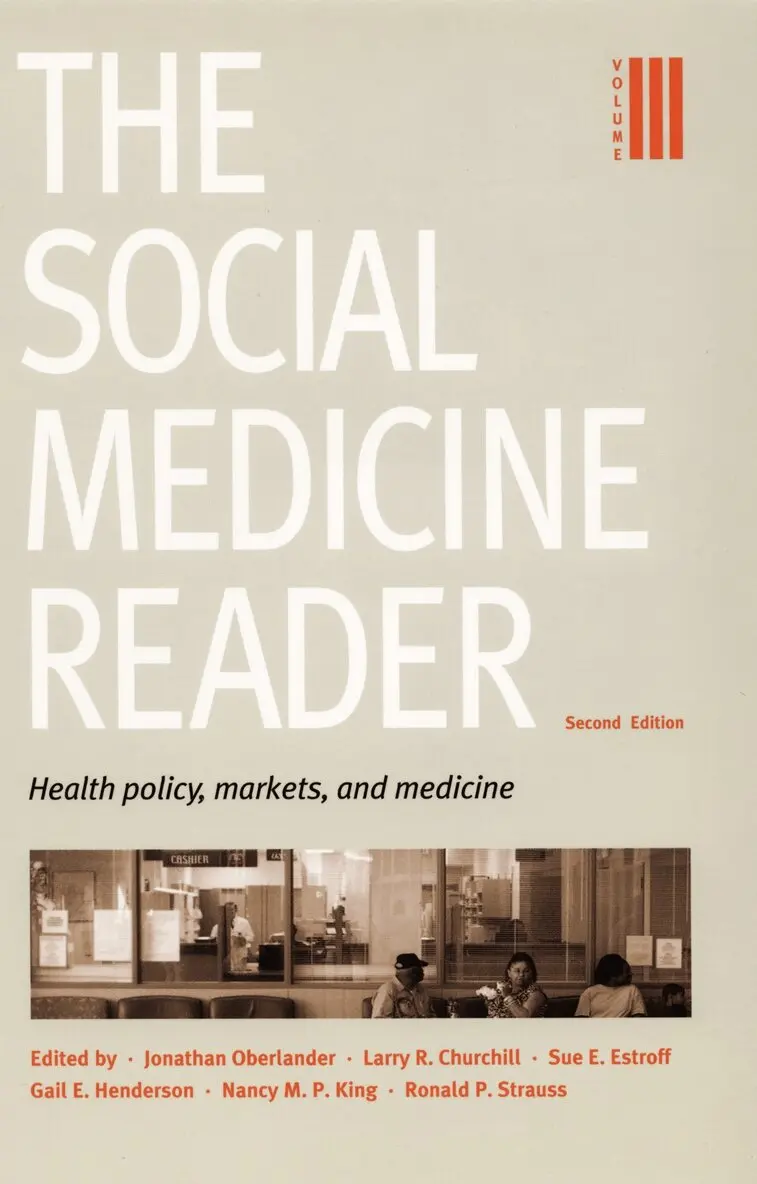
Duke University Press is pleased to announce the second edition of the bestselling Social Medicine Reader. The Reader provides a survey of the challenging issues facing today’s health care providers, patients, and caregivers by bringing together moving narratives of illness, commentaries by physicians, debates about complex medical cases, and conceptually and empirically based writings by scholars in medicine, the social sciences, and the humanities. The first edition of The Social Medicine Reader was a single volume. This significantly revised and expanded second edition is divided into three volumes to facilitate use by different audiences with varying interests.Praise for the 3-volume second edition of The Social Medicine Reader:“A superb collection of essays that illuminate the role of medicine in modern society. Students and general readers are not likely to find anything better.”-Arnold S. Relman, Professor Emeritus of Medicine and Social Medicine, Harvard Medical SchoolPraise for the first edition:“This reviewer strongly recommends The Social Medicine Reader to the attention of medical educators.”-Samuel W. Bloom, JAMA: The Journal of the American Medical AssociationVolume 3:Over the past four decades the American health care system has witnessed dramatic changes in private health insurance, campaigns to enact national health insurance, and the rise (and perhaps fall) of managed care. Bringing together seventeen pieces new to this second edition of The Social Medicine Reader and four pieces from the first edition, Health Policy, Markets, and Medicine draws on a broad range of disciplinary perspectives-including political science, economics, history, and bioethics-to consider changes in health care and the future of U.S. health policy. Contributors analyze the historical and moral foundation of today’s policy debates, examine why health care spending is so hard to control in the United States, and explain the political dynamics of Medicare and Medicaid. Selections address the rise of managed care, its impact on patients and physicians, and the ethical implications of applying a business ethos to medical care; they also compare the U.S. health care system to the systems in European countries, Canada, and Japan. Additional readings probe contemporary policy issues, including the emergence of consumer-driven health care, efforts to move quality of care to the top of the policy agenda, and the implications of the aging of America for public policy.Contributors: Henry J. Aaron, Drew E. Altman, George J. Annas, Robert H. Binstock, Thomas Bodenheimer, Troyen A. Brennan, Robert H. Brook, Lawrence D. Brown, Daniel Callahan, Jafna L. Cox, Victor R. Fuchs, Kevin Grumbach, Rudolf Klein, Robert Kuttner, Larry Levitt, Donald L. Madison, Wendy K. Mariner, Elizabeth A. McGlynn, Jonathan Oberlander, Geov Parrish, Sharon Redmayne, Uwe E. Reinhardt, Michael S. Sparer, Deborah Stone
1 088 kr
Skickas inom 10-15 vardagar
Bioethics needs an expanded moral vision. Born in the ferment of the 1970s, the field responded to rapid developments in biomedical technology and injustices in clinical care and research. Since then, bioethics has predominantly focused on respect for autonomy, beneficence and nonmaleficence, and the zero-sum "lifeboat" ethics of distributive justice, applying these principles almost exclusively within the walls of medical institutions. It is now time for bioethics to take full account of the problems of health disparities and structural injustice that are made newly urgent by the COVID-19 pandemic and the effects of climate change. This book shows why and how the field must embrace a broader and more meaningful view of justice, principally by incorporating the tools and insights of the social sciences, epidemiology, and public health. Nancy M. P. King, Gail E. Henderson, and Larry R. Churchill make the case for a more social understanding and application of justice, a deeper humility in assessing expertise in bioethics consulting, a broader and more relevant research agenda, and greater appreciation of the profound health implications of global warming.
253 kr
Skickas inom 10-15 vardagar
Bioethics needs an expanded moral vision. Born in the ferment of the 1970s, the field responded to rapid developments in biomedical technology and injustices in clinical care and research. Since then, bioethics has predominantly focused on respect for autonomy, beneficence and nonmaleficence, and the zero-sum "lifeboat" ethics of distributive justice, applying these principles almost exclusively within the walls of medical institutions. It is now time for bioethics to take full account of the problems of health disparities and structural injustice that are made newly urgent by the COVID-19 pandemic and the effects of climate change. This book shows why and how the field must embrace a broader and more meaningful view of justice, principally by incorporating the tools and insights of the social sciences, epidemiology, and public health. Nancy M. P. King, Gail E. Henderson, and Larry R. Churchill make the case for a more social understanding and application of justice, a deeper humility in assessing expertise in bioethics consulting, a broader and more relevant research agenda, and greater appreciation of the profound health implications of global warming.
Social Medicine Reader, Volume I, Third Edition
Ethics and Cultures of Biomedicine
Inbunden, Engelska, 2019
1 167 kr
Skickas inom 7-10 vardagar
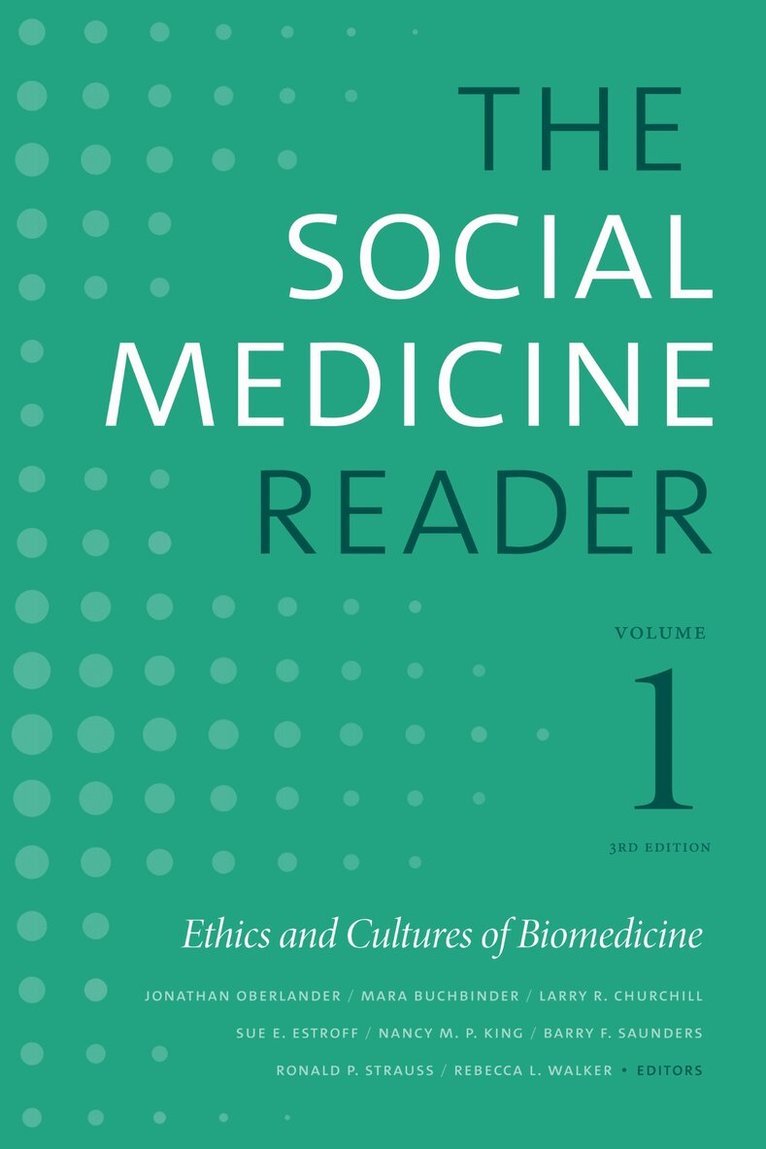
The extensively updated and revised third edition of the bestselling Social Medicine Reader provides a survey of the challenging issues facing today's health care providers, patients, and caregivers by bringing together moving narratives of illness, commentaries by physicians, debates about complex medical cases, and conceptually and empirically based writings by scholars in medicine, the social sciences, and the humanities.Volume 1, Ethics and Cultures of Biomedicine, contains essays, case studies, narratives, fiction, and poems that focus on the experiences of illness and of clinician-patient relationships. Among other topics the contributors examine the roles and training of professionals alongside the broader cultures of biomedicine; health care; experiences and decisions regarding death, dying, and struggling to live; and particular manifestations of injustice in the broader health system. The Reader is essential reading for all medical students, physicians, and health care providers.
Social Medicine Reader, Volume II, Third Edition
Differences and Inequalities
Inbunden, Engelska, 2019
1 734 kr
Skickas inom 7-10 vardagar
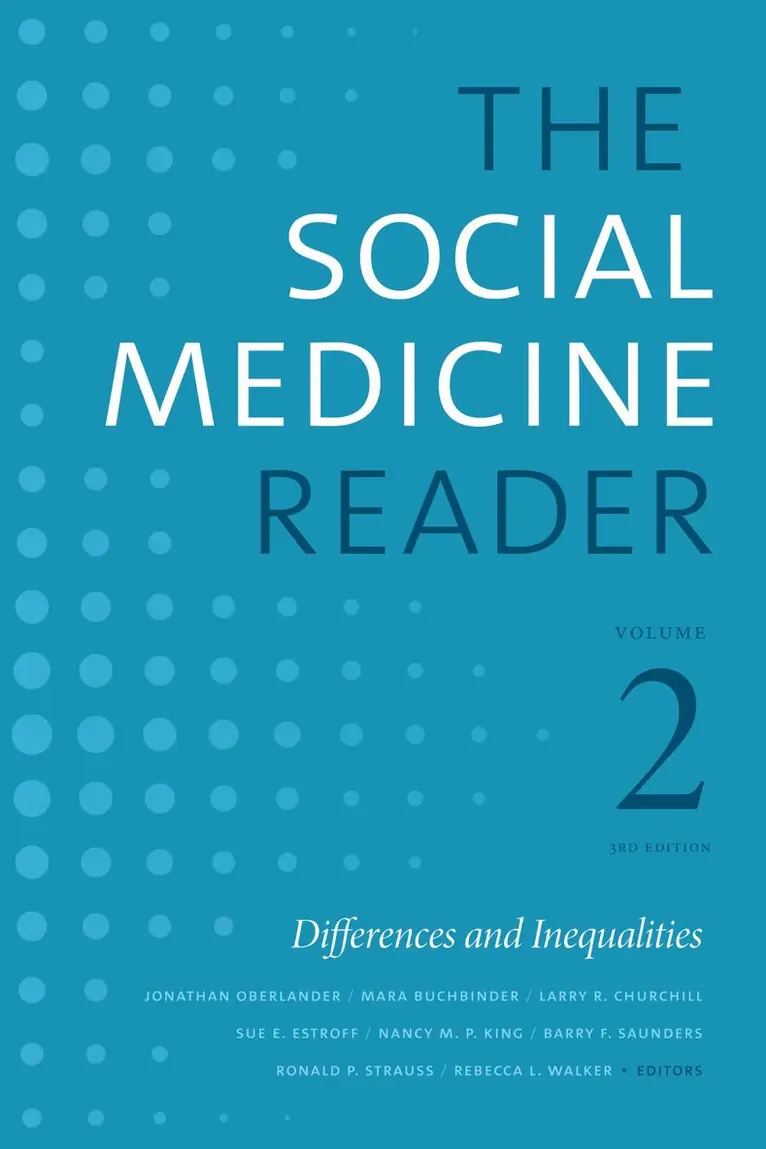
The extensively updated and revised third edition of the bestselling Social Medicine Reader provides a survey of the challenging issues facing today's health care providers, patients, and caregivers with writings by scholars in medicine, the social sciences, and the humanities.
Social Medicine Reader, Volume I, Third Edition
Ethics and Cultures of Biomedicine
Häftad, Engelska, 2019
317 kr
Skickas inom 7-10 vardagar
The extensively updated and revised third edition of the bestselling Social Medicine Reader provides a survey of the challenging issues facing today's health care providers, patients, and caregivers by bringing together moving narratives of illness, commentaries by physicians, debates about complex medical cases, and conceptually and empirically based writings by scholars in medicine, the social sciences, and the humanities.Volume 1, Ethics and Cultures of Biomedicine, contains essays, case studies, narratives, fiction, and poems that focus on the experiences of illness and of clinician-patient relationships. Among other topics the contributors examine the roles and training of professionals alongside the broader cultures of biomedicine; health care; experiences and decisions regarding death, dying, and struggling to live; and particular manifestations of injustice in the broader health system. The Reader is essential reading for all medical students, physicians, and health care providers.
425 kr
Skickas inom 7-10 vardagar
The extensively updated and revised third edition of the bestselling Social Medicine Reader provides a survey of the challenging issues facing today's health care providers, patients, and caregivers with writings by scholars in medicine, the social sciences, and the humanities.
1 588 kr
Skickas inom 10-15 vardagar
"The fixed person for fixed duties, who in older societies was such a godsend, in the future ill be a public danger." Twenty years ago, a single legal metaphor accurately captured the role that American society accorded to physicians. The physician was "c- tain of the ship." Physicians were in charge of the clinic, the Operating room, and the health care team, responsible - and held accountabl- for all that happened within the scope of their supervision. This grant of responsibility carried with it a corresponding grant of authority; like the ship's captain, the physician was answerable to no one regarding the practice of his art. However compelling the metaphor, few would disagree that the mandate accorded to the medical profession by society is changing. As a result of pressures from a number of diverse directions - including technological advances, the development of new health professionals, changes in health care financing and delivery, the recent emphasis on consumer choice and patients' rights - what our society expects phy- cians to do and to be is different now. The purpose of this volume is to examine and evaluate the conceptual foundations and the moral imp- cations of that difference. Each of the twelve essays of this volume assesses the current and future validity of the "captain of the ship" metaphor from a different perspective. The essays are grouped into four sections. In Section I, Russell Maulitz explores the physician's role historically.
1 076 kr
Skickas inom 10-15 vardagar
Bioethical Responsibilities in Twenty-First Century Crises argues for an expanded role and scope for the field of bioethics to tackle the pressing challenges confronting health and healthcare now and on the horizon. The diverse chapters in this collection, edited by Elizabeth Lanphier and Larry R. Churchill, address the need for new bioethical methods, attention to overlooked difference, responding to climate change, and charting new identities for and within bioethics. Taken as a whole, this volume shows how bioethics, with its core commitment to justice, needs to update its tools and attention to realize justice in the twenty-first century. This includes better understanding of and responding to the ways that structural inequities and intersectional oppression impact not only individual medical care and healthcare access, health policy, or research priorities and participation, but also individual and community contributions to and vulnerability from climate change, and the impact social and political choices have on health and well-being.