Gail E. Henderson – författare
Visar alla böcker från författaren Gail E. Henderson. Handla med fri frakt och snabb leverans.
10 produkter
10 produkter
Del 25 - Studies on China
Re-Drawing Boundaries
Work, Households, and Gender in China
Häftad, Engelska, 2000
389 kr
Skickas inom 5-8 vardagar
Representing the culmination of more than a decade of empirical research in post-Mao China, this collection of essays explores changes in the nature of work in relation to changes in households, migration patterns, and gender roles during an era of economic reform. The contributors are respected scholars in fields that range from history and anthropology to demography and sociology. They use a variety of data and diverse approaches to gauge the impact of new economic opportunities on Chinese households and to show how the rise of the private sector, the industrialization of the countryside, and increased migration have affected Chinese workers and workplaces. The collection also asks us to consider how gender roles have been redefined by the economic and institutional changes that arose from post-Mao market reform.
E-bok
Engelska, 2005398 kr
Läs direkt efter köp
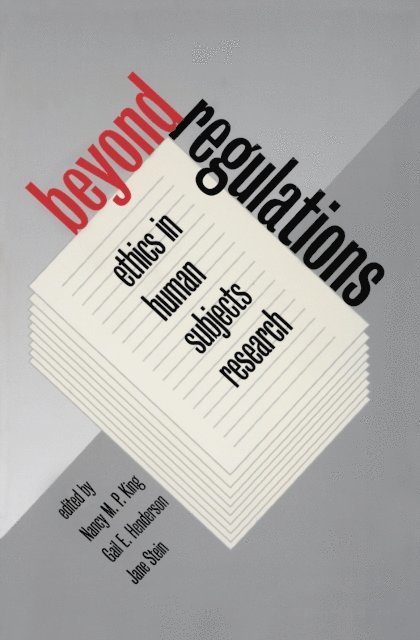
Across a broad range of disciplines — in medicine, social science, and the humanities — researchers, scholars, teachers, and administrators increasingly are looking for new ways to approach ethical issues in research with human subjects. Questions about how relationships between funders and researchers should affect research design, for example, or whether the potential benefits of research can outweigh the importance of its subjects'' interests are inadequately addressed by the prevailing, regulation-based research ethics paradigm.This book constitutes a reexamination of research ethics. It combines case studies and commentaries by a multidisciplinary group of scholars and researchers to explore such topics as informed consent, conflict of interest, confidentiality, and research on illegal behavior. All human subjects research takes place within complex social, cultural, and political contexts, the contributors argue. Increased consideration of the relationships between researchers and their subjects, funders, and institutions within these contexts will facilitate research that is sensitive and responsible as well as scientifically fruitful.Beyond Regulations features a keynote essay by Ruth Macklin. Other contributors are Marcela Aracena Alvarez, Jorge Balan, B. Susan Bauer, Alan F. Benjamin, Lynn Blanchard, Allan M. Brandt, J. Pat Browder, Barbara Entwisle, Sue E. Estroff, Renee C. Fox, Lara Freidenfelds, Gail E. Henderson, Nancy M. P. King, Loretta M. Kopelman, Ernest N. Kraybill, Barry M. Popkin, Silvina Ramos, Desmond K. Runyan, Jane Stein, Ronald P. Strauss, Keith A. Wailoo, and Cynthia Waszak.Across a broad range of disciplines — in biomedicine, the social sciences, and the humanities — researchers, scholars, administrators, and teachers increasingly struggle with questions of ethics in research with human subjects. All research takes place in complex social, cultural, political, and economic contexts; yet the prevailing principle-based research ethics paradigm does not adequately account for them.This book reexamines research ethics using a new relationships paradigm. Through in-depth cases, commentaries, and essays, a multidisciplinary group of scholars and researchers addresses informed consent, conflict of interest, confidentiality, and other issues, considering questions like: What relationships should researchers have with their subjects'' communities? When researchers and subjects have different views about research, who should have control? How should relationships between funders and researchers affect research design? Can research be so potentially beneficial that its importance outweighs the interests of subjects? Examining the relationships between researchers and subjects, communities, funders, and institutions — including considerations of authority and voice — can facilitate human subjects research that is morally sensitive and responsible as well as scientifically fruitful.
Häftad, Engelska, 2005
484 kr
Skickas inom 3-6 vardagar
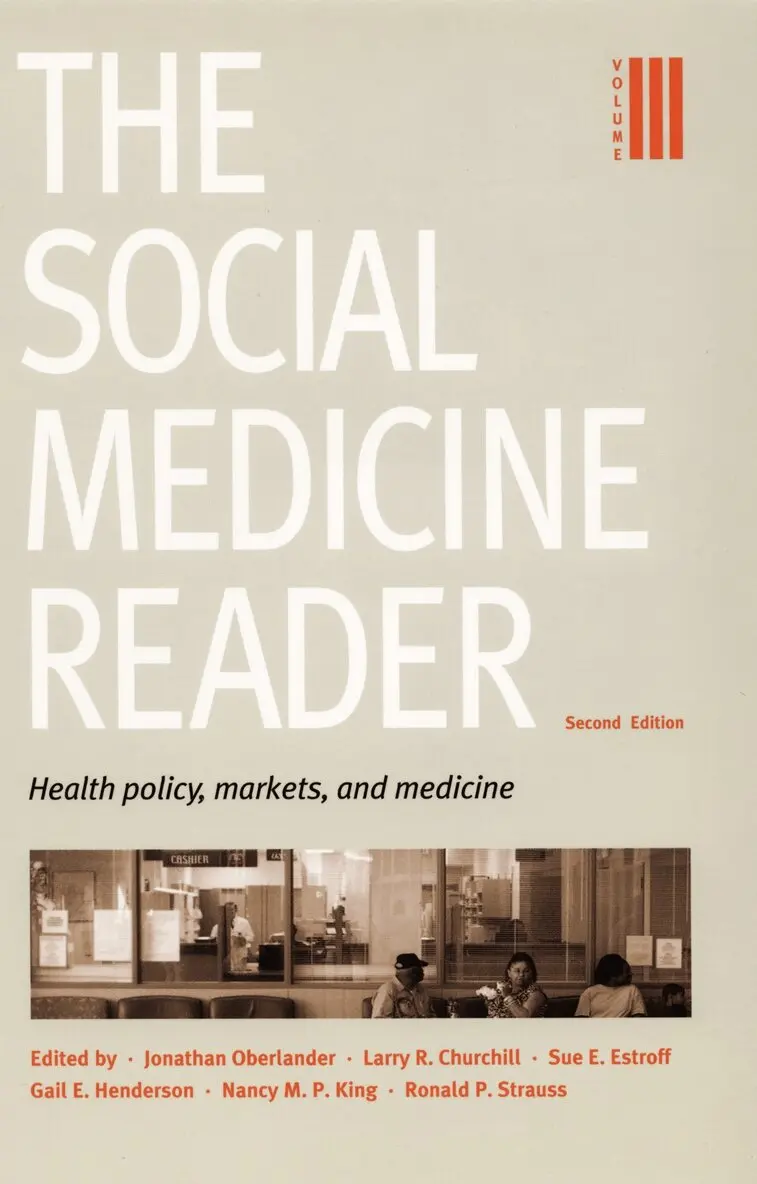
Duke University Press is pleased to announce the second edition of the bestselling Social Medicine Reader. The Reader provides a survey of the challenging issues facing today’s health care providers, patients, and caregivers by bringing together moving narratives of illness, commentaries by physicians, debates about complex medical cases, and conceptually and empirically based writings by scholars in medicine, the social sciences, and the humanities. The first edition of The Social Medicine Reader was a single volume. This significantly revised and expanded second edition is divided into three volumes to facilitate use by different audiences with varying interests.Praise for the 3-volume second edition of The Social Medicine Reader:“A superb collection of essays that illuminate the role of medicine in modern society. Students and general readers are not likely to find anything better.”-Arnold S. Relman, Professor Emeritus of Medicine and Social Medicine, Harvard Medical SchoolPraise for the first edition:“This reviewer strongly recommends The Social Medicine Reader to the attention of medical educators.”-Samuel W. Bloom, JAMA: The Journal of the American Medical AssociationVolume 3:Over the past four decades the American health care system has witnessed dramatic changes in private health insurance, campaigns to enact national health insurance, and the rise (and perhaps fall) of managed care. Bringing together seventeen pieces new to this second edition of The Social Medicine Reader and four pieces from the first edition, Health Policy, Markets, and Medicine draws on a broad range of disciplinary perspectives-including political science, economics, history, and bioethics-to consider changes in health care and the future of U.S. health policy. Contributors analyze the historical and moral foundation of today’s policy debates, examine why health care spending is so hard to control in the United States, and explain the political dynamics of Medicare and Medicaid. Selections address the rise of managed care, its impact on patients and physicians, and the ethical implications of applying a business ethos to medical care; they also compare the U.S. health care system to the systems in European countries, Canada, and Japan. Additional readings probe contemporary policy issues, including the emergence of consumer-driven health care, efforts to move quality of care to the top of the policy agenda, and the implications of the aging of America for public policy.Contributors: Henry J. Aaron, Drew E. Altman, George J. Annas, Robert H. Binstock, Thomas Bodenheimer, Troyen A. Brennan, Robert H. Brook, Lawrence D. Brown, Daniel Callahan, Jafna L. Cox, Victor R. Fuchs, Kevin Grumbach, Rudolf Klein, Robert Kuttner, Larry Levitt, Donald L. Madison, Wendy K. Mariner, Elizabeth A. McGlynn, Jonathan Oberlander, Geov Parrish, Sharon Redmayne, Uwe E. Reinhardt, Michael S. Sparer, Deborah Stone
Inbunden, Engelska, 2022
1 209 kr
Skickas inom 10-15 vardagar
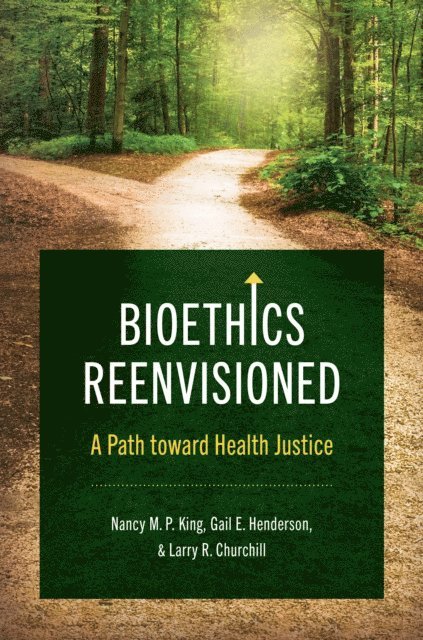
Bioethics needs an expanded moral vision. Born in the ferment of the 1970s, the field responded to rapid developments in biomedical technology and injustices in clinical care and research. Since then, bioethics has predominantly focused on respect for autonomy, beneficence and nonmaleficence, and the zero-sum "lifeboat" ethics of distributive justice, applying these principles almost exclusively within the walls of medical institutions. It is now time for bioethics to take full account of the problems of health disparities and structural injustice that are made newly urgent by the COVID-19 pandemic and the effects of climate change. This book shows why and how the field must embrace a broader and more meaningful view of justice, principally by incorporating the tools and insights of the social sciences, epidemiology, and public health. Nancy M. P. King, Gail E. Henderson, and Larry R. Churchill make the case for a more social understanding and application of justice, a deeper humility in assessing expertise in bioethics consulting, a broader and more relevant research agenda, and greater appreciation of the profound health implications of global warming.
Häftad, Engelska, 2022
279 kr
Skickas inom 10-15 vardagar
Bioethics needs an expanded moral vision. Born in the ferment of the 1970s, the field responded to rapid developments in biomedical technology and injustices in clinical care and research. Since then, bioethics has predominantly focused on respect for autonomy, beneficence and nonmaleficence, and the zero-sum "lifeboat" ethics of distributive justice, applying these principles almost exclusively within the walls of medical institutions. It is now time for bioethics to take full account of the problems of health disparities and structural injustice that are made newly urgent by the COVID-19 pandemic and the effects of climate change. This book shows why and how the field must embrace a broader and more meaningful view of justice, principally by incorporating the tools and insights of the social sciences, epidemiology, and public health. Nancy M. P. King, Gail E. Henderson, and Larry R. Churchill make the case for a more social understanding and application of justice, a deeper humility in assessing expertise in bioethics consulting, a broader and more relevant research agenda, and greater appreciation of the profound health implications of global warming.
E-bok
Engelska, 2022208 kr
Läs direkt efter köp
Bioethics needs an expanded moral vision. Born in the ferment of the 1970s, the field responded to rapid developments in biomedical technology and injustices in clinical care and research. Since then, bioethics has predominantly focused on respect for autonomy, beneficence and nonmaleficence, and the zero-sum “lifeboat” ethics of distributive justice, applying these principles almost exclusively within the walls of medical institutions. It is now time for bioethics to take full account of the problems of health disparities and structural injustice that are made newly urgent by the COVID-19 pandemic and the effects of climate change. This book shows why and how the field must embrace a broader and more meaningful view of justice, principally by incorporating the tools and insights of the social sciences, epidemiology, and public health. Nancy M. P. King, Gail E. Henderson, and Larry R. Churchill make the case for a more social understanding and application of justice, a deeper humility in assessing expertise in bioethics consulting, a broader and more relevant research agenda, and greater appreciation of the profound health implications of global warming.
E-bok
Engelska, 20222 164 kr
Läs direkt efter köp
Bioethics needs an expanded moral vision. Born in the ferment of the 1970s, the field responded to rapid developments in biomedical technology and injustices in clinical care and research. Since then, bioethics has predominantly focused on respect for autonomy, beneficence and nonmaleficence, and the zero-sum “lifeboat” ethics of distributive justice, applying these principles almost exclusively within the walls of medical institutions. It is now time for bioethics to take full account of the problems of health disparities and structural injustice that are made newly urgent by the COVID-19 pandemic and the effects of climate change. This book shows why and how the field must embrace a broader and more meaningful view of justice, principally by incorporating the tools and insights of the social sciences, epidemiology, and public health. Nancy M. P. King, Gail E. Henderson, and Larry R. Churchill make the case for a more social understanding and application of justice, a deeper humility in assessing expertise in bioethics consulting, a broader and more relevant research agenda, and greater appreciation of the profound health implications of global warming.
E-bok
PDF, Engelska, 2022225 kr
Läs direkt efter köp
Bioethics needs an expanded moral vision. Born in the ferment of the 1970s, the field responded to rapid developments in biomedical technology and injustices in clinical care and research. Since then, bioethics has predominantly focused on respect for autonomy, beneficence and nonmaleficence, and the zero-sum “lifeboat” ethics of distributive justice, applying these principles almost exclusively within the walls of medical institutions. It is now time for bioethics to take full account of the problems of health disparities and structural injustice that are made newly urgent by the COVID-19 pandemic and the effects of climate change. This book shows why and how the field must embrace a broader and more meaningful view of justice, principally by incorporating the tools and insights of the social sciences, epidemiology, and public health. Nancy M. P. King, Gail E. Henderson, and Larry R. Churchill make the case for a more social understanding and application of justice, a deeper humility in assessing expertise in bioethics consulting, a broader and more relevant research agenda, and greater appreciation of the profound health implications of global warming.
E-bok
PDF, Engelska, 20221 654 kr
Läs direkt efter köp
Bioethics needs an expanded moral vision. Born in the ferment of the 1970s, the field responded to rapid developments in biomedical technology and injustices in clinical care and research. Since then, bioethics has predominantly focused on respect for autonomy, beneficence and nonmaleficence, and the zero-sum “lifeboat” ethics of distributive justice, applying these principles almost exclusively within the walls of medical institutions. It is now time for bioethics to take full account of the problems of health disparities and structural injustice that are made newly urgent by the COVID-19 pandemic and the effects of climate change. This book shows why and how the field must embrace a broader and more meaningful view of justice, principally by incorporating the tools and insights of the social sciences, epidemiology, and public health. Nancy M. P. King, Gail E. Henderson, and Larry R. Churchill make the case for a more social understanding and application of justice, a deeper humility in assessing expertise in bioethics consulting, a broader and more relevant research agenda, and greater appreciation of the profound health implications of global warming.
E-bok
PDF, Engelska, 2005398 kr
Läs direkt efter köp
Across a broad range of disciplines — in medicine, social science, and the humanities — researchers, scholars, teachers, and administrators increasingly are looking for new ways to approach ethical issues in research with human subjects. Questions about how relationships between funders and researchers should affect research design, for example, or whether the potential benefits of research can outweigh the importance of its subjects'' interests are inadequately addressed by the prevailing, regulation-based research ethics paradigm.This book constitutes a reexamination of research ethics. It combines case studies and commentaries by a multidisciplinary group of scholars and researchers to explore such topics as informed consent, conflict of interest, confidentiality, and research on illegal behavior. All human subjects research takes place within complex social, cultural, and political contexts, the contributors argue. Increased consideration of the relationships between researchers and their subjects, funders, and institutions within these contexts will facilitate research that is sensitive and responsible as well as scientifically fruitful.Beyond Regulations features a keynote essay by Ruth Macklin. Other contributors are Marcela Aracena Alvarez, Jorge Balan, B. Susan Bauer, Alan F. Benjamin, Lynn Blanchard, Allan M. Brandt, J. Pat Browder, Barbara Entwisle, Sue E. Estroff, Renee C. Fox, Lara Freidenfelds, Gail E. Henderson, Nancy M. P. King, Loretta M. Kopelman, Ernest N. Kraybill, Barry M. Popkin, Silvina Ramos, Desmond K. Runyan, Jane Stein, Ronald P. Strauss, Keith A. Wailoo, and Cynthia Waszak.Across a broad range of disciplines — in biomedicine, the social sciences, and the humanities — researchers, scholars, administrators, and teachers increasingly struggle with questions of ethics in research with human subjects. All research takes place in complex social, cultural, political, and economic contexts; yet the prevailing principle-based research ethics paradigm does not adequately account for them.This book reexamines research ethics using a new relationships paradigm. Through in-depth cases, commentaries, and essays, a multidisciplinary group of scholars and researchers addresses informed consent, conflict of interest, confidentiality, and other issues, considering questions like: What relationships should researchers have with their subjects'' communities? When researchers and subjects have different views about research, who should have control? How should relationships between funders and researchers affect research design? Can research be so potentially beneficial that its importance outweighs the interests of subjects? Examining the relationships between researchers and subjects, communities, funders, and institutions — including considerations of authority and voice — can facilitate human subjects research that is morally sensitive and responsible as well as scientifically fruitful.