Larry R. Ford - Böcker
Visar alla böcker från författaren Larry R. Ford. Handla med fri frakt och snabb leverans.
3 produkter
3 produkter
395 kr
Skickas inom 7-10 vardagar
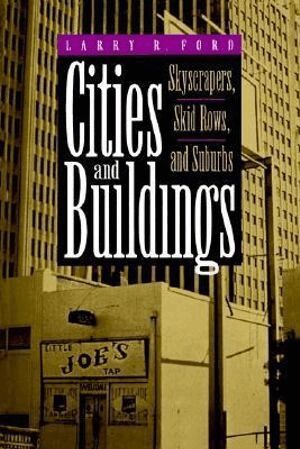
In this text, Ford offers an account of the relationship between urban architecture - especially vernacular architecture - and the spatial arrangement and development of cities in North America. From office towers in the central business district to commercial strips in the "edge city", Ford shows how changes in the built environment parallel changes in urban economies and human culture. Focusing on ordinary structures rather than famous landmarks, the book aims to provide a guide to understanding the changing character of any urban landscape. Ford describes how the idea - as well as the appearance - of the modern city has changed with the evolution of buildings such as skyscrapers, skid-row hotels, single family bungalows and ranches, large apartment buildings, public-housing towers, motels, mini-malls and festival market-places. Through illustrated case studies of specific building types in particular places, Ford explores the conflicting forces of decline, revitalization and preservation that constantly transform the urban scene.
395 kr
Skickas inom 7-10 vardagar
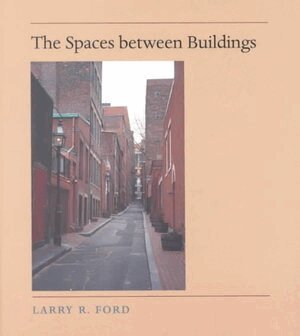
Gates and fences, sidewalks and driveways, alleys and parking lots-these ordinary features have an important architectural impact, influencing how a building relates to the spaces around it. As geographer Larry R. Ford argues, architectural histories and guidebooks tell us surprisingly little about the character of American cities because they concentrate on buildings taken out of context, buildings divorced from space. In The Spaces between Buildings, Ford focuses on the neglected "nooks and crannies" between structures, supplementing his analysis with three photographic essays. Long before Ford knew anything about geography or architecture, he was a connoisseur of front porches, alleys, and loading docks. As a kid in Columbus, Ohio, he knew where to find coal chutes to play in, which rooftops and fire escapes were ideally suited for watching parades, and which stoops were perfect for waiting for a bus. To him the spaces between buildings seemed wonderfully integrated and connected. The Spaces between Buildings is the result of Ford's preoccupation with the relationship of buildings to one another and how their means of access and boundaries organize the areas around us.As Ford observes, a city with friendly, permeable facades and a great variety of street-level doors is more conducive to civic life than a city characterized by fortresslike structures with blank walls and invisible doors. Life on the street is defined and guided by the nature of the surrounding buildings. Similarly, a residential neighborhood with front porches, small lawns or gardens, and houses with lots of windows and architectural details presents a more walkable and gregarious setting than a neighborhood where public space is surrounded by walls, three-car garage doors, blank facades, and concrete driveways. Ford begins by looking at the growth of four urban places, each representing a historical era as much as a geographic location: the Islamic medina; the city shaped by the Spanish renaissance; the nineteenth-century North American city; and the twentieth-century American city. His first essay also discusses the evolution of the free-standing structure as a basic urban building type and the problems encountered in beautifying the often work-a-day back and side yards that have helped to create the image of the untidy American city.The second essay examines the urban trend toward viewing lawns, gardens, hedges, and trees as an essential adjunct to architecture. The final essay focuses on pedestrian and vehicular spaces. Here the author includes the landscape of the garage, sidewalks, streets, and alleys. In its exploration of how spaces become places, The Spaces between Buildings invites readers to see anew the spaces they encounter every day and often take for granted.
564 kr
Tillfälligt slut
What makes a good downtown, and why? Are today's downtowns, with their waterfront parks, festival markets, sports arenas, and cultural centers, more vibrant and lively than the "central business districts" of the nineteenth and early twentieth centuries? Was there ever a "golden age" of downtowns? In this book, noted urban scholar Larry Ford casts a critical and practiced eye on sixteen contemporary urban centers to offer an expert's view of the best-and worst-of downtown America. Ford begins with a brief history of U.S. urban development. He then explains his criteria for evaluating downtowns before proceeding with an on-the-street examination of the featured sixteen cities. Each is rated based on use of physical site, particularly for housing (unlike suburbs, Ford notes, most downtowns are located in challenging physical locales, such as harbors, rivers, hills, or peninsulas), street morphology, civic space, functional aspects (office space, retail stores, and convention centers), and the support districts in the fringe areas surrounding the downtown core.Ford concludes with a suggested model of downtown structure based upon the case studies and with a look at the possible effects of increasing globalization on the downtowns of the late twenty-first century. This book will appeal to those interested in urban studies, landscape studies, American studies, architecture, historic preservation and planning, and urban geography. Featured cities: Atlanta, Baltimore, Charlotte, Cleveland, Columbus, Denver, Indianapolis, Minneapolis, Phoenix, Pittsburgh, Portland, Providence, San Antonio, San Diego, Seattle, and St. Louis