Laura Jockusch - Böcker
Visar alla böcker från författaren Laura Jockusch. Handla med fri frakt och snabb leverans.
7 produkter
7 produkter
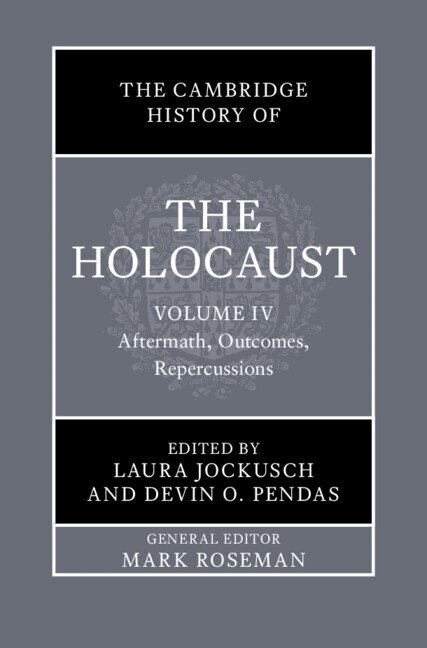
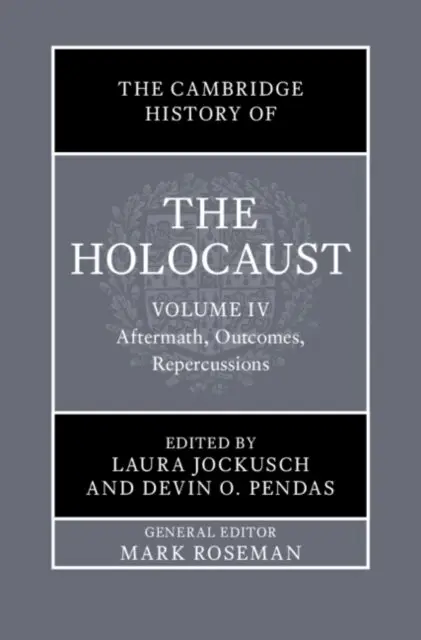
The Cambridge History of the Holocaust: Volume 4, Aftermath, Outcomes, Repercussions
Inbunden, Engelska, 2025
1 682 kr
Skickas inom 7-10 vardagar
The aftermath of the Holocaust has been long and wide-reaching. Any act of mass murder and genocide leaves powerful traces: the trauma of the survivors, the challenge of punishment for the perpetrators and justice for the victims, and questions of how to properly commemorate and memorialize the loss and how to rebuild and restore. This is all the more true for the Holocaust, which has come to serve as a global cultural touchstone for evaluating mass violence. The legacy of the Holocaust has impacted every area of political and cultural life in many different countries since 1945. What is the state of aftermath studies for the Holocaust? How do we periodize the post-Holocaust landscape? Where are there continuities and where are there changes? How, when, and where has the Holocaust been globalized? In what areas did the Holocaust generate a fundamental rethinking of human relations and state institutions? And where did it not? This volume offers a comprehensive, interdisciplinary account of the impact and legacy of the Holocaust around the world and demonstrates its enduring significance, from the postwar period to the present day.
419 kr
Skickas inom 5-8 vardagar
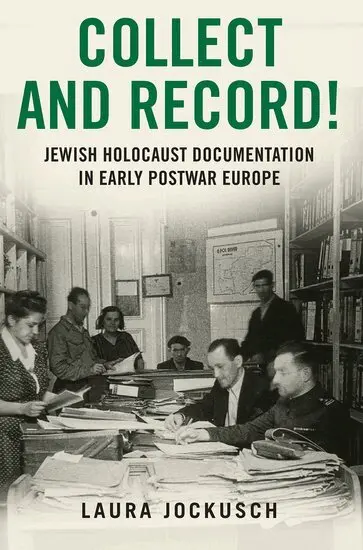
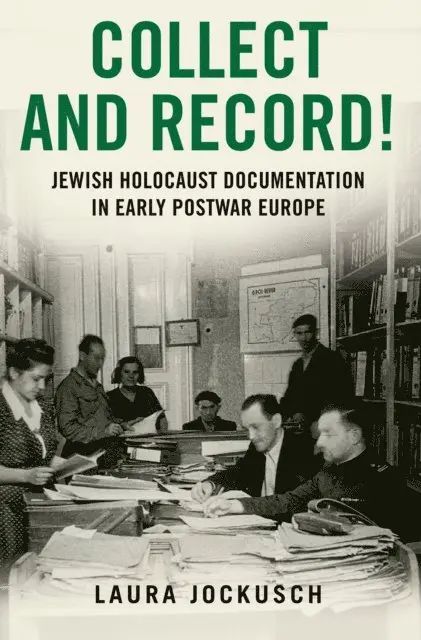
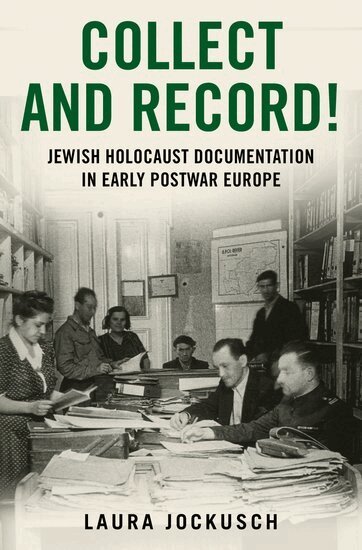
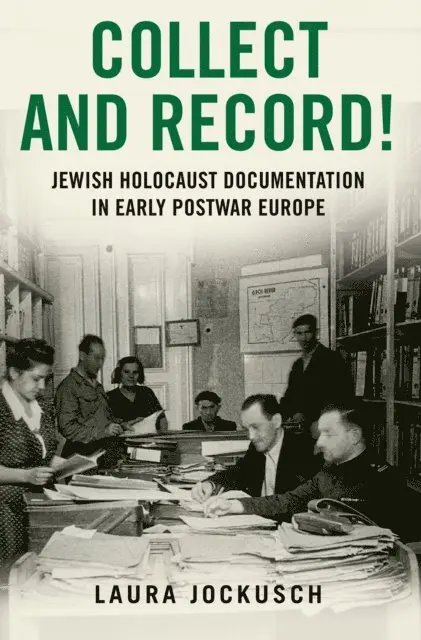
This book describes the vibrant activity of survivors who founded Jewish historical commissions and documentation centers in Europe immediately after the Second World War. In the first postwar decade, these initiatives collected thousands of Nazi documents along with testimonies, memoirs, diaries, songs, poems, and artifacts of Jewish victims. They pioneered in developing a Holocaust historiography that placed the experiences of Jews at the center and used both victim and perpetrator sources to describe the social, economic, and cultural aspects of the everyday life and death of European Jews under the Nazi regime. This book is the first in-depth monograph on these survivor historians and the organizations they created. A comparative analysis, it focuses on France, Poland, Germany, Austria, and Italy, analyzing the motivations and rationales that guided survivors in chronicling the destruction they had witnessed, while also discussing their research techniques, archival collections, and historical publications. It reflects growing attention to survivor testimony and to the active roles of survivors in rebuilding their postwar lives. It also discusses the role of documenting, testifying, and history writing in processes of memory formation, rehabilitation, and coping with trauma.Jockusch finds that despite differences in background and wartime experiences between the predominantly amateur historians who created the commissions, the activists found documenting the Holocaust to be a moral imperative after the war, the obligation of the dead to the living, and a means for the survivors to understand and process their recent trauma and loss. Furthermore, historical documentation was vital in the pursuit of postwar justice and was deemed essential in counteracting efforts on the part of the Nazis to erase their wartime crimes. The survivors who created the historical commissions were the first people to study the development of Nazi policy towards the Jews and also to document Jewish responses to persecution, a topic that was largely ignored by later generations of Holocaust scholars.
1 379 kr
Skickas inom 5-8 vardagar
This volume tells the largely unknown story of Holocaust survivors who founded Jewish historical commissions and documentation centers in Europe immediately after World War II. Amidst political turmoil and extreme privation, physically exhausted and traumatized women and men who had survived ghettos, camps, hiding, or life under false identities sought to chronicle the catastrophe. They collected thousands of Nazi documents along with more than 18,000 testimonies, some 8,000 questionnaires, and large numbers of memoirs, diaries, songs, poems, and artifacts of Jewish victims. The activists found documenting the Holocaust to be a moral imperative after the war, the obligation of the dead to the living, and a means to understand and process their recent trauma and loss. They deemed historical documentation vital in the pursuit of postwar justice and essential in counteracting the Nazis' wartime efforts to erase the evidence of their crimes. These Jewish documentation initiatives pioneered the development of a Holocaust historiography that used both victim and perpetrator sources to describe the social, economic, and cultural aspects of the everyday life and death of European Jews under the Nazi regime, while placing the experiences of Jews at the center of the story. These groundbreaking efforts of survivors to study the Nazi regime's genocide of European Jews was ignored by subsequent generations of Holocaust scholars.With a comparative analysis, Jockusch focuses on France, Poland, Germany, Austria, and Italy to illuminate the transnational nature of Jewish efforts to write the history of the Holocaust in its immediate aftermath. The book explores the motivations and rationales that guided survivors in chronicling the destruction they had witnessed, their research techniques, archival collections, and historical publications. As the first comprehensive study on the subject, this book serves as an important complement to the literature on survivor testimony, Holocaust memory, and the rebuilding of Jewish life in postwar Europe.
Jewish Honor Courts
Revenge, Retribution, and Reconciliation in Europe and Israel After the Holocaust
Häftad, Engelska, 2015
392 kr
Skickas inom 10-15 vardagar
In the aftermath of World War II, virtually all European countries struggled with the dilemma of citizens who had collaborated with Nazi occupiers. Jewish communities in particular faced the difficult task of confronting collaborators among their own ranks-those who had served on Jewish councils, worked as ghetto police, or acted as informants. European Jews established their own tribunals-honor courts-for dealing with these crimes, while Israel held dozens of court cases against alleged collaborators under a law passed two years after its founding. In Jewish Honor Courts: Revenge, Retribution, and Reconciliation in Europe and Israel after the Holocaust, editors Laura Jockusch and Gabriel N. Finder bring together scholars of Jewish social, cultural, political, and legal history to examine this little-studied and fascinating postwar chapter of Jewish history.The volume begins by presenting the rationale for punishing wartime collaborators and purging them from Jewish society. Contributors go on to examine specific honor court cases in Allied-occupied Germany and Austria, Poland, the Netherlands, and France. One essay also considers the absence of an honor court in Belgium. Additional chapters detail the process by which collaborators were accused and brought to trial, the treatment of women in honor courts, and the unique political and social place of honor courts in the nascent state of Israel. Taken as a whole, the essays in Jewish Honor Courts illustrate the great caution and integrity brought to the agonizing task of identifying and punishing collaborators, a process that helped survivors to reclaim their agency, reassert their dignity, and work through their traumatic experiences.For many years, the honor courts have been viewed as a taboo subject, leaving their hundreds of cases unstudied. Jewish Honor Courts uncovers this forgotten chapter of Jewish history and shows it to be an integral part of postwar Jewish rebuilding. Scholars of Jewish, European, and Israeli history as well as readers interested in issues of legal and social justice will be grateful for this detailed volume.
278 kr
Skickas inom 7-10 vardagar
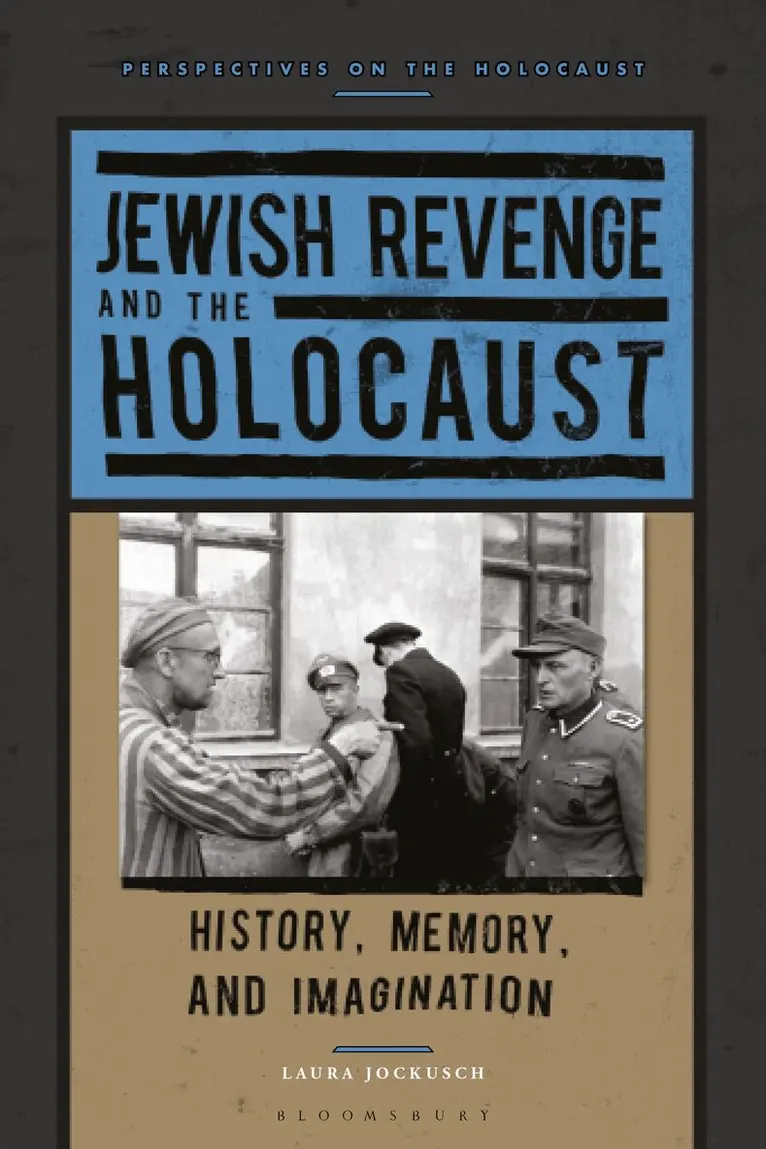
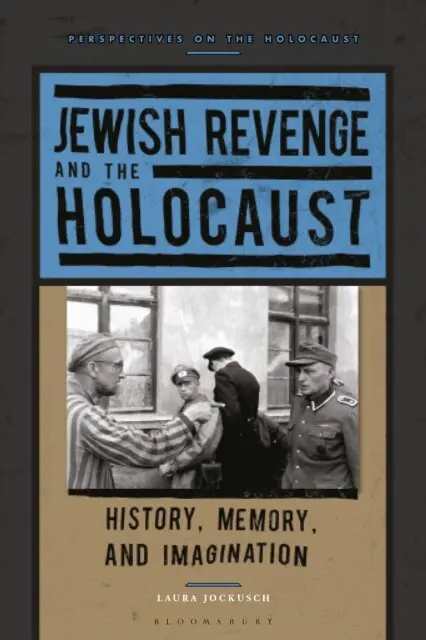
Revenge, argues award-winning author Laura Jockusch, was a ubiquitous coping reaction among European Jews during the Holocaust. It manifested as some acts of violence against Nazi perpetrators and their collaborators as well as revenge fantasies expressed in diaries, letters, last wills, wall inscriptions, songs, and poems. Jockusch reveals how Holocaust survivors—alongside other Europeans—continued this multifaceted engagement with revenge after their liberation from Nazi rule, though some survivors claimed in the decades that followed that revenge was absent among Jews.Jewish Revenge and the Holocaust examines the complexities of Jewish revenge during and after the Holocaust. It shows that, since revenge is a universal human response to atrocity and injustice, neither the claim that Jews were particularly vengeful (as Nazi perpetrators commonly held) nor the idea that Jews did not engage in revenge, are accurate. Rather, revenge had many expressions and it fulfilled various functions for the victims and survivors of the Holocaust: a last resort act in face of death; or a coping response in utter powerlessness and despair; or a means to confront and commemorate the traumatic past and to go on living after destruction and loss. Jockusch convincingly contends that, even if most survivors chose to forgo violent revenge for ethical reasons, they nevertheless engaged with the idea of vengeance. This book analyses that engagement and integrates revenge into the spectrum of Jewish responses to the Holocaust, placing it in the wider context of postwar retribution for Nazi crimes in the process.
901 kr
Skickas inom 10-15 vardagar
Revenge, argues award-winning author Laura Jockusch, was a ubiquitous coping reaction among European Jews during the Holocaust. It manifested as some acts of violence against Nazi perpetrators and their collaborators as well as revenge fantasies expressed in diaries, letters, last wills, wall inscriptions, songs, and poems. Jockusch reveals how Holocaust survivors—alongside other Europeans—continued this multifaceted engagement with revenge after their liberation from Nazi rule, though some survivors claimed in the decades that followed that revenge was absent among Jews.Jewish Revenge and the Holocaust examines the complexities of Jewish revenge during and after the Holocaust. It shows that, since revenge is a universal human response to atrocity and injustice, neither the claim that Jews were particularly vengeful (as Nazi perpetrators commonly held) nor the idea that Jews did not engage in revenge, are accurate. Rather, revenge had many expressions and it fulfilled various functions for the victims and survivors of the Holocaust: a last resort act in face of death; or a coping response in utter powerlessness and despair; or a means to confront and commemorate the traumatic past and to go on living after destruction and loss. Jockusch convincingly contends that, even if most survivors chose to forgo violent revenge for ethical reasons, they nevertheless engaged with the idea of vengeance. This book analyses that engagement and integrates revenge into the spectrum of Jewish responses to the Holocaust, placing it in the wider context of postwar retribution for Nazi crimes in the process.
2 295 kr
Skickas inom 11-20 vardagar
This volume features 50 documents in Polish, Yiddish, and German, with English translations, exemplifying early Holocaust research undertaken by the Central Jewish Historical Commission in Poland in the years 1944–1949. Featured texts include methodological reflections on how the destruction of European Jews ought to be studied, witness testimonies, and journalistic essays. These writings shed light on the motivations of the commission: commemorating the dead, keeping a historical record of the events, gathering evidence that could be used to bring the perpetrators to justice, working through trauma, loss, and destruction, and providing material for future historical research. The documents are a testimony to the survivors’ efforts in using both victim and perpetrator sources to describe the everyday life and death of European Jews under the Nazi regime, while placing the experiences of Jewish communities at the center.